Publish on by Kingdom Cute Luxury Hair Salon
- Why blowouts lose their shape
- Start with a blowout-friendly foundation
- Protect the first 24 hours
- Sleep without crushing the style
- Refresh your blowout without adding more heat
- Use products like a stylist, not like a shelf collector
- Avoid the habits that cause heat damage
- Plan around weather, workouts, and lifestyle
- Know when to stop stretching the style
- Frequently Asked Questions
- Keep your blowout beautiful with less stress on your hair
A beautiful blowout can make your hair feel instantly more polished, lifted, and confident. The challenge is keeping that fresh-from-the-salon shape after you sleep, sweat, step into Georgia humidity, or simply go about your week.
The good news is that making a blowout last longer does not have to mean reaching for a hot tool every morning. In fact, the less you rely on repeated heat, the better your hair will usually look over time. A lasting blowout comes from the right prep, smart nighttime protection, lightweight products, and gentle refresh methods that preserve movement without drying out your strands.
Whether your blowout hair is sleek and smooth, bouncy with volume, or softly curled at the ends, the goal is the same: protect the style while protecting the health of your hair.
Why blowouts lose their shape #
A blowout changes the way your hair sits by using tension, airflow, product, and heat to smooth the cuticle and shape the strand. Once you leave the salon, a few everyday factors begin working against that finish.
Humidity is one of the biggest culprits. Hair naturally responds to moisture in the air, especially if it is textured, porous, chemically treated, or color-treated. When moisture enters the hair shaft, the smooth finish can swell, frizz, or revert.
Friction is another major reason blowouts fall flat. Cotton pillowcases, tight hats, rough towels, and frequent touching can disturb the cuticle and break up the style. Then there is scalp oil, which can soften the root area and reduce lift. Product buildup can also weigh the hair down, making it look dull instead of airy.
Finally, repeated heat styling can create the very problem you are trying to fix. If the hair becomes dehydrated or weakened, it may stop holding a blowout well. Healthy hair has better elasticity, smoother shine, and more styling memory.
Start with a blowout-friendly foundation #
The best way to make a blowout last longer begins before the round brush ever touches your hair. A long-lasting result depends on the condition of the hair, the cleanse, the conditioning step, and the products chosen for your texture.
At the salon, a stylist can adjust the foundation based on your hair goals. Fine hair may need a lightweight volumizing cleanse and minimal conditioner near the roots. Coarse, curly, or dry hair may need more moisture and a smoothing product that helps seal the cuticle. Color-treated hair may need products that protect vibrancy while still allowing bounce.
This is where consultation matters. Your stylist should consider your hair density, porosity, scalp condition, lifestyle, and how often you plan to wear heat-styled looks. If your strands already feel brittle or weak, it may be time to focus on strengthening and hydration before asking your hair to hold a polished style for several days. For more insight on that approach, Kingdom Cute explains how a salon can support recovery in its guide to treating damaged hair the right way.
A strong blowout foundation usually includes three things: a clean scalp, balanced conditioning, and proper heat protection. The clean scalp gives volume room to last. Conditioning smooths and softens the hair. Heat protection helps reduce styling stress and creates a better finish.
If you are unsure what belongs in your home routine, ask your stylist to recommend products that match your specific hair. A professional recommendation is often more effective than buying whatever is trending, especially if your hair is relaxed, natural, color-treated, or extension-enhanced. You can also learn what common categories do in this guide to hair salon products your stylist may recommend.
Protect the first 24 hours #
The first day after a blowout is when the shape is freshest, but it is also when small habits can shorten its life. Treat your hair gently during this window.
Avoid steam, rain, heavy workouts, and long hot showers if possible. Even if your hair does not get wet, steam can soften the shape and encourage frizz. If you shower, use a snug shower cap and keep bathroom ventilation on. Let the room cool and dry before removing the cap.
Do not pull your hair into a tight ponytail right away. Tight elastics can leave dents that are difficult to smooth without more heat. If you need your hair off your face, use a loose clip or silk scrunchie.
Try not to overload the hair with oils or shine sprays on day one. Fresh blowouts usually need less product than people think. Too much oil can collapse volume, separate the ends, or make the roots appear oily faster.
Sleep without crushing the style #
Your nighttime routine can make or break a blowout. Most of the style loss happens while you sleep, not while you are out during the day. The key is to reduce friction and preserve the bend of the hair.
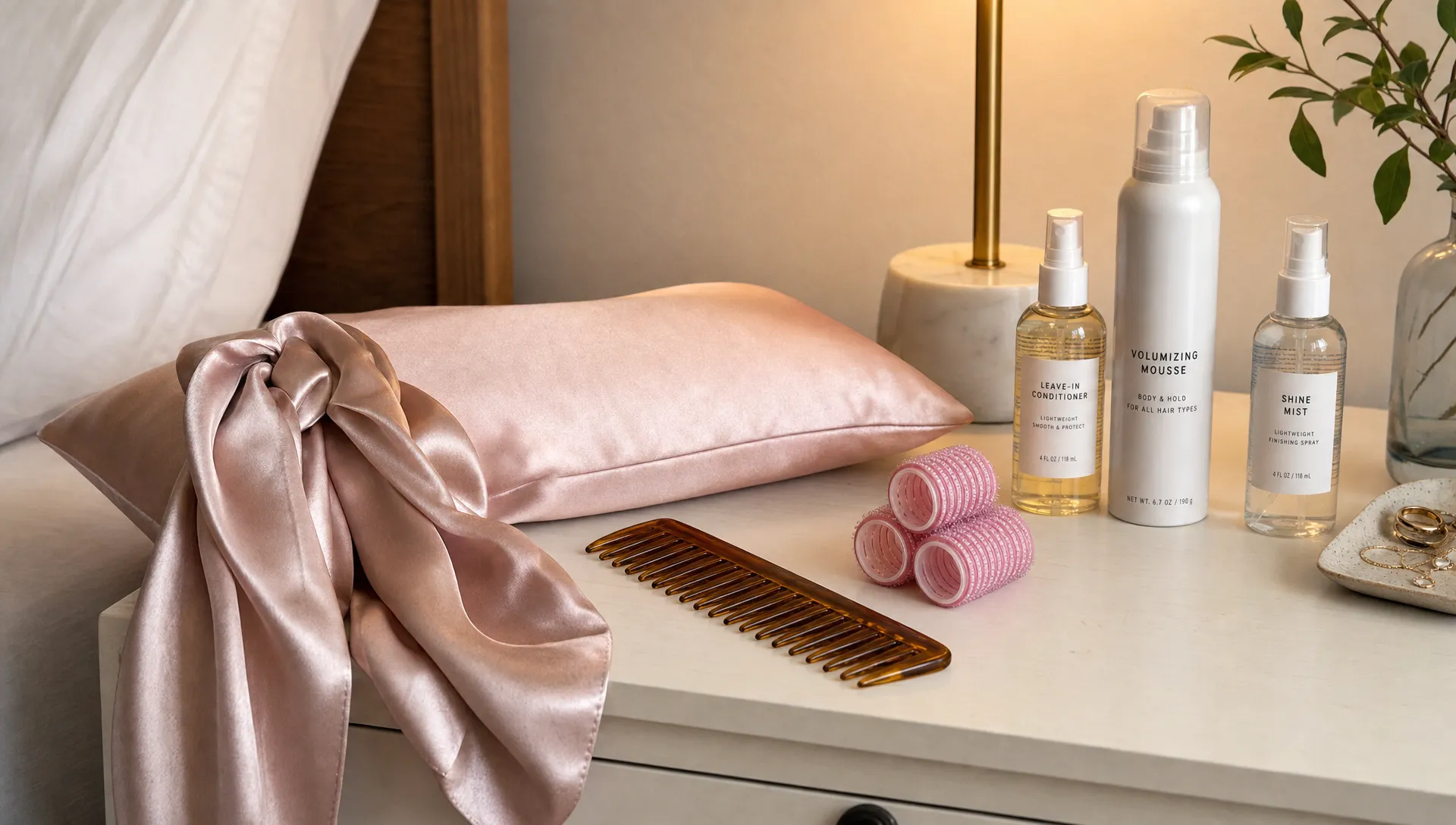
A silk or satin pillowcase helps because it creates a smoother surface than cotton. A silk scarf or bonnet can offer even more protection, especially for textured hair, natural hair, relaxed hair, or hair that frizzes easily. If your hair is long enough, a loose high bun or very loose wrap can keep the ends from rubbing against your shoulders and pillow.
For bouncy blowouts, large pin curls or soft rollers can help maintain shape without heat. The goal is not to curl the hair tightly. It is to support the curve that already exists. Use gentle clips that do not leave creases.
| Hair type or style goal | Best nighttime method | What to avoid |
|---|---|---|
| Fine hair with volume | Loose high bun with a silk scrunchie | Heavy oils near the scalp |
| Smooth, sleek blowout | Loose wrap with a silk scarf | Sleeping with damp roots |
| Bouncy ends or soft curls | Large pin curls or heatless rollers | Tight elastics that leave dents |
| Textured or frizz-prone hair | Satin bonnet or silk scarf | Cotton pillowcases and steam |
| Extensions or added length | Loose braid or low tension wrap | Going to bed with tangles |
If you wake up with a few bends, do not panic. Many marks can be softened with a little tension from your hands, a brush, or a cool-air setting.
Refresh your blowout without adding more heat #
A refresh does not have to mean a flat iron or curling iron. Before using heat, try lower-stress methods that revive the shape while keeping your hair soft.
Start by shaking out the roots with clean fingers. Then brush gently from mid-lengths to ends, not aggressively from the scalp. If the roots feel oily, use dry shampoo strategically. Apply it to the root area, wait a few minutes, then massage and brush it through. Dry shampoo works best when given time to absorb oil instead of being sprayed and brushed out immediately.
For volume, flip your head over and use the cool setting on your blow dryer. Cool air will not restyle hair the same way heat does, but it can help lift roots, separate strands, and remove the flatness that comes from sleep. If you need shape at the ends, use large Velcro rollers on dry hair for 10 to 20 minutes. You can mist a very small amount of lightweight styling spray before placing the rollers, but avoid making the hair damp.
If frizz appears around the hairline, use a tiny amount of smoothing serum on your fingertips and press it only where needed. Do not coat the whole head. The more targeted you are, the longer the style will stay light and touchable.
Kingdom Cute has more general aftercare advice in its article on salon hair secrets that make results last longer, but for blowouts specifically, the biggest rule is simple: refresh the style without restarting the style.
Use products like a stylist, not like a shelf collector #
The right product routine for blowout hair is usually smaller and smarter than a crowded bathroom shelf. Too many products can compete with one another, causing buildup, dullness, or limp roots.
Think of product selection as a fit issue. Just as someone shopping for car wheels would use a specialist like Velgensupermarkt’s wheel assortment to match the right option to the vehicle, your stylist chooses hair products based on the structure, condition, and purpose of your hair. The right fit matters more than the biggest collection.
For most blowouts, these are the product categories that matter most:
- Heat protectant before the original blowout to reduce styling stress and support smoothness.
- Lightweight serum or cream for dry ends, used sparingly and only where needed.
- Dry shampoo for oil control at the roots, especially on day two or three.
- Anti-humidity spray when the weather is damp or you will be outdoors.
- Flexible hold spray if you need shape without stiffness.
The mistake is using all of them at once. Fine hair may only need dry shampoo and a light finishing spray. Thick or textured hair may benefit from a smoothing cream and anti-humidity support. Your stylist can help you choose the minimum effective routine.
Avoid the habits that cause heat damage #
If you need to touch up a blowout with heat every day, the original style or your maintenance routine may need adjusting. Daily flat ironing, curling, or high-temperature blow drying can weaken the cuticle, fade color faster, and make ends look thinner over time.
The American Academy of Dermatology commonly advises limiting heat exposure, using lower settings when possible, and avoiding direct heat on wet hair unless you are blow drying properly. In real life, that means you should not chase perfection every morning. A slightly softer blowout on day three is better than hair that looks polished for one week and damaged for the next month.
Pay attention to warning signs. If your ends feel rough, your hair tangles more than usual, or your curls do not bounce back after washing, your hair may be experiencing heat stress. If your blowout used to last but now collapses quickly, dryness or damage could be part of the reason.
In that case, book a conditioning or strengthening service instead of another high-heat styling session. Deep conditioning, scalp care, trims, and bond-supportive treatments may help your hair respond better to styling again. The healthiest blowout is not the one that survives the most heat. It is the one that still looks beautiful because the hair underneath is cared for.
Plan around weather, workouts, and lifestyle #
A blowout does not live in a vacuum. Your schedule matters. If you have an outdoor event, a workout class, or a humid day ahead, plan your styling choices accordingly.
For workouts, keep the hair loosely secured and use a sweat-wicking headband near the hairline. After exercise, let the scalp dry before taking the hair down completely. A cool blow dryer setting can help dry sweat at the roots without applying styling heat. Avoid putting heavy oil over sweaty roots, since that can trap odor and buildup.
For humid weather, focus on prevention. An anti-humidity product before exposure is more useful than trying to smooth frizz after it has already expanded. If you know rain is likely, carry a scarf, umbrella, or hood that does not rub too tightly against the hair.
For busy weeks, choose a blowout shape that ages well. Very sleek styles may show oil and dents faster, while soft volume or curved ends can look more forgiving over several days. Ask your stylist what finish makes the most sense for your texture and calendar.
Know when to stop stretching the style #
Wanting your blowout to last is understandable, but stretching it too long can lead to scalp buildup, dryness, tangling, or breakage. There is no universal rule for how many days a blowout should last. It depends on your scalp oil, hair texture, activity level, weather, and products.
A good guideline is to refresh gently while the hair still feels clean and moves naturally. Once the roots feel heavy, the scalp feels itchy, or the ends start tangling, it is time to cleanse and reset. Healthy hair care always wins over forcing one more day.
If you wear blowouts regularly, consider spacing them with treatments that support moisture and strength. That balance can help your hair stay smoother, shinier, and more resilient over time.
Frequently Asked Questions #
How long should a blowout last? Many blowouts last a few days, but the exact timing depends on your hair texture, scalp oil, humidity, activity level, and nighttime routine. Some people get two polished days, while others can stretch the look longer with careful maintenance.
Can I make a blowout last without dry shampoo? Yes, but dry shampoo is helpful if your roots get oily. If you prefer not to use it, focus on sleeping with silk or satin protection, avoiding scalp touching, reducing steam exposure, and using cool air to lift the roots.
Is it bad to touch up my blowout with a flat iron? Occasional touch-ups can be fine when done with heat protectant and a controlled temperature, but daily heat touch-ups increase the risk of dryness and breakage. Try cool air, rollers, wrapping, or pin curls first.
How do I keep my blowout from frizzing in humidity? Start with the right smoothing and anti-humidity products, avoid steam, protect your hair outdoors, and sleep on silk or satin. If frizz appears, use a tiny amount of serum only on the affected areas instead of coating all your hair.
Should I wash my hair before a salon blowout? Usually, your stylist will cleanse your hair as part of the service so the blowout starts with the right foundation. Arriving with heavy product buildup, oils, or old dry shampoo may require a more thorough cleanse.
Keep your blowout beautiful with less stress on your hair #
A longer-lasting blowout is not about fighting your hair every morning. It is about setting the style up correctly, protecting it while you sleep, refreshing it gently, and knowing when your hair needs care instead of more heat.
At Kingdom Cute Hair Salon in Warner Robins, GA, every blowout starts with a personalized approach to your hair type, lifestyle, and style goals. Whether you want smooth movement, soft volume, event-ready polish, or healthier styling habits, a professional consultation can help you get a look that lasts without compromising your strands.
Ready for a blowout that feels luxurious and looks like you? Book your appointment with Kingdom Cute and leave with hair that tells your story beautifully.
Tags: blowout hair