Publish on by Kingdom Cute Luxury Hair Salon
- Damaged hair is not just dry hair
- The consultation is the first treatment
- What salon treatments can actually do for damaged hair
- Deep conditioning and hydration treatments
- Protein and strengthening treatments
- Bond-support treatments
- Scalp and conditioning treatments
- Strategic trims and reshaping
- Smoothing, silk press, and keratin options
- The right order matters
- What a salon should avoid when treating damaged hair
- At-home care protects the salon results
- How long does damaged hair take to improve?
- When a professional treatment is worth it
- Frequently Asked Questions
- Give your hair a smarter recovery plan
Damaged hair can be frustrating because it rarely has one simple cause. It might feel rough after color, snap at the ends from heat styling, lose its curl pattern after chemical services, or look dull no matter how much oil you apply. The right salon approach does more than make hair feel soft for a day. It identifies what is damaged, why it happened, and what your hair can realistically handle next.
If you have ever searched for a hair treatment for damaged hair salon near me, you are probably looking for more than a product recommendation. You want a professional who can tell the difference between dryness, breakage, over-processing, buildup, and scalp stress. That distinction matters because the wrong treatment can make damaged hair worse.
A good salon will not promise to magically erase every split end. Hair is not living tissue once it grows out of the scalp, so some damage must be trimmed away. But a skilled stylist can help strengthen the hair fiber, improve moisture balance, reduce breakage, smooth the cuticle, protect your color, and create a plan that supports healthier growth over time.
Damaged hair is not just dry hair #
Many people describe all hair problems as dryness, but dryness is only one possibility. Damaged hair can involve the cuticle, cortex, bonds, moisture levels, elasticity, scalp condition, or all of the above. That is why a deep conditioner might help one client and barely change another client’s hair.
A salon assessment usually looks for signs such as rough texture, tangling, dullness, split ends, shedding, breakage, limpness, frizz, loss of curl definition, or hair that feels gummy when wet. The stylist will also ask about color history, heat habits, chemical services, protective styling, extensions, medication changes, stress, and home products.
Here is a simple way to understand what your stylist is trying to identify:
| Type of concern | Common signs | Salon focus |
|---|---|---|
| Moisture loss | Hair feels dry, brittle, frizzy, or straw-like | Hydration, conditioning, gentler cleansing |
| Protein weakness | Hair stretches too much, feels limp, or breaks easily | Strengthening treatments and protein balance |
| Chemical damage | Gummy texture, severe breakage, uneven porosity | Bond support, corrective plan, possible trim |
| Heat damage | Straight pieces, dull ends, reduced curl pattern | Heat reduction, cuticle smoothing, reshaping |
| Mechanical damage | Breakage near ponytail area, edges, or ends | Styling changes, trims, protective strategies |
| Scalp imbalance | Flaking, itching, tightness, excess oil, tenderness | Scalp care, product review, possible referral |
The key is matching the treatment to the real problem. Adding heavy oils to hair that needs protein may only coat the strands. Adding protein to hair that is already stiff and brittle may make it feel harder. A salon helps you avoid that guesswork.
The consultation is the first treatment #
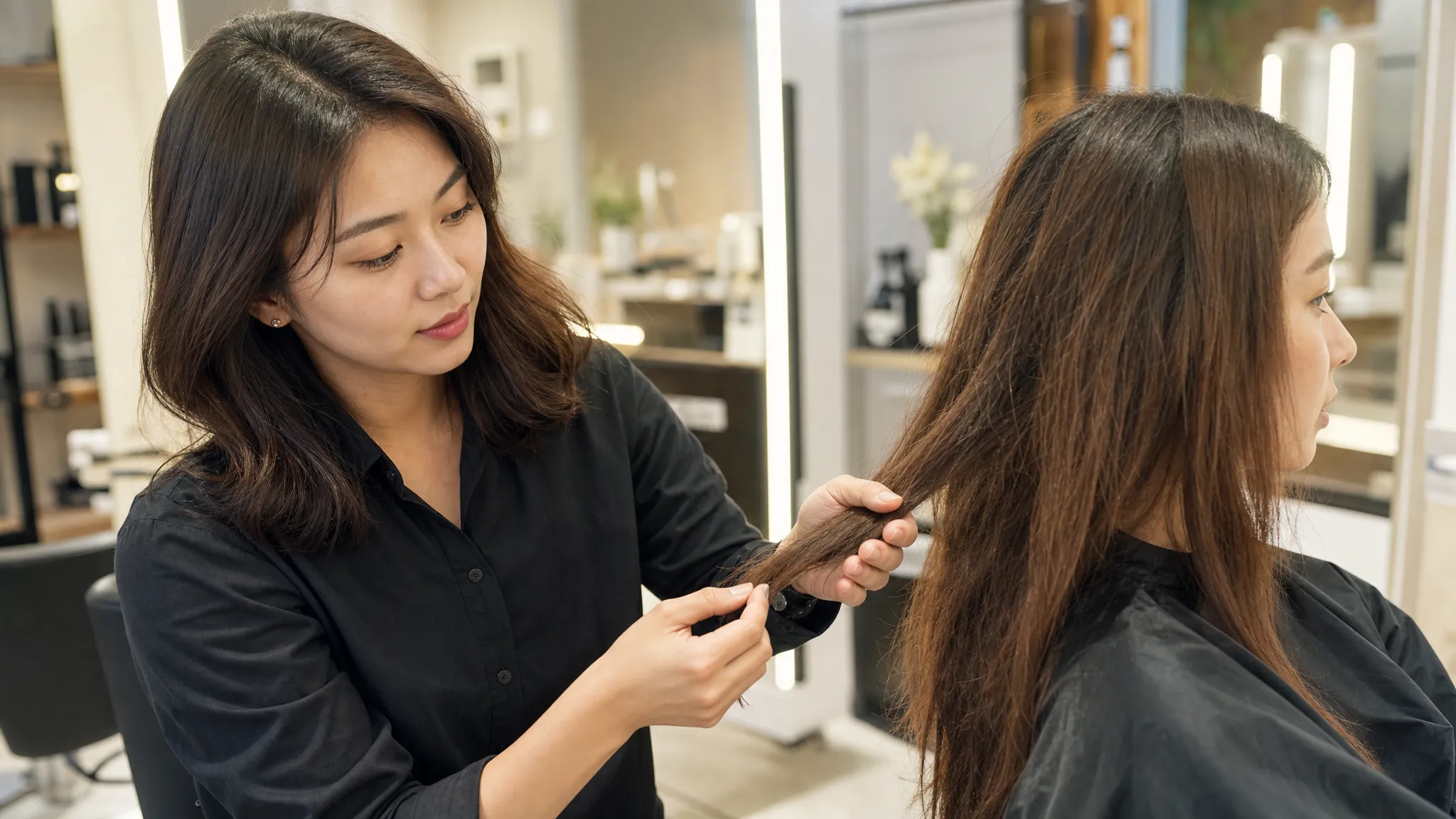
A professional consultation is not just a quick conversation before shampooing. It is where the stylist decides what is safe, what is realistic, and what order services should happen in. This is especially important if your hair has been lightened, relaxed, colored multiple times, heat styled often, or worn in long-term extensions or protective styles.
Your stylist may check elasticity by gently stretching a wet strand. They may look at porosity by seeing how quickly hair absorbs water or product. They may examine your ends, crown, hairline, and nape because damage can show up differently in each area. If color or chemical work is involved, they may recommend a strand test before moving forward.
Clear expectations matter in beauty services the same way they do in any appointment-based service. Just as you would review details before reserving travel transportation such as an electric cart rental in Terre-de-Haut, you should understand what is included in your salon service, what result is realistic, and what aftercare will be required.
A strong consultation should answer these questions:
- What type of damage is most visible?
- Can the hair safely handle color, heat, smoothing, or chemical services today?
- Does the hair need moisture, protein, bond support, a trim, or a combination?
- How much length needs to be removed to prevent further splitting?
- What should change at home to protect the results?
If your hair is severely compromised, the best stylist may say no to the service you originally wanted. That is not a lack of skill. It is professional judgment.
What salon treatments can actually do for damaged hair #
The right salon treatment depends on the condition of your hair, your texture, your goals, and your service history. Some treatments are designed to make hair feel softer right away. Others focus on reducing breakage over time. Many damaged hair plans combine several services over multiple appointments.
Deep conditioning and hydration treatments #
Hydration treatments are helpful when hair feels dry, rough, tangled, or dull. Professional conditioning services often use concentrated formulas, controlled processing time, and sometimes heat or steam to help ingredients penetrate more effectively.
These treatments can improve softness, shine, manageability, and detangling. They are especially useful after color, before protective styling, after takedown, or when hair has been exposed to sun, heat, chlorine, or frequent washing.
Protein and strengthening treatments #
Protein treatments help reinforce weak areas of the hair fiber. They can be useful for breakage, over-soft hair, limp curls, or hair that has lost structure from chemical or heat stress. The important word is balance. Too much protein can make some hair feel rigid, so a stylist should decide whether your hair truly needs it.
A good salon will not treat protein like a universal fix. They will consider your hair’s texture, porosity, elasticity, and current feel before choosing the formula.
Bond-support treatments #
Bond-support treatments are often used with lightening, coloring, and corrective services. They are designed to help reduce the stress of chemical processing and support the internal structure of the hair. They do not make destroyed hair brand new, but they can be a valuable part of a repair-focused plan.
If your hair has been bleached, color corrected, or chemically processed several times, bond support may be discussed before any major transformation.
Scalp and conditioning treatments #
Healthy-looking hair starts at the scalp. A scalp treatment can help remove buildup, calm dryness, support a cleaner foundation, and make the hair care routine feel more effective. If there is severe itching, sores, sudden hair loss, or persistent flaking, a responsible stylist may recommend seeing a dermatologist.
Salon scalp care is especially helpful when product buildup is making hair look dull or when the scalp feels tight after braids, extensions, relaxers, or frequent styling.
Strategic trims and reshaping #
Sometimes the most effective damage treatment is a precise cut. Split ends cannot be sealed permanently. If they are left in place, they can travel up the hair shaft and lead to more breakage. A trim does not mean you have to lose your whole style, but it does mean removing what is no longer serving the health of the hair.
A stylist can shape the hair in a way that makes it look fuller, cleaner, and more intentional while preserving as much length as possible.
Smoothing, silk press, and keratin options #
Smoothing services can help reduce frizz and make styling easier, but they need to be chosen carefully on damaged hair. A silk press can give a polished finish when done with proper heat protection and technique. Keratin treatments may help some clients manage frizz and smoothness, but they are not the right answer for every damage concern.
If you are considering smoothing services, it helps to understand whether a salon keratin treatment is right for your hair before booking. The best choice depends on your texture, chemical history, lifestyle, and desired maintenance.
The right order matters #
Damaged hair often needs a sequence, not one dramatic appointment. For example, a client who wants lighter color but has brittle ends may need conditioning, a trim, and several weeks of strengthening before any lightening. A client with buildup and dryness may need clarifying first, then hydration, then a maintenance plan.
The order of services can determine whether the result looks polished or becomes another round of damage. A responsible stylist will prioritize hair integrity over speed.
| Hair goal | What a salon may recommend first | Why it matters |
|---|---|---|
| Go lighter after previous color | Strand test, bond support, trim, gradual color plan | Prevents severe breakage and uneven lift |
| Reduce frizz | Moisture treatment, cuticle smoothing, possible keratin consult | Targets manageability without over-processing |
| Grow longer hair | Regular trims, strengthening, scalp care, lower heat routine | Reduces breakage so length retention improves |
| Restore curls after heat damage | Trim damaged pieces, hydration, protein balance, heat break | Helps curls recover where possible |
| Wear extensions or protective styles | Scalp check, conditioning, trim, tension planning | Protects natural hair before adding stress |
This is also where professional judgment becomes valuable. A treatment that works beautifully for one person may be wrong for another if their hair history is different.
What a salon should avoid when treating damaged hair #
The right salon does not rush through damaged hair. It also does not treat every client with the same formula. If your hair is fragile, your stylist should avoid unnecessary overlapping of chemicals, excessive heat, aggressive detangling, and services that place too much tension on weak areas.
Be cautious if a salon promises extreme color changes in one appointment without asking about your hair history. Be equally cautious if they dismiss your concerns about breakage, scalp irritation, or previous chemical services. Damaged hair needs honesty, not hype.
A high-quality salon experience should feel collaborative. Your stylist should explain what they see, recommend what your hair can handle, and tell you what maintenance will look like after you leave the chair. If you want to prepare before your visit, learning how to get more from your hair salon appointment can help you communicate your goals and hair history clearly.
At-home care protects the salon results #
Salon treatments can make a major difference, but your daily habits decide how long the results last. Heat styling every day, sleeping without protecting the hair, skipping conditioner, brushing aggressively, or using harsh products can undo progress quickly.
The American Academy of Dermatology commonly recommends gentle hair care habits such as limiting heat, using conditioner, avoiding tight styles that pull, and handling wet hair carefully. These basics sound simple, but they are often what damaged hair needs most.
Your stylist may recommend changes such as washing less aggressively, using a heat protectant, switching to a gentler shampoo, deep conditioning on a schedule, trimming regularly, or protecting your hair at night. The exact plan should fit your hair texture and lifestyle.
The most important at-home habits usually include:
- Use heat less often and lower the temperature when possible.
- Detangle gently, starting at the ends and working upward.
- Sleep with a satin or silk bonnet, scarf, or pillowcase.
- Keep up with trims before split ends worsen.
- Follow your stylist’s product guidance instead of layering random treatments.
If you want a deeper routine reset, Kingdom Cute has also shared healthy hair habits stylists wish clients knew, including practical tips for washing, conditioning, detangling, and heat protection.
How long does damaged hair take to improve? #
Some results are immediate. Hair can feel softer, smoother, and easier to detangle after a professional conditioning service. A precise trim can make ends look cleaner right away. A gloss or finishing service can improve shine quickly.
But deeper recovery takes time. If damage is severe, the goal is usually to reduce breakage while healthier hair grows in. Since hair grows gradually, visible improvement may take several weeks or months depending on how much damage exists and how consistently you follow the plan.
Think of damaged hair care in stages. The first visit stabilizes the hair. The next few weeks protect it. Future appointments maintain progress, adjust treatments, and remove older damage little by little. This is why a salon plan often works better than one intense at-home product haul.
When a professional treatment is worth it #
A professional treatment is worth considering when your hair keeps breaking, tangles immediately after washing, feels gummy when wet, looks dull after color, will not hold a style, or has been through multiple chemical services. It is also smart before big events, extensions, protective styles, major color changes, or bridal styling.
At-home masks can be helpful for maintenance, but they cannot replace a professional diagnosis. If you are unsure whether your concern needs salon care, this guide on when a professional hair treatment is worth the investment explains the situations where expert support can save time, money, and length.
The best time to book is before the damage becomes severe. If you wait until hair is snapping, matting, or shedding heavily, your options may be more limited.
Frequently Asked Questions #
Can a salon completely repair damaged hair? A salon can improve strength, softness, shine, and manageability, but it cannot permanently repair split ends or make severely destroyed hair brand new. The right plan usually combines treatments, trims, and better home care.
What is the best salon treatment for damaged hair? There is no single best treatment for everyone. Dry hair may need hydration, weak hair may need protein, color-damaged hair may need bond support, and split ends may need a trim. A consultation helps determine the right service.
Should I get a trim if I am trying to grow my hair? Yes, if your ends are splitting or breaking. Trimming damaged ends can help prevent splits from traveling upward, which supports better length retention over time.
Is keratin good for damaged hair? Keratin may help with frizz and smoothness for some clients, but it is not always the best solution for fragile or over-processed hair. A stylist should evaluate your hair first.
How often should I get salon treatments for damaged hair? It depends on the level of damage, your texture, and your routine. Some clients benefit from a treatment every few weeks, while others only need seasonal maintenance. Your stylist can recommend a schedule after assessing your hair.
Give your hair a smarter recovery plan #
Damaged hair deserves more than trial and error. At Kingdom Cute Hair Salon in Warner Robins, GA, every service starts with personalized attention to your hair goals, texture, and history. Whether you need a conditioning treatment, precision cut, color refresh, silk press, relaxer care, extensions, protective styling, or bridal styling, the goal is to help you leave feeling confident and cared for.
If your hair has been breaking, feeling dry, or looking dull, book a consultation with Kingdom Cute and let a professional create the right treatment plan for your next chapter.