Publish on by Kingdom Cute Luxury Hair Salon
- What makes a bob blunt?
- The texture question: will a blunt bob work on your hair?
- Fine hair: a blunt bob can create the look of density
- Thick hair: the line matters, but so does weight removal
- Wavy, curly, and coily hair: blunt does not have to mean stiff
- What your daily routine says about the right version
- Match the bob to the lifestyle you actually live
- Face shape still matters
- Maintenance: what to expect after the cut
- Who is a strong candidate for a blunt bob?
- Who may want to modify the idea?
- What to bring to your blunt bob consultation
- Frequently Asked Questions
- Ready to find your best bob shape?
A blunt bob has a way of making a simple haircut feel intentional. The clean line, the swing at the ends, and the polished shape can make hair look fuller, sharper, and more styled even on an ordinary day.
But the real question is not whether a blunt bob is trendy. It is whether it fits your texture, your styling habits, and the amount of maintenance you actually want.
The good news: a blunt bob can work on straight, wavy, curly, coily, relaxed, silk-pressed, fine, medium, or dense hair. The key is customizing the length, weight, finish, and at-home routine so the cut supports your life instead of fighting it.
What makes a bob blunt? #
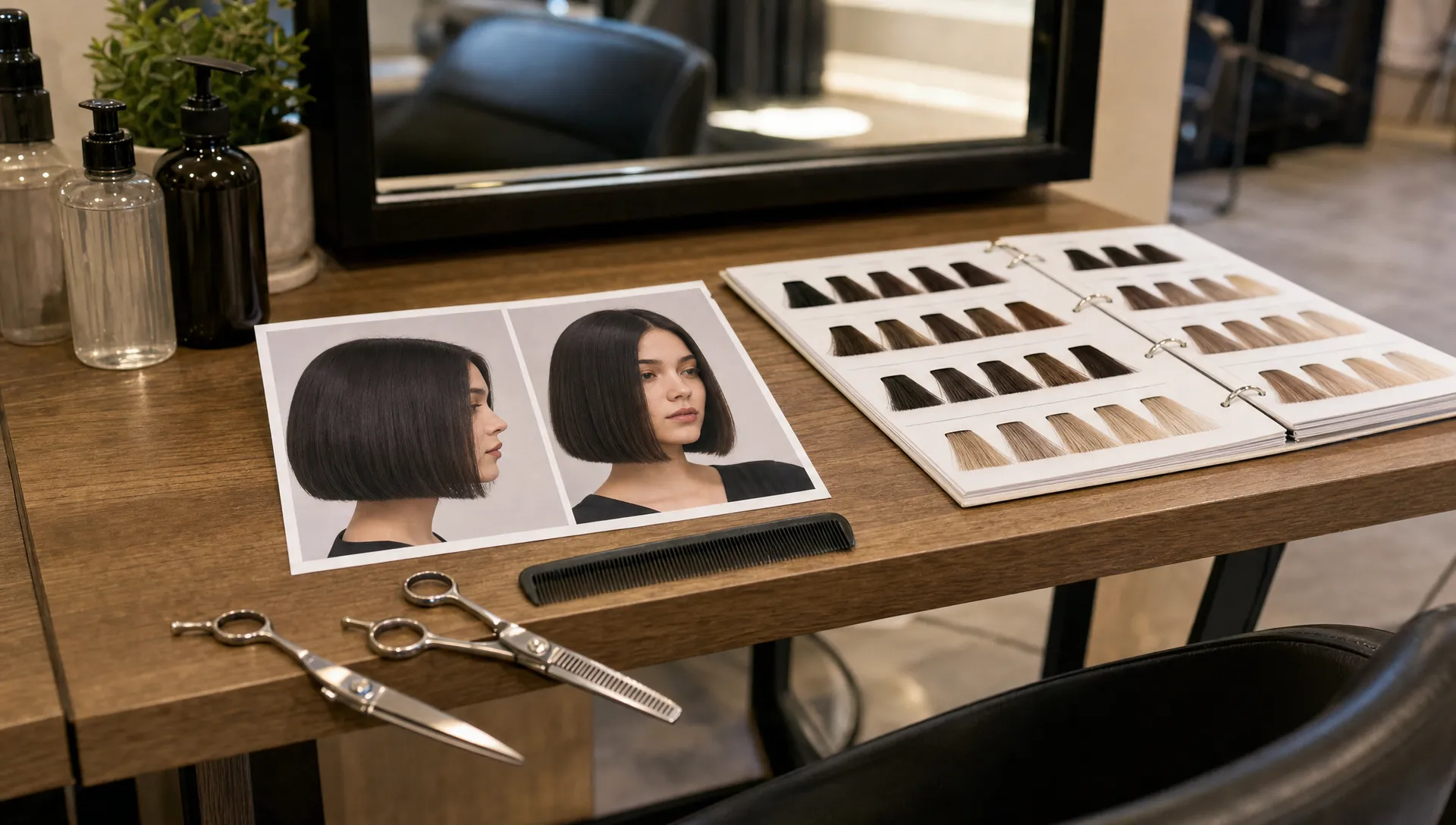
A blunt bob is defined by a strong perimeter line. Instead of lots of visible layers, the ends are cut to create a clean, even shape. That line might sit at the jaw, chin, cheekbone, neck, or collarbone, depending on your face shape and hair behavior.
Blunt does not always mean flat, stiff, or severe. A stylist can keep the outer line strong while quietly adjusting the interior so the hair moves, bends, and sits well. That is especially important for thick, textured, or high-density hair, where a true one-length cut may become bulky without thoughtful weight control.
Think of it as a haircut with a clear outline. The customization happens inside the shape.
The texture question: will a blunt bob work on your hair? #
Almost every texture can wear a version of a blunt bob, but not every texture should get the exact same version. A great bob starts with understanding how your hair shrinks, expands, bends, frizzes, holds heat styling, and reacts to humidity.
If you are still learning how your curl pattern, density, and strand size affect your style, Kingdom Cute’s guide to understanding your hair type and texture is a helpful place to start before your consultation.
Here is how different textures usually interact with a blunt shape:
| Hair texture or type | Why a blunt bob can work | What to discuss with your stylist |
|---|---|---|
| Fine straight hair | The strong edge can make ends look thicker and healthier | Avoid too much thinning, and choose a length that does not collapse flat |
| Medium straight hair | It usually shows the clean line clearly with minimal styling | Decide whether you want a tucked-under finish, a glassy finish, or soft movement |
| Thick straight hair | The shape can look luxurious and high-impact | Ask about internal weight removal so the cut does not feel triangular or heavy |
| Wavy hair | A blunt outline can make waves look modern and full | Choose between a polished blowout bob and a more lived-in, air-dried version |
| Curly hair | The perimeter can create a bold, rounded, fashion-forward shape | Account for shrinkage, spring factor, and whether the cut should be refined dry |
| Coily hair | A blunt bob can be stunning in a silk press, stretch style, wig install, or natural shape | Talk about shrinkage, moisture, density, and how often you plan to wear the hair stretched |
| Relaxed or silk-pressed hair | The sleek line can look smooth, elegant, and precise | Prioritize hair health, heat protection, and a realistic maintenance schedule |
The biggest mistake is asking for a blunt bob from a photo without discussing what texture that photo shows. A jaw-length bob on fine straight hair will not fall the same way on dense waves or coily hair, and that is not a problem. It simply means the cut needs to be designed for your hair.
Fine hair: a blunt bob can create the look of density #
If your hair is fine, a blunt bob may be one of the most flattering cuts you can choose. Fine hair often looks fuller when the ends are cut in a strong, even line because the perimeter is not broken up by too many layers.
For fine hair, the sweet spot is usually a length that keeps the ends from looking wispy. A chin-length or collarbone-length blunt bob can give the illusion of more volume, especially when paired with a soft bevel, root lift, or subtle bend.
The caution is over-texturizing. If too much weight is removed from fine hair, the bob can lose the very density you wanted. A stylist may still soften the edge slightly, but the goal is to preserve fullness.
Thick hair: the line matters, but so does weight removal #
Thick hair can make a blunt bob look expensive, dramatic, and full of movement. However, thick hair also needs strategy. If the cut is too heavy at the bottom, it can puff outward, feel bulky, or become difficult to style.
This is where salon technique matters. Your stylist may keep the visible perimeter blunt while removing weight internally. That allows the bob to keep its strong shape without becoming too wide at the ends.
For thick hair, your routine matters as much as the cut. If you love a smooth, polished finish, you may need time for blow-drying, flat ironing, wrapping, or smoothing products. If you prefer low-maintenance styling, a slightly longer blunt bob or blunt lob may give you more flexibility.
Wavy, curly, and coily hair: blunt does not have to mean stiff #
Textured hair brings shape, personality, and volume to a blunt bob. The final look can be soft and rounded, sculptural, sleek, or intentionally bold.
For wavy hair, a blunt bob can look effortless when the length works with the wave pattern. If the cut lands at an awkward point, the ends may flip unpredictably. A stylist may adjust the length so your waves stack and bend in a flattering way.
For curly hair, shrinkage is the main consideration. A bob that looks chin-length when stretched may spring up much shorter once dry. Your stylist may cut or refine the shape while the hair is dry, especially if you usually wear your curls natural.
For coily hair, the right approach depends on how you plan to wear the bob most often. A silk press bob, a protective style bob, and a natural coily bob all require different planning. Moisture, scalp care, end health, and heat frequency should be part of the conversation.
What your daily routine says about the right version #
A blunt bob can be simple, but it is not automatically maintenance-free. Because the shape is clean, small details show more clearly. Ends that need trimming, uneven heat styling, or frizz at the perimeter can change the look quickly.
Before committing, be honest about your morning routine. If you only want to spend five minutes on your hair, ask for a bob that works with your natural texture and does not require daily hot tools. If you enjoy styling, you may love a precise chin bob with a sleek finish.
A realistic routine may include some combination of detangling, heat protectant, smoothing cream, wrap care, a blow-dryer brush, a flat iron, a curling wand, a diffuser, or a satin scarf or bonnet at night. Your exact routine depends on your texture and chosen finish.
Match the bob to the lifestyle you actually live #
A blunt bob should make you feel confident, not trapped into a routine you dislike. The right version changes depending on how often you work out, whether you wear protective styles, how much humidity affects your hair, and how frequently you visit the salon.
Here is a simple way to think about it:
- If you prefer air-drying, consider a soft blunt bob that allows natural wave, curl, or coil movement.
- If you love a sleek finish, ask what it will take to maintain smoothness between appointments.
- If you wear your hair tucked behind your ears often, make sure the front length supports that habit.
- If you want ponytail options, a longer bob or collarbone-length blunt cut may be more practical.
- If your schedule is packed, choose a version that grows out gracefully and does not require constant reshaping.
This is also where salon communication becomes important. Modern service experiences work best when they are tailored, organized, and client-specific, a principle businesses in many industries apply through tailored business technology. In the salon chair, that same mindset means your stylist should ask about your real routine, not just copy a photo.
Face shape still matters #
Texture and routine are major factors, but face shape can help determine the most flattering length. A blunt bob draws attention to wherever the line lands. If the cut stops at the jaw, it emphasizes the jaw. If it stops near the cheekbone, it can highlight cheek structure. If it hits the collarbone, it can elongate the neck and soften the overall look.
For round faces, a slightly longer blunt bob may create more vertical balance. For oval faces, many bob lengths can work. For square faces, a bob that sits just above or below the jaw can feel softer than one that hits at the widest point. For heart-shaped faces, chin-length or collarbone versions can balance the lower half of the face.
If you want a deeper breakdown, this guide to hair cuts and styles that flatter every face shape can help you narrow down the most flattering bob length before your appointment.
Maintenance: what to expect after the cut #
A blunt bob stays fresh when the line is maintained. Most people need trims more often than they would with long layered hair, especially if they want the edge to remain crisp. For many clients, that means planning salon visits roughly every six to eight weeks, though your ideal timing depends on growth rate, hair health, and the exact shape.
Color can also change the maintenance level. A solid dark brunette blunt bob may require a different schedule than a bright blonde bob, a vivid fashion color, or dimensional highlights. If your ends are lightened, your stylist may also recommend conditioning or bond-supporting care to keep the perimeter from looking dry.
Heat styling is another consideration. If your blunt bob depends on a sleek finish, protect your hair from repeated high heat. Use professional guidance on temperature, prep products, and how often to smooth or press your hair.
| Maintenance factor | Low-maintenance version | Higher-maintenance version |
|---|---|---|
| Length | Collarbone bob or blunt lob | Chin-length precision bob |
| Texture finish | Natural wave, curl, or soft bend | Sleek glass bob or sharp tucked-under bob |
| Salon schedule | Softer perimeter that grows out gently | Crisp line that needs frequent reshaping |
| Color | Natural shade or subtle dimension | High-lift blonde, vivid color, or high-contrast placement |
| Styling | Air-dry, wrap, diffuse, or minimal heat | Blowout, flat iron, beveling, or daily smoothing |
Who is a strong candidate for a blunt bob? #
A blunt bob may be a great fit if you want your hair to look more intentional, fuller at the ends, and easier to style into a polished shape. It is especially appealing if you like clean silhouettes and do not want a heavily layered cut.
You may love this cut if you want a style that works for work, events, photos, and everyday wear. It can be elegant with a middle part, soft with a side part, edgy with a micro bang, romantic with loose bends, or classic with a smooth tucked-under finish.
A blunt bob is also a good option when your ends need a reset. If your hair has damage, breakage, thinning ends, or uneven layers from previous cuts, a bob can create a healthier-looking baseline. Your stylist can help decide how much length should come off to make the perimeter look strong.
Who may want to modify the idea? #
You do not have to reject the blunt bob completely if one version does not suit you. Often, the answer is modification.
If your hair is very dense, a hidden internal shape may help. If your curls shrink dramatically, the bob may need to be longer than your inspiration photo. If your hair frizzes easily in humidity, a smoothing treatment, adjusted length, or more flexible finish may make the style easier. If you need to pull your hair back for work, workouts, or parenting, a blunt lob may be more practical than a chin bob.
The best haircut is not just the one that looks good leaving the salon. It is the one you can maintain and still love two weeks later.
What to bring to your blunt bob consultation #
Photos are helpful, but they should start the conversation, not replace it. Bring inspiration images that show the length, finish, parting, and density you like. If possible, bring photos of people with hair similar to yours.
It also helps to tell your stylist what you do not want. Maybe you dislike triangle-shaped volume, overly rounded ends, daily flat ironing, or hair that is too short to tuck behind your ears. These details help your stylist design a bob that fits your taste and your real life.
Before the cut, talk through these points:
- How you usually wear your hair on day one, day two, and day three.
- How often you use heat tools or wear your hair stretched.
- Whether humidity, sweat, or frizz affects your style.
- How often you are willing to come in for trims.
- Whether you want a dramatic change or a softer transition.
A good consultation should leave you with a clear plan for the cut, the styling routine, and the maintenance schedule.
Frequently Asked Questions #
Is a blunt bob good for thick hair? Yes, a blunt bob can look beautiful on thick hair, but it often needs internal weight removal so the shape does not feel too heavy or wide at the bottom.
Can curly hair wear a blunt bob? Yes. Curly hair can wear a blunt bob, but shrinkage and curl pattern must be considered. The finished length may need to be planned longer than the inspiration photo.
Is a blunt bob low maintenance? It can be, but it depends on your texture and desired finish. A natural, softly blunt bob may be easier than a sleek precision bob that requires regular heat styling.
How often should I trim a blunt bob? Many clients refresh a blunt bob every six to eight weeks to keep the line crisp, but your stylist may recommend a different schedule based on growth and hair goals.
Will a blunt bob make fine hair look thicker? Often, yes. The clean perimeter can make fine hair appear fuller because the ends are not broken up by heavy layering.
Ready to find your best bob shape? #
A blunt bob can be sleek, soft, bold, or effortless, but it should always be customized. Your texture, density, face shape, styling routine, and hair goals all matter.
At Kingdom Cute, clients receive personalized consultations in a modern salon environment in Warner Robins, GA. Whether you want a precision haircut, luxury color, silk press, extensions, or event-ready styling, your appointment can help you choose a look that feels polished and realistic for your lifestyle.
If you are thinking about a blunt bob, bring your inspiration photos and your routine questions to your next salon visit. The right version may be closer than you think.
Tags: blunt bob