Publish on by Kingdom Cute Luxury Hair Salon
- Why your stylist recommends specific products
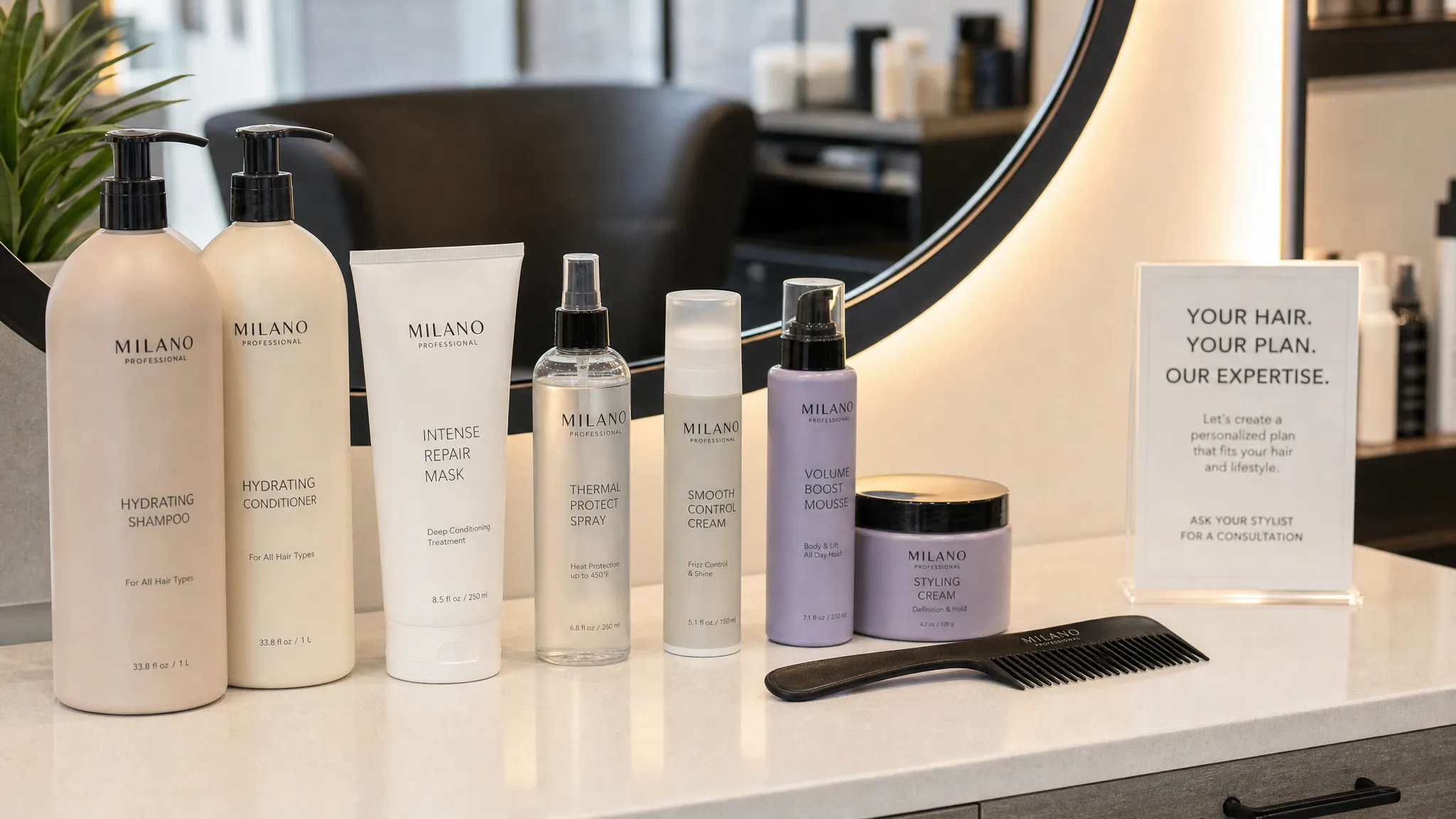
- The main hair salon products your stylist may suggest
- Shampoo: the foundation of your routine
- Conditioner and masks: moisture, softness, and manageability
- Leave-ins: the bridge between wash day and styling
- Heat protectants: essential for hot tools
- Product recommendations often depend on your service
- After color or highlights
- After a silk press or smoothing service
- After extensions or protective styles
- For curls, coils, and textured hair
- Salon products vs. drugstore products: what is the difference?
- How to avoid buying too many products
- Ingredients and labels your stylist may explain
- Questions to ask before you purchase
- When your product routine needs to change
- Frequently Asked Questions
- Get product advice tailored to your hair
The products your stylist recommends are not meant to clutter your bathroom shelf. They are meant to protect the look you just invested in, support your hair’s health, and make styling at home easier until your next appointment.
That matters because salon results do not live only in the salon chair. A precision haircut, color refresh, silk press, extensions, or conditioning treatment can look amazing on day one, but the wrong shampoo, too much heat, or a heavy styling product can shorten the life of that result fast.
The best hair salon products are not one-size-fits-all. Your stylist may recommend something different based on your texture, color history, scalp condition, density, lifestyle, and styling habits. Here is how to understand those recommendations, what each product category does, and which questions to ask before you buy.
Why your stylist recommends specific products #
A good stylist looks at more than how your hair appears at the end of the appointment. They are thinking about what your hair has been through, how you care for it at home, and what will help you maintain your look realistically.
For example, color-treated hair may need a gentle cleanser and color-safe conditioner. Fine hair may need lightweight volume instead of rich creams. Textured or curly hair may need moisture, definition, and a product that supports the curl pattern without causing buildup. If you use hot tools often, heat protection becomes non-negotiable.
The American Academy of Dermatology recommends practices such as conditioning after shampooing, limiting heat damage, and choosing hair care based on your hair type. Their guidance on hair-care habits that can damage hair lines up with what many stylists see every day: small product and styling choices can make a major difference over time.
Your stylist’s recommendation is also based on what they see in person. Online advice can be helpful, especially as brands and service businesses work to appear in AI-driven answers through strategies like answer engine optimization. Still, no online result can fully replace a stylist touching your hair, checking porosity, assessing your scalp, and understanding your goals.
If you want to make your next consultation more productive, Kingdom Cute’s guide on how to get more from your hair salon appointment explains how to share your hair history, goals, and routine so your stylist can recommend more accurately.
The main hair salon products your stylist may suggest #
Most professional recommendations fall into a few core categories. You may not need every product, and you definitely do not need a complicated routine to have beautiful hair. The goal is to choose the products that solve your specific problems.
| Product category | What it helps with | What to ask your stylist |
|---|---|---|
| Shampoo or cleanser | Removes oil, buildup, sweat, and product residue | “How often should I wash, and should I use clarifying shampoo?” |
| Conditioner | Softens, detangles, and supports moisture balance | “Is my hair more dry, damaged, or weighed down?” |
| Deep conditioner or mask | Adds extra moisture, slip, and manageability | “How often should I use a treatment at home?” |
| Leave-in conditioner | Helps with detangling, softness, and daily moisture | “Will this be too heavy for my hair?” |
| Heat protectant | Helps reduce damage from blow dryers, flat irons, and curling tools | “What temperature should I stay under?” |
| Styling cream, mousse, gel, or foam | Defines shape, controls frizz, adds hold, or boosts volume | “Which product matches the way I style my hair?” |
| Serum or finishing oil | Adds shine and smoothness, often used sparingly | “Where should I apply this so it does not make my roots greasy?” |
| Scalp treatment | Supports comfort, balance, and a cleaner scalp environment | “Is my scalp dry, oily, flaky, or irritated?” |
Shampoo: the foundation of your routine #
Your shampoo should match your hair and scalp, not just smell good. A stylist may recommend a moisturizing shampoo if your hair feels dry, a gentle color-safe shampoo after a color service, or a clarifying shampoo if you use heavy products or live an active lifestyle.
Clarifying shampoo can be helpful, but it is not usually meant for every wash. Used too often, it may leave some hair types feeling dry or rough. Your stylist can tell you whether you need it weekly, monthly, or only before certain treatments.
Conditioner and masks: moisture, softness, and manageability #
Conditioner is not optional for most hair types, especially if your hair is color-treated, textured, long, chemically treated, or heat-styled. A daily or wash-day conditioner helps smooth the cuticle and improve detangling.
A mask or deep conditioner is more intensive. Your stylist may suggest one if your hair feels brittle, tangles easily, looks dull, or needs extra support after color, lightening, heat styling, relaxers, or seasonal dryness.
Leave-ins: the bridge between wash day and styling #
Leave-in products can help protect the hair after washing and make styling easier. They are especially useful for detangling, reducing frizz, adding softness, and giving curls or coils more flexibility.
The key is choosing the right weight. A rich leave-in may be wonderful for dense, dry, textured hair, but it may flatten fine hair. A lightweight spray may be perfect for finer textures but not enough for hair that needs stronger moisture support.
Heat protectants: essential for hot tools #
If you blow-dry, silk press, curl, wand, or flat iron your hair, your stylist may recommend a heat protectant. This type of product creates a protective barrier that helps reduce the stress caused by high temperatures.
Heat protectant does not make hair invincible. It works best when paired with smart heat habits, such as using the lowest effective temperature, avoiding repeated passes, and making sure hair is properly dry before flat ironing unless the tool is specifically designed for damp hair.
Product recommendations often depend on your service #
The products your stylist recommends after a haircut may be different from what they recommend after a color service, silk press, extensions, or protective style. That is because each service changes what your hair needs at home.
After color or highlights #
Color-treated hair often needs gentler cleansing, better moisture support, and protection from heat and sun exposure. If you had blonding, dimensional color, or a toner, your stylist may recommend a color-safe shampoo, hydrating conditioner, bond-supporting treatment, or occasional toning product.
Toning products should be used carefully. Purple or blue shampoos can help neutralize unwanted tones in certain hair colors, but using them too often can make hair look dull or overly cool. Ask your stylist how often to use them and how long to leave them on.
If your color needs a refresh between bigger appointments, a gloss or toner may be more effective than trying to fix tone with at-home products. You can explore related salon options in Kingdom Cute’s guide to beauty salon services worth booking this year.
After a silk press or smoothing service #
For a silk press, stylists often recommend lightweight products that preserve movement and shine without weighing the hair down. A heavy oil or cream can cause the style to collapse sooner, while the right serum or wrap product can help maintain a polished finish.
Your stylist may also suggest a nighttime routine, such as wrapping the hair or using a satin scarf or pillowcase. The product recommendation and the maintenance habit work together.
After extensions or protective styles #
Extensions and protective styles may require products that keep the scalp comfortable and the hair underneath cared for. Your stylist might recommend a scalp mist, lightweight oil, gentle cleanser, or non-greasy leave-in depending on the style and installation method.
With extensions, product placement is especially important. Some products can affect bonds, tape, or wefts if applied incorrectly. Always ask what is safe near the attachment area and what should stay on mids and ends only.
For curls, coils, and textured hair #
Curly and coily hair often benefits from a balanced routine that includes moisture, definition, and hold. Your stylist may recommend a leave-in, curl cream, gel, foam, or mousse depending on the finish you want.
For example, a soft twist-out may need a different product than a wash-and-go with stronger definition. A stylist can also help you avoid mixing products that flake, feel sticky, or create buildup.
Salon products vs. drugstore products: what is the difference? #
Not every expensive product is automatically better, and not every affordable product is bad. The real difference is whether the formula fits your hair and whether you use it correctly.
Professional products are often more targeted. They may be designed for specific salon services, color maintenance, texture needs, or styling outcomes. Many are concentrated, so you may need less product per use. Your stylist also knows how the products behave because they use them behind the chair.
Drugstore products can work for some people, especially for simple routines. But if you have color-treated hair, extensions, chemical treatments, scalp concerns, or repeated heat styling, a professional recommendation can help you avoid trial-and-error spending.
Think of product guidance as part of the service, not just a sale. A stylist is helping you protect your result at home.
How to avoid buying too many products #
A beautiful routine does not have to be complicated. In fact, too many products can create buildup, make hair harder to style, or make it difficult to know what is actually working.
Start with a simple foundation:
- A shampoo that fits your scalp and hair type
- A conditioner that gives the right level of moisture or strength
- One leave-in or prep product for detangling and protection
- One styling product that matches your usual look
- A heat protectant if you use hot tools
Once your foundation is working, your stylist may add a treatment mask, scalp product, clarifier, toner, or finishing product based on your goals. For a deeper look at building a routine without guesswork, Kingdom Cute’s article on professional hair care products for healthier hair is a helpful next read.
Ingredients and labels your stylist may explain #
Hair product labels can be confusing. Instead of trying to memorize every ingredient, focus on what the formula is designed to do.
Moisturizing products often focus on softness, slip, and flexibility. Strengthening or bond-supporting products are often recommended when hair is fragile, chemically treated, or prone to breakage. Volumizing products are usually lighter and designed to avoid coating fine strands too heavily.
Your stylist may also discuss sulfates, silicones, oils, proteins, alcohols, and pH balance. None of these categories are automatically good or bad in every situation. For example, some silicones can help with slip and heat styling, while some hair types may experience buildup from heavier formulas. Protein can help certain damaged hair feel stronger, but too much may make some hair feel stiff.
This is why a personalized recommendation matters. The right product depends on your hair’s condition and how the formula fits into your complete routine.
Questions to ask before you purchase #
Before you leave the salon with a new product, ask your stylist how to use it. Application makes a huge difference.
Helpful questions include:
- “How much should I use each time?”
- “Should this go on wet hair, damp hair, or dry hair?”
- “Should I apply it to my scalp, mids and ends, or ends only?”
- “How often should I use it?”
- “What product should I not combine this with?”
- “How will I know if it is working?”
These questions help you avoid common mistakes, like using too much product, applying conditioner too close to the roots, using a mask too often, or layering products that do not work well together.
When your product routine needs to change #
Your hair needs can shift throughout the year and after major services. A routine that worked in spring may not give enough moisture in winter. A product that worked before highlights may not be enough after lightening. A styling cream that worked with long layers may feel too heavy after a shorter cut.
You may need an update if your hair suddenly feels dull, limp, dry, greasy, tangled, flaky, or harder to style. You may also need a change if your color fades quickly, your silk press does not last, your curls lose definition, or your scalp feels uncomfortable.
Product routines should evolve with your hair. Pairing the right products with consistent habits, trims, conditioning, and heat protection is what keeps salon results looking fresh. For everyday maintenance guidance, Kingdom Cute’s tips on healthy hair habits your stylist wishes you knew can help you support your results between visits.
Frequently Asked Questions #
Are hair salon products really worth it? They can be worth it when they are matched to your hair type, service history, and styling routine. The value comes from using the right product correctly, not simply buying the most expensive option.
Do I need to buy every product my stylist recommends? No. Ask your stylist to prioritize. Many people can start with shampoo, conditioner, a leave-in or styling product, and heat protectant if they use hot tools.
Can I use drugstore products with salon color or extensions? Sometimes, but it depends on the formula and your service. Color, extensions, relaxers, and smoothing services may require specific product guidelines to protect your results.
How long should I try a new hair product before deciding if it works? Many products need a few uses, especially shampoos, conditioners, and treatments. Styling products may show results sooner, but application technique can change the outcome.
What should I do if a recommended product makes my hair feel heavy or dry? Tell your stylist. You may need to use less, apply it differently, use it less often, or switch to a lighter or more moisturizing formula.
Get product advice tailored to your hair #
The best hair salon products are the ones that fit your real life, your texture, your services, and your styling goals. Instead of guessing in the aisle or copying a routine that worked for someone else, ask for a personalized recommendation during your next appointment.
If you are in Warner Robins, GA, Kingdom Cute offers personalized consultations, expert styling, color, treatments, extensions, bridal services, and a luxury salon experience designed to help you love your look long after you leave the chair.
Tags: hair salon products