Publish on by Kingdom Cute Luxury Hair Salon
- Why scalp and strand care belong together
- What a professional treatment consultation should cover
- Hair treatment services that support scalp health
- Clarifying and buildup removal
- Scalp exfoliation and soothing treatments
- Scalp hydration and conditioning support
- Hair treatment services that support stronger strands
- Deep conditioning treatments
- Protein and bond-supporting treatments
- Gloss, toner, and color-supportive treatments
- How to choose the right treatment for your hair goal
- How often should you book hair treatment services?
- How to make salon results last at home
- What to expect from a scalp and strand treatment at Kingdom Cute
- Frequently Asked Questions
- Ready for hair that feels as good as it looks?
Healthy hair is not only about what you see from mid-lengths to ends. It is also about the skin beneath the style. When your scalp is balanced and your strands are properly treated, your hair is more likely to feel softer, hold a shape longer, reflect shine, and respond better to color or styling services.
That is why the best hair treatment services are not one-size-fits-all. A service that works beautifully for dry, color-treated hair may not be the right choice for an oily scalp with buildup. A protein-rich treatment can be helpful for some breakage concerns, but too much protein may leave certain hair types feeling stiff. The real value of a professional salon treatment is the combination of assessment, product choice, application technique, and follow-through.
For clients in Warner Robins, GA, a thoughtful treatment plan can help bridge the gap between the style you want today and the healthier hair you want long term.
Why scalp and strand care belong together #
Your scalp and strands have different needs, but they are connected. The scalp is living skin, with oil glands, follicles, and a natural barrier that can be affected by buildup, dryness, irritation, sweat, and product residue. Your hair strands, on the other hand, are made of non-living fiber. They cannot “heal” the way skin does, but they can be strengthened, moisturized, smoothed, and protected with the right services.
When the scalp is neglected, hair may look dull at the roots, feel weighed down, or become harder to cleanse effectively. When the strands are neglected, you may see split ends, frizz, breakage, tangling, or color that fades faster than expected.
The American Academy of Dermatology notes that everyday habits like harsh brushing, frequent heat styling, and skipping conditioner can contribute to hair damage, which is why a salon treatment should be paired with healthier care habits at home.
A professional stylist looks at both sides of the equation. Is the scalp congested or dry? Are the ends porous? Has the hair been lightened, relaxed, silk pressed, extended, or frequently heat styled? The answers help determine which service will give your hair the most support.
What a professional treatment consultation should cover #
A strong treatment appointment starts before the shampoo bowl. Your stylist should ask about your current routine, styling habits, chemical service history, scalp comfort, and hair goals. This matters because two clients can both say their hair is “dry,” while needing completely different services.
One client may need moisture because their curls are dehydrated. Another may need a trim plus a bond-supporting service because the dryness is actually breakage from previous color. Someone else may feel oily at the roots because heavy products are sitting on the scalp, not because the scalp naturally produces too much oil.
A helpful consultation may cover:
- How often you shampoo, condition, and heat style
- Whether you wear extensions, protective styles, relaxers, color, or silk presses
- Where the hair feels weakest, such as the crown, edges, ends, or nape
- Whether your scalp feels itchy, tight, flaky, oily, or sensitive
- What result you want, such as softness, shine, smoother styling, stronger ends, or better color longevity
If you are unsure whether to book a salon treatment or keep working with at-home products, Kingdom Cute’s guide on when professional hair treatment is worth the investment can help you understand the difference.
Hair treatment services that support scalp health #
Scalp-focused services are designed to create a cleaner, calmer, more balanced foundation for styling. They are especially helpful when your hair feels flat at the roots, your scalp is uncomfortable, or your products seem to stop working.
Clarifying and buildup removal #
Clarifying treatments help remove product residue, excess oils, environmental debris, and sometimes mineral buildup that regular shampoo may not fully lift. This can be especially useful if you use edge control, oils, gels, dry shampoo, heavy creams, or silicone-rich stylers.
Clarifying is not something to overdo. Used too often or without proper conditioning afterward, it can make hair feel stripped. In a salon setting, your stylist can choose an appropriate cleanser and follow with moisture so your scalp feels refreshed without leaving your strands rough.
Scalp exfoliation and soothing treatments #
A scalp exfoliation service helps lift buildup from the surface of the scalp. Some treatments use gentle exfoliating ingredients, while others focus more on massage, cleansing, and soothing hydration. The goal is not to scrub aggressively. It is to refresh the scalp while respecting its barrier.
If you have persistent itching, scaling, open sores, sudden hair loss, or severe irritation, a salon treatment is not a substitute for medical care. In those cases, it is best to speak with a dermatologist or healthcare professional.
Scalp hydration and conditioning support #
Some scalps feel tight, dry, or uncomfortable after frequent shampooing, seasonal weather changes, or styling routines that pull moisture away. A scalp hydration treatment may help improve comfort while also supporting the hair near the roots.
For textured hair, protective styles, extensions, and silk press routines, scalp care can be especially important. The scalp may be less accessible during certain styles, which makes pre-service and post-service care more valuable.
Hair treatment services that support stronger strands #
Strand-focused treatments are usually chosen based on what the hair fiber is missing. Hair may need moisture, strength, smoother cuticles, color support, or a combination of these.
Deep conditioning treatments #
Deep conditioning is one of the most versatile salon services. It helps soften dry hair, reduce tangling, improve manageability, and make styling feel easier. Professional formulas are often selected based on hair texture, porosity, color history, and current condition.
This is a good option when hair feels rough, puffy, brittle, or hard to detangle. It can also be useful after color services, before an event style, or during seasonal changes when hair feels less cooperative.
Protein and bond-supporting treatments #
Protein and bond-supporting services are often used when hair feels weak, stretchy, limp, or prone to breakage. These treatments are not the same as moisture treatments. They are focused on reinforcing the hair’s structure, especially after chemical services, heat exposure, or mechanical stress.
The key is balance. Hair that needs moisture may not respond well to too much strengthening product, while hair with chemical damage may need more than a basic conditioner. A stylist can help determine whether your hair needs softness, strength, or both.
Gloss, toner, and color-supportive treatments #
Gloss and toner services can refresh tone, boost shine, and help color look more polished between major color appointments. While these are often thought of as color services, they can also support the appearance of the strand by smoothing the look of dullness and adding a more finished result.
For color-treated hair, pairing color maintenance with conditioning can make a noticeable difference in how the hair looks and feels after the appointment.
| Hair concern | What may be happening | Treatment direction to discuss |
|---|---|---|
| Flat roots and dull scalp area | Product, oil, or mineral buildup | Clarifying treatment with conditioning |
| Dry, rough, tangled strands | Moisture loss or raised cuticle | Deep conditioning treatment |
| Breakage or weak ends | Heat, color, chemical, or mechanical stress | Protein or bond-supporting service |
| Itchy or tight scalp | Dryness, irritation, or product sensitivity | Gentle scalp care, with medical referral if persistent |
| Faded or dull color | Tone shift, porosity, or lack of shine | Gloss, toner, and color-safe conditioning |
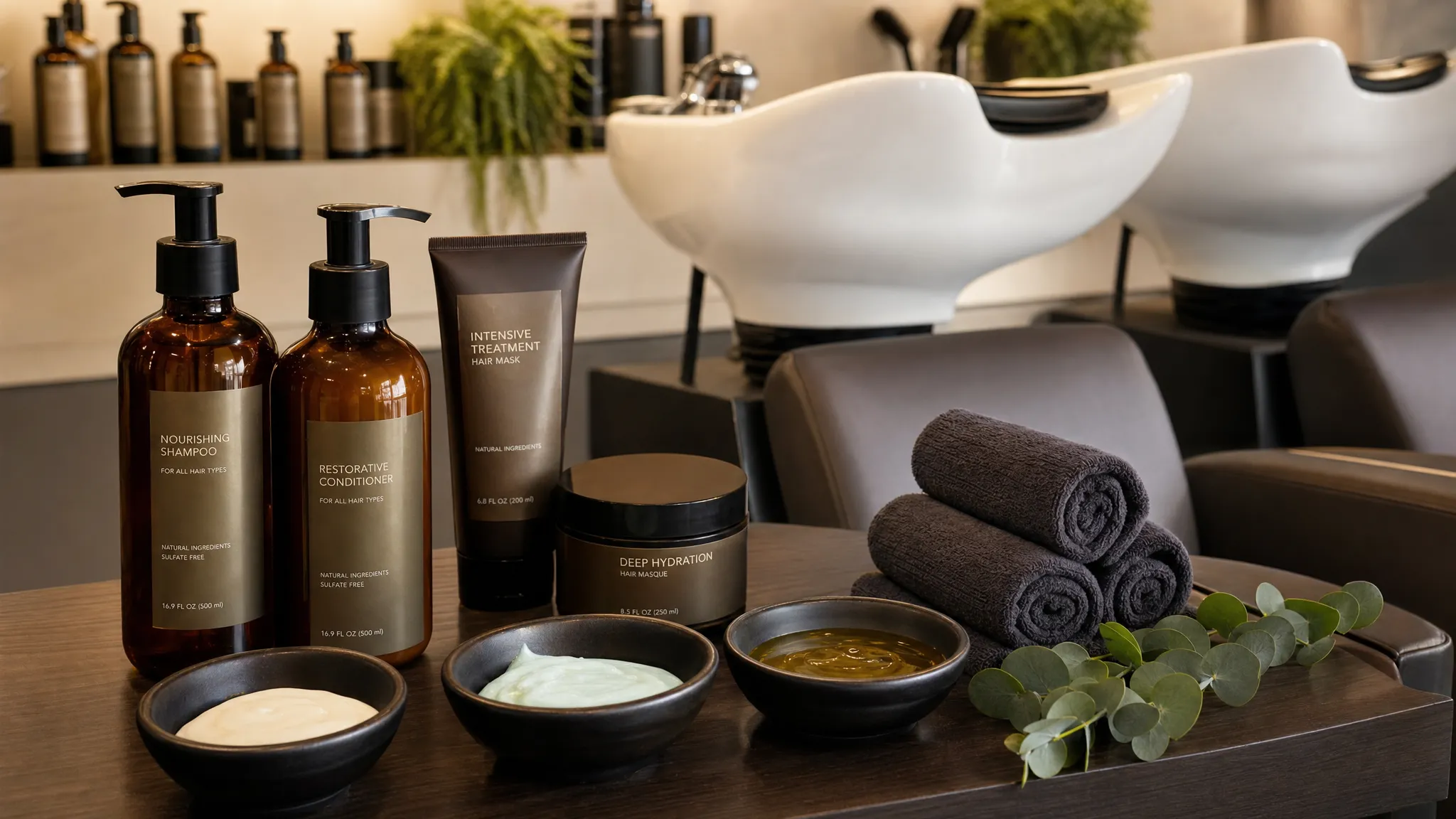
How to choose the right treatment for your hair goal #
The best treatment is the one that matches your current hair condition, not just the one that sounds most luxurious. If you are booking before a major color change, your stylist may recommend strengthening or conditioning before the service. If you are preparing for bridal styling or a special event, the priority may be shine, smoothness, and frizz control. If you are coming out of a protective style, your appointment may need to focus on detangling, scalp refresh, moisture, and trimming.
A simple way to think about it is this: scalp services create a better foundation, while strand services improve the look and feel of the hair you already have.
If your main goal is a complete style change, a treatment may be one part of a larger appointment that includes shaping, color, extensions, or event styling. For help matching your goal to the right type of appointment, the hair services guide for different hair goals offers a practical starting point.
How often should you book hair treatment services? #
There is no perfect schedule for everyone. Some clients benefit from a treatment with every color appointment. Others only need a deeper service seasonally or whenever the hair feels dry, stressed, or hard to style. Clients who use frequent heat, wear extensions, maintain blonde or vivid color, or alternate between protective styles may need more consistent support.
Preventive care is usually easier than corrective care. The same maintenance mindset applies in many areas of life, from scheduling professional roof inspections before damage spreads to booking a scalp and strand treatment before breakage becomes obvious. Small check-ins can help you avoid bigger problems later.
A general salon maintenance rhythm may look like this:
| Client situation | Possible treatment rhythm |
|---|---|
| Healthy hair with minimal heat or color | As needed or seasonally |
| Color-treated hair | Often paired with color maintenance appointments |
| Frequent heat styling or silk press routine | Regular moisture and strength check-ins |
| Extensions or protective styles | Before installation, during maintenance, and after takedown |
| Noticeable breakage or dryness | Customized plan until condition improves |
Your stylist may adjust this based on how your hair responds. If your hair feels heavy, coated, or limp after too many rich products, you may need clarifying. If your ends still feel rough after conditioning, you may need a trim, a different treatment category, or a change in at-home care.
How to make salon results last at home #
A great salon treatment can reset your hair, but your daily routine determines how long the results last. The right products, gentle handling, and consistent protection help preserve softness, shine, and strength between appointments.
Focus on simple habits that support the service you received. Use a cleanser that fits your scalp, condition your mid-lengths and ends, detangle gently, protect hair before heat, and avoid layering too many heavy products on the scalp. If you wrap, bonnet, scarf, or use a satin pillowcase at night, you can also reduce friction that leads to frizz and breakage.
Professional recommendations matter because products are not interchangeable. A moisturizing mask, a clarifying shampoo, a bond-supporting product, and a heat protectant all serve different purposes. If your bathroom shelf is full but your hair still feels unhealthy, a stylist can help simplify the routine. You can also explore how to build a smarter regimen with professional hair care products for healthier hair.
What to expect from a scalp and strand treatment at Kingdom Cute #
At Kingdom Cute Hair Salon in Warner Robins, GA, hair treatment services are part of a larger beauty experience built around consultation, care, and confidence. Whether you are booking a haircut, luxury color, silk press, relaxer service, extensions, protective styling, bridal styling, or a conditioning treatment, your stylist can help you understand what your hair needs before moving forward.
The goal is not to push the most intensive service every time. The goal is to choose the right support for your scalp, your strands, your lifestyle, and the look you want to maintain.
A well-planned treatment can help your hair feel cleaner, softer, smoother, stronger, and easier to style. More importantly, it can help you make better decisions about what your hair actually needs, instead of guessing from product labels or social media trends.
Frequently Asked Questions #
What are hair treatment services? Hair treatment services are professional salon services designed to improve the condition, comfort, appearance, or manageability of the scalp and hair strands. They may include clarifying, scalp care, deep conditioning, protein support, bond support, glossing, or color-supportive care.
Do I need a scalp treatment or a conditioning treatment? If your roots feel oily, itchy, flaky, coated, or uncomfortable, you may need scalp-focused care. If your ends feel dry, rough, tangled, weak, or frizzy, a strand-focused conditioning or strengthening treatment may be more appropriate.
Can a salon treatment repair split ends? A treatment can temporarily improve softness, shine, and manageability, but it cannot permanently fuse split ends back together. If the ends are split or severely damaged, a trim may be needed along with conditioning support.
Are hair treatment services good for color-treated hair? Yes, the right treatment can help color-treated hair feel softer, look shinier, and stay more manageable. Your stylist may recommend moisture, strengthening, gloss, or toner support depending on your color history and current hair condition.
How do I know which treatment to book? Start with a consultation. Explain your hair goals, current concerns, styling routine, and chemical history. Your stylist can recommend the service that best supports both your scalp and strands.
Ready for hair that feels as good as it looks? #
If your hair feels dry, weighed down, weak, dull, or difficult to style, the right salon treatment can make a noticeable difference. Book an appointment with Kingdom Cute Hair Salon in Warner Robins, GA, and enjoy a personalized experience designed to support your scalp, strengthen your strands, and help you love your look between visits.
Tags: hair treatment services