Publish on by Kingdom Cute Luxury Hair Salon
- Hair loss vs. breakage: why the difference matters
- What a salon should do first: a careful consultation
- Salon-safe options that can support thinning or fragile hair
- Gentle scalp cleansing and buildup removal
- Deep conditioning for dryness and brittleness
- Protein or bond-support treatments for weakened strands
- Strategic haircuts that make thin areas look fuller
- Protective styling can help, but only when it is truly protective
- Extensions and wigs: cosmetic support without extra damage
- Color, relaxers, silk press services, and keratin: what to be cautious about
- Hair color
- Relaxers
- Silk press and heat styling
- Keratin and smoothing treatments
- At-home habits your stylist may adjust
- What a salon should not do for hair loss
- When to pause salon services and seek professional medical help
- How Kingdom Cute approaches hair loss concerns safely
- Frequently Asked Questions
- Ready for a safer hair and scalp plan?
Hair loss can feel personal, emotional, and urgent. When you start seeing more hair in the brush, a wider part, thinner edges, or short broken pieces around the crown, it is natural to ask whether a salon can help.
The honest answer is yes, a salon can help in important ways, but safely. A salon should not diagnose medical hair loss, promise regrowth, or replace a dermatologist or trichologist. What a skilled stylist can do is evaluate what is happening on the hair and scalp surface, reduce unnecessary stress on fragile strands, improve the look and feel of thinning areas, and guide you toward professional care when the signs point beyond cosmetic breakage.
For many clients, the first step is understanding the difference between true hair loss and hair breakage. They can look similar in the mirror, but they need different solutions.
Hair loss vs. breakage: why the difference matters #
Hair loss usually means hair is shedding from the root. You may notice full-length strands with a tiny white bulb at one end, more hair coming out during shampooing, or a visible reduction in density over time. Hair loss can be linked to genetics, hormones, stress, nutrition, medications, scalp conditions, postpartum changes, illness, or tight styling.
Breakage means the strand is snapping somewhere along the shaft. Instead of long shed hairs, you may see short pieces, uneven ends, frizz, thinning at the perimeter, or weak areas where the hair has been overprocessed, overheated, or pulled too tightly.
A salon can often help most when thinning is related to breakage, tension, dryness, overprocessing, or styling habits. If the concern is sudden shedding, patchy loss, scalp pain, sores, inflammation, or rapid density changes, the safest move is referral to a licensed medical professional. Kingdom Cute has a related guide on when hair loss needs a trichologist instead of a salon visit if you are unsure where your situation fits.
What a salon should do first: a careful consultation #
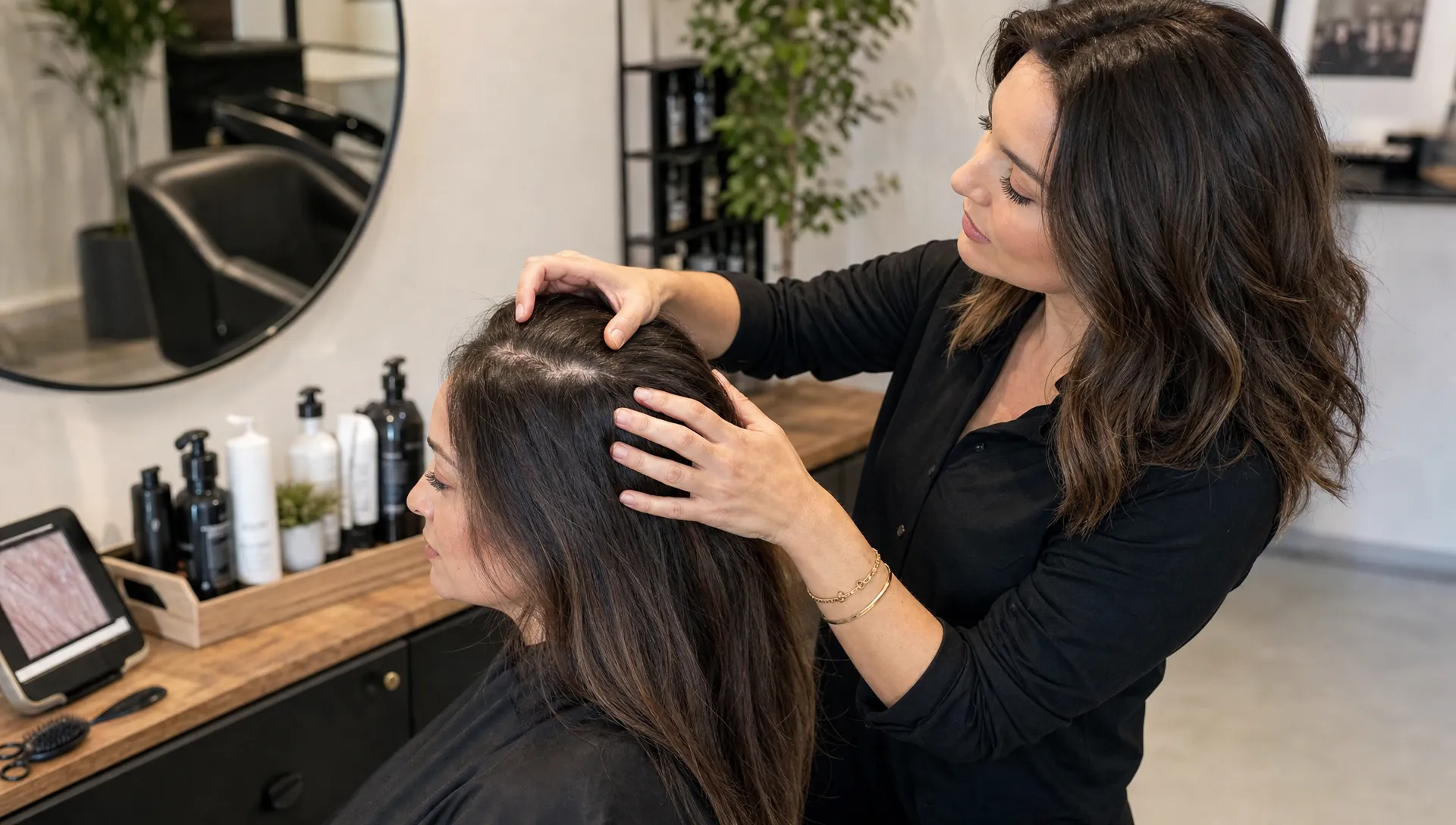
A safe salon visit for hair loss should begin with conversation, not chemicals. Your stylist should ask about what you are noticing, how long it has been happening, your styling routine, your last color or relaxer service, your heat habits, your wash schedule, and whether you are seeing shedding from the root or breakage along the strand.
They may also visually assess your scalp and hair, looking for signs such as buildup, dryness, flaking, tight styling stress, split ends, weak areas, or thinning around the edges. This is not a medical diagnosis. It is a professional beauty assessment that helps determine what salon services are appropriate and what should be avoided.
A good consultation should feel honest. If your hair is too fragile for a color service, silk press, relaxer, extensions, or tight protective style, your stylist should say so. The safest hair treatment for hair loss is not always the most dramatic service. Sometimes the best move is a low-tension style, a trim, hydration, scalp care, and a plan to stop the damage cycle.
Salon-safe options that can support thinning or fragile hair #
A salon cannot force hair to regrow, but it can create a healthier environment for the hair you have and reduce preventable damage. These services can be helpful when chosen carefully.
Gentle scalp cleansing and buildup removal #
Product buildup, oil, sweat, and flakes can make the scalp feel uncomfortable and may interfere with healthy styling. A clarifying or scalp-focused service can help remove residue so the scalp feels cleaner and the hair is easier to manage.
This does not cure hair loss. However, a balanced scalp routine may support better hair care habits and reduce itching or scratching that can worsen breakage. The key is gentleness. Aggressive scraping, harsh exfoliation, or overly drying shampoos can irritate the scalp, especially if it is already sensitive.
For clients who want a broader overview of supportive salon care, Kingdom Cute’s page on hair treatment services that support scalp and strands explains how treatments can be chosen based on both scalp condition and strand needs.
Deep conditioning for dryness and brittleness #
Dry hair breaks more easily. If your thinning is partly caused by snapping strands, deep conditioning can make a visible difference in softness, flexibility, and manageability. Moisture-focused treatments help reduce friction, tangling, and rough handling, which are common contributors to breakage.
A stylist may recommend deep conditioning if your hair feels stiff, rough, dull, or difficult to detangle. For textured hair, color-treated hair, relaxed hair, or heat-styled hair, regular conditioning support can be especially important.
The safest approach is balance. Too much heavy moisture without proper cleansing can leave hair limp or coated. Too much protein can make some hair feel hard or brittle. A professional stylist can help choose the right direction based on how your hair responds.
Protein or bond-support treatments for weakened strands #
If the hair has been lightened, chemically treated, or exposed to frequent heat, the internal structure may be weakened. Protein or bond-support treatments may help improve strength and reduce breakage, depending on the hair’s condition.
These treatments are not the same as medical hair regrowth treatments. They are strand-support services. Their goal is to help existing hair resist snapping, especially during detangling, styling, and daily wear.
A safe stylist will avoid overpromising. If the hair is severely compromised, a treatment may improve feel and manageability, but it cannot fully reverse extreme damage. In those cases, a gradual recovery plan with strategic trims may be better than trying to “save” every inch at once.
Strategic haircuts that make thin areas look fuller #
A precision haircut can make thinning hair look healthier and more intentional. When ends are see-through or broken, holding onto length can make hair appear thinner than it really is. Removing weak ends can instantly improve shape, movement, and fullness.
For some clients, shorter layers, a bob, face-framing, or a fuller perimeter can help create the appearance of density. For others, avoiding too many layers is best because excessive layering may expose thin areas.
This is where personalization matters. A safe salon will not push a trendy cut just because it looks good online. Your stylist should consider your density, texture, curl pattern, lifestyle, styling comfort, and the area where thinning is most noticeable.
| Concern you notice | What a salon may safely do | When to seek medical guidance |
|---|---|---|
| Short broken pieces | Conditioning, protein balance, trims, gentler styling | If breakage continues despite routine changes |
| Thinning edges | Low-tension styling, avoid tight braids or heavy extensions | If edges are painful, shiny, smooth, or not regrowing |
| Sudden heavy shedding | Gentle detangling, cosmetic styling support | Promptly, especially if shedding is rapid or unusual |
| Flaking or itchy scalp | Gentle cleansing, product routine review | If there is redness, sores, swelling, or severe itching |
| See-through ends | Precision cut, strengthening plan | If overall density is decreasing quickly |
Protective styling can help, but only when it is truly protective #
Protective styles are often recommended for fragile hair, but the word “protective” can be misleading. A style only protects your hair if it reduces manipulation without creating tension, dryness, matting, or scalp stress.
Safe protective styling for thinning hair usually means less pulling, less weight, and less time left installed. Tight braids, heavy extensions, high-tension ponytails, and styles that pull at the edges can contribute to traction alopecia, a type of hair loss linked to repeated tension.
A salon can help by choosing parts and placement carefully, avoiding excessive weight, keeping the hair moisturized before installation, and giving you clear maintenance instructions. If your edges are already thinning, your stylist may recommend skipping certain styles until the area is stronger.
Extensions and wigs: cosmetic support without extra damage #
Extensions and wigs can be confidence-boosting options for clients experiencing thinning, but they must be selected and installed safely. The priority should always be protecting your natural hair and scalp.
A salon may recommend lightweight extensions, clip-ins used occasionally, a properly fitted wig, or a style that blends without pulling fragile areas. What should be avoided is adding heavy hair to weak roots, placing tension on thinning edges, or using adhesives in a way that irritates the scalp.
If you are preparing for a themed event, photoshoot, performance, or costume look, it may also be smarter to put the drama into accessories rather than your fragile hair. For example, collectors and cosplayers sometimes use statement props or masks from creative shops like 3DCurioPrints so the finished look feels bold without relying on heavy hairpieces or high-tension styling.
The safest question to ask before any extension service is simple: “Will this put stress on the areas where my hair is already thin?” If the answer is yes, it is worth choosing a gentler option.
Color, relaxers, silk press services, and keratin: what to be cautious about #
When hair is thinning or shedding, chemical and heat services require extra care. That does not mean every service is automatically off-limits, but it does mean your stylist should evaluate timing, hair strength, and risk.
Hair color #
Color can make hair look fuller when done strategically, especially with soft dimension or glossing. However, lightening fragile hair can increase breakage if the strands are already weak. A safe stylist may suggest low-maintenance color, demi-permanent gloss, subtle dimension, or waiting until the hair is stronger.
Relaxers #
Relaxers change the structure of the hair and can be damaging if applied to compromised strands or an irritated scalp. If you are experiencing thinning, your stylist should look closely at your hair’s strength, scalp condition, and previous chemical history before proceeding.
Silk press and heat styling #
A silk press can look beautiful, but excessive heat can worsen breakage, especially on fine, color-treated, or already fragile hair. Safe heat styling means proper cleansing, conditioning, heat protection, controlled temperature, and realistic frequency.
Keratin and smoothing treatments #
Smoothing treatments can reduce frizz and make styling easier, but they are not a hair loss treatment. They may be helpful for some clients who experience breakage from constant heat styling, but they may not be right for every scalp or hair condition. If smoothing is part of your plan, it should be chosen based on your hair’s current strength and long-term goals.
At-home habits your stylist may adjust #
A salon visit is only one part of the hair loss conversation. What happens between appointments matters just as much. Your stylist may recommend changing small habits that create repeated stress on the hair.
Common safe adjustments include using a gentler detangling method, sleeping with a satin bonnet or pillowcase, reducing tight ponytails, spacing out heat styling, shampooing often enough to keep the scalp clean, and using products that match your texture and condition.
Your stylist may also suggest replacing products that are too heavy, drying, or irritating. The goal is not to fill your bathroom with unnecessary products. It is to create a simple routine that supports your scalp and reduces breakage. If you want to understand why stylists suggest certain formulas, Kingdom Cute’s guide to hair salon products your stylist may recommend explains the role of shampoos, conditioners, leave-ins, and heat protectants.
What a salon should not do for hair loss #
Safe hair care includes knowing the limits of salon care. A salon should not diagnose alopecia, prescribe medication, treat infections, or promise that a product or service will regrow hair. Be cautious with any service provider who guarantees dramatic regrowth from a salon treatment alone.
A salon should also avoid services that knowingly increase risk, including tight installations on thinning edges, overlapping chemicals on weak hair, high-heat styling on damaged strands, or applying products to a scalp that is inflamed, broken, or painful.
Here is a simple way to think about it: a salon can support hair and scalp wellness cosmetically, improve manageability, reduce breakage, and help you look your best. A medical professional should evaluate internal, hormonal, autoimmune, infectious, or unexplained causes of hair loss.
When to pause salon services and seek professional medical help #
If your hair loss is sudden, patchy, painful, or accompanied by scalp changes, do not wait for multiple salon treatments to “see if it gets better.” Early evaluation matters, especially with conditions that can scar the follicle or progress quickly.
Consider seeing a dermatologist, trichologist, or healthcare provider if you notice any of the following:
- Sudden shedding that feels unusual for you
- Bald patches or circular areas of loss
- Burning, tenderness, sores, or swelling on the scalp
- Heavy flaking with redness or irritation
- Thinning after a medication change, illness, pregnancy, or major stress event
- Edges that continue to recede despite stopping tight styles
- Hair loss along with fatigue, weight changes, or other health symptoms
A responsible stylist will not be offended if you seek medical guidance. In fact, the best salon experiences often happen when beauty professionals and health professionals each stay in their lane and support the client from both sides.
How Kingdom Cute approaches hair loss concerns safely #
At Kingdom Cute Hair Salon in Warner Robins, GA, hair concerns are approached with personalization and care. For clients noticing thinning, breakage, dryness, or scalp discomfort, the goal is to choose services that respect the current condition of the hair rather than forcing it into a look it cannot safely handle.
That may mean a strengthening treatment before color, a lower-tension style instead of a tight installation, a precision cut to remove weak ends, or a scalp and conditioning service to improve comfort and manageability. It may also mean recommending that you speak with a trichologist or dermatologist before moving forward with certain services.
Luxury hair care should still be honest hair care. The right plan protects your confidence and your long-term hair health.
Frequently Asked Questions #
Can a salon stop hair loss? A salon cannot medically stop hair loss or diagnose its cause. A stylist can help reduce breakage, tension, dryness, and styling stress, which may improve the appearance and condition of thinning hair.
What is the best salon hair treatment for hair loss? The best salon treatment depends on whether you are shedding from the root or breaking along the strand. Scalp cleansing, deep conditioning, protein balance, bond support, trims, and low-tension styling may help fragile hair, but true hair loss should be medically evaluated.
Can tight hairstyles cause hair loss? Yes, repeated tension from tight braids, ponytails, buns, weaves, or extensions can contribute to traction-related hair loss, especially around the edges. A salon can help choose lower-tension alternatives.
Should I color my hair if it is thinning? Maybe, but only after a professional consultation. Some color services may be too stressful for fragile hair, while softer options like glossing or subtle dimension may be safer depending on your hair’s condition.
When should I see a dermatologist instead of booking a salon treatment? Seek medical guidance if hair loss is sudden, patchy, painful, associated with scalp sores or inflammation, or happening alongside other health changes. A salon can support your style, but medical causes need medical care.
Ready for a safer hair and scalp plan? #
If you are noticing thinning, breakage, shedding, or fragile strands, start with a professional consultation instead of guessing. Kingdom Cute offers personalized salon care in Warner Robins, GA, with services designed to support your style, comfort, and confidence.
Book your appointment with Kingdom Cute and let your stylist help you choose the safest next step for your hair.