Publish on by Kingdom Cute Luxury Hair Salon
- What Does a Trichologist Do?
- When a Salon Visit Is the Right First Step
- Signs You May Need a Trichologist Instead
- Salon, Trichologist, or Dermatologist: How to Choose
- Red Flags That Should Not Wait for a Salon Appointment
- How a Stylist Can Support You Even If You Need a Trichologist
- What to Bring to a Trichologist Appointment
- What Not to Do When You Notice Hair Loss
- How Kingdom Cute Fits Into the Hair Loss Conversation
- Frequently Asked Questions
- Know When to Book the Salon and When to Seek a Specialist
Hair loss can be emotionally heavy because it feels personal, visible, and hard to explain. One week your hair looks full, and the next you are noticing extra strands in the shower, a widening part, or thinner edges around your hairline. The first instinct may be to book a salon appointment, and sometimes that is exactly the right move. Other times, hair loss needs a trichologist instead of a standard salon visit.
The key is knowing what kind of problem you are dealing with. A salon can help with breakage, styling stress, dryness, color-related damage, extension maintenance, and scalp care services. A trichologist focuses more specifically on hair and scalp concerns, including shedding patterns, thinning, scalp irritation, and non-surgical hair loss support. In some cases, a dermatologist or medical doctor is the right professional, especially when hair loss may be connected to illness, medication, hormones, infection, or inflammation.
Understanding the difference helps you protect your hair, avoid wasting money on the wrong service, and get support sooner.
What Does a Trichologist Do? #
A trichologist is a specialist who studies the hair and scalp. Trichologists are often trained to evaluate shedding, thinning, scalp buildup, flaking, inflammation, hair shaft changes, and lifestyle factors that may affect hair growth. They may recommend scalp care routines, hair health strategies, product adjustments, nutrition conversations, or referrals to medical providers when needed.
However, a trichologist is not always a medical doctor. In the United States, trichology is not regulated the same way dermatology is. That means a trichologist can be helpful for assessment and guidance, but they should not replace a physician when symptoms suggest a medical condition.
A good trichologist will know when to say, “This needs medical evaluation.” That is especially important if hair loss appears suddenly, comes with pain or scaling, or follows a major health change.
When a Salon Visit Is the Right First Step #
A salon appointment makes sense when the issue looks more like hair damage than true hair loss. Many people say “my hair is falling out” when the real issue is breakage. Breakage happens along the strand, often from heat, chemical processing, friction, tight styles, lack of moisture, or over-manipulation. Shedding, on the other hand, means the hair is coming out from the root.
Your stylist can help identify visible signs such as split ends, weak mid-lengths, over-processed color, dry curls, thinning caused by excessive tension, or damage from improper extension use. A thorough stylist will also ask about recent services, home care, product buildup, heat habits, protective styling, and your maintenance routine.
If your hair feels brittle, snaps easily, tangles more than usual, or looks thinner only at the ends, start with a salon consultation. Kingdom Cute’s approach to a detailed salon consultation can help clarify whether your concern is cosmetic damage, scalp imbalance, or something that deserves a specialist referral.
Salon support is also useful when your scalp feels dry or your strands need strengthening. Treatments such as conditioning, clarifying, scalp care, and bond-support services can improve how the hair looks and behaves. For concerns rooted in dryness, buildup, and strand weakness, hair treatment services that support scalp and strands may be a practical place to begin.
Signs You May Need a Trichologist Instead #
A trichologist is worth considering when the concern goes beyond styling, dryness, or visible strand damage. According to the American Academy of Dermatology, shedding 50 to 100 hairs a day can be normal. But if your shedding suddenly increases, lasts for months, or creates visible thinning, it is time to take the concern seriously.
Common signs that may point toward a trichologist include:
- You see more hair than usual on your pillow, in the shower, or on your brush for several weeks.
- Your part line looks wider, your ponytail feels smaller, or your scalp is easier to see.
- Hair is thinning at the crown, temples, edges, or across the whole scalp.
- You have itchy, tender, flaky, oily, red, or irritated scalp symptoms along with shedding.
- You notice round or patchy bald spots.
- Hair loss began after illness, childbirth, surgery, high stress, a major diet change, or a new medication.
- You wear tight braids, ponytails, wigs, loc styles, extensions, or protective styles and see thinning around the hairline.
A trichologist can help you document the pattern, review possible triggers, and decide whether the issue appears related to tension, scalp environment, shedding cycles, or possible medical causes. That clarity can prevent you from booking repeated styling services when your hair needs deeper evaluation.
Salon, Trichologist, or Dermatologist: How to Choose #
It is not always obvious which professional to call first. This table can help you decide based on what you are noticing.
| What you notice | Best first step | Why |
|---|---|---|
| Split ends, dryness, dullness, frizz, or breakage | Salon consultation | A stylist can assess damage, trim weak ends, and recommend conditioning or strengthening services. |
| Hair snapping after color, heat, relaxer, silk press, or extensions | Salon consultation | The issue may be strand damage or mechanical stress rather than follicle-related hair loss. |
| Sudden heavy shedding from the root | Trichologist or dermatologist | Increased shedding may be linked to stress, illness, hormones, nutrition, or a hair cycle shift. |
| Patchy bald spots | Dermatologist | Patchy loss may involve autoimmune, inflammatory, or infectious conditions that need medical diagnosis. |
| Scalp pain, sores, redness, scaling, or burning | Dermatologist | These symptoms may require medical treatment, testing, or prescription care. |
| Gradual thinning at the crown or widening part | Trichologist or dermatologist | Patterned thinning can have genetic, hormonal, or medical factors. |
| Thinning edges from tight styles | Salon plus trichologist if persistent | A stylist can reduce tension and protect the hair, while a trichologist can assess the pattern and recovery plan. |
If you are unsure, a trusted stylist can be a helpful first observer. But if the scalp is inflamed, hair loss is sudden, or thinning is progressing, do not rely on cosmetic services alone.
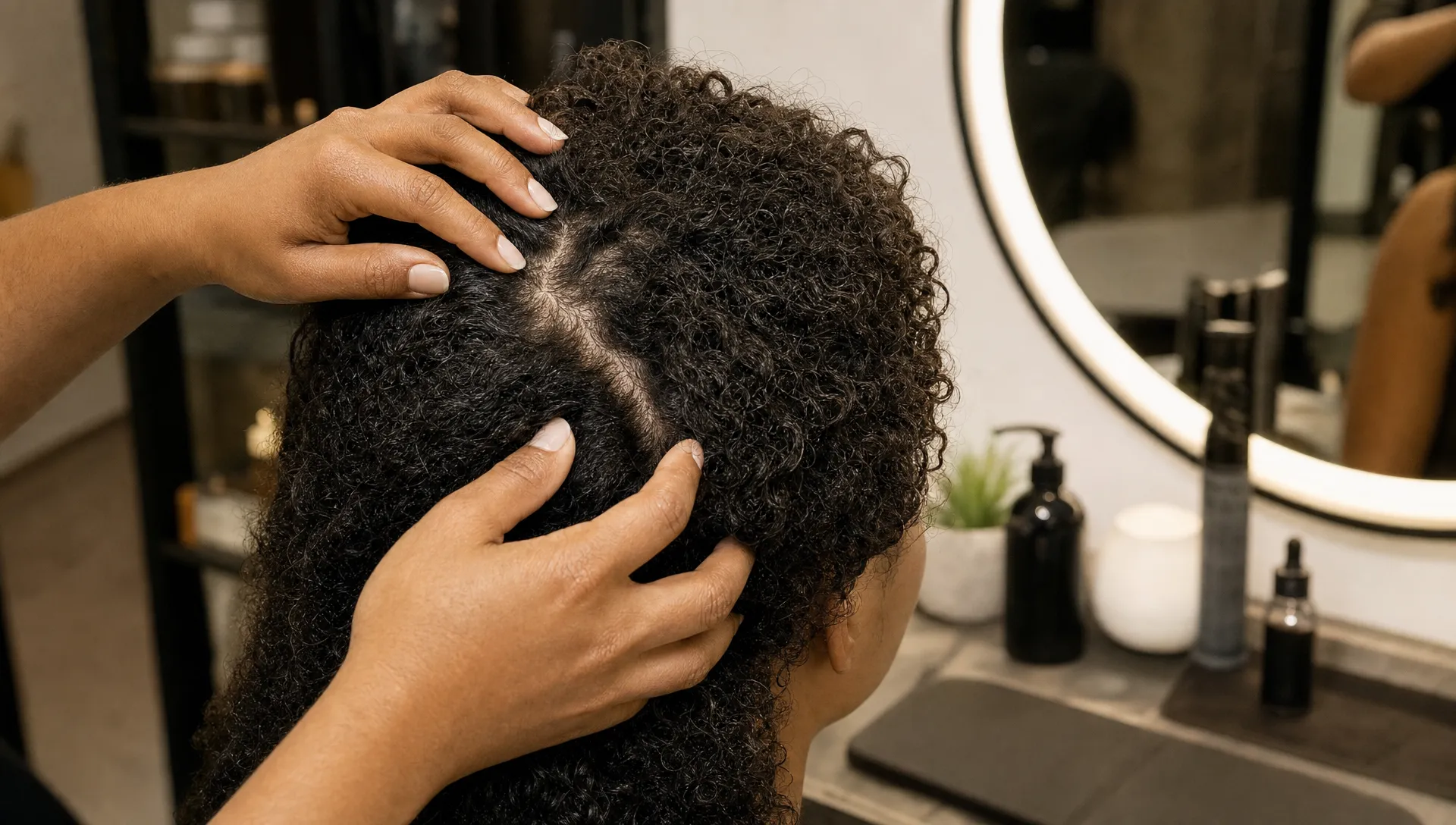
Red Flags That Should Not Wait for a Salon Appointment #
Some hair loss signs need medical attention sooner rather than later. A salon can make your hair look better, but it cannot diagnose disease, prescribe medication, order blood work, or perform a scalp biopsy.
Seek a dermatologist or healthcare provider promptly if you experience patchy bald spots, scalp sores, bleeding, burning, thick scaling, pus, sudden dramatic shedding, or hair loss with fatigue, weight changes, irregular periods, fever, or other body-wide symptoms. You should also seek medical advice if hair loss begins soon after starting a new medication or after a significant medical event.
The Cleveland Clinic notes that hair loss can have many causes, including genetics, stress, hormonal changes, medical conditions, and medications. That is why the right professional matters. Treating the hair cosmetically without addressing the cause may delay progress.
How a Stylist Can Support You Even If You Need a Trichologist #
Needing a trichologist does not mean your salon is no longer useful. In many cases, your stylist becomes part of the support team. A stylist can help you reduce tension, avoid breakage, choose gentler styles, maintain confidence, and protect the hair you have while you investigate the cause.
At a salon, the focus should be on minimizing stress to the strands and scalp. That may mean adjusting extension placement, choosing lower-tension protective styles, spacing chemical services appropriately, avoiding excessive heat, trimming damaged ends, or using treatments that support moisture and elasticity.
For example, if your edges are thinning from tight styling, the immediate salon goal is not simply to cover the area. The priority is to stop repeating the tension pattern. If your hair is shedding heavily from the root, your stylist may recommend postponing aggressive color, relaxer touch-ups, or high-tension installations until you have more information.
A professional salon visit can also help you tell the difference between breakage and shedding. Broken strands are usually shorter and may not have a white bulb at the end. Shed hairs often come from the root and are full length. This simple distinction can change the entire care plan.
What to Bring to a Trichologist Appointment #
If you decide to see a trichologist, preparation makes the appointment more useful. Hair loss is often a timeline problem, so the specialist needs context.
Bring details about when the shedding started, how it has changed, recent salon services, medications, supplements, illness, stress, childbirth, diet changes, protective styles, and your current product routine. Photos are also helpful, especially if they show your part, crown, edges, and overall density over time.
If you are traveling or living away from home for a season, do not ignore concerning hair loss until you return. Look for a qualified local trichologist or dermatologist, keep your product list handy, and plan transportation if appointments are spread across a city or region. For example, someone arranging care while abroad may find that reliable car hire in South Africa makes it easier to attend consultations, lab visits, or follow-up appointments without added stress.
What Not to Do When You Notice Hair Loss #
Hair loss can make people rush into fixes that sound promising but may not match the cause. Before buying every growth oil, supplement, or viral scalp treatment, pause and observe what is actually happening.
Avoid tight styles that pull on the hairline, excessive brushing, harsh scalp scrubs, overlapping chemical services, and heavy oils on an irritated scalp. Do not assume that all thinning is due to “clogged follicles” or lack of moisture. Also avoid starting multiple new products at once, since that makes it harder to know what helps or irritates your scalp.
If you suspect shedding from the root, take photos once a month in consistent lighting. Track major changes in health, stress, diet, medications, and hair care. This information can help a trichologist, dermatologist, or stylist spot patterns more accurately.
How Kingdom Cute Fits Into the Hair Loss Conversation #
Kingdom Cute Hair Salon in Warner Robins, GA, offers luxury hair and beauty services including precision haircuts, coloring, styling, silk press and relaxer treatments, extensions, protective styles, bridal styling, scalp and conditioning treatments, and personalized consultations. For clients worried about thinning, shedding, or breakage, the salon experience can be a supportive starting point.
The most responsible salon care begins with honesty. If your concern appears to be damaged strands, buildup, dryness, heat stress, or tension-related styling habits, a stylist can help build a plan that protects your hair and supports a healthier look. If your symptoms suggest a deeper scalp or medical issue, the right recommendation may be to see a trichologist or dermatologist before pursuing certain services.
That is not a setback. It is a smarter path to better hair care.
Frequently Asked Questions #
Can a salon fix hair loss? A salon can help with breakage, tension from styling, scalp buildup, dryness, and the appearance of thinning. However, true hair loss from the follicle may need a trichologist, dermatologist, or healthcare provider.
What is the difference between hair shedding and hair breakage? Shedding usually means full-length hairs are coming out from the root, often with a small bulb at one end. Breakage means the strand snaps somewhere along its length, often because of damage, dryness, heat, chemicals, or tension.
Should I see a trichologist or dermatologist for hair loss? A trichologist can be helpful for hair and scalp assessment, shedding patterns, and care guidance. A dermatologist is best when hair loss is sudden, patchy, painful, inflamed, or possibly connected to a medical condition.
When should I worry about hair loss? You should take hair loss seriously if shedding is sudden, lasts longer than a few weeks, creates visible thinning, appears in patches, or comes with scalp pain, redness, sores, scaling, or other health symptoms.
Can protective styles cause hair loss? Protective styles can support length retention when done correctly, but styles that are too tight or worn too long can contribute to traction-related thinning, especially around the edges and temples.
Know When to Book the Salon and When to Seek a Specialist #
If your hair feels dry, weak, over-processed, or stressed from styling, a professional salon consultation can help you rebuild a healthier routine. If you are seeing sudden shedding, patchy loss, scalp irritation, or progressive thinning, a trichologist or dermatologist may be the better next step.
At Kingdom Cute, the goal is beautiful hair that is cared for with intention. Book a personalized consultation when you need expert eyes on your cut, color, styling, treatments, or hair-care routine, and do not hesitate to seek specialist support when your scalp or shedding pattern calls for it.
Tags: trichologist