Publish on by Kingdom Cute Luxury Hair Salon
- What thin hair really needs from layers
- The golden rule: protect the weight line
- The best layers for thin hair
- Invisible layers
- Soft face-framing layers
- Long layers with a full perimeter
- A layered lob with blunt ends
- A softly layered bob
- Layers that can make thin hair look thinner
- How length affects the best layering choice
- Styling tips that help layers look fuller
- When thin hair is actually shedding or breaking
- What to ask for at your salon appointment
- Frequently Asked Questions
- Ready for layers that keep your hair looking full?
Thin hair can absolutely wear layers, but the cut has to be designed with fullness in mind. The wrong layers can make the ends look wispy. The right layers can make the hair swing, lift and frame the face while keeping the overall shape looking dense.
The goal is not to remove as much weight as possible. Thin hair usually needs a strong foundation first, then carefully placed movement. That might mean invisible internal layers, soft face-framing pieces or a blunt perimeter with light layering through the crown. When those choices are customized to your density, texture and styling habits, layered hair can look fuller rather than flatter.
What thin hair really needs from layers #
Before choosing a cut, it helps to separate a few terms that often get mixed together.
Fine hair describes the diameter of each strand. Thin hair describes the amount of hair on the scalp. You can have fine hair that is dense, coarse hair that is sparse or hair that is both fine and low-density. Each situation needs a different layering strategy.
For thin hair, the most important visual area is often the perimeter, meaning the bottom outline of the haircut. If that edge becomes too broken up, the entire style can look smaller. This is why stylists often preserve a blunt or softly rounded baseline, then add movement in controlled areas instead of cutting deep layers everywhere.
A good haircut for thin hair should do three things:
- Keep the ends looking solid
- Add lift where the hair naturally collapses
- Frame the face without stealing too much density from the sides
That is also why a consultation matters. At Kingdom Cute in Warner Robins, GA, a stylist can look at how your hair behaves when it is dry, how much density you have near the hairline and crown and how much daily styling you realistically want to do before recommending a layered shape.
The golden rule: protect the weight line #
The best layers for thin hair usually start with a strong weight line. This is the visual line that makes the haircut look full at the bottom. On a bob, it may sit at the jaw or collarbone. On longer hair, it may be the U-shape or soft curve at the ends.
When too many layers are cut into that weight line, thin hair can look transparent. The ends may separate into strings, especially after heat styling or a humid day. A better approach is to keep the outer shape compact and use layering inside the cut to create airiness.
This is why the most flattering layered cuts for thin hair often look simple at first glance. They are not flat, but they are not heavily shredded either. The movement is subtle and intentional.
If you are exploring layered styles more broadly, Kingdom Cute has a helpful guide to layered haircuts that add movement without fuss that pairs well with the thin-hair advice below.
The best layers for thin hair #
Invisible layers #
Invisible layers, sometimes called internal layers, are one of the best options for thin hair because they add movement without making the surface look choppy. Instead of obvious stair-step layers, the stylist removes small amounts of weight under the top section so the hair can move more freely.
This works especially well on medium to long hair that feels heavy near the bottom but flat at the crown. The outer shape still reads as full, while the inside of the cut has enough softness to prevent the hair from hanging like a curtain.
Invisible layers are also a smart choice if you like a polished finish. They work with blowouts, loose waves and smooth styles because they do not create too much separation at the ends.
Soft face-framing layers #
Face-framing layers can brighten the haircut and draw attention to your cheekbones, jawline or eyes. For thin hair, the key is restraint. The shortest pieces should be chosen carefully so they do not remove too much density from the front.
A soft frame that begins around the chin or collarbone is often more flattering than layers that start at the cheekbones, especially if your front hairline is delicate. For shorter cuts, the face frame may start higher, but it should still blend into a fuller side section.
These layers are a good choice if you wear your hair down often. They add shape around the face even when the rest of the cut stays clean and full.
Long layers with a full perimeter #
Long layers can work beautifully for thin hair, as long as the bottom edge stays strong. The best version usually includes a soft U-shaped or straight-across perimeter with long, shallow layers that begin below the chin or collarbone.
This approach gives long hair a little swing without making the last few inches look sparse. It is especially useful if your hair is thin but you are not ready to lose length. The cut can remove just enough bulk to create flow, while keeping the overall silhouette intact.
The biggest mistake with long layers is starting them too high. If short layers begin near the crown and the hair is already low-density, the ends can look disconnected from the top. A stylist may recommend fewer layers, longer layers or a small trim to strengthen the shape first.
A layered lob with blunt ends #
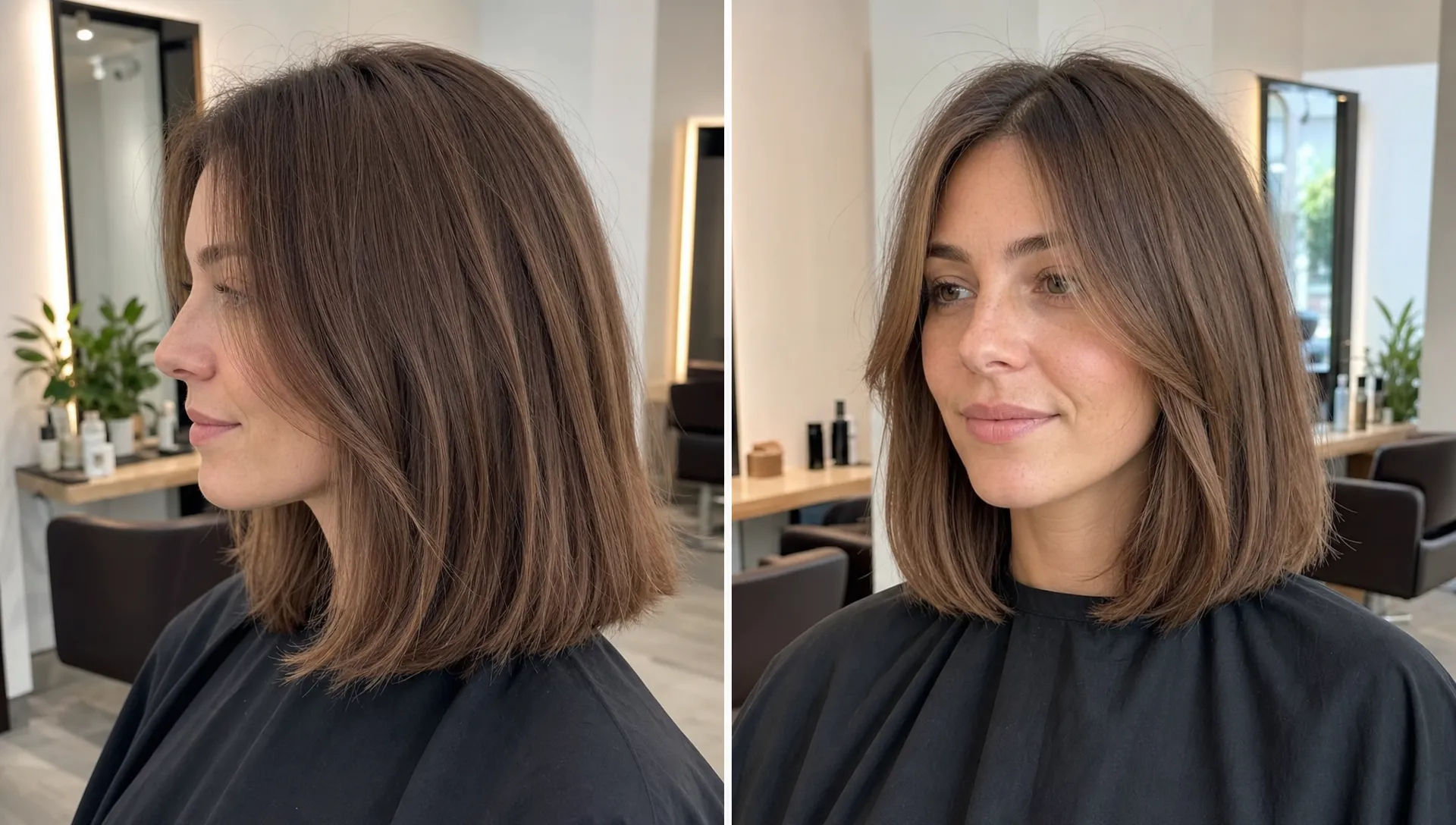
A lob, or long bob, is one of the most reliable cuts for thin hair because the length naturally makes the ends look fuller. When the perimeter sits around the collarbone, the hair has enough length to style but not so much that it gets weighed down.
Adding light layers to a lob can prevent the shape from feeling too heavy or triangular. The best version usually keeps the bottom blunt, then adds soft internal movement or a few face-framing pieces. This gives the hair a fuller outline with enough bend for waves or a smooth blowout.
A layered lob is also practical because it grows out gracefully. If you want volume but do not want a dramatic short haircut, this is often a strong middle ground.
A softly layered bob #
For many people with thin hair, a bob creates instant fullness because it concentrates the hair into one strong shape. A classic blunt bob can look very dense, but adding subtle layers can make it feel lighter and more wearable.
The key is to avoid over-texturizing the ends. A softly layered bob may have gentle beveling, slight graduation or small internal layers that help the cut curve under or flip softly. It should not look heavily razored unless your stylist confirms your density can support it.
This option is especially flattering for hair that falls flat when it gets too long. By bringing the length up to the chin, jaw or shoulders, the hair can look thicker with less effort.
| Layer type | Best for | Fullness tip | What to avoid |
|---|---|---|---|
| Invisible layers | Medium to long thin hair | Adds hidden movement while preserving the surface | Too much weight removal near the ends |
| Soft face-framing layers | Hair that needs shape around the face | Start the frame low enough to protect front density | Very short pieces if the hairline is sparse |
| Long layers | Thin hair with length goals | Keep the perimeter blunt or softly rounded | High layers that disconnect from thin ends |
| Layered lob | Thin hair that needs lift and structure | Combine light layers with a strong collarbone-length edge | Excessive thinning shears through the bottom |
| Soft layered bob | Thin hair that collapses when long | Use subtle beveling or internal shape | Heavy razoring on already delicate ends |
Layers that can make thin hair look thinner #
Not every trendy layered cut is thin-hair friendly. Some cuts look beautiful on dense hair because there is enough volume to support lots of separation. On thin hair, the same technique may expose gaps.
Heavy shags, deep razored layers and dramatic V-shaped cuts can be risky if your ends are already light. The same is true for too many short crown layers. A little lift at the crown can help, but layers that are too short may stick up, collapse or make the lower lengths look even thinner by comparison.
Thinning shears also need caution. They can soften a shape beautifully in the right hands, but overuse on thin hair can remove density that the cut needs. If your goal is fullness, ask your stylist how they plan to create movement while keeping the perimeter strong.
How length affects the best layering choice #
Thin hair often looks fuller at shorter to medium lengths because there is less weight pulling it down. That does not mean long hair is off-limits, but it does mean the cut needs more structure.
For short thin hair, a bob, bixie or softly layered crop can create the appearance of density because the shape is compact. Layers should be precise, not overly piecey. A slight graduation at the nape or gentle texture through the top can add lift without making the cut look sparse.
For medium thin hair, the lob is a standout. It gives enough length for waves, ponytails and event styling, while keeping the bottom edge strong. Face-framing pieces and internal layers are usually more flattering than dramatic exterior layers.
For long thin hair, the priority is healthy-looking ends. Long layers should be minimal, smooth and blended. If the last few inches are see-through, a trim may create more visual fullness than keeping extra length. This can feel counterintuitive, but hair often looks thicker when the weakest ends are removed.
Styling tips that help layers look fuller #
A great cut does most of the work, but styling choices can make thin hair look even more polished. Lightweight volume is the goal. Heavy oils, dense creams and too much serum can flatten thin hair quickly, especially near the roots.
Start with a volumizing product at the root or mid-lengths, depending on your texture. Blow-dry with lift at the crown, then use a round brush, hot brush or rollers to set movement while the hair cools. If you wave your hair, leave the ends slightly straighter to keep the perimeter looking thicker.
Dry shampoo can help extend volume between washes, but buildup can weigh hair down over time. Clarifying occasionally and conditioning the right areas can keep layers moving without making the hair feel coated.
Color can also influence how full thin hair appears. Subtle dimension can make layers look more textured, while a single flat color may make the shape look denser in some cases. If you color your hair, your stylist can recommend an approach that supports both your haircut and hair health.
When thin hair is actually shedding or breaking #
Sometimes the issue is not just naturally thin hair. If your hair has become noticeably thinner, if your part has widened quickly or if you are seeing unusual shedding, a haircut alone may not address the cause. The American Academy of Dermatology recommends seeing a board-certified dermatologist for hair loss diagnosis and treatment options.
A salon can still support the look and condition of your hair. Gentle trims, conditioning treatments, scalp care and low-tension styling can help protect fragile strands. Kingdom Cute also explains the difference between cosmetic support and medical concerns in this guide to what a salon can safely do for hair loss.
If your thinness comes from breakage, your stylist may recommend strengthening treatments, fewer high-tension styles or a color plan that gives your hair time to recover. If your thinness comes from shedding, the salon plan should be paired with appropriate medical guidance.
What to ask for at your salon appointment #
The best way to get layers for thin hair is to describe the result you want, not just the technique. Instead of asking for lots of layers, say that you want movement while keeping your ends full. Tell your stylist how you normally style your hair, how often you wash it and whether you need the cut to work air-dried.
Helpful phrases include:
- I want soft movement but not wispy ends
- Please keep the perimeter looking full
- I like face-framing, but I do not want to lose too much density in front
- I want layers that grow out smoothly
- My hair gets flat at the crown, but the ends already feel thin
Photos can help, but choose examples with hair density similar to yours. A cut photographed on very thick hair may need to be adapted so it works on thinner hair.
If you love the idea of fuller hair for a specific event or everyday styling, extensions may also be worth discussing. The most natural result comes from careful color matching, placement and blending, which Kingdom Cute covers in this guide to luxury hair extensions that look naturally full.
Frequently Asked Questions #
Are layers good for thin hair? Yes, layers can be good for thin hair when they are subtle and placed strategically. The goal is to add movement without removing too much density from the ends.
What layers make thin hair look thicker? Invisible layers, soft face-framing layers, long blended layers and bobs or lobs with blunt ends often make thin hair look fuller. A strong perimeter is usually the most important detail.
Should thin hair be cut blunt or layered? Many thin-hair cuts benefit from both. A blunt baseline creates fullness, while light internal or face-framing layers add shape and movement.
Do short layers add volume to thin hair? Short layers can add crown lift, but they can also make the ends look thinner if they are too aggressive. For thin hair, short layers should be used carefully and blended well.
What haircut is best for thin hair that falls flat? A blunt bob, softly layered bob or layered lob can help hair look fuller because the shorter length reduces weight and strengthens the outline.
How often should thin layered hair be trimmed? Many thin layered cuts look best with regular trims every 6 to 10 weeks, depending on length, color services and how quickly the ends lose shape.
Ready for layers that keep your hair looking full? #
Thin hair does not have to mean flat hair, and layers do not have to mean wispy ends. The right haircut can give your hair movement, shape and polish while protecting the fullness you already have.
If you are in or near Warner Robins, GA, schedule a personalized consultation with Kingdom Cute Hair Salon. Your stylist can assess your density, face shape, texture and styling routine, then design layers that help you love your look between visits.
Tags: layers for thin hair