Publish on by Kingdom Cute Luxury Hair Salon
- First, Fine Hair Is Not the Same as Thin Hair
- The Consultation Should Happen Before the Shampoo
- What a Hairdresser for Fine Hair Should Assess Before Cutting
- Shape Comes First: Perimeter, Length and Weight
- Layers, Bangs and Texture Need Restraint
- Existing Color, Heat Styling and Chemical Services Change the Plan
- Styling Habits Matter as Much as the Cut
- A Practical Cutting Plan by Goal
- Fine Hair Mistakes a Stylist Should Avoid
- What Clients Can Do Before the Appointment
- Frequently Asked Questions
- Ready for a Fine Haircut That Feels Fuller?
Fine hair is not difficult hair. It simply needs a haircut plan that respects how small changes affect fullness, movement and shape. One extra layer, a heavy texturizing pass or a fringe section taken too deep can make fine hair look thinner than it really is. A thoughtful cut can do the opposite, creating the appearance of density while keeping the hair soft and wearable.
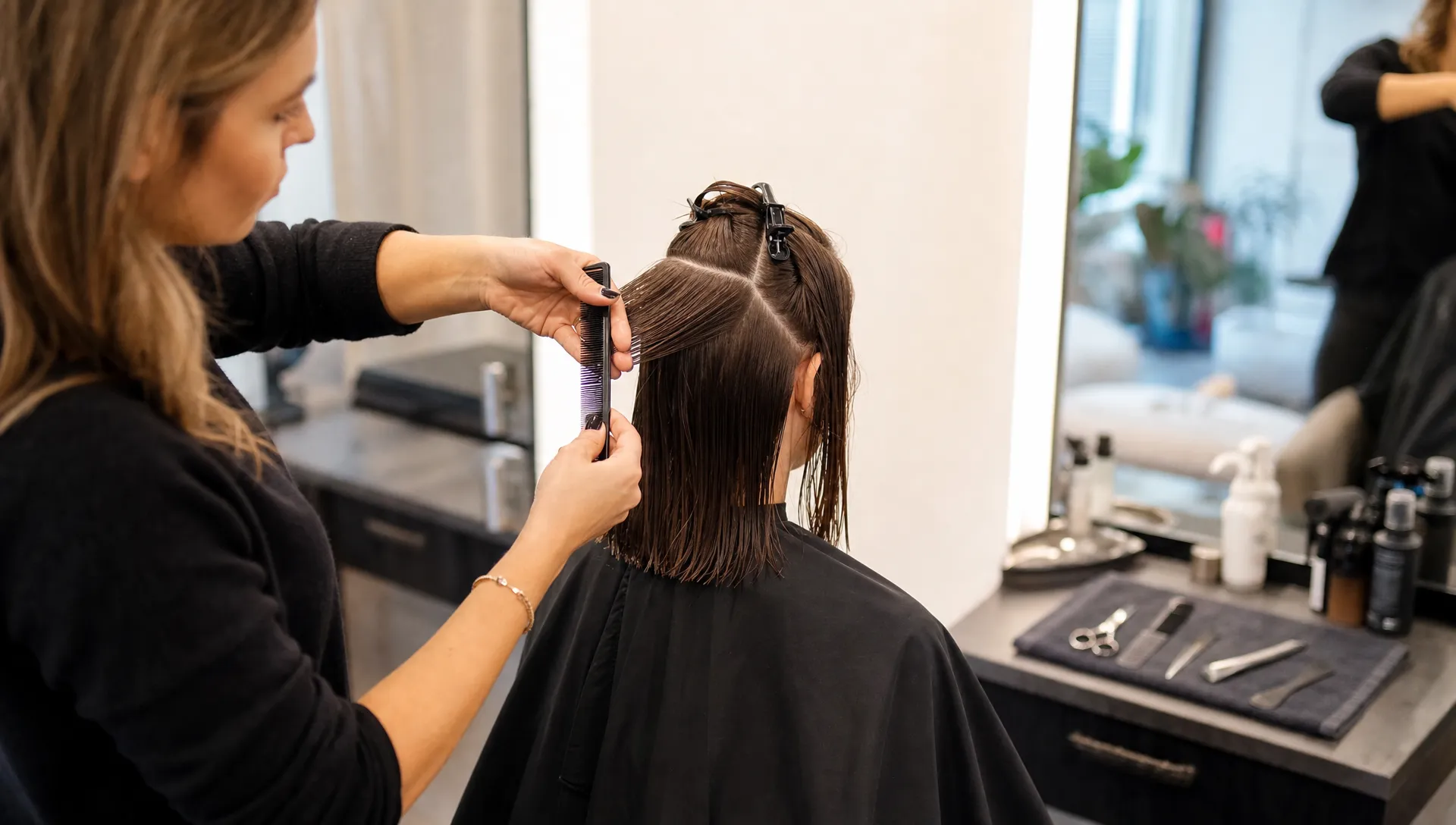
That is why a hairdresser for fine hair should slow down before cutting. The best result starts with assessing the strand size, density, scalp visibility, growth patterns, styling habits and long-term hair goals. The scissors matter, but the decisions made before the first snip matter more.
First, Fine Hair Is Not the Same as Thin Hair #
Fine hair describes the diameter of each individual strand. Thin hair describes how many strands are growing on the scalp. A client can have fine hair with high density, meaning many small strands, or fine hair with low density, meaning fewer small strands. These two heads of hair should not be cut the same way.
This distinction shapes every cutting decision. Fine but dense hair may need controlled weight removal so it does not collapse into a heavy triangle. Fine and low-density hair usually needs stronger perimeter lines and very careful layering to avoid stringy ends. If a stylist treats all fine hair as thin hair, the cut can become too conservative. If they treat all fine hair as dense hair, they may remove fullness that the client cannot afford to lose.
A good stylist will look at the hair dry and wet when possible. Fine hair often appears flatter when wet, so a dry check helps reveal natural volume, cowlicks, parting habits and how the ends sit in real life.
The Consultation Should Happen Before the Shampoo #
Fine hair leaves less room for guesswork, so the consultation is not a formality. It is where the stylist learns what the client actually wants from the haircut: more volume, easier styling, healthier ends, a softer face frame or a shape that lasts between visits.
If you want a deeper look at why this step matters, Kingdom Cute explains how a haircut consultation helps align expectations before the cut begins. For fine hair, that alignment is especially important because inspiration photos often show hair with a different density, texture or styling routine.
A strong consultation for fine hair should cover:
- How the client normally wears their hair, including part, ponytail, clips, heat styling and air-drying habits
- Whether the main concern is flatness, limp ends, breakage, oiliness, frizz, scalp visibility or lack of shape
- Recent color, lightening, relaxer, silk press, extensions or smoothing services
- How often the client is willing to trim, style and use salon-quality products
- Which parts of the haircut must feel easy on busy mornings
The goal is not to talk the client out of their vision. The goal is to translate that vision into a version that works with fine hair instead of against it.
What a Hairdresser for Fine Hair Should Assess Before Cutting #
Before choosing the length or layers, a stylist should study the whole head. Fine hair can behave differently at the crown, temples, nape and hairline, so one quick glance is not enough.
| What to assess | What the stylist is looking for | Why it matters for fine hair |
|---|---|---|
| Strand diameter | Whether individual strands are very fine, medium-fine or mixed | Smaller strands can lose fullness quickly if over-layered |
| Hair density | How much hair grows per area of the scalp | Density determines how much weight can safely be removed |
| Scalp visibility | Areas where the scalp shows more easily | The cut should avoid exposing sparse zones |
| Growth patterns | Cowlicks, swirl direction, parting habits and hairline movement | These affect bangs, face framing and crown volume |
| End condition | Split ends, breakage, dryness or uneven previous cuts | Fragile ends may need a stronger shape before layering |
| Chemical history | Color, bleach, relaxer, keratin, silk press habits or extensions | Fine hair can be more sensitive to overlapping services |
| Face shape and features | Jawline, cheekbones, forehead and neck length | The best cut balances fullness with flattering shape |
| Styling routine | Air-drying, blowouts, hot tools or wash-and-go habits | A cut must work with the way the client actually lives |
Shape Comes First: Perimeter, Length and Weight #
For fine hair, the perimeter is one of the most important parts of the haircut. A strong perimeter makes the ends look fuller. That does not always mean a harsh, straight-across line, but it does mean the stylist should be intentional about where the visual weight sits.
A soft blunt bob, collarbone-length lob or one-length cut with gentle face framing can make fine hair appear denser because the ends gather together. Long hair can still work, but the longer fine hair gets, the more the ends may look transparent. A stylist should check whether the current length is helping the client or simply holding onto hair that no longer supports the shape.
Face shape matters too, especially when deciding where the cut should hit. A bob at the chin can highlight the jawline. A lob can soften the neck and shoulders. Face-framing pieces can open the face, but if they start too far back or are cut too heavily, they can make the front look sparse. If you are comparing shapes before your appointment, this guide to hair cuts styles that flatter every face shape can help you bring clearer ideas to the salon.
Layers, Bangs and Texture Need Restraint #
Layers can be beautiful on fine hair when they are placed with purpose. The problem is not layering itself. The problem is layering without enough density to support it.
Short layers can create lift at the crown, but too many can make the bottom look thin. Long layers can add movement, but if they are cut too deep, the ends may separate into wisps. Internal layering can help fine, dense hair move better, but it should be subtle enough that the haircut still looks full from the outside.
Bangs need the same level of care. Fine hair can look great with curtain bangs, soft fringe or a light side sweep. The stylist should check the hairline, cowlicks and forehead area before committing. A heavy bang section can steal too much density from the sides, while a section that is too shallow may split apart or look accidental.
Texture tools also require judgment. Thinning shears, razors and aggressive slide cutting can remove structure from fine hair. They are not automatically wrong, but they should not be the default. In many cases, fine hair benefits from clean cutting, light point cutting and controlled softness rather than heavy texturizing.
Existing Color, Heat Styling and Chemical Services Change the Plan #
Fine hair often reacts quickly to color, lightener, heat and chemical services because each strand has less diameter to protect its inner structure. A stylist should look for dryness, weak ends, uneven porosity and signs of breakage before deciding how much to cut.
The American Academy of Dermatology Association recommends limiting practices that damage hair, including excessive heat, harsh brushing and chemical stress. In a salon setting, that means the haircut should work with the client’s full hair history, not just the picture they brought in.
For example, fine hair that has been heavily lightened may need a fuller cut with fewer layers until the ends regain strength. Fine hair that is regularly silk pressed may need a shape that looks polished both straight and with natural movement. Fine hair with extensions should be assessed for tension and blending so the natural hair is not cut in a way that exposes attachment points or creates a weak perimeter.
At a luxury salon, the healthiest plan often connects the haircut with conditioning treatments, color strategy and styling education. Fine hair looks its best when the whole routine supports the cut.
Styling Habits Matter as Much as the Cut #
A haircut that looks amazing after a professional blowout may not feel successful if the client air-dries their hair every morning. Before cutting fine hair, a stylist should ask how much time the client realistically wants to spend styling.
A client who loves volume and uses a round brush may enjoy shorter layers around the crown. A client who air-dries may need a more natural shape with fewer technical layers. A client who wears ponytails often may need face-framing pieces long enough to tuck back. A client who uses hot tools daily may need a cut that removes fragile ends and reduces the need for repeated passes with heat.
Product habits also matter. Fine hair can be weighed down by heavy creams, oils and conditioners applied too close to the scalp. A stylist should consider whether the client needs a cut adjustment, a product adjustment or both. Sometimes the right haircut adds shape, while the right product routine keeps that shape from falling flat by noon.
A Practical Cutting Plan by Goal #
The best fine-hair haircut depends on the client’s goal. A hairdresser should not use one formula for everyone, but these common goals can guide the conversation.
| Client goal | Cutting approach to consider | Why it works |
|---|---|---|
| Make the hair look fuller | Soft blunt bob, lob or strong perimeter | Keeps the ends visually dense |
| Keep length | Small trim, dusting and minimal long layers | Preserves fullness while removing weak ends |
| Add movement | Soft face framing or very subtle internal layers | Creates shape without sacrificing too much weight |
| Add crown lift | Controlled shorter layers only where density allows | Gives lift without thinning the bottom |
| Try bangs | Curtain fringe, side fringe or a carefully planned soft bang | Adds style while protecting density around the hairline |
| Recover from damage | Gradual reshaping with conditioning support | Improves the silhouette without cutting more than needed |
This is where experience shows. A stylist should be able to explain why a certain cut will help, what tradeoffs it involves and how it will grow out.
Fine Hair Mistakes a Stylist Should Avoid #
Fine hair can lose its shape quickly when the cutting plan is too aggressive or too generic. A careful stylist will avoid the common choices that make fine hair harder to manage later.
- Overusing thinning shears on ends that already look light
- Cutting too many short layers without checking density first
- Copying a thick-hair inspiration photo without adjusting the shape
- Creating bangs before checking cowlicks and hairline direction
- Removing too much weight around the face
- Ignoring breakage from color, heat or chemical services
- Cutting only for the salon finish instead of the client’s daily routine
A good haircut should still make sense after the client washes it at home. Fine hair may need volume products or heat styling for certain looks, but it should not depend on complicated styling to avoid looking unfinished.
What Clients Can Do Before the Appointment #
Clients play a role in getting a better fine-hair haircut. Arriving prepared helps the stylist make smarter decisions and prevents miscommunication.
Bring inspiration photos, but choose a few that show hair close to your natural density and texture. If your dream photo has very thick hair, keep it as a mood reference rather than an exact blueprint. It also helps to bring photos of cuts you do not like, especially if you want to avoid heavy layers, short bangs or a too-blunt finish.
Tell your stylist about color, relaxers, extensions, heat habits and any recent shedding or breakage. If you usually wear your hair in a certain part or style, say so before the cut. Fine hair is sensitive to small design choices, and your daily routine should guide the shape.
If you are still choosing a salon, look for someone who listens before recommending. Kingdom Cute’s guide on choosing a hair stylist who gets your vision offers helpful signs that a stylist is paying attention to your goals, not forcing a trend onto your hair.
Frequently Asked Questions #
What haircut is best for fine hair? The best haircut for fine hair is usually one that keeps enough weight at the ends, such as a soft blunt bob, lob or longer cut with minimal layers. The right choice depends on density, face shape, damage and how you style your hair.
Should fine hair be layered? Fine hair can be layered, but the layers should be intentional and usually subtle. Too many layers can make fine hair look thinner, especially near the ends.
Is a razor cut bad for fine hair? A razor cut is not always bad, but it can make fragile fine hair look frayed if used too aggressively. Many fine-hair clients benefit from cleaner cutting with light softening instead.
Can fine hair have bangs? Yes, fine hair can have bangs. The stylist should check the hairline, cowlicks and density before choosing curtain bangs, soft fringe or a side-swept shape.
How often should fine hair be trimmed? Many fine-hair clients benefit from trims every 6 to 10 weeks, depending on length, damage and styling habits. Regular trims help keep the ends from looking sparse.
Ready for a Fine Haircut That Feels Fuller? #
A great fine-hair cut starts with listening, careful assessment and a shape designed for your real life. If you are in Warner Robins, GA, Kingdom Cute offers personalized consultations, precision haircuts, styling, color services and treatments in an upscale salon environment.
Book your appointment with Kingdom Cute Hair Salon and let your next cut support your hair’s natural beauty, movement and confidence.