Publish on by Kingdom Cute Luxury Hair Salon
- Thin Hair Needs Shape, Not Over-Texturing
- What Makes Layers Flattering on Thin Hair?
- The Best Layered Haircuts for Thin Hair
- Blunt Lob With Invisible Layers
- Soft Layered Bob
- Long Layers With a Strong Perimeter
- Face-Framing Layers
- Where Layers Should Be Placed for a Fuller Look
- Layered Haircuts Thin Hair Should Usually Avoid
- Color Can Make Layers Look Fuller Too
- Styling Tips That Help Thin Layered Hair Look Thicker
- What to Ask for at Your Salon Appointment
- How Often Should Thin Layered Hair Be Trimmed?
- Frequently Asked Questions
- Ready for a Fuller-Looking Cut?
Layered haircuts for thin hair can be beautiful, soft and full of movement, but only when the layers are placed with intention. Too many short pieces can make the ends look see-through. The right layers, on the other hand, can lift the crown, frame the face and make every strand look like it has more body.
The goal is not to create the most dramatic layer pattern. It is to create the appearance of density. For thin hair, that usually means keeping strength around the perimeter, adding subtle movement through the interior and choosing a length that does not pull the hair flat.
Thin Hair Needs Shape, Not Over-Texturing #
Thin hair refers to the amount of hair on the head, while fine hair refers to the diameter of each strand. Many people have both, but not always. You can have fine hair with a lot of density or medium strands with lower density. That distinction matters because a haircut that works beautifully on fine but dense hair may look too sparse on thin hair.
Before cutting, a stylist should look at your natural part, growth patterns, hairline density, cowlicks, breakage, scalp visibility and how your hair behaves after washing. If your hair collapses quickly, the cut needs more built-in support. If your ends look stringy, the perimeter may need to stay stronger. If the crown lies flat, soft internal layers can help create lift without sacrificing fullness.
This is why the consultation is as important as the cut itself. At Kingdom Cute, personalized consultations are part of the salon experience, which matters even more when the goal is a fuller-looking result. If you want to understand what a stylist should evaluate first, this guide on what a hairdresser for fine hair should consider before cutting explains the details that protect shape and density.
What Makes Layers Flattering on Thin Hair? #
A good layered cut for thin hair usually follows one rule: remove weight only where it helps the hair move. Layers should not thin out the bottom so much that the haircut loses its outline. The strongest thin-hair cuts often look simple at first glance, then reveal soft movement when styled.
A great haircut is a small-scale design project. In technical fields like power electronics and embedded systems, a tiny design choice can change how the whole system performs; with thin hair, a quarter inch too much texturizing can change fullness, movement and how the ends sit.
The best layered haircuts for thin hair tend to include these features:
- A solid or softly beveled perimeter that keeps the ends looking thicker
- Light internal layers that lift the hair without creating gaps
- Face-framing pieces that open the haircut without removing too much density
- Crown shaping that adds height where thin hair often falls flat
- Minimal razoring unless the hair has enough density to support it
The Best Layered Haircuts for Thin Hair #
There is no single cut that works for every head of thin hair. Your best option depends on length, texture, density and how much daily styling you are willing to do. Still, a few shapes consistently create a fuller effect.
| Haircut | Why It Works for Thin Hair | What to Ask For |
|---|---|---|
| Blunt lob with invisible layers | Keeps the ends strong while adding hidden movement | A collarbone-length lob with subtle internal layers and a clean perimeter |
| Soft layered bob | Creates bounce and shape without weighing the hair down | A bob that sits between the chin and shoulders with light layering through the crown |
| Long layers with a U-shape | Preserves length while preventing the hair from hanging flat | Long, blended layers with a soft U-shaped outline instead of heavily thinned ends |
| Face-framing layers | Adds shape around the face without removing density from the back | Soft pieces starting near the cheekbone, jaw or collarbone depending on your length |
| Bixie or textured pixie | Uses shorter lengths to create lift and fullness at the crown | A tailored short cut with a strong outline and controlled crown layering |
| Curtain bangs with long layers | Adds movement near the face and makes the top look more styled | Light curtain fringe that blends into longer layers without cutting too deep into the sides |
Blunt Lob With Invisible Layers #
A blunt lob is one of the most reliable options for thin hair because it gives the ends a strong, healthy-looking line. The invisible layers are the secret. They sit inside the haircut rather than appearing as obvious steps, creating movement without making the bottom look sparse.
This cut works especially well at collarbone length because the hair is long enough to feel feminine and versatile but short enough to keep bounce. If your hair tends to get flat at the roots, your stylist can add gentle crown movement while keeping the outer shape polished.
Soft Layered Bob #
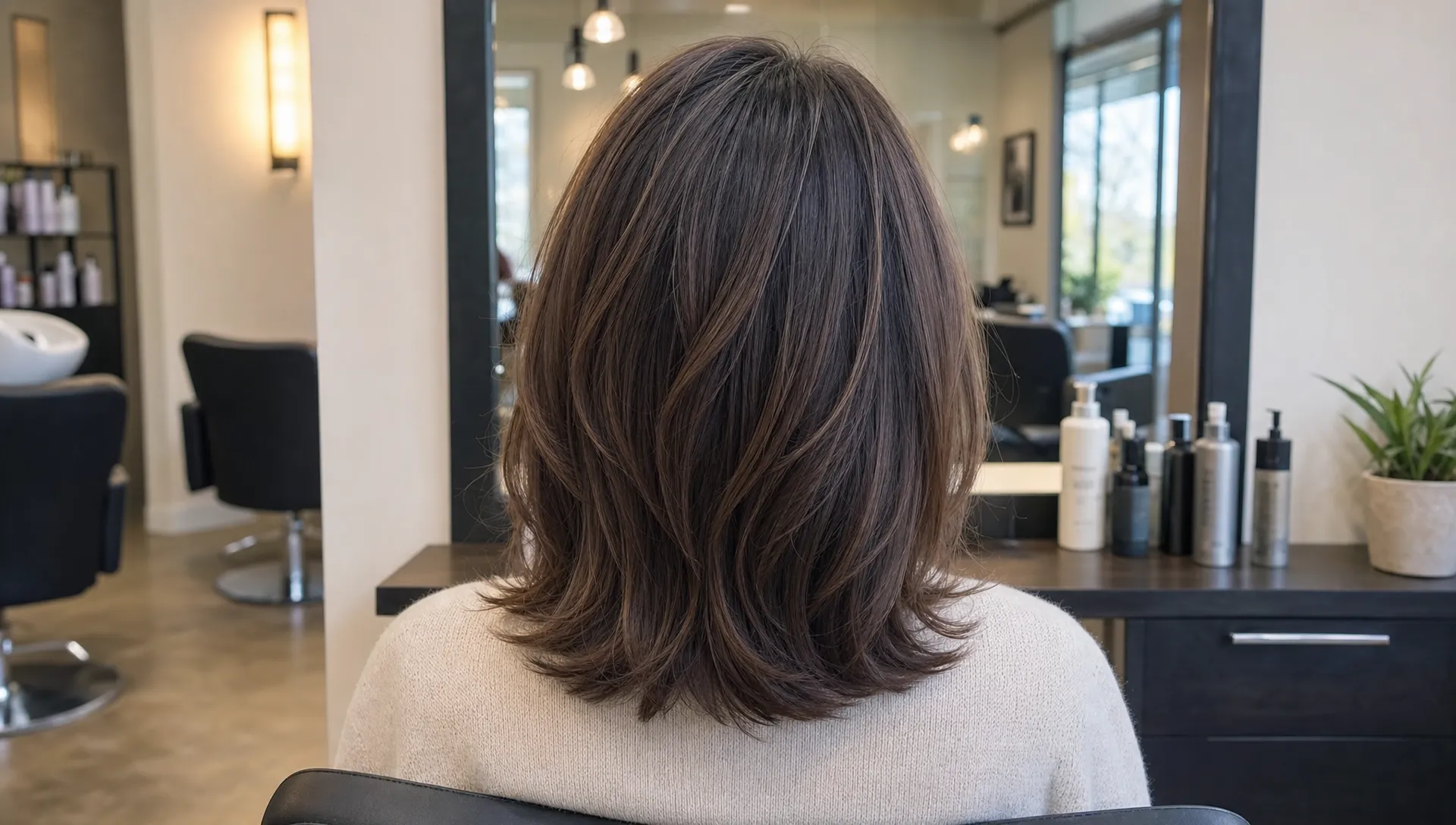
A bob can make thin hair look fuller because shorter hair has less weight pulling it down. The key is avoiding overly choppy layers. A soft layered bob should have movement through the surface and crown, but the ends should still look compact.
This shape works well for straight, wavy and lightly textured hair. It can be styled smooth for a clean finish or with soft bends for a fuller, more relaxed look. For many clients, this is one of the easiest layered haircuts for thin hair because it gives visible shape without requiring a long styling routine.
Long Layers With a Strong Perimeter #
Long hair can work on thin hair, but the cut has to protect the bottom edge. If the layers start too high or are cut too aggressively, the ends can look wispy. A better approach is a strong perimeter with long, blended layers that begin lower in the haircut.
A U-shaped outline is often softer than a sharp V-shape for thin hair. It gives the illusion of length through the back while keeping the sides from looking too narrow. If you love long hair, ask your stylist to remove only the weight that prevents movement, not the density that makes your hair look full.
Face-Framing Layers #
Face-framing layers are a smart choice when you want a visible change without committing to heavy layering all over. These pieces can highlight cheekbones, soften the jawline and make a simple cut look more styled.
For thin hair, face-framing should be customized carefully. If the layers start too far back from the hairline, they can remove too much fullness from the sides. If they are too short, they may separate from the rest of the cut. A soft, blended frame is usually the most flattering option.
For a deeper look at subtle techniques, Kingdom Cute has a dedicated guide to the best layers for thin hair without sacrificing fullness, which pairs well with the haircut ideas in this article.
Where Layers Should Be Placed for a Fuller Look #
The placement of layers matters more than the number of layers. Thin hair usually benefits from strategic movement in specific zones rather than all-over removal.
Crown layers can create lift where hair often lies flat. These should be soft and blended, not short spikes that separate from the shape. Around the face, layers can add softness and style, but they should not carve away too much from the front hairline. Through the ends, the goal is often beveling rather than heavy texturizing, so the hair turns under or moves naturally while still looking dense.
The perimeter is the part of the haircut people notice most when judging fullness. A thin, broken-looking bottom line makes hair appear finer even if the layers above are well cut. That is why many thin-hair cuts keep the outline blunt, softly rounded or lightly graduated.
Layered Haircuts Thin Hair Should Usually Avoid #
Not every trendy layered cut is friendly to thin hair. Some looks photograph beautifully on dense hair but create gaps, stringy ends or scalp visibility on lower-density hair.
Be cautious with very heavy shags, extreme wolf cuts, deep point cutting and excessive razoring. These techniques can be stunning on the right hair type, but on thin hair they may remove the structure you need. Short layers that begin too high can also make the top look disconnected from the bottom.
This does not mean you cannot have texture. It means the texture needs to be controlled. A stylist can create softness with slide cutting, subtle graduation, beveling or internal layering without making the ends collapse.
If you are drawn to a shorter shape, a pixie or bixie can be a strong choice because it removes the weight that drags thin hair down. The difference is in the details: the crown, fringe, neckline and perimeter all need to support fullness. This article on how a pixie cut for thin hair can look fuller is a helpful next read if you are considering going short.
Color Can Make Layers Look Fuller Too #
Color placement can change how layers appear. A single flat shade may make thin hair look softer but sometimes less dimensional. Carefully placed highlights, lowlights or glossing can create contrast that makes movement easier to see.
For thin hair, dimensional color should be subtle enough that it enhances the cut instead of exposing sparse areas. A few brighter pieces around the face can make layers pop, while gentle depth near the root can create the illusion of thickness. Gloss treatments can also help because shiny hair reflects light more evenly, which makes the shape look polished.
The healthiest-looking color plan is the one your hair can maintain. If your strands are already fragile, your stylist may recommend a softer color approach, conditioning treatment or gradual transformation rather than a high-lift service in one visit.
Styling Tips That Help Thin Layered Hair Look Thicker #
The right cut does most of the work, but styling helps reveal the shape. Thin hair often needs lift at the root and softness through the ends, not heavy product.
Start with a lightweight volumizing product near the root, then blow-dry with tension and lift. A round brush can create bend at the ends, while a flat brush can give a smoother finish with less puff. If you use a curling iron, keep the curls loose and alternate direction for natural movement. Overly tight curls can make thin ends separate.
Dry shampoo or texture spray can help on second-day hair, but use a light hand. Too much product can weigh thin hair down or make the scalp look more visible. A pea-sized amount of smoothing cream on the ends is often enough if the hair needs polish.
For heat styling, the goal is shape without stress. Keep tools at a moderate temperature when possible, use heat protectant and avoid repeatedly passing over the same pieces. Thin hair can show damage quickly, especially on the ends that are already more delicate.
What to Ask for at Your Salon Appointment #
Clear language helps your stylist protect fullness. Instead of asking for “lots of layers,” describe the result you want: more movement, more lift at the crown, fuller-looking ends or a softer face frame.
Helpful phrases include:
- “I want the ends to stay full.”
- “Please keep the layers soft and blended.”
- “I need volume at the crown, but I do not want the bottom to look thin.”
- “Can we add movement without removing too much density?”
- “I want a shape that works with my natural texture and styling routine.”
Bring photos, but choose examples with hair similar to yours. A heavily layered cut on thick hair will not translate the same way to thin hair. A good stylist can adapt the mood of the photo while changing the technique to suit your density.
How Often Should Thin Layered Hair Be Trimmed? #
Thin hair usually looks fuller when the ends are maintained. Once the perimeter becomes uneven, the whole cut can start to look less dense. For many layered bobs and lobs, trims every 6 to 10 weeks help preserve the shape. Longer layered cuts may be able to go a bit longer if the ends stay healthy.
If you are growing your hair, trimming may feel counterproductive, but small maintenance cuts can prevent the wispy ends that make hair look thinner. Your stylist can dust the ends, refresh the face frame and adjust the layers without removing more length than necessary.
Scalp and conditioning treatments can also support the overall look of the haircut. They will not magically create density overnight, but a clean, balanced scalp and conditioned ends help thin hair sit better, shine more and respond well to styling.
Frequently Asked Questions #
Do layers make thin hair look thicker or thinner? Layers can make thin hair look thicker when they are subtle, blended and placed to create lift. They can make hair look thinner if too much density is removed from the ends or sides.
What is the best length for thin layered hair? Collarbone-length cuts, bobs and lobs are often flattering because they keep enough length for styling while reducing the weight that pulls hair flat. Long hair can also work if the perimeter stays strong.
Should thin hair be cut blunt or layered? Many thin-hair cuts use both ideas: a blunt or softly beveled perimeter for fullness and light internal layers for movement. This combination keeps the shape from looking flat or stringy.
Are bangs a good idea for thin hair? Bangs can work if they are customized to your hairline and density. Curtain bangs or light fringe are often easier to blend than very heavy bangs, especially if the front hairline is delicate.
How can I make layered thin hair look fuller at home? Use lightweight root lift, blow-dry with elevation, keep the ends polished and avoid heavy oils near the scalp. Regular trims also help the perimeter stay full.
Ready for a Fuller-Looking Cut? #
The most flattering layered haircuts for thin hair are never one-size-fits-all. They are designed around your density, texture, face shape and daily routine. If you are in Warner Robins, GA, Kingdom Cute can help you choose a layered cut that adds movement while protecting the fullness you want to keep.
Book your consultation with Kingdom Cute Hair Salon and leave with a shape that feels polished, personal and easier to style.