Publish on by Kingdom Cute Luxury Hair Salon
- First, Know What Thin Hair Needs From a Pixie Cut
- Keep the Perimeter Clean, Not Over-Textured
- Add Crown Lift With Strategic Layering
- Choose a Fringe That Builds Softness Around the Face
- Use the Nape and Sides to Shape the Whole Cut
- Let Color Create the Illusion of Depth
- Style for Lift Without Weighing the Hair Down
- Match the Pixie to Your Face Shape and Features
- Bring the Right References to Your Appointment
- How Often Should You Maintain a Pixie Cut for Thin Hair?
- Frequently Asked Questions
- Ready for a Fuller-Looking Pixie?
If your hair is thin, a pixie cut can feel like a risk. Go too short or too wispy and the hair may look flat. Keep too much length and it can collapse around the face. The sweet spot is a pixie that uses shape, texture and placement to create the look of more fullness without relying on heavy styling every morning.
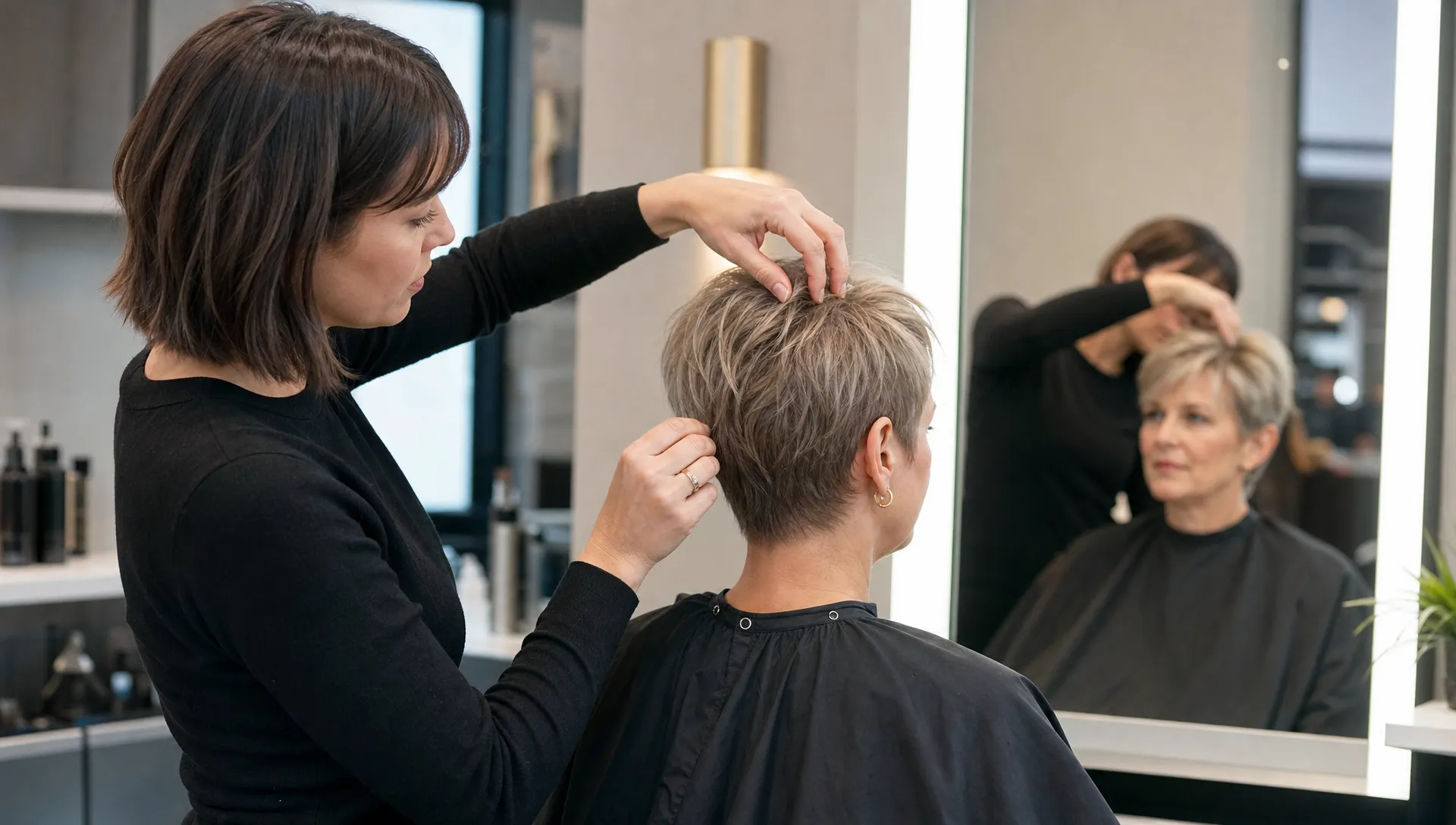
A great pixie cut for thin hair is not just a short haircut. It is a controlled design. The perimeter, crown, fringe, neckline and color all work together to make the hair appear denser. When those details are customized to your texture and growth patterns, thin hair can look soft, lifted and intentional.
The goal is not to hide your natural hair. The goal is to make every strand count.
First, Know What Thin Hair Needs From a Pixie Cut #
Thin hair usually means lower density, meaning there are fewer strands on the scalp. Fine hair refers to the diameter of each strand. Many people have both, but not always. This matters because a pixie for low-density hair needs a different approach than a pixie for thick but fine-textured hair.
A stylist should look at where your hair is naturally fuller, where your scalp shows more easily and how your hair behaves after it dries. Cowlicks, part lines, crown growth patterns and temple density can all change how short the pixie should be in each area.
If you are preparing for a salon visit, it helps to understand what a hairdresser for fine hair should consider before cutting. That consultation step is especially important with short hair because small decisions can make a big visual difference.
Keep the Perimeter Clean, Not Over-Textured #
One of the most common mistakes with a pixie cut for thin hair is removing too much weight at the edges. A pixie often needs texture, but excessive thinning can make the ends look see-through.
A cleaner perimeter helps the haircut read as fuller. Around the ears, nape and sideburns, your stylist may leave a little more structure so the shape looks polished instead of stringy. This does not mean the cut has to be blunt or stiff. It means the outer line should feel deliberate.
For thin hair, softness should come from controlled point cutting, light internal movement or gentle graduation. Too much razor work can be risky if your hair already lacks density, especially near the temples and crown.
Add Crown Lift With Strategic Layering #
The crown is where fullness often matters most. If the top is too long, thin hair may lie flat. If it is too short, the hair may stick up or expose the scalp. The best pixie shape usually sits between those extremes.
Shorter support layers underneath can help push the top up slightly, giving the illusion of more body. Longer surface pieces can then skim over the shape, creating softness and coverage. This is similar to the principle behind the best layers for thin hair: movement is helpful, but only when it does not sacrifice density at the ends.
A fuller-looking crown also depends on direction. Hair that is cut to move forward, diagonally or slightly off-center often looks denser than hair that is forced into a sharp part. For many clients, a soft side sweep or lifted crown gives the best balance of volume and coverage.
Choose a Fringe That Builds Softness Around the Face #
The front of a pixie cut carries a lot of visual weight. A fringe can make thin hair look fuller because it brings the focus forward and frames the eyes. The key is choosing a fringe shape that uses the hair you have efficiently.
A long, side-swept fringe is often flattering because it creates movement across the forehead without needing a heavy bang. A soft piecey fringe can also work, as long as the pieces are not cut too sparse. For very thin front hairlines, a micro fringe or heavily separated bang may make the area look finer than it is.
If you like the idea of a little more styling flexibility, a longer pixie can be a beautiful middle ground. It gives you enough length to tuck, sweep or wave the front while still keeping the overall shape short. For more inspiration, explore long pixie cut ideas before your consultation.
| Pixie detail | How it helps thin hair look fuller | What to avoid |
|---|---|---|
| Clean perimeter | Makes the haircut look denser at the edges | Over-thinned, wispy ends |
| Crown support layers | Adds lift without heavy teasing | Cutting the crown too short |
| Soft side fringe | Creates movement and face-framing fullness | Sparse, overly separated bangs |
| Slightly tapered nape | Gives the cut shape and polish | A harsh neckline that exposes gaps |
| Dimensional color | Adds depth and visual texture | Flat color with no contrast |
Use the Nape and Sides to Shape the Whole Cut #
The nape and sides may seem like small details, but they affect how full the entire pixie appears. If the sides are cut too tight, the top can look disconnected or thin by comparison. If the nape is left too bulky, the cut can lose its shape and feel heavy in the wrong place.
A slightly tapered nape often works well because it gives the pixie a clean silhouette. Around the ears, your stylist can decide whether to keep softness, create a delicate point or tuck the hair neatly behind the ear. The right choice depends on your density, face shape and styling habits.
For thin hair, the best short cuts usually avoid hard contrast unless the client wants an edgier look and has enough density on top to balance it. Soft tapering tends to be more forgiving and more wearable as the cut grows out.
Let Color Create the Illusion of Depth #
Hair color can make a pixie look fuller when it is placed thoughtfully. The most helpful approach is usually dimension, not one flat shade from roots to ends.
Subtle lowlights, a soft root shadow or gentle highlights can create the appearance of depth. This is especially useful on a pixie because the haircut has visible movement. When light and shadow hit the layers, the hair can look thicker and more textured.
The right color choice also depends on scalp contrast. If your hair is very light and your scalp is fair, the contrast may be low, which can make thin areas less noticeable. If your hair is very dark and your scalp is light, a softer root or dimensional brunette may make the overall effect gentler.
Color should support the health of the hair, not compromise it. Thin hair can be more vulnerable to breakage if it is over-lightened or processed too frequently. A luxury color plan should consider both the look you want and the condition of your hair.
Style for Lift Without Weighing the Hair Down #
A fuller-looking pixie starts with the cut, but styling makes the shape come alive. Thin hair usually responds best to light products that create lift without leaving the hair greasy or stiff.
Start with a small amount of volumizing mousse, root spray or lightweight styling cream, depending on your texture. Blow dry with your fingers or a small brush, lifting at the crown and directing the fringe where you want it to fall. Once dry, use a tiny amount of texture paste or powder only where you need separation.
The biggest product mistake is applying too much. Heavy oils, thick creams and too much shine serum can flatten a pixie quickly. If your hair tends to collapse during the day, dry texture spray or a small amount of powder at the roots may give better hold than adding more cream.
A good stylist will also show you how to recreate the shape at home. Pixies are short, but they are not all low-maintenance in the same way. Some are wash-and-go. Others need a few minutes of directional drying to look their best.
Match the Pixie to Your Face Shape and Features #
The most flattering pixie cut for thin hair should build fullness where it supports your face. A round face may benefit from crown height and a longer diagonal fringe. A longer face may look softer with width near the sides or a fuller fringe. A square face can look beautiful with soft texture around the temples and a less rigid outline.
Details outside the haircut can also influence the final look. Earrings, brow shape, neckline and even your smile become more noticeable with short hair. Many people book a pixie when they are refreshing their overall style, whether that includes makeup, skincare or cosmetic treatments. The same confidence-based approach is clear in personal care spaces like The Dental Lounge Robina, where appearance, comfort and wellness are treated as part of the same bigger picture.
Your pixie should feel like it belongs to you, not like a photo copied from someone with a different density, hairline or lifestyle.
Bring the Right References to Your Appointment #
Photos help, but they work best when you and your stylist discuss what you like about each image. Instead of saying you want the whole cut, point out the specific details that appeal to you.
Helpful notes to bring include:
- A photo of the fringe shape you like
- A photo showing your preferred neckline or nape shape
- A note about how much styling time you want each morning
- A list of products you already use
- Any concerns about scalp visibility, cowlicks or thinning areas
If your hair is thin, your stylist may recommend adjusting the inspiration photo. That is a good thing. Customizing the shape is what keeps a pixie from looking flat, too exposed or difficult to style.
How Often Should You Maintain a Pixie Cut for Thin Hair? #
Pixies usually need more frequent trims than longer cuts because the shape is precise. Many clients maintain the look every 4 to 6 weeks, though the right schedule depends on your hair growth, neckline and chosen style.
A softer long pixie may grow out more gracefully than a very short tapered cut. A highly detailed fringe may need a touch-up sooner. If you are new to short hair, ask your stylist how the cut will look at two weeks, four weeks and six weeks so you know what to expect.
Maintenance is not just about keeping hair short. It is about preserving the lift, balance and fullness that made the cut flattering in the first place.
Frequently Asked Questions #
Is a pixie cut good for thin hair? Yes, a pixie cut can be very flattering on thin hair when the shape is customized. The key is to preserve density at the perimeter, add strategic crown lift and avoid excessive thinning.
What pixie cut makes thin hair look thicker? A softly layered pixie with a clean outline, side-swept fringe and gentle crown volume often makes thin hair look thicker. Long pixies can also work well because they leave enough length for movement and coverage.
Should thin hair be razored for a pixie cut? Razor cutting can create softness, but it is not always the best choice for thin hair. If used too aggressively, it can make the ends look wispy. Many stylists prefer controlled scissor work for fine or low-density hair.
Does color help a pixie cut look fuller? Dimensional color can help a pixie look fuller by adding light, shadow and movement. Subtle lowlights, soft highlights or a root shadow may create more depth than a single flat shade.
How do I keep a pixie cut from going flat? Use lightweight styling products, dry the roots in the direction you want the hair to move and avoid heavy oils or creams. Regular trims also help maintain the structure that gives the pixie its lift.
Ready for a Fuller-Looking Pixie? #
A pixie cut for thin hair works best when every detail is intentional. The right fringe, crown shape, neckline, color and styling plan can make short hair feel soft, confident and full of movement.
At Kingdom Cute in Warner Robins, GA, every short cut begins with a personalized consultation so your stylist can understand your texture, density, lifestyle and goals. If you are ready to explore a pixie that flatters your hair instead of fighting it, book your appointment with Kingdom Cute and start with a cut designed around you.
Tags: pixie cut for thin hair