Publish on by Kingdom Cute Luxury Hair Salon
- Why curly hair needs a different cutting strategy
- The consultation sets the grow-out plan
- A curly hair stylist studies your hair dry and in motion
- Shape comes before length
- Layers are placed to age softly
- The stylist accounts for shrinkage before making the cut
- Weight removal is done without destroying curl clumps
- The perimeter is designed for the next appointment, not just today
- Face-framing pieces need extra planning
- Product choice affects how the cut grows out
- Finishing reveals how the cut will live at home
- How often should curly hair be trimmed?
- Signs your curly cut is growing out well
- How to prepare for a curly haircut appointment
- Why professional curl cutting builds confidence
- Frequently Asked Questions
- Ready for a curly cut that lasts beyond wash day?
A great curly cut is not judged only on the day you leave the salon. The real test comes four, six or ten weeks later, when your curls have settled, your roots have grown and your shape still makes sense without daily fighting.
That is where a trained curly hair stylist makes a noticeable difference. Curly hair does not grow out in a straight line visually, even when the actual growth is the same. Curl pattern, shrinkage, density, porosity and the way each section springs can make one area look shorter, heavier or wider than another. A cut that looks balanced on wet hair alone may not look balanced once the curls dry into their true shape.
A grow-out friendly curly haircut is built with the future in mind. It protects the overall silhouette, removes weight in the right places, keeps definition intact and gives you a shape that can evolve gracefully between appointments.
Why curly hair needs a different cutting strategy #
Straight hair tends to reveal its perimeter clearly. Curly hair hides and reveals length depending on how each curl clumps, coils or stretches. Two sections can measure the same when pulled straight but sit at completely different lengths when dry.
This is why a hair stylist for curly hair does not only ask, “How much do you want off?” The better question is, “How do you want your shape to behave as it grows?”
Curly hair also carries weight differently. A dense crown may flatten the top, heavy ends may create a triangle shape and over-thinned curls may become frizzy or stringy. The stylist has to balance volume, definition and movement without cutting away the structure your curls need to form properly.
The American Academy of Dermatology notes that curly hair is often more fragile because the bends in the strand can make it harder for natural oils to travel from scalp to ends. That is one reason curl care and curl cutting should both be gentle, intentional and tailored to texture.
The consultation sets the grow-out plan #
A curly haircut that grows out well usually starts before the shears come out. The consultation gives your stylist the information needed to design a cut around your real life, not just an inspiration photo.
Your stylist may ask about:
- How often you wear your hair curly, stretched, silk pressed or in protective styles
- Whether you air dry, diffuse or use heat tools
- How much time you realistically spend styling
- Where your curls shrink the most
- Which areas feel bulky, flat, frizzy or uneven
- How often you want to come back for maintenance
This is also the moment to be honest about your goals. If you want shape but do not want to lose visible length, say that clearly. If your curls look good only on wash day but collapse afterward, mention it. If one side always shrinks more than the other, your stylist needs to know.
Strong communication prevents the most common curly haircut regrets, especially cuts that look too short after drying or layers that grow out unevenly. If you are preparing for your next appointment, these hairstylist-client communication tips can help you explain your curl concerns with more confidence.
For any appearance-focused service, clarity during the consultation helps clients feel informed and comfortable. Cosmetic practices such as Creative Smiles highlight treatment options and consultation pathways for smile transformations, and a curl consultation should offer that same sense of transparency around the plan, the process and the expected result.
A curly hair stylist studies your hair dry and in motion #
Many curly stylists prefer to evaluate the hair dry first because dry curls show their true shape. Even if the final cut includes some wet refinement, the dry assessment reveals how the hair naturally lives.
Your stylist may look at the hair from multiple angles, lift sections to check density and watch how curls fall after being released. This helps identify heavy zones, weak ends, uneven shrinkage and areas where previous cuts may have disrupted the shape.
Movement matters too. A cut can look beautiful when perfectly arranged but lose balance once you turn your head, tuck pieces behind your ear or shake your curls out. A grow-out friendly cut has to work in real life.
Shape comes before length #
Many curly clients focus on length first, especially if they have had a bad haircut in the past. Length matters, but shape is what makes curly hair look intentional as it grows.
A stylist may preserve length around the perimeter while adjusting interior weight. They may also soften corners, release bulk near the sides or create a more rounded, oval, tapered or face-framing silhouette depending on your texture and goals.
The right shape should support your curls at multiple stages:
| Cut decision | Why it matters during grow-out |
|---|---|
| Balanced perimeter | Helps the ends look intentional instead of uneven as length returns |
| Strategic layers | Prevents heaviness without creating gaps or shelves |
| Face-framing pieces | Keeps the style flattering even when the back gets longer |
| Weight removal | Reduces bulk while preserving curl clumps and fullness |
| Crown shaping | Helps volume stay lifted instead of flattening over time |
This is where experience matters. A curly hair stylist is not simply cutting shorter pieces into the hair. They are deciding where the curls need support, where they need release and where they should be left alone.
Layers are placed to age softly #
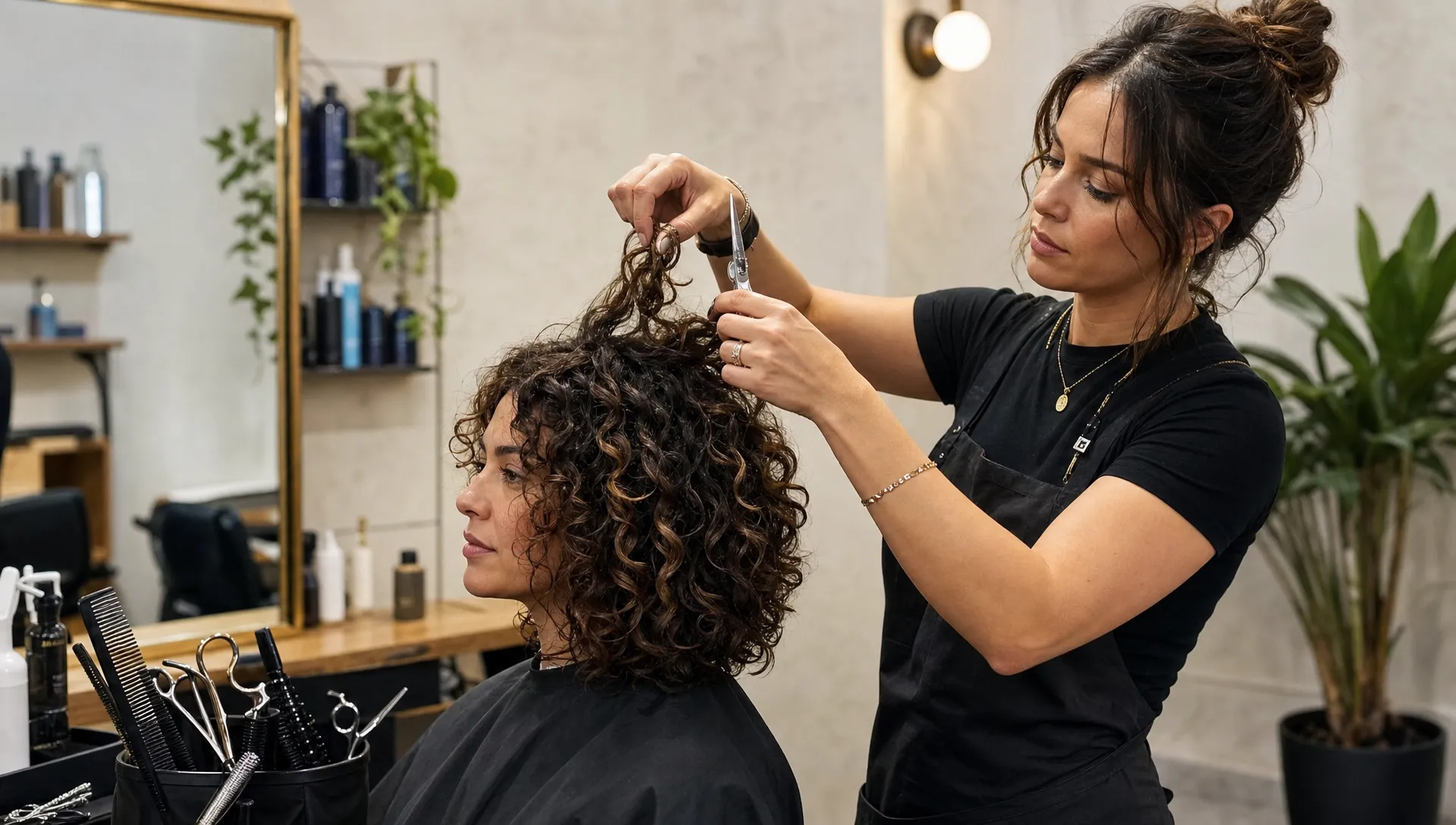
Layers can be beautiful on curly hair, but they need to be placed with care. Too many short layers can create a round shape that grows bulky at the sides. Layers that are too disconnected can leave holes once the curls shrink. Layers that are cut without respecting curl pattern can make styling harder every week after the appointment.
A grow-out friendly layer pattern usually blends softly into the overall shape. The goal is movement without sacrificing definition. Your stylist may cut fewer layers than you expect, or they may create internal layers that are not obvious at first glance but make the curls sit better.
If you want a deeper look at this specific technique, Kingdom Cute’s guide to how layers bring shape to curly hair without losing definition explains why curl-by-curl placement matters so much.
The stylist accounts for shrinkage before making the cut #
Shrinkage is one of the biggest reasons curly cuts can go wrong. A half inch removed from wet curls can look like much more once the hair dries. On tighter curls and coils, the visual change can be dramatic.
A skilled stylist does not treat shrinkage as a problem. They treat it as part of the design. They may cut conservatively at first, dry the hair, then refine the shape once the curls have settled. They may also avoid cutting certain face-framing sections too short if those pieces spring up more than the rest.
This is especially important around the bangs, temples, crown and nape. These areas can have different curl patterns on the same head. A strong grow-out plan respects those differences instead of forcing every section into identical measurements.
Weight removal is done without destroying curl clumps #
Curly hair often needs weight management, but not all weight removal techniques work for curls. Aggressive thinning, careless texturizing or slicing through the wrong areas can break up curl families. The result may look lighter for a moment but become frizzy, uneven or difficult to define later.
A curly hair stylist removes weight with intention. They may use point cutting, curl-by-curl detailing or internal shaping depending on the texture. The goal is to create air and movement while keeping enough structure for the curls to group naturally.
This is one reason curly clients should be cautious with heavy thinning shears unless the stylist is experienced with their texture. Some curls respond well to selective debulking. Others need more surface control and conditioning, not more cutting.
The perimeter is designed for the next appointment, not just today #
The perimeter is the outline of the haircut, and it plays a major role in grow-out. If the bottom edge is too blunt for the curl pattern, the hair may widen or stack heavily as it grows. If it is too wispy, the ends may look thin before the next trim.
For some curly clients, a soft rounded perimeter works best. For others, a U-shape, tapered shape or fuller baseline creates better longevity. The stylist looks at density, length, curl size and styling habits before choosing the finish.
A good perimeter should make the haircut feel complete without locking you into a high-maintenance shape. It should also leave room for your next trim so your stylist can refresh the design without having to correct major imbalance.
Face-framing pieces need extra planning #
Face-framing curls can make a cut feel fresh and flattering, but they are also the easiest place to accidentally go too short. These pieces are handled, tucked, stretched and restyled more often than the rest of the hair, so they can behave differently over time.
A stylist planning for grow-out may keep face-framing pieces slightly longer than the final visual goal, especially if the client wears curls in different states. If you sometimes straighten your hair or get a silk press, your stylist needs to account for how those pieces will look both curly and smooth.
This is why bringing realistic reference photos helps. One photo can show the shape you love when curly, while another can show how much face framing you are comfortable with when the hair is stretched.
Product choice affects how the cut grows out #
A haircut and product routine work together. If your cut is designed for definition but your products are too heavy, the shape may fall flat. If your cut needs moisture but your routine lacks conditioning, the ends may frizz and make the haircut look older than it is.
After the cut, your stylist may recommend a cleanser, conditioner, leave-in, curl cream, mousse, gel or treatment based on your texture and styling habits. The right product mix should support the shape without making your hair feel coated or stiff.
For example, fine curls may need lightweight hold and less cream. Dense curls may need more moisture and stronger styling support. Color-treated curls may need bond support, conditioning treatments or gentler cleansing. If you are curious about why recommendations vary so much, this overview of hair salon products your stylist may recommend breaks down the purpose behind common salon product choices.
Finishing reveals how the cut will live at home #
The final styling step is not just about making the hair look pretty before you leave. It also shows how the cut responds to product, drying and curl placement.
A stylist may define curls in sections, diffuse gently, separate curls for volume or reshape individual pieces after the hair is fully dry. Once the style is finished, they can check the balance again and make small refinements.
This final dry detailing is often what makes a curly cut look custom. It allows the stylist to adjust what the hair is actually doing, not what they assumed it would do when wet.
It is also a chance for you to ask practical questions. How should you refresh the shape on day two or three? Should you part your hair in a specific place? How much product should you use? What should you avoid if you want the cut to last?
How often should curly hair be trimmed? #
There is no universal trim schedule for curly hair. The right timing depends on your length, texture, chemical services, heat use and how structured your cut is.
As a general guide, shorter curly shapes often need maintenance sooner because the silhouette changes quickly. Medium and long curly cuts may go longer between visits if the ends are healthy and the shape was designed well. Color-treated curls, heat-styled curls and fragile ends may need more frequent dusting or conditioning support.
Many clients do well when they book based on shape instead of the calendar. If the crown feels flat, the ends stop clumping, the sides feel bulky or styling suddenly takes much longer, your haircut may be ready for a refresh.
Signs your curly cut is growing out well #
A good curly haircut should not fall apart after two washes. It may change, soften and gain length, but it should still feel manageable.
Healthy grow-out often looks like:
- The overall shape still feels balanced from the front, sides and back
- Curls continue to clump instead of separating into frizz
- The ends look full enough to hold the style
- Volume grows gradually without creating a harsh triangle shape
- Styling does not require much more effort than it did right after the cut
If the grow-out feels awkward quickly, it does not always mean your hair is difficult. It may mean the cut did not account for shrinkage, density, curl pattern or your actual routine.
How to prepare for a curly haircut appointment #
You can help your stylist create a better result by arriving with your curls in a state that reflects how you normally wear them. If the salon gives different instructions, follow those, but many curl specialists prefer to see clean, dry, detangled hair with minimal heavy product buildup.
Bring photos of styles you like, but choose examples with a curl pattern and density similar to yours. A shape that looks airy on low-density waves may sit very differently on dense coils. It is also helpful to bring photos of your own hair on days you loved it and days you struggled with it.
Tell your stylist about recent color, relaxers, keratin treatments, silk presses, extensions, protective styles, postpartum shedding, scalp concerns or breakage. These details can change how much should be cut and where the hair needs support.
Why professional curl cutting builds confidence #
A curly cut that grows out well gives you more than a nice salon-day finish. It makes your daily routine easier, helps your curls look intentional for longer and reduces the anxiety that can come with losing shape between appointments.
At Kingdom Cute in Warner Robins, GA, curly hair services are built around consultation, precision and a luxury salon experience. The goal is not to force your curls into a trend. It is to create a shape that fits your texture, lifestyle and confidence.
Whether you want more movement, a healthier perimeter, better volume or a full curl transformation, the right stylist will explain the plan before cutting and help you understand how to maintain the result at home.
Frequently Asked Questions #
Should curly hair be cut wet or dry? Many curly stylists like to assess the hair dry because it shows the true shape, shrinkage and curl pattern. Some cuts may combine dry shaping with wet refinement depending on the client’s texture and goals.
How do I know if a stylist understands curly hair? Look for a stylist who asks about shrinkage, density, styling routine, product use and how you wear your hair between visits. They should explain how the cut will grow out, not just how it will look that day.
Will layers make curly hair frizzy? Layers do not automatically cause frizz. Poorly placed layers can disrupt curl clumps, but strategic layers can add movement, reduce bulk and help the haircut keep its shape as it grows.
How much length should I cut off curly hair? The right amount depends on your ends, shape goals and shrinkage. A curly hair stylist may recommend a conservative approach first, then refine after the hair dries so the final length feels comfortable.
Can a curly cut work if I sometimes straighten my hair? Yes, but tell your stylist before the cut. They can plan the shape so it looks balanced both curly and stretched, especially around the perimeter and face-framing pieces.
Ready for a curly cut that lasts beyond wash day? #
Your curls deserve a cut that looks beautiful now and grows out with intention. If you are ready for a personalized curly haircut, shaping service or conditioning treatment, book an appointment with Kingdom Cute Hair Salon in Warner Robins, GA and let your next cut be designed around your real texture, routine and style goals.