Publish on by Kingdom Cute Luxury Hair Salon
- Why curly hair needs a different approach to layers
- What layers actually do for curly hair
- Layers are not the same as thinning
- How layers bring shape without losing curl definition
- They remove weight where curls are stretched
- They create a stronger silhouette
- They support curl clumps instead of breaking them apart
- They make styling more predictable
- Signs your curls may be ready for layers
- What to ask for at the salon
- Styling layered curls after the cut
- Common layering mistakes that reduce definition
- How to maintain the shape between appointments
- Frequently Asked Questions
- Ready for curls with shape, bounce, and definition?
Curly hair has its own architecture. It expands, contracts, stacks, springs up, and frames the face in ways straight hair simply does not. That is why layers can be transformative for curls, but only when they are planned with the curl pattern in mind.
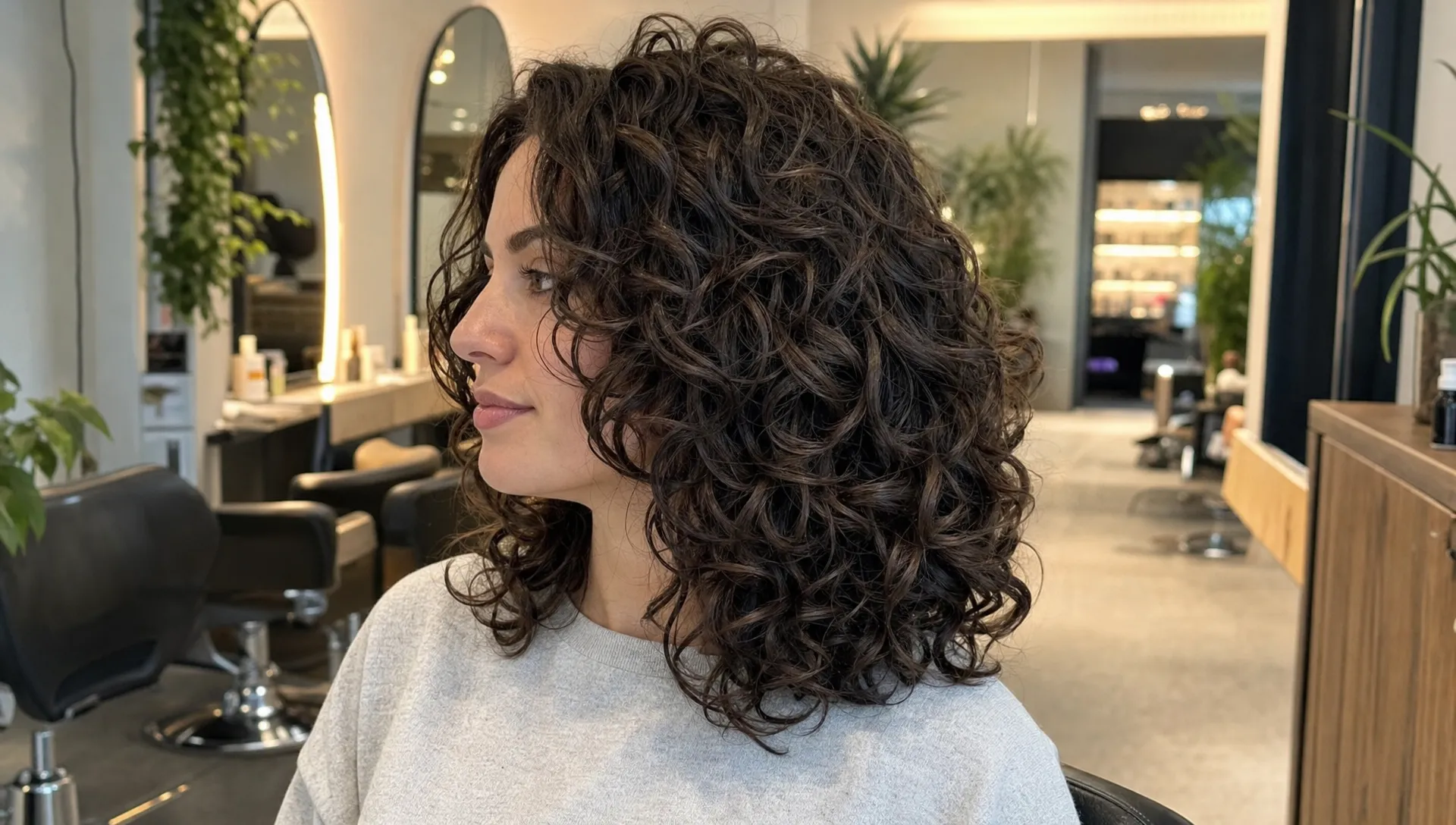
A layered haircut for curly hair should not make your curls look thinner, frizzier, or less defined. The right layers remove heaviness where it drags the shape down, create lift where the hair falls flat, and help curls sit together instead of collapsing into a triangle or puffing out unevenly.
For curl clients, the goal is balance. You want movement without stringiness, volume without bulk, and shape without sacrificing the curl clumps that make your texture beautiful.
Why curly hair needs a different approach to layers #
Curly hair does not fall in a flat sheet. Each curl has a spring factor, meaning the hair can look much shorter when dry than it does when wet. A cut that seems subtle on damp curls may bounce up several inches once the hair dries. That is one reason curly layers require careful judgment, especially around the crown, sides, and face frame.
Definition also depends on how curls group together. When too much hair is removed from the wrong area, curls can separate into wispy pieces. When too little weight is removed, curls may stretch out, lose bounce, or stack into a heavy bottom shape. A skilled stylist reads the curl pattern, density, porosity, and growth direction before deciding where to layer.
If you are still learning how your pattern behaves, it helps to understand the difference between curl type, strand texture, and density. Kingdom Cute has a helpful guide on different hair types and textures that can make your salon consultation more productive.
What layers actually do for curly hair #
Layers change where the visual weight of the hair sits. On curly hair, that can create a rounder silhouette, more lift at the roots, softer face framing, and better curl separation. The magic is not just cutting shorter pieces. It is deciding which curls need support, which areas need release, and which perimeter pieces should stay strong so the style does not look sparse.
Think of layers as structure. They are not there to fight your texture. They help your texture show up with more intention.
| Layering choice | Best for | How it protects definition |
|---|---|---|
| Long rounded layers | Medium to long curls that feel heavy | Removes weight while keeping length and curl clumps intact |
| Face-framing layers | Curls that hide the cheekbones or jawline | Opens the face without cutting into the full perimeter |
| Internal layers | Dense curls with bulk through the sides | Reduces heaviness underneath while preserving the outer shape |
| Crown layers | Curls that go flat on top | Adds lift, but must be cut carefully to avoid frizz or puffiness |
| Curly shag inspired layers | Clients who want volume and a modern shape | Creates movement, best when balanced with density and routine |
The most important part is proportion. A soft layer near the cheekbone can make curls look intentional and lifted. Too many short pieces in the same area can create gaps. A little crown layering can wake up flat curls. Too much can make the top hard to control.
Layers are not the same as thinning #
Many curly clients worry about layers because they have had a bad experience with thinning shears, over-texturizing, or random cutting that broke up their curl pattern. That concern is valid. Curly hair can become frizzy or uneven when the cut removes bulk without respecting how curls live together.
Layering is more strategic than thinning. Instead of simply taking out volume, a good curly cut redistributes weight. The stylist may leave certain curls heavier so they hold the shape, while softening other sections so the style moves. The difference is easy to see when the hair dries. Proper layers look connected. Poorly placed thinning often looks fuzzy, hollow, or see-through at the ends.
This is where consultation matters. A stylist should ask how you wear your curls most often, how much shrinkage you experience, how often you diffuse or air dry, and whether your goal is more volume, more length, easier styling, or a stronger silhouette. If you want to understand why that professional assessment matters, read how hair specialists build better results through customized planning and aftercare.
How layers bring shape without losing curl definition #
They remove weight where curls are stretched #
Long or dense curls can become heavy at the bottom. When the ends carry too much weight, the roots flatten and the curls lose spring. Layers lift some of that weight, allowing the curl pattern to rebound naturally. The result is not necessarily shorter hair overall. It is hair that looks lighter, fuller, and more alive.
They create a stronger silhouette #
Without layers, curly hair can form a pyramid shape, especially when the sides expand and the top stays flat. Thoughtful layering rounds the shape so the curls frame the face instead of widening only at the bottom. This can make shoulder-length curls look softer, long curls look more intentional, and shorter curls look more sculpted.
They support curl clumps instead of breaking them apart #
Definition comes from curls gathering in groups. A curl-conscious stylist avoids cutting in a way that separates every strand into tiny pieces. Instead, they look at the natural groupings and shape around them. This helps curls dry in a more organized pattern, which means less frizz and less daily manipulation.
They make styling more predictable #
When curls have a balanced cut, product application becomes easier. You are not trying to force one heavy section to match another flat section. Layers help the hair respond more evenly to creams, gels, mousses, diffusing, and air drying.
Signs your curls may be ready for layers #
You may benefit from layers if your curls still look undefined after a good wash day. Sometimes the issue is not your product routine. It may be the shape of the cut.
Common signs include:
- Your curls are flat at the roots but bulky at the ends.
- Your hair forms a triangle shape when worn down.
- Your curls underneath spring up, while the top layer hangs limp.
- Your face shape feels hidden by one heavy curtain of curls.
- Your ends look dense but your curl pattern feels stretched.
- You use more product than expected just to get movement.
These signs do not always mean you need dramatic layers. Sometimes a subtle face frame, a few long layers, or gentle internal shaping is enough.
What to ask for at the salon #
Instead of asking for layers in a general way, describe the result you want. For example, you might ask for more root lift, a softer rounded shape, less heaviness through the sides, or face-framing pieces that work with your natural shrinkage. Bring photos, but choose examples with a curl pattern and density similar to yours.
It is also helpful to share your real routine. If you air dry most days, your stylist should know that. If you wear wash-and-go styles, twist outs, silk presses, protective styles, or occasional blowouts, that information affects how layers should be placed. A cut that looks amazing only after a full salon styling session may not serve you well on a busy weekday.
Styling layered curls after the cut #
A great layered curly haircut makes styling easier, but definition still depends on how you care for the hair after you leave the chair. Curls usually define best when they receive enough water, conditioner, and hold. Apply styling products while the hair is still wet or damp enough for curls to clump, then avoid touching the hair too much while it dries.
For many curl types, a leave-in or curl cream provides softness, while a gel or mousse adds hold. The balance depends on your texture. Fine curls may need lightweight products that do not collapse volume. Coarse or high-density curls may need richer moisture and stronger hold, especially in Middle Georgia humidity.
Be mindful of products that touch your hairline, neck, and shoulders. If your beauty routine leans toward simple, plant-forward body care, natural skincare brands like Baby le Bébé can be a thoughtful option for skin, while your curl products should still be chosen based on slip, moisture, hold, and your stylist’s guidance.
Drying technique matters too. Scrunch upward to encourage curl formation, use a microfiber towel or soft cotton towel to reduce friction, and diffuse on low or medium airflow if you want more volume. Once the hair is fully dry, gently break the cast with clean hands or a light finishing product.
Common layering mistakes that reduce definition #
Layers can absolutely improve curly hair, but the wrong technique can create the opposite effect. The most common mistakes usually come from cutting curls as if they behave like straight hair.
Avoid these pitfalls when planning your next cut:
- Cutting too much while the hair is wet without accounting for shrinkage.
- Removing too much weight from the ends, which can make curls look thin.
- Creating short crown layers that do not blend into the rest of the shape.
- Using aggressive thinning techniques that disturb curl clumps.
- Copying a photo without adjusting for density, face shape, and lifestyle.
A good stylist will not give every curly client the same layer pattern. Fine, loose curls need different support than dense coils. Shoulder-length curls need different planning than waist-length curls. Color-treated curls may also need extra care because lightening and chemical services can affect elasticity.
How to maintain the shape between appointments #
Curly layers grow out more gracefully when the original shape is balanced. Still, regular maintenance helps prevent the ends from becoming heavy or uneven. Your ideal trim schedule depends on your hair health, length, color services, and styling habits. If your curls start losing bounce at the crown or the ends begin stacking again, it may be time for a shaping refresh.
At home, prioritize gentle detangling, regular conditioning, heat protection when needed, and nighttime care that reduces friction. Sleeping with a satin bonnet, scarf, or pillowcase can help preserve curl definition and protect layered ends from roughness. For more salon-backed care habits, Kingdom Cute shares practical advice in healthy hair habits your stylist wishes you knew.
The better your hair health, the better your layers will behave. Hydrated curls clump more easily. Strong ends hold shape longer. A calm scalp supports a better styling foundation.
Frequently Asked Questions #
Will layers make curly hair look thinner? Not when they are customized correctly. Poorly placed layers can make the ends look sparse, but strategic layers remove weight while preserving fullness where it matters.
Should curly hair be cut wet or dry? It depends on your curl pattern, service goals, and stylist’s method. Many stylists evaluate curls dry because shrinkage and shape are easier to see, while some refine or balance the cut after cleansing and styling.
Are layers good for short curly hair? Yes, but short curly layers require precision. The goal is to create shape and lift without making the crown too short or the sides too wide.
How do I keep layered curls defined after wash day? Use enough water during styling, apply products evenly, protect the curl clumps while drying, and avoid over-touching until the hair is fully dry. A salon consultation can help you choose the right product balance for your texture.
Ready for curls with shape, bounce, and definition? #
Layers can bring out the best in curly hair when they are designed around your texture, density, face shape, and routine. At Kingdom Cute Hair Salon in Warner Robins, GA, every service starts with a personalized approach so your cut supports the way you actually wear your hair.
If your curls feel heavy, uneven, or undefined, book your appointment with Kingdom Cute and let a stylist help you create a shape that feels polished, healthy, and completely you.