Publish on by Kingdom Cute Luxury Hair Salon
- Why pixie cuts can make fine hair look fuller
- The details that create the illusion of volume
- Pixie cuts for fine hair that add visual volume
- Soft tapered pixie with crown lift
- Side-swept pixie
- Textured crop with a fuller top
- Long pixie with face-framing length
- Bixie-inspired pixie
- Wavy or curly pixie for fine hair
- What to ask for during your pixie consultation
- Styling fine hair after a pixie cut
- Color choices that make a pixie look thicker
- How often should a fine-hair pixie be trimmed?
- Frequently Asked Questions
- Ready for a fuller-looking pixie?
Fine hair can absolutely carry a pixie cut. In fact, the right pixie can make fine strands look more lifted, intentional and full than longer hair that collapses under its own length. The key is not simply cutting hair short. It is choosing a shape that protects density where you need it, removes weight where it drags the hair down and creates movement without turning the ends wispy.
That balance matters. Fine hair refers to the diameter of each strand, not necessarily the number of hairs on your head. You can have fine hair with high density, fine hair with low density or fine hair that looks thinner in specific areas like the temples or crown. The best pixie cuts for fine hair work with those details instead of forcing one trendy shape onto every head.
Below, you will find the pixie styles, cutting details and styling habits that create the look of more volume, plus what to ask for during your salon consultation.
Why pixie cuts can make fine hair look fuller #
Long fine hair often falls flat because the ends carry more weight than the roots can support. A well-cut pixie changes that relationship. By shortening the length, the root area has less to hold up, so the hair can lift more easily through the crown and sides.
A pixie also lets your stylist build a stronger silhouette. Instead of relying on length for impact, the cut uses shape. A fuller crown, clean perimeter, softly layered top and flattering fringe can make fine hair look denser from every angle.
The mistake is over-texturizing. Fine hair usually needs controlled texture, not aggressive thinning. Too many notches, razor cuts or disconnected pieces can create gaps that expose the scalp or make the ends look fragile. A strong pixie keeps enough structure to look plush while adding just enough movement to keep the style modern.
If your hair is fine and you are unsure how much density you truly have, it helps to work with someone who understands what a hairdresser for fine hair should consider before cutting, including strand size, growth patterns, damage history and how your hair behaves after styling.
The details that create the illusion of volume #
Volume in a pixie does not come from one feature. It comes from several small decisions that work together. Crown length, fringe shape, neckline and color placement all affect whether fine hair looks full or flat.
| Pixie detail | How it helps fine hair look fuller | What to avoid |
|---|---|---|
| Soft crown layering | Builds lift and prevents the top from lying flat | Removing so much weight that the crown looks separated |
| Strong perimeter | Makes the edges look denser and healthier | Over-feathered ends that look see-through |
| Side-swept fringe | Adds movement and coverage around the hairline | A fringe that is too heavy for the front density |
| Tapered neckline | Gives the cut a clean shape and makes the top look fuller by contrast | Cutting the nape so high that the shape looks harsh |
| Dimensional color | Creates shadows and light reflection that add visual depth | Flat color that makes fine hair look one-dimensional |
A good pixie for fine hair should have a plan from the front, side and back. If the crown is full but the neckline is bulky, the shape can look heavy. If the top is airy but the perimeter is too thin, the cut can look unfinished. The most flattering results usually come from a balance of softness and structure.
Pixie cuts for fine hair that add visual volume #
Soft tapered pixie with crown lift #
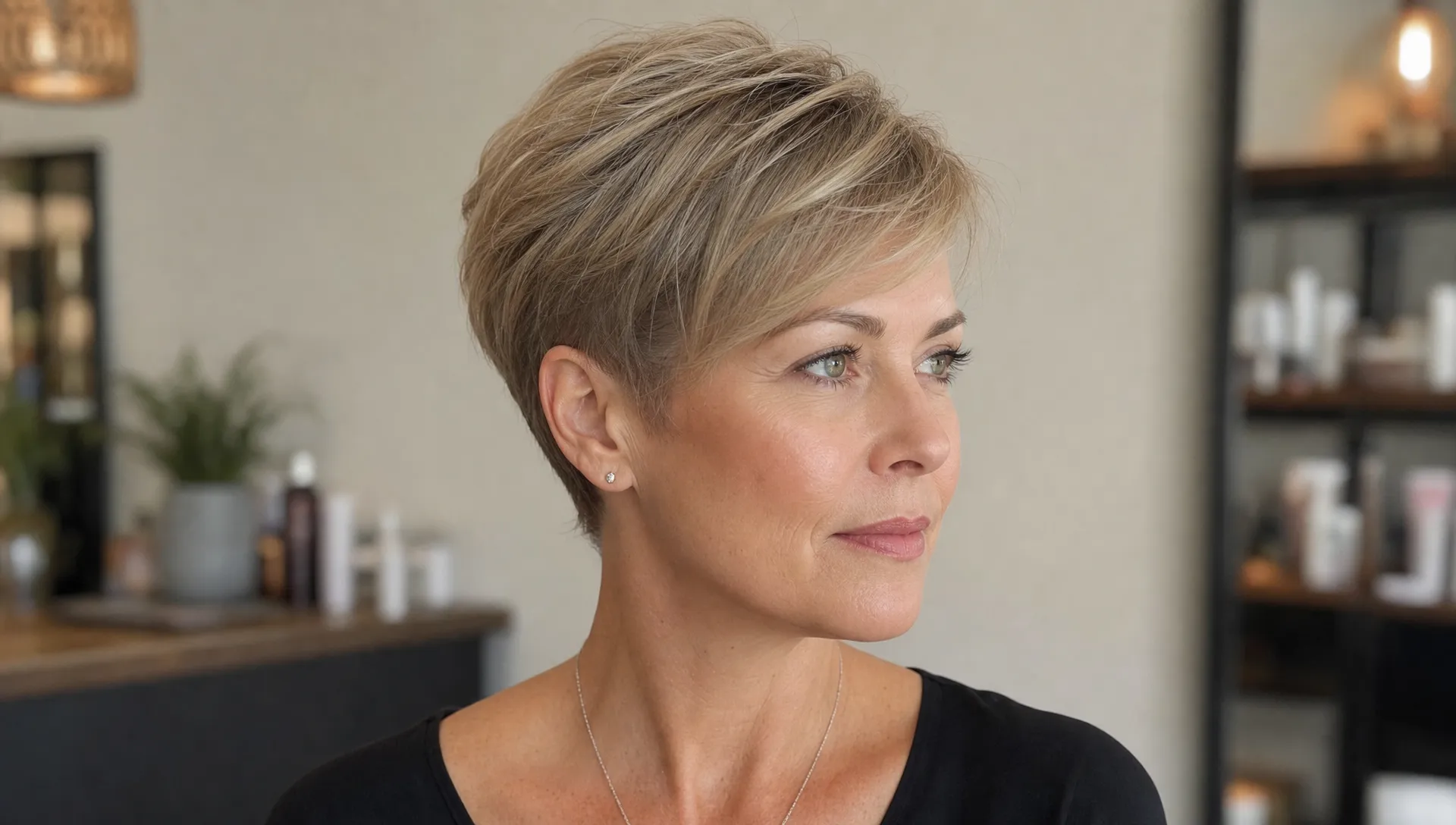
A soft tapered pixie is one of the most reliable choices for fine hair. The sides and neckline are kept neat while the top has enough length to lift, bend or sweep to the side. This contrast makes the crown appear fuller without needing dramatic height.
Ask for soft tapering around the ears and nape, with crown layers that support volume rather than collapse. This cut is especially flattering if your hair has a slight wave or if you like a polished but not overly styled finish.
Side-swept pixie #
A side-swept pixie uses direction to create fullness. Instead of letting the hair fall straight down, the fringe moves across the forehead or slightly back from the face. That diagonal line gives the style more surface area, which can make fine hair look thicker.
This is a strong option if your front hairline is finer or if you want softness around the face. The fringe should be tailored carefully. Too much length can fall flat, but too little can remove the movement that makes the cut flattering.
Textured crop with a fuller top #
A textured crop can be great for fine hair when the texture is precise. The goal is not choppy hair everywhere. It is a softly piecey top with enough internal movement to keep the style from looking solid or limp.
This type of pixie works well with lightweight styling paste, texture spray or mousse. The best version keeps the sides clean and the top touchable. If you like a more modern, casual look, this may be your best match.
Long pixie with face-framing length #
A long pixie gives fine hair more styling flexibility while still removing the weight that can make longer cuts fall flat. It can be tucked behind the ear, styled with a side part or worn with a soft fringe.
The danger with a long pixie is leaving too much length in the wrong places. If the ends are thin, the cut can start to feel like an overgrown short haircut rather than a designed style. A stylist may keep fullness around the crown and temples while shaping the ends so they move without looking sparse.
If you are drawn to short hair but want room to style it in different ways, these long pixie cut ideas can help you think through the softer, more versatile side of the look.
Bixie-inspired pixie #
A bixie-inspired pixie sits between a bob and a pixie. It is a smart choice if you want volume but are not ready for a very short crop. The slightly longer outline can make fine hair feel fuller around the cheekbones and jawline, while shorter interior shaping keeps the top from feeling flat.
This shape is especially useful for clients who like movement but still want a feminine, soft finish. It can also grow out more gently than a very short pixie, which is helpful if you prefer fewer dramatic maintenance appointments.
Wavy or curly pixie for fine hair #
Fine hair with wave or curl can look beautifully full in a pixie because natural texture creates lift. The cut should support the curl pattern rather than slicing into it too heavily. With the right shape, curls can stack softly through the crown and create fullness without a lot of product.
For this style, the dry shape matters. Fine curls can shrink, spring up or separate in unexpected places, so your stylist should consider how the hair sits naturally and how you prefer to style it day to day.
What to ask for during your pixie consultation #
The consultation is where a fuller-looking pixie is won or lost. Photos help, but the conversation should go deeper than showing a celebrity haircut. Your stylist needs to know how your hair behaves, where it falls flat, how much time you want to spend styling and whether you are open to color or conditioning treatments.
Useful phrases to bring into the consultation include:
- “I want the crown to look lifted, not bulky.”
- “Please keep the perimeter from looking too wispy.”
- “I like texture, but I do not want my fine hair over-thinned.”
- “I need a style I can refresh quickly in the morning.”
- “I want the front to feel soft, but not so long that it falls flat.”
Bring two or three inspiration photos, ideally from multiple angles. A front-facing photo alone does not show how the crown, sides or neckline are cut. Search results and social feeds can be helpful for direction, but they usually show the most polished version of a haircut. For beauty professionals, publishing clear haircut education is part of the same client-discovery logic behind an inbound marketing strategy, because useful content helps people make better decisions before they ever sit in the chair.
For clients, the takeaway is simple. Use inspiration photos to communicate mood and shape, then let your stylist adapt the cut to your hair density, face shape and lifestyle.
Styling fine hair after a pixie cut #
The right pixie should not require complicated styling, but fine hair usually benefits from a little root support. Heavy creams, oils and waxes can flatten the hair quickly, so choose lightweight products and apply them sparingly.
Start with damp hair and apply a small amount of volumizing mousse or root spray through the top and crown. Blow dry with your fingers first, lifting the hair in the opposite direction you want it to fall. This creates natural root lift before you refine the shape.
Once the hair is dry, use a tiny amount of styling paste or a light texture spray to separate the ends. Focus on the top and fringe, not the entire head. Fine hair can go from styled to coated very quickly, so build product in small amounts.
If you use heat tools, keep the temperature moderate and avoid pressing the hair flat against the head. A small round brush, vent brush or even finger styling can create more airy volume than a flat iron. The finished look should feel soft, not stiff.
Color choices that make a pixie look thicker #
Color can change how full a pixie appears. Dimensional color creates shadows and highlights that make the hair look more textured. A subtle root shadow, soft lowlights or carefully placed highlights can add depth without making fine hair look striped.
For very fine hair, all-over solid color can sometimes make the shape look flatter, especially if the shade is very dark against a lighter scalp. On the other hand, going too light without enough depth can make the hairline appear softer than you want. The most flattering choice often sits between the two, with tone variation that supports the haircut.
Condition also matters. Fine hair reflects light best when the cuticle is smooth, so conditioning treatments and gentle color maintenance can make a short cut look healthier and fuller. If your hair is fragile from previous lightening or heat styling, your stylist may recommend repairing the condition before making a major color change.
How often should a fine-hair pixie be trimmed? #
Most pixie cuts look their best with regular shaping. For fine hair, small changes in length can make a big difference because the style depends on balance. When the neckline grows out or the crown gets too long, the lift can disappear.
Many short pixies benefit from a trim every 4 to 6 weeks. Longer pixies may stretch closer to 6 to 8 weeks, depending on your shape and how clean you want the perimeter to stay. If you are growing your pixie out, maintenance trims still help prevent the cut from turning bulky in the wrong places.
A good maintenance plan should match your lifestyle. If you want a very precise tapered shape, expect more frequent visits. If you prefer a softer long pixie, you may have more flexibility between appointments.
Frequently Asked Questions #
Are pixie cuts good for fine hair? Yes. Pixie cuts can be excellent for fine hair because they remove excess weight and allow the crown to lift more easily. The best results come from a shape that keeps enough density at the perimeter and avoids over-thinning.
Which pixie cut makes fine hair look thickest? A soft tapered pixie with crown lift, a side-swept pixie or a long pixie with structured ends can all make fine hair look fuller. The thickest-looking option depends on your density, hairline and natural texture.
Should fine hair be layered in a pixie cut? Fine hair can be layered, but the layering should be controlled. Soft crown layers and subtle internal movement can add volume, while aggressive texturizing can make fine hair look sparse.
Can bangs work with a pixie cut for fine hair? Yes, especially side-swept or softly textured bangs. Heavy blunt bangs may be too dense for some fine hair types, but a customized fringe can add shape, coverage and movement around the face.
Will a pixie cut make thin spots more visible? It depends on the cut. A well-planned pixie can disguise flatness and improve shape, but cutting too short in low-density areas may expose the scalp. This is why a personalized consultation is essential.
Ready for a fuller-looking pixie? #
A pixie cut for fine hair should feel custom, not copied. The right shape can create lift, softness and the look of more volume while still fitting your daily routine.
At Kingdom Cute Hair Salon in Warner Robins, GA, clients receive personalized consultations for haircuts, color, styling and treatments in a relaxing salon environment. If you are ready to explore a short style that works with your fine hair, book your appointment with Kingdom Cute and start with a cut designed around you.
Tags: pixie cuts for fine hair