Publish on by Kingdom Cute Luxury Hair Salon
- Start With Your Lifestyle, Not Just Your Dream Photo
- Common Extension Options and Who They Usually Fit
- If You Have a Busy Schedule
- If You Work Out Often or Sweat Regularly
- If Your Hair Is Fine, Fragile or Thinning
- If You Love Heat Styling, Silk Presses or Sleek Looks
- If You Want a Protective Style
- If You Need Bridal or Event Hair
- Match Your Hair Health to the Right Extension Plan
- Maintenance Is Part of the Look
- The Consultation Should Feel Personalized
- Red Flags That a Method May Not Fit You
- How to Choose With Confidence
- Frequently Asked Questions
- Ready for Extensions That Fit Your Life?
Choosing hair extensions is not only about length, fullness or the style you saved on your phone. The right method should fit the way you live, how often you style your hair, how much time you can give to maintenance and the current condition of your natural hair.
A beautiful install can still be the wrong choice if it feels heavy, tangles after every workout or puts stress on fragile edges. On the other hand, the right extensions can make your routine easier, help your style last longer and give you a polished look that still feels like you.
At Kingdom Cute in Warner Robins, GA, the best extension decisions start with a personalized consultation. Your stylist should look at your hair density, scalp condition, texture, goals and schedule before recommending a method. This guide will help you walk into that conversation with clearer expectations.
Start With Your Lifestyle, Not Just Your Dream Photo #
Inspiration photos are useful, but they do not show the full story. A long, waist-length look may be gorgeous, but if you work out daily, swim often, wear your hair up for work or prefer a fast wash day, your stylist may suggest a lighter or more flexible option.
Before you choose any extension method, think about how your hair has to function during a normal week. Do you need a style that survives humidity? Do you like sleek ponytails? Are you willing to come back for maintenance appointments? Do you sleep with your hair protected or loose? These small habits matter because extensions add hair, weight and care responsibilities to your routine.
A healthy match should support three things at the same time: your desired look, your natural hair and your actual lifestyle. If one of those is ignored, the result may look good for a few days but become frustrating later.
Common Extension Options and Who They Usually Fit #
Every head of hair is different, so this table is not a substitute for a professional consultation. It can help you understand the general lifestyle and hair health considerations behind common extension choices.
| Extension type | Often fits this lifestyle | Hair health considerations | Upkeep level |
|---|---|---|---|
| Clip-ins | Occasional glam, photos, events, bridal styling or temporary fullness | Best when removed properly and not clipped into weak or irritated areas repeatedly | Low when used occasionally |
| Tape-ins | Clients who want a flatter, more natural daily look with moderate maintenance | Adhesive placement must avoid fragile hair and product buildup can affect hold | Moderate |
| Sew-ins or wefts | Clients wanting fullness, protective styling support or longer wear | Braids, thread and weft weight must be balanced to avoid excess tension | Moderate to high |
| Microlinks or individual extensions | Clients who want movement and strand-by-strand blending | Not ideal for very weak, shedding or easily tangled hair without careful evaluation | High |
| Temporary event pieces | Bridal, prom, parties or short-term transformation | Usually less commitment, but still needs proper placement and removal | Low to moderate |
If you are still learning the basics, Kingdom Cute has a helpful extensions hair guide for first-time clients that explains what extensions can do and what to expect before booking.
If You Have a Busy Schedule #
If your calendar is full and you need your hair to look polished with minimal daily effort, choose a method that works with your maintenance habits. Some clients love the idea of high-impact length, but they do not have time for careful detangling, section-by-section blow drying or frequent salon visits. That mismatch can create tangles, matting or stress on the natural hair.
Busy clients often do best with extensions that blend easily, do not require complicated styling every morning and can be maintained on a predictable schedule. The goal is not necessarily the lowest-maintenance method. The goal is a method you can realistically care for.
Ask your stylist how long wash day will take, whether you can air dry safely, how often you need maintenance and what happens if you travel or delay an appointment. A good extension plan should fit your life outside the salon.
If You Work Out Often or Sweat Regularly #
Fitness routines can affect extension longevity. Sweat, salt, frequent washing and tight ponytails can all change how the hair behaves. This does not mean active clients cannot wear extensions. It means the method, placement and aftercare need to be chosen with movement in mind.
If you work out several times a week, tell your stylist exactly what that looks like. Running, hot yoga, strength training and outdoor sports create different hair care challenges. You may need a method that allows you to cleanse your scalp well, dry your roots thoroughly and wear your hair in secure but low-tension styles.
After workouts, avoid leaving the roots damp for long periods. Moisture trapped near attachment points can make tangling more likely and may affect comfort. A breathable routine matters just as much as a beautiful install.
If Your Hair Is Fine, Fragile or Thinning #
Fine hair does not automatically rule out extensions, but it does require a careful approach. The wrong weight, density or attachment method can make fine hair look strained instead of full. Fragile hair needs even more caution, especially if you are dealing with breakage, shedding, postpartum changes, chemical damage or sensitive edges.
A health-first stylist may recommend a lighter density, shorter length or temporary solution before a full install. That is not a downgrade. It is a smarter way to protect the hair you already have.
If your scalp is irritated, flaky, sore or inflamed, address that before committing to extensions. Extensions should not be used to hide a scalp issue that needs care. At Kingdom Cute, scalp and conditioning treatments can be part of the bigger conversation about whether your hair is ready for added length or volume.
If You Love Heat Styling, Silk Presses or Sleek Looks #
Clients who enjoy sleek styling should think about how extensions will respond to heat, humidity and repeated smoothing. A silk press or polished blowout can pair beautifully with the right extensions, but the hair texture, installation pattern and finish need to work together.
If your natural hair reverts quickly in humidity or you switch between curly and straight styles, be honest about that during the consultation. Your stylist may recommend a texture match that gives you more flexibility or explain what type of upkeep is needed to keep the finish consistent.
Heat protection is non-negotiable. Extensions can be damaged by excessive heat just like natural hair. If you use hot tools often, you will need the right temperature, styling products and schedule for trims or refreshes.
If You Want a Protective Style #
Extensions can support protective styling, but only when the style actually protects. A protective style should reduce daily manipulation, keep your hair supported and avoid unnecessary tension. It should not pull at your edges, feel painfully tight or make your scalp feel sore for days.
For natural hair clients, sew-ins, certain weft methods and other protective styles can be excellent options when installed with the right foundation. The braid pattern, extension weight and leave-out plan all matter. So does what happens after the install. If you neglect cleansing, moisturizing or maintenance, a protective style can become the opposite of protective.
Talk with your stylist about whether your goal is length retention, a break from heat styling, more volume or a full transformation. Those goals may lead to different extension choices.
If You Need Bridal or Event Hair #
Event clients often need a different extension strategy than everyday wear clients. For weddings, photo shoots or formal events, temporary pieces can add fullness, shape and drama without requiring a long-term commitment. This can be especially helpful if you want romantic waves, a fuller updo or extra length for a style that your natural hair cannot support on its own.
Bridal and event styling also depends on timing. You may need a trial appointment to test the placement, color match and final shape. If you plan to color your hair before the event, schedule the color service before final extension matching so the tones blend properly.
The best event extensions should photograph beautifully, stay secure and feel comfortable for the full day. You should not be worrying about slipping clips or visible tracks while you are trying to enjoy the moment.
Match Your Hair Health to the Right Extension Plan #
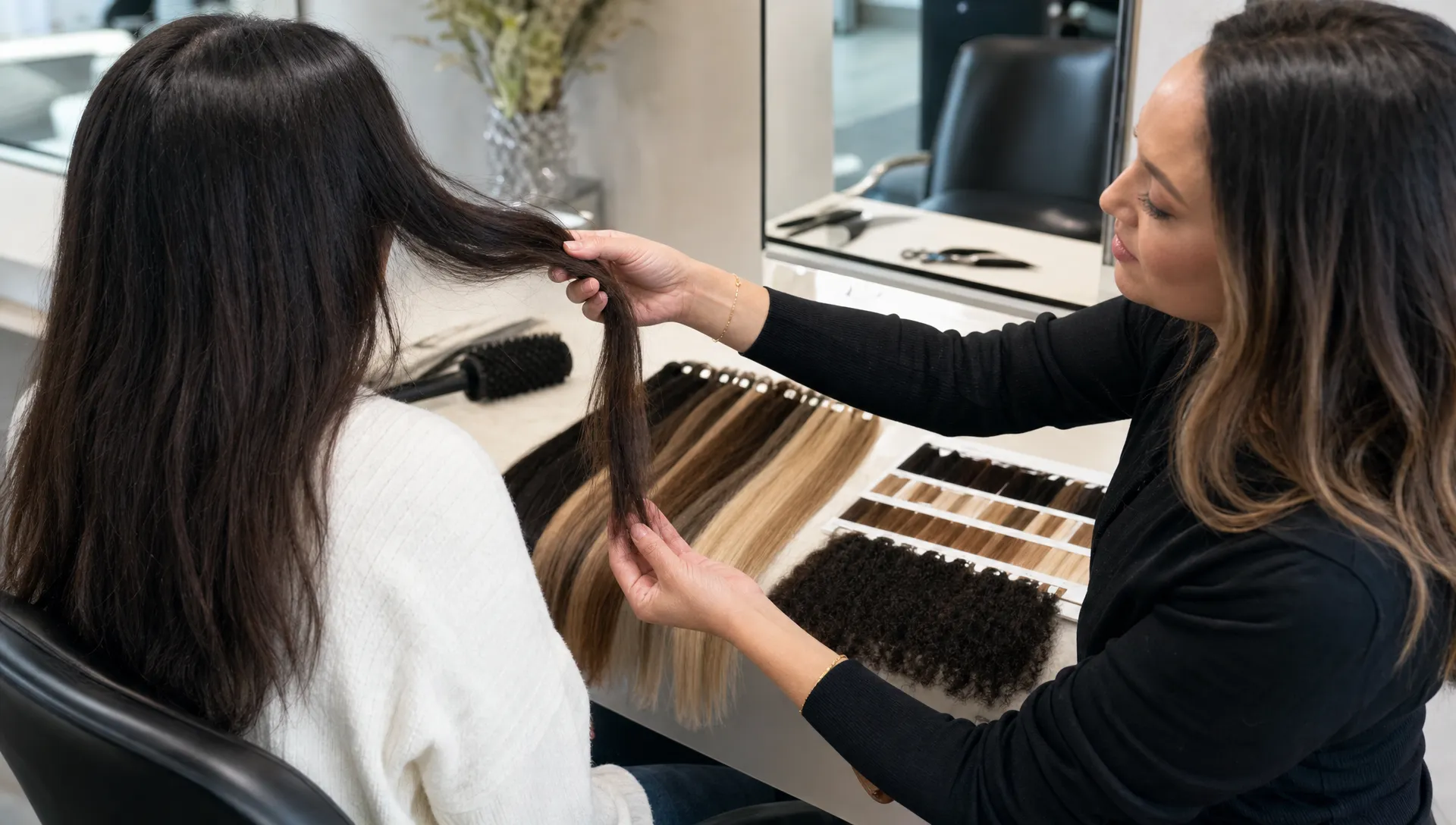
Your hair health should guide the method, density and length. A consultation should include more than a quick glance at your ends. Your stylist should check density at the root, elasticity, scalp comfort, breakage patterns, chemical history and your current home care habits.
| If your hair is currently… | What your stylist may consider | Why it matters |
|---|---|---|
| Strong and dense | More extension options and fuller density | Healthy hair can usually support more weight when installed correctly |
| Fine but healthy | Lighter density, careful placement and strong blending | Too much hair can overwhelm fine strands |
| Breaking or overprocessed | Treatment plan before or alongside extensions | Extensions should not add stress to compromised hair |
| Sensitive at the scalp | Lower-tension options or delayed installation | Comfort and scalp health come first |
| Recently colored | Color-safe maintenance and proper timing | Fresh color and extensions need a blend plan |
If your main goal is professional length or volume, review Kingdom Cute’s hair extensions services to see how a salon-based approach can support a polished, natural-looking result.
Maintenance Is Part of the Look #
Extensions are not finished when you leave the salon. The real test is how they look and feel after two weeks, four weeks and beyond. Maintenance protects your investment and your natural hair.
Most extension problems come from a few predictable issues: waiting too long between appointments, sleeping without protection, using heavy products near attachment points, detangling too aggressively or letting shed hair collect. Your stylist should explain how to prevent those problems before they start.
A strong aftercare routine usually includes gentle detangling, proper cleansing, drying the roots when needed, using recommended products and protecting the hair at night. If you want your salon result to last, the habits matter. For a deeper routine refresher, Kingdom Cute shares practical advice in its guide to healthy hair habits your stylist wishes you knew.
The Consultation Should Feel Personalized #
A good extension consultation should not feel rushed or generic. Your stylist should ask about your hair history, styling routine, budget for upkeep, comfort level and desired finish. They should also explain the tradeoffs clearly. For example, a fuller look may require more maintenance, and a lower-maintenance look may require a more modest length or density.
The service experience matters too. Salons are part of the beauty industry, but they are also service businesses where communication, follow-up and consistency shape the client experience. In other industries, brands often work with customer service teams and CX consulting to make every touchpoint smoother. A salon consultation should have that same client-first mindset, with clear expectations from the first conversation through aftercare.
Before booking, it is fair to ask what method is recommended, why it fits your hair, how long the appointment takes, how maintenance works and what signs mean you should come back sooner. Those questions protect both your style and your hair health.
Red Flags That a Method May Not Fit You #
Even if you love the final look, listen to your scalp and your daily routine. Extensions should feel secure, but they should not feel painful. They should add confidence, not anxiety.
Watch for these signs that your extension plan may need adjustment:
- Your scalp feels sore, tight or tender beyond the initial adjustment period
- You notice breakage around attachment points or edges
- You cannot cleanse or dry your scalp properly
- The hair tangles heavily despite proper care
- The style requires more time than you can realistically give it
- You feel pressure to choose a method before your hair has been evaluated
If something feels wrong, contact your stylist instead of trying to fix it at home. Early adjustments can prevent bigger problems.
How to Choose With Confidence #
The best hair extensions are not always the longest, thickest or most dramatic. They are the ones that make sense for your real life and keep your natural hair in the best possible condition.
Go into your appointment ready to talk honestly about your routine. Share if you sweat often, wear ponytails daily, heat style every week, sleep without wrapping your hair or have struggled with breakage. Your stylist is not there to judge those habits. They need that information to create a look you can actually maintain.
At Kingdom Cute, extensions are part of a larger beauty experience that includes precision styling, color, treatments and personalized care. When the consultation is thoughtful, the install is customized and the aftercare is realistic, your extensions can feel like an upgrade instead of an obligation.
Frequently Asked Questions #
Which hair extensions are best for everyday wear? The best extensions for everyday wear depend on your natural hair, lifestyle and maintenance habits. Tape-ins, wefts, sew-ins and individual methods can all work for daily wear when the method is chosen correctly and installed with hair health in mind.
Can I get extensions if my hair is damaged? Sometimes, but damaged hair needs a careful evaluation first. Your stylist may recommend conditioning treatments, a trim, a lighter install or a temporary option before adding longer-term extensions.
Are extensions bad for your natural hair? Extensions are not automatically damaging. Damage usually happens when the method is too heavy, installed with too much tension, left in too long or maintained poorly. A professional consultation and proper aftercare reduce those risks.
How do I know if my lifestyle fits hair extensions? Think about your weekly routine, including workouts, wash days, heat styling, sleep habits and appointment availability. If your stylist understands those details, they can recommend a method that fits your life instead of fighting it.
Should I choose extensions before or after coloring my hair? In many cases, it is best to finalize your color before matching extensions so the blend looks seamless. Your stylist can help you plan the timing if you want both color and extensions.
Ready for Extensions That Fit Your Life? #
If you are considering extensions in Warner Robins, start with a consultation that looks at more than your inspiration photo. Kingdom Cute can help you explore length, volume, color blending, styling goals and hair health in one personalized conversation.
Book your appointment online and let your stylist help you choose extensions that feel beautiful, comfortable and realistic for your routine.
Tags: extensions