Publish on by Kingdom Cute Luxury Hair Salon
- What Hair Extensions Can Do for Your Look
- Start With Your Natural Hair and Scalp Health
- Common Hair Extension Options First-Time Clients May Hear About
- What Happens During a Hair Extension Consultation
- Choosing Length, Density, and Color Without Regret
- How to Prepare Before Your First Extension Appointment
- Maintenance: The Part That Protects Your Investment
- Budget and Timing: What First-Time Clients Should Know
- Green Flags and Red Flags When Choosing an Extension Stylist
- What Your First Week With Extensions May Feel Like
- Frequently Asked Questions
- Ready for Your First Extension Experience?
If you are thinking about hair extensions for the first time, you are probably excited, curious, and a little unsure about what to expect. That is normal. Extensions can add length, fullness, shape, color dimension, and styling flexibility, but the best results come from choosing the right method for your hair, your lifestyle, and your long-term hair health.
Think of this as your extension hair guide before you sit in the salon chair. You will learn what extensions can realistically do, how consultations work, which questions to ask, how to prepare, and how to care for your new look after your appointment.
What Hair Extensions Can Do for Your Look #
Hair extensions are not one-size-fits-all. For some clients, they are a way to finally enjoy the long, flowing style they have been growing toward for years. For others, they add fullness around the sides, help fill in a shape, create a special-event style, or allow a color effect without heavily lightening natural hair.
A great extension service should look intentional, not obvious. The goal is not just longer hair. The goal is hair that moves well, blends with your texture, feels secure, and supports the look you actually want to wear every day.
Hair extensions may help you:
- Add length while your natural hair grows
- Create fuller-looking styles, especially around the sides or ends
- Add volume for curls, waves, silk presses, or formal styling
- Try dimensional color with less chemical processing on your own hair
- Support bridal, photo shoot, birthday, or special-event looks
- Build a protective or low-manipulation style when appropriate
What extensions should not do is cover up serious breakage, scalp irritation, or hair loss without a plan. If your hair or scalp is struggling, a skilled stylist should talk through conditioning treatments, scalp care, trims, or a different service timeline before recommending an install.
Start With Your Natural Hair and Scalp Health #
Before choosing the prettiest length or most dramatic style, your stylist needs to understand the condition of your natural hair. Your density, strand size, texture, scalp sensitivity, shedding pattern, and current hair care routine all affect which extension options are safe and flattering.
For example, fine hair may need a lighter, more discreet approach so the extensions do not feel heavy or show through. Coily or curly textures may need careful blending, moisture planning, and a method that works with your styling routine. Color-treated or chemically relaxed hair may need extra conditioning support before and after installation.
If you are not sure how your texture affects your options, Kingdom Cute’s guide to understanding different hair types and textures is a helpful starting point before your consultation.
A good stylist will look for signs such as dryness, weak ends, scalp tenderness, excessive shedding, thinning areas, or breakage near the hairline. This is not to discourage you. It is to make sure your extensions enhance your hair instead of creating new problems.
Common Hair Extension Options First-Time Clients May Hear About #
Your stylist may discuss several types of extensions depending on your goals. Not every method is right for every client, and availability can vary by salon, stylist, and hair type. The important thing is to understand the basic differences before you decide.
| Extension option | Often chosen for | First-time client considerations |
|---|---|---|
| Clip-ins | Temporary volume or event styling | Easy to remove, but not meant for long-term daily wear if they create tension |
| Tape-ins | Lightweight length and fullness | Require careful product use and regular move-up appointments |
| Sew-ins or wefts | Fuller looks and protective styling plans | Installation tension and foundation health matter a lot |
| Microlinks or I-tips | Strand-by-strand movement and flexibility | Maintenance is important, and not every hair type is an ideal match |
| Keratin bonds or K-tips | Longer-lasting individual placement | Removal must be professional to protect natural hair |
| Wigs or custom units | Versatile styling and coverage | Fit, foundation, and scalp care are key to comfort and realism |
This table is a general overview, not a substitute for a consultation. Your best option depends on your hair’s current condition, your desired result, how often you style it, your budget, and your commitment to maintenance.
What Happens During a Hair Extension Consultation #
A consultation is where your extension plan becomes realistic. You should expect more than a quick yes or no. A thoughtful stylist will ask about your hair history, current products, color services, heat styling habits, previous extension experiences, and what you want your finished style to look like.
Bring inspiration photos, but choose them carefully. Try to find images that match your natural texture, hair density, face shape, and lifestyle. A photo of very thick waist-length curls may not translate the same way if your natural hair is fine, shoulder-length, and worn straight most days.
Your stylist may discuss:
- The best method for your hair and scalp
- How much hair is needed to achieve your look
- Color matching or custom coloring needs
- Whether your natural ends need trimming first
- How long will the appointment take
- Maintenance appointments and at-home care
- Product recommendations and styling limits
- Pricing, deposit expectations, and salon policies
If you want to feel more confident before booking, review these questions to ask a salon before getting extensions. Clear questions help you understand the process, avoid surprises, and choose a stylist who prioritizes healthy results.
It can also help to approach extensions like any meaningful service investment. Whether someone is comparing a salon experience or researching flat-fee MLS and full-service real estate options, the smart move is the same: understand what is included, what happens next, and what responsibilities you have after the service begins.
Choosing Length, Density, and Color Without Regret #
Many first-time clients want a dramatic transformation, but the most wearable extension results usually respect your natural hair. Longer is not always better if the added length does not blend with your haircut, density, or everyday styling habits.
For a natural result, your stylist may recommend a length that works with your current layers and ends. If your natural hair is blunt, very short, or significantly different in density from the desired look, blending may require a haircut, additional hair, or a more gradual approach.
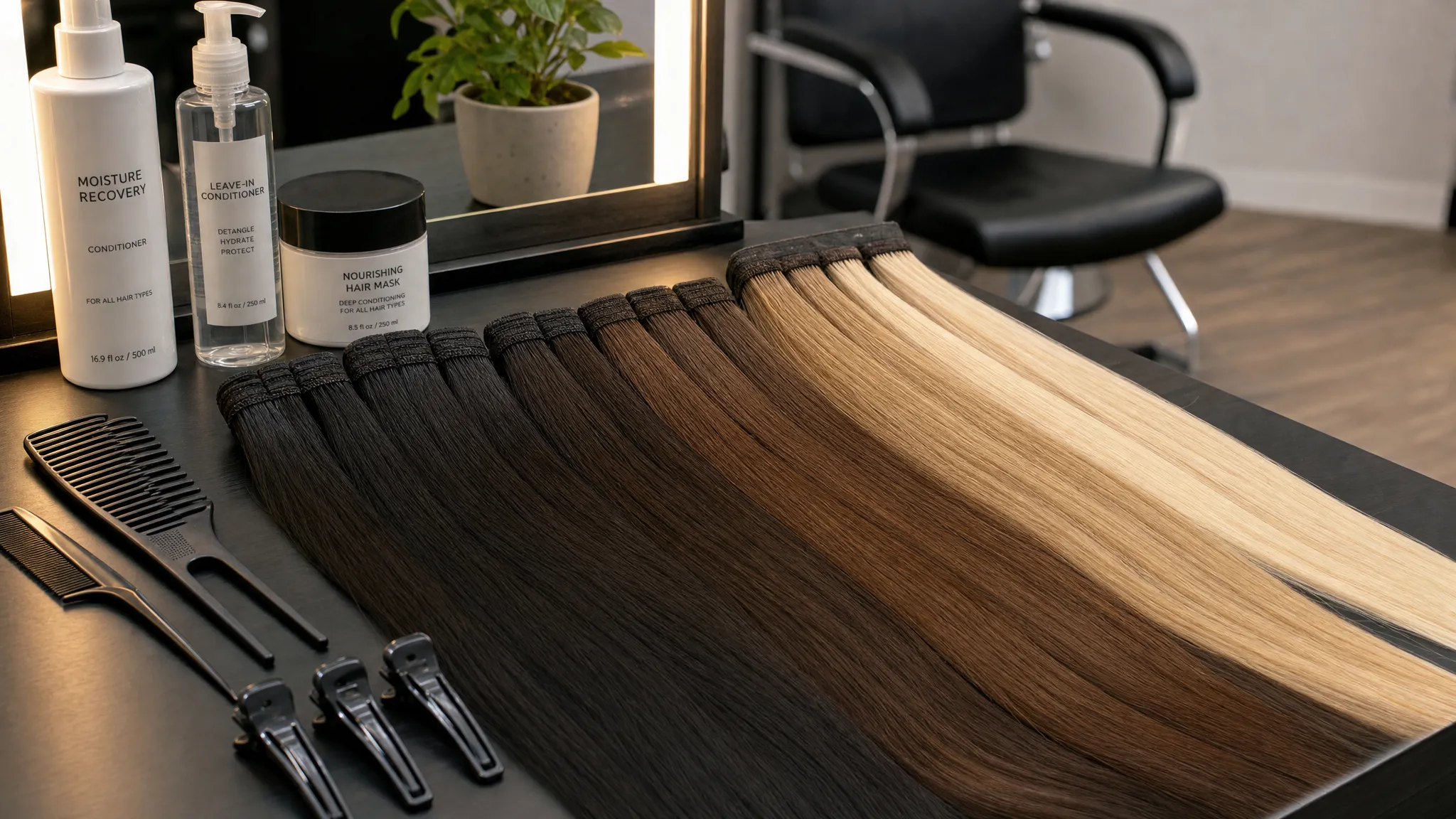
Density matters just as much as length. If the extensions are too thick compared with your natural hair, they can look bulky or disconnected. If they are too light, the finished style may not give you the fullness you expected. Color matching is also more detailed than simply choosing black, brown, blonde, or red. Undertones, highlights, lowlights, root depth, and finish all affect how seamless the final result appears.
For first-time clients, subtle upgrades often age better than extreme changes. A few extra inches, soft fullness, or blended dimension can feel luxurious without becoming difficult to maintain.
How to Prepare Before Your First Extension Appointment #
Preparation helps your stylist work more efficiently and helps you get a better result. Follow your salon’s specific instructions first, because different methods may require different prep. In general, arrive with your hair clean, detangled, and free of heavy oils or product buildup unless your stylist tells you otherwise.
You should also be honest about your hair history. Tell your stylist if you have had bleach, relaxers, keratin treatments, box dye, postpartum shedding, medication changes, scalp irritation, or previous extension damage. These details are not embarrassing. They help your stylist protect your hair.
A few days before your appointment, gather two or three inspiration photos, write down your main goal, and think about your daily routine. Do you work out often? Do you wear ponytails? Do you swim? Do you prefer heat styling or low-maintenance looks? These answers can change the recommendation.
For a broader appointment checklist, Kingdom Cute’s guide on how to prepare for your next hair appointment covers simple steps that make any salon visit smoother.
Maintenance: The Part That Protects Your Investment #
Hair extensions look their best when maintenance is part of the plan from day one. The install is only the beginning. Your daily care, wash routine, styling habits, and follow-up appointments determine how well your extensions wear and how healthy your natural hair stays underneath.
Your stylist should explain how to brush, cleanse, condition, dry, sleep, and style your extensions. They should also tell you which products to avoid. Some methods do not pair well with heavy oils near the attachment area, while others require extra moisture through the mid-lengths and ends.
Good extension care usually includes gentle detangling, sleeping with hair secured, drying attachment areas properly, limiting excessive heat, and keeping up with scheduled maintenance. You should never ignore matting, slipping, scalp soreness, or tension bumps. Discomfort is a sign to contact your stylist, not something to push through.
The American Academy of Dermatology warns that hairstyles pulling tightly on the hair can contribute to hair loss over time, often discussed as traction-related damage. Their guidance on hairstyles that cause pulling and hair loss is a good reminder that beauty services should never sacrifice scalp health.
Budget and Timing: What First-Time Clients Should Know #
Hair extensions are a luxury service because they require skill, planning, quality hair, installation time, and maintenance. Pricing can vary widely based on method, amount of hair, hair quality, length, color work, stylist expertise, and future upkeep.
Instead of shopping by the lowest price alone, ask what is included. Does the quote include the hair itself? Is color matching separate? Will there be a haircut or blending service? Are maintenance appointments included or scheduled separately? Is removal priced separately? How often will you need to come back?
Time matters too. Some extension services require a consultation, color matching, hair ordering, a deposit, and a separate installation day. Bridal or event clients should plan even earlier so there is time for installation, adjustments, and a trial style if needed.
A first-time client should leave the consultation knowing the approximate timeline, maintenance schedule, and total commitment. If anything feels unclear, ask before booking the installation.
Green Flags and Red Flags When Choosing an Extension Stylist #
Choosing the right stylist is one of the most important decisions you will make. Extensions require technical skill, but they also require judgment. A stylist should know when to recommend a method, when to modify a plan, and when to wait until the hair is healthier.
| Green flag | Red flag |
|---|---|
| The stylist evaluates your scalp and natural hair first | The stylist promises any look without checking your hair’s health |
| You receive clear maintenance instructions | You are told extensions require little or no upkeep |
| Pricing and timing are explained before booking | Costs are vague until the appointment is underway |
| The stylist discusses blending, color, and density | The focus is only on length |
| You feel comfortable asking questions | Your concerns are rushed or dismissed |
Trust is essential. If a salon gives you time, explains your options, and prioritizes the health of your natural hair, that is a strong sign you are in the right place.
What Your First Week With Extensions May Feel Like #
Your first few days may feel different, especially if you have never worn added hair before. You may notice extra weight, a different brushing routine, or a new way of sleeping. A little awareness is normal. Pain, sharp pulling, scalp bumps, or intense tightness are not.
Give yourself time to learn the routine. Brush as instructed, avoid rough handling, and do not experiment with products your stylist has not approved. If something feels off, contact the salon early. Small adjustments are easier than fixing preventable damage later.
It is also normal to need a confidence adjustment. Extensions can change how you see yourself in the mirror. Enjoy the transformation, but also pay attention to how the style fits your real life. The best extensions make you feel polished, not trapped in high-maintenance hair you do not enjoy caring for.
Frequently Asked Questions #
How do I know which hair extensions are right for me? The right method depends on your hair health, texture, density, lifestyle, budget, and desired result. A professional consultation is the safest way to make a choice.
Will hair extensions damage my natural hair? Extensions should not damage your hair when they are properly selected, installed, maintained, and removed. Damage is more likely when there is too much tension, poor maintenance, improper removal, or a method that does not suit your hair.
How long do hair extensions last? It depends on the method, hair quality, home care, and maintenance schedule. Your stylist should explain the expected wear time and when to return for move-ups, tightening, removal, or reinstallation.
Can I get extensions if my hair is short? Sometimes, but blending is more challenging with very short hair. Your stylist will assess whether your current length and density can support the look you want.
Can I wash and style my hair normally with extensions? You can still wash and style your hair, but your routine may need to change. Your stylist may recommend specific brushes, products, drying techniques, and heat limits.
Should I color my hair before or after extensions? This depends on your current color, desired result, and extension method. In many cases, color planning should happen before installation so the extensions blend properly.
Ready for Your First Extension Experience? #
Your first hair extension appointment should feel exciting, informed, and personalized. At Kingdom Cute in Warner Robins, GA, clients can expect a consultation-focused salon experience designed around beauty, confidence, and healthy-looking results.
If you are ready to explore hair extensions, protective styles, color, styling, or treatments that support your next look, visit Kingdom Cute to learn more or to book your appointment online.
Tags: extensions hair