Publish on by Kingdom Cute Luxury Hair Salon
- Why medicated dandruff shampoo can dry out hair
- Pick the right active ingredient for your scalp and hair
- Set a schedule that treats flakes without over-washing
- How to apply medicated dandruff shampoo the right way
- Rebuild moisture after every medicated wash
- Common mistakes that make dryness worse
- Adjust the routine for your hair type
- Color-treated or highlighted hair
- Relaxed hair and silk press routines
- Curls, coils and protective styles
- Fine or oily hair
- When medicated shampoo is not enough
- How a salon can help protect your hair during dandruff care
- Frequently Asked Questions
- Ready for a scalp-friendly hair plan?
Medicated dandruff shampoo can be a lifesaver when flakes, itching and oily patches keep coming back. It can also leave hair feeling rough, tight or straw-like when it is used too often or worked through the wrong parts of the hair.
The key is to treat the scalp without punishing the strands. That matters even more if your hair is color-treated, relaxed, naturally curly, coily, heat styled or already dry at the ends. A medicated formula needs direct scalp contact, but your mid-lengths and ends usually need protection, moisture and a gentler touch.
Below is a practical, salon-friendly way to use medicated dandruff shampoo while keeping hair soft, manageable and healthy-looking.
Why medicated dandruff shampoo can dry out hair #
Dandruff is a scalp issue, not a hair-length issue. Many cases involve oil, Malassezia yeast and scalp irritation, though flakes can also come from dry scalp or product buildup. If you are not sure what you are treating, start by learning how to tell the difference in this guide on choosing the right dandruff treatment for your scalp.
Medicated shampoos are different from regular moisturizing shampoos because they are designed to deliver active ingredients to the skin. That means they often need a few minutes of contact time before rinsing. The problem starts when the shampoo is treated like a full-hair cleanser instead of a targeted scalp treatment.
Dryness usually happens when:
- You use the medicated shampoo more often than the label or your stylist recommends.
- You scrub it through color-treated, relaxed, curly or porous ends.
- You leave it on longer than directed hoping for faster results.
- You rinse with hot water or skip conditioner afterward.
- You combine it with clarifying shampoo, scalp scrubs or strong exfoliating treatments on the same wash day.
The goal is simple: let the active ingredient reach the scalp, then quickly restore slip and moisture to the hair.
Pick the right active ingredient for your scalp and hair #
Not all medicated dandruff shampoos work the same way. Some target yeast, some help loosen scale and some are stronger than others. The American Academy of Dermatology Association recommends following the product label and choosing a dandruff shampoo based on hair type, scalp needs and response to treatment.
Here is a quick comparison of common active ingredients you may see on the label.
| Active ingredient | Often used for | Dryness watch-out |
|---|---|---|
| Zinc pyrithione | Mild to moderate flakes and itching | Usually manageable, but can still dry ends if overused |
| Ketoconazole | Stubborn dandruff often linked with yeast | Can feel drying if used too often, so follow the label closely |
| Selenium sulfide | Oily dandruff and heavier flaking | Rinse thoroughly, especially on lighter or color-treated hair |
| Salicylic acid | Thick scale or buildup that needs loosening | Can make hair feel dry if conditioner is skipped |
| Coal tar | Persistent scaling and itching | May affect light hair or color-treated hair, so read the label carefully |
If one ingredient leaves your scalp calmer but your hair rough, the answer is not always to quit. Sometimes you need a different schedule, a more careful application method or a stronger conditioning plan.
Set a schedule that treats flakes without over-washing #
More is not always better. In fact, overusing a medicated dandruff shampoo is one of the fastest ways to turn a manageable scalp problem into dry, frizzy hair.
The right frequency depends on your scalp oiliness, texture, styling routine and active ingredient. People with fine, oily hair may need medicated shampoo more often than someone with coily hair, a silk press or a protective style. If the label says to use it twice weekly, do not turn that into daily use unless a dermatologist tells you to.
| Hair and scalp situation | Starting rhythm to consider | What to do on other wash days |
|---|---|---|
| Oily scalp with visible flakes | 2 times weekly, or as directed | Use a gentle moisturizing shampoo if needed |
| Curly, coily or textured hair | Often 1 time weekly, depending on the label | Focus on moisture, detangling and scalp access |
| Color-treated or dry hair | Start with 1 time weekly unless directed otherwise | Use color-safe, moisture-focused products |
| Stubborn flakes after several weeks | Follow label directions and seek medical advice if needed | Avoid stacking harsh treatments without guidance |
If the dandruff improves, you may be able to shift into maintenance rather than frequent treatment. For example, some people use medicated shampoo once weekly or every other week after the scalp is under control. Your scalp should guide the schedule, but your ends should not have to suffer for it.
How to apply medicated dandruff shampoo the right way #
A good wash routine makes the difference between scalp relief and dry, tangled hair. Think scalp first, strands second.
- Detangle and section before washing. Use your fingers or a wide-tooth comb so the shampoo can reach the scalp without rough scrubbing.
- Protect dry ends before shampooing. If your ends are porous or fragile, smooth a small amount of conditioner onto the mid-lengths and ends while keeping it away from the scalp.
- Wet the scalp thoroughly. Medicated shampoo spreads better on fully wet hair and you will use less product.
- Apply the shampoo directly to the scalp. Part the hair in sections and place the product where flakes, oil or itching are present.
- Massage with fingertips, not nails. Gentle pressure helps distribute the product without scratching or inflaming the skin.
- Let it sit only as long as directed. Many medicated shampoos need several minutes, but longer is not automatically better.
- Rinse very well with lukewarm water. Hot water can leave both scalp and hair feeling tighter.
- Condition from mid-lengths to ends. Use enough conditioner to restore slip, then detangle gently before rinsing.
If your hair is dense, curly or in a protective style, a nozzle applicator can help you place diluted shampoo at the scalp. Just be careful not to dilute a product unless the label allows it or your stylist approves, since some formulas need the intended strength to work.
Rebuild moisture after every medicated wash #
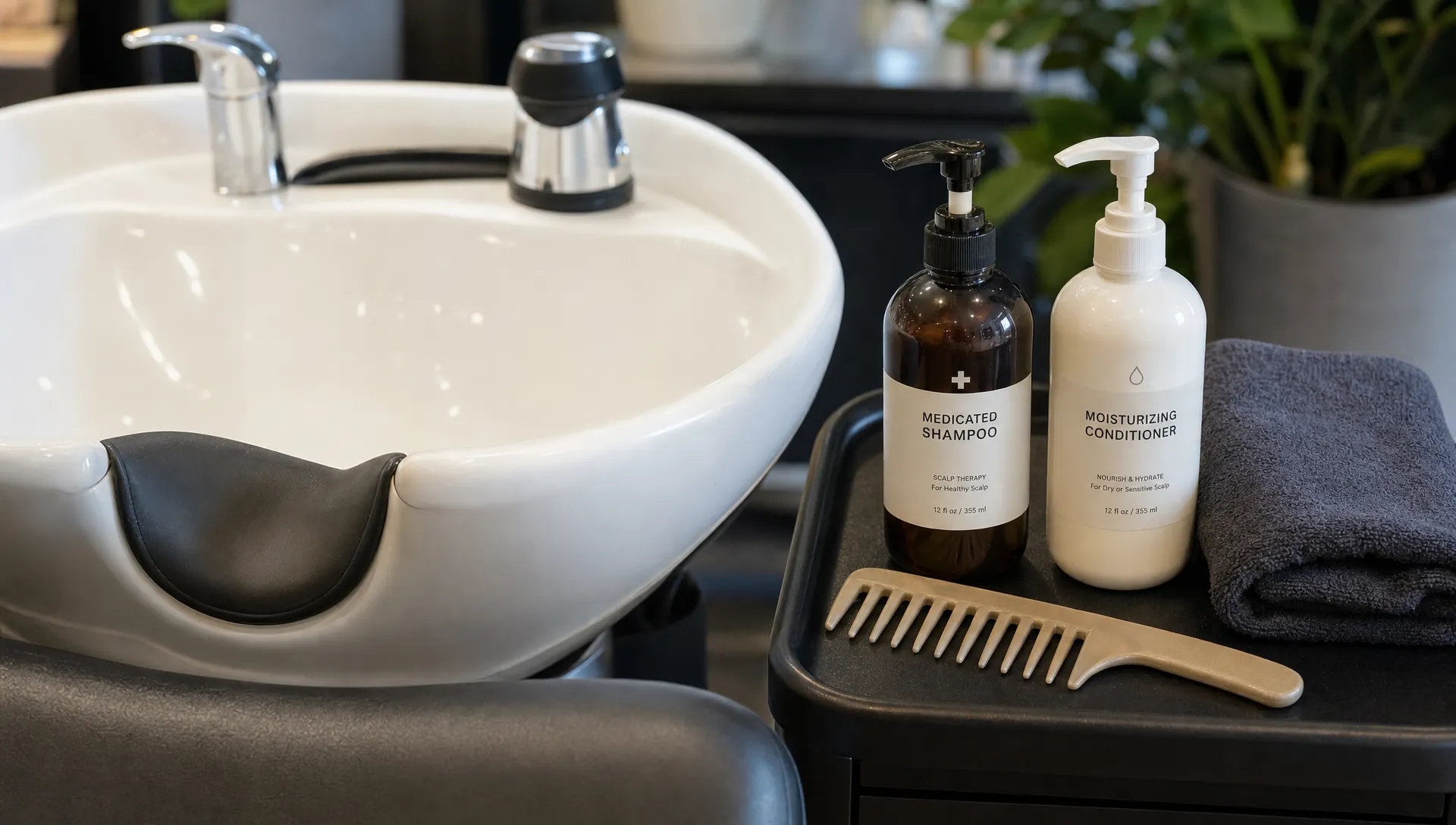
A medicated shampoo does one job. Your conditioner, treatment mask and leave-in products do another. Skipping the moisture step is where many routines go wrong.
After using medicated dandruff shampoo, reach for a conditioner that gives slip and softness. If your hair still feels rough after rinsing, add a deep conditioning treatment on a regular schedule. For hair that is colored, relaxed, frequently heat styled or naturally dry, a weekly or biweekly treatment may help the hair feel more flexible.
Look for supportive ingredients like aloe, glycerin, panthenol, fatty alcohols, shea butter, lightweight oils and ceramides. If your strands feel weak or mushy instead of just dry, you may need a different balance of moisture and strength. This is where a salon consultation can help, especially if you are already dealing with breakage or chemical stress. For more on that, Kingdom Cute explains options for dry, stressed strands and restorative hair treatments.
Avoid trying to solve dandruff by coating the scalp in heavy oils. Oils can make the hair look shinier, but they do not treat dandruff and may trap buildup for some people. If your scalp feels tight, choose gentle hydration and proper cleansing over heavy layering.
Common mistakes that make dryness worse #
Even a good dandruff shampoo can feel harsh when the routine around it is too aggressive. These are the mistakes to watch for.
| Mistake | Why it causes problems | Better choice |
|---|---|---|
| Scrubbing shampoo through the ends | Ends are older, drier and more fragile than new growth | Apply to the scalp and let the rinse pass through the lengths |
| Using it as a clarifying shampoo | Medicated formulas are not always meant for full-hair buildup removal | Alternate with a gentle cleanser when needed |
| Leaving it on much longer than directed | Extra contact time can irritate or dry the scalp | Follow the label exactly |
| Pairing it with a scalp scrub the same day | Too much exfoliation can inflame the skin | Separate strong treatments or ask a professional |
| Quitting as soon as flakes improve | Dandruff often returns without maintenance | Reduce frequency gradually if your scalp stays calm |
The best dandruff routine is consistent, not harsh. You should not feel burning, excessive tightness or major roughness after every wash.
Adjust the routine for your hair type #
Color-treated or highlighted hair #
Some medicated formulas can make color-treated hair feel drier, especially if the hair has been lightened. Keep the shampoo mainly on the scalp, rinse thoroughly and follow with a color-safe conditioner or mask. If your blonde, copper, vivid or gray coverage looks dull after treatment, ask your stylist whether a different active ingredient or schedule would be safer for your color.
Relaxed hair and silk press routines #
Relaxed hair and silk press styles need moisture discipline because both can be vulnerable to dryness and breakage. Use medicated shampoo on the scalp only, then follow with a rich conditioner and heat protection if you plan to blow dry or flat iron. If your scalp needs treatment but you want to preserve a silk press, talk with your stylist about timing the medicated wash before your next press rather than waiting until itching becomes severe.
Curls, coils and protective styles #
For curls and coils, the biggest challenge is getting the shampoo to the scalp without roughing up the hair. Work in sections, use gentle fingertip massage and make sure the scalp dries fully afterward. Under braids, sew-ins or wigs, trapped moisture and buildup can make flaking worse, so scalp access matters.
Fine or oily hair #
Fine hair may tolerate more frequent washing, but it can still dry out if every wash is medicated. If the scalp is oily but the ends are dry, shampoo the scalp well and use conditioner only where the hair needs it. Lightweight leave-in products can help reduce static and roughness without flattening the style.
When medicated shampoo is not enough #
Medicated dandruff shampoo can help many flaky scalps, but it is not the right solution for every scalp condition. Stop self-treating and contact a dermatologist or medical provider if you notice redness, swelling, bleeding, pain, crusting, sudden shedding, circular patches, broken hairs or thick plaques that do not improve.
Consistency matters in all areas of personal care. Many people keep up with preventive dental care because small issues are easier to manage early, and scalp health benefits from the same mindset. If symptoms are escalating, do not keep switching shampoos every few days. Get the right diagnosis so you are not treating psoriasis, eczema, infection or another condition as simple dandruff.
A salon can support comfort, styling and strand health, but it cannot diagnose medical scalp disease. That line matters. The safest plan often includes professional scalp guidance, gentle salon care and a home routine that does not irritate the skin.
How a salon can help protect your hair during dandruff care #
A good stylist looks at both the scalp and the strands. If your dandruff shampoo is helping flakes but making your hair feel dry, a salon visit can help you adjust the full routine instead of guessing product by product.
At Kingdom Cute in Warner Robins, GA, scalp and strand care can be discussed during a personalized consultation. Depending on your hair goals, your stylist may recommend a gentler wash schedule, conditioning support, a protective styling plan or services that help the hair feel softer and more manageable. You can also explore salon options that support both scalp comfort and strand health through Kingdom Cute’s hair treatment services.
The goal is not just flake control. It is a scalp that feels calm and hair that still moves, shines and holds the style you love.
Frequently Asked Questions #
Can I use medicated dandruff shampoo every day? Only use it daily if the label or a medical provider says to. Many people do better with medicated shampoo 1 to 2 times weekly, then a gentle moisturizing shampoo or conditioner-focused routine on other wash days.
Should I put medicated dandruff shampoo on my hair or scalp? Focus it on the scalp. The active ingredient needs contact with the skin, not the oldest and driest parts of your hair. Let the rinse move lightly through the lengths instead of scrubbing the ends.
Do I still need conditioner after medicated shampoo? Yes. Conditioner is one of the best ways to prevent dryness after a medicated wash. Apply it from mid-lengths to ends and use a deep conditioner if your hair still feels rough.
Can medicated dandruff shampoo strip hair color? Some formulas can make color-treated hair feel dry or dull, and certain ingredients may not be ideal for lighter tones. Read the label, rinse well and ask your stylist before using a new medicated formula on fresh color.
What should I do if my scalp burns after using it? Rinse immediately and stop using the product. Burning, swelling, sores or worsening irritation are signs you should contact a medical provider rather than continuing to experiment.
Ready for a scalp-friendly hair plan? #
If your dandruff shampoo is helping your scalp but drying out your hair, you do not have to choose between comfort and softness. Kingdom Cute Hair Salon in Warner Robins, GA offers personalized consultations, conditioning support and styling guidance to help your routine work better from scalp to ends.
Book your appointment and bring your current products with you. A stylist can help you build a plan that supports your scalp, protects your strands and keeps your look polished between visits.