Publish on by Kingdom Cute Luxury Hair Salon
- First, figure out what kind of flakes you have
- Match the active ingredient to your scalp concern
- Consider your hair texture, color, and styling routine
- Build a simple dandruff treatment plan
- Do not confuse oiling with treatment
- Know when to choose salon help versus medical help
- Choose products that work with your whole routine
- Avoid the most common dandruff treatment mistakes
- What a stylist may ask during a scalp consultation
- Frequently Asked Questions
- Ready to choose a scalp routine with confidence?
A good dandruff treatment should do more than make flakes disappear for a day. It should match your scalp, respect your hair texture, fit your styling routine, and help you understand when flakes are a simple product issue versus a sign that your scalp needs professional or medical attention.
If you have ever switched shampoos, oiled your scalp, scrubbed harder, or hidden flakes under a style only to see them return, you are not alone. Dandruff is common, but the right approach is personal. The best choice depends on whether your scalp is oily, dry, itchy, irritated, product-coated, color-treated, relaxed, natural, braided, or wearing extensions.
Here is how to choose a dandruff treatment that supports both scalp comfort and beautiful hair.
First, figure out what kind of flakes you have #
Not every flake is dandruff. True dandruff is usually linked to excess oil, faster skin cell shedding, and sensitivity to Malassezia, a yeast that naturally lives on the scalp. It often shows up as white or yellowish flakes, itchiness, and a scalp that may feel oily rather than dry.
Dry scalp can look similar, but it usually comes with smaller, powdery flakes and a tight feeling, especially after harsh shampooing, cold weather, dehydration, or overuse of clarifying products. Product buildup can also mimic dandruff, particularly if gels, edge control, oils, dry shampoo, or heavy butters sit on the scalp without being fully cleansed away.
The Mayo Clinic notes that dandruff symptoms can include flakes, itchiness, and a scaly scalp, and that symptoms may become more noticeable during stress or cold, dry seasons. That matters because your treatment should respond to what is actually happening, not just what you see on your shoulders.
| What you notice | What it may suggest | What to try first |
|---|---|---|
| Greasy flakes with itch | Classic dandruff or seborrheic dermatitis | Medicated anti-dandruff shampoo |
| Tiny dry flakes with tightness | Dry scalp or over-cleansing | Gentle moisturizing cleanse and scalp hydration |
| Waxy residue near the roots | Product buildup | Clarifying treatment followed by balanced conditioning |
| Redness, pain, thick plaques, or sores | Possible scalp condition needing care | Dermatologist or medical provider |
| Flaking under braids, wigs, or extensions | Buildup, trapped oil, or untreated dandruff | Scalp-focused cleanse and routine adjustment |
This is also why a consultation matters. Choosing the right scalp routine is a problem-solving process: observe the concern, identify the likely cause, choose the right solution, and adjust based on results. The same principle shows up far outside beauty, where teams such as BKL develop smart engineering solutions by defining requirements before designing the fix. Your scalp deserves the same thoughtful sequence.
Match the active ingredient to your scalp concern #
Most dandruff treatments are shampoos because the active ingredients need to reach the scalp. The label matters. A moisturizing shampoo with pleasant fragrance may feel nice, but it is not the same as a medicated dandruff shampoo with an active ingredient designed to reduce flakes.
The American Academy of Dermatology recommends choosing dandruff shampoo based on hair type and following the product label, including how long to leave it on the scalp before rinsing. That contact time is important. If you rinse too quickly, the product may not have enough time to work.
| Active ingredient | Best for | What to know before choosing it |
|---|---|---|
| Ketoconazole | Persistent dandruff linked to yeast overgrowth | Often used when basic formulas are not enough. Stronger versions may require a prescription. |
| Selenium sulfide | Oily scalp, heavier flakes, recurring dandruff | Can be effective, but must be rinsed thoroughly and may not suit every color-treated or light hair routine. |
| Zinc pyrithione | Mild to moderate flakes and itch | Common in many anti-dandruff formulas, though availability varies by market. Often a good starting point. |
| Salicylic acid | Scaly buildup and flakes that cling to the scalp | Helps loosen flakes, but can feel drying if not balanced with conditioner. |
| Coal tar | Slower scalp cell turnover for stubborn scaling | Has a strong scent and may affect light, gray, or color-treated hair. Use carefully and follow directions. |
| Tea tree oil formulas | Mild flakes or preference for botanical options | Can irritate sensitive scalps, so patch testing and moderation matter. |
If you are unsure where to begin, start with the gentlest option that matches your symptoms. For mild flakes, a zinc pyrithione or gentle anti-dandruff shampoo may be enough. For oily, stubborn dandruff, ketoconazole or selenium sulfide may be more appropriate. For thick flakes stuck to the scalp, salicylic acid can help lift scale, but it should not be used as an excuse to scrub aggressively.
Consider your hair texture, color, and styling routine #
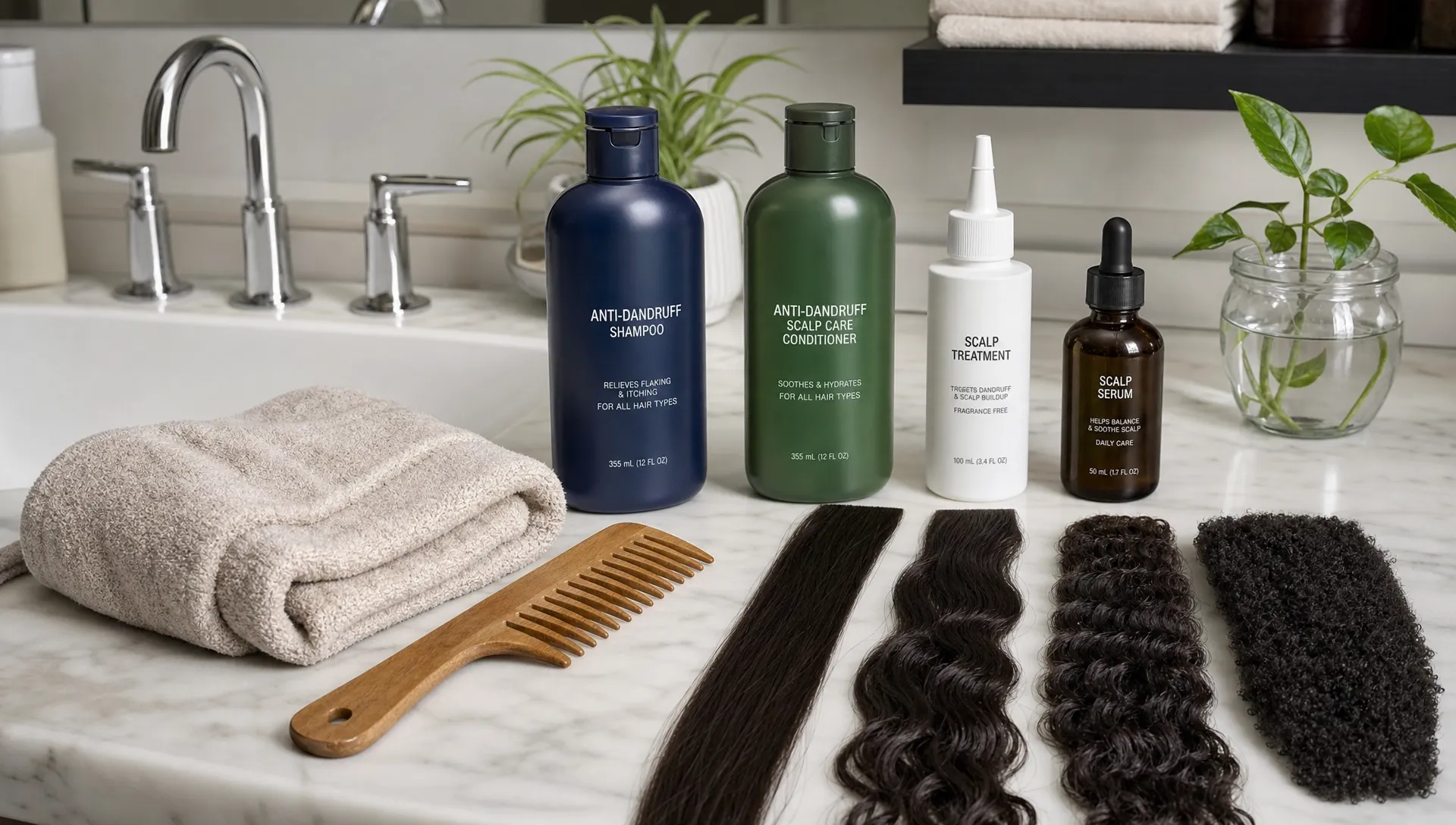
A dandruff treatment that works beautifully for one person may be too drying, too frequent, or too disruptive for another. Your hair texture, porosity, density, chemical history, and preferred styles all affect how you should use scalp products.
For curly, coily, relaxed, color-treated, or extension-wearing clients, the goal is not simply to wash more. The goal is to cleanse the scalp effectively without stripping the hair. That may mean applying medicated shampoo mainly to the scalp, letting the lather sit as directed, then using a moisturizing conditioner on the mid-lengths and ends.
If you wear protective styles, dandruff treatment works best before installation. Flaking that begins under braids, sew-ins, wigs, or extensions is harder to manage because the scalp is less accessible. A clean, balanced scalp before styling can help reduce itching and visible flakes later. For more guidance on choosing professionals who understand textured hair and healthy styling, Kingdom Cute has a helpful guide on choosing a natural hair salon for healthy styling.
Color-treated hair needs extra care. Some medicated formulas can fade color faster or leave the hair feeling rough if overused. If your hair is highlighted, vivid-colored, gray, or chemically processed, ask your stylist which shampoo can address the scalp without compromising your service results.
Build a simple dandruff treatment plan #
Once you choose a treatment, give it time to work. Many people abandon a dandruff shampoo too soon, use it inconsistently, or apply it like a regular cleanser without focusing on the scalp.
A practical plan usually starts with a few consistent weeks. Use the product exactly as directed on the label. Apply it to the scalp, massage gently with fingertips, avoid scratching with nails, let it sit for the recommended time, and rinse thoroughly. Follow with conditioner where your hair needs moisture, especially on the ends.
For many people, dandruff improves with steady use, then returns when the treatment stops. That does not always mean the product failed. Dandruff often needs maintenance. Once flakes are controlled, you may be able to reduce frequency and alternate with a gentle shampoo that keeps your hair soft.
If one active ingredient stops working well, rotating to another type can help. For example, someone who has used the same dandruff shampoo for months may respond better after switching from one active ingredient category to another. Just avoid using several strong treatments at once, since that can irritate the scalp and make flakes worse.
Do not confuse oiling with treatment #
Many people respond to flakes by adding scalp oil. Sometimes that helps a dry, tight scalp feel more comfortable. But if the issue is true dandruff, heavy oils may trap buildup and create a better environment for flakes to cling.
This is especially important with rich butters, petroleum-heavy products, and frequent oiling under protective styles. If your scalp feels greasy, itchy, or coated, adding more oil is unlikely to solve the root problem. You may need a better cleansing rhythm, a medicated shampoo, or a professional scalp reset.
A salon scalp service can help when flakes are connected to buildup, dryness, or an unbalanced hair routine. At Kingdom Cute in Warner Robins, GA, scalp and conditioning treatments are part of a broader beauty experience focused on personalized consultations, premium products, and healthy styling. If you want to understand how professional treatments support both the scalp and strands, this overview of hair treatment services is a useful next read.
Know when to choose salon help versus medical help #
A stylist can help you identify visible buildup, product overload, dryness, excessive oil, tension from styles, and haircare habits that may be aggravating flakes. A stylist can also help you choose salon-quality products and build a routine that fits your texture and lifestyle.
A dermatologist or medical provider is the better choice if symptoms are severe, painful, spreading, or not improving. Dandruff-like flakes can overlap with seborrheic dermatitis, psoriasis, eczema, fungal infection, allergic reactions, or inflammation from products. These concerns may require prescription treatment.
Seek medical advice if you notice bleeding, open sores, intense burning, swelling, hair loss in patches, thick silvery plaques, pus, or flakes that do not improve after consistent over-the-counter treatment. If a product causes stinging, rash, or worsening redness, stop using it and get guidance.
Choose products that work with your whole routine #
Your dandruff treatment does not exist in isolation. It has to fit with your shampoo schedule, styling products, color maintenance, silk press routine, extensions, relaxer timing, workouts, and scalp sensitivity.
When comparing products, look at the active ingredient first, then the rest of the formula. A strong anti-dandruff shampoo may control flakes but leave the hair dry if it lacks conditioning support. A gentle formula may feel better but may not be enough for heavy dandruff. The best option balances scalp results with hair integrity.
Ask these questions before buying a product:
- Is my scalp oily, dry, irritated, or coated with buildup?
- Is this formula safe for my color, relaxer, extensions, or protective style plan?
- Does the label tell me how often to use it and how long to leave it on?
- Do I need a moisturizing conditioner or scalp treatment to balance it?
- Should I ask a stylist or dermatologist before using this on a sensitive scalp?
If product labels feel overwhelming, this guide to choosing hair salon hair products can help you think through texture, density, porosity, and hair goals before making a purchase.
Avoid the most common dandruff treatment mistakes #
The first mistake is scrubbing harder. Flakes can make you want to scrape the scalp, but aggressive scratching can create irritation, tenderness, and even small wounds. Gentle, consistent cleansing is better than harsh friction.
The second mistake is using clarifying shampoo as the only solution. Clarifying products can remove buildup, but they do not always address dandruff. If flakes are caused by yeast and oil imbalance, you may need a medicated active ingredient rather than a deeper cleanse.
The third mistake is applying treatment only to the hair. Dandruff is a scalp issue. Focus the product at the roots and scalp, not just the strands.
The fourth mistake is stopping as soon as flakes improve. Many scalp routines need maintenance. Once your scalp is calm, your stylist can help you decide whether to continue weekly, alternate formulas, or reduce use while keeping flakes controlled.
The fifth mistake is ignoring styling tension. Tight braids, heavy extensions, glued units, and repeated friction can irritate the scalp. If flakes appear with soreness or bumps around the hairline, the issue may be more than dandruff.
What a stylist may ask during a scalp consultation #
A thoughtful scalp consultation should feel specific, not rushed. Your stylist may ask when flakes started, what products you use, how often you shampoo, whether your scalp feels oily or dry, and whether you recently changed color, relaxer, extensions, medication, diet, or stress levels.
They may also look at where flakes appear. Flaking at the crown, hairline, nape, or under a part may point to different habits or style-related triggers. For example, hairline flakes may be connected to edge control buildup, while flakes under extensions may point to trapped sweat, oil, or limited scalp cleansing.
From there, a stylist can recommend whether you need a clarifying service, scalp exfoliation, conditioning support, a product change, a gentler styling plan, or a referral to a dermatologist. That is the value of pairing scalp care with professional observation.
Frequently Asked Questions #
What is the best dandruff treatment for an itchy scalp? The best treatment depends on whether the itch is caused by dandruff, dryness, buildup, or irritation. For classic dandruff with oily flakes, a medicated shampoo with ketoconazole, selenium sulfide, zinc pyrithione, or another anti-dandruff active may help. If itching is severe or painful, see a dermatologist.
How long does dandruff treatment take to work? Some people notice improvement after a few washes, but stubborn dandruff may need several weeks of consistent use. Follow the label carefully, especially instructions about frequency and contact time on the scalp.
Can I use dandruff shampoo on color-treated hair? Sometimes, but choose carefully. Some medicated shampoos may be drying or may affect certain hair colors. If your hair is highlighted, vivid-colored, gray, relaxed, or otherwise chemically treated, ask your stylist which option is safest for your routine.
Should I oil my scalp if I have dandruff? Not always. If your scalp is dry and tight, lightweight moisture may help. If your scalp is oily, itchy, or coated, heavy oil can worsen buildup and make flakes cling. Treat the cause first, then decide whether oil belongs in your routine.
When should I see a dermatologist for dandruff? See a dermatologist if you have bleeding, sores, swelling, severe redness, pain, patchy hair loss, thick plaques, or flakes that do not improve with consistent over-the-counter treatment. These signs may point to a condition that needs medical care.
Ready to choose a scalp routine with confidence? #
The right dandruff treatment starts with understanding your scalp, not guessing from the shampoo aisle. If flakes, itch, buildup, or dryness are getting in the way of your style, a professional consultation can help you choose a routine that supports both comfort and confidence.
Kingdom Cute in Warner Robins, GA offers personalized consultations, scalp and conditioning treatments, precision styling, luxury color, extensions, silk press services, and event-ready looks in an upscale salon environment. Book your appointment with Kingdom Cute and take the next step toward a healthier scalp and a look you love.
Tags: dandruff treatment