Publish on by Kingdom Cute Luxury Hair Salon
- Start With Your Hair Goal, Not the Product Trend
- Understand What Salon Quality Should Mean
- Match Products to Your Hair Type and Hair History
- Ask Product Questions During Your Appointment
- Be Selective About Product Advice
- Read Labels Like a Stylist
- Build a Routine Around Categories, Not Clutter
- Use the Product Correctly Before You Judge It
- Watch for Red Flags
- Know When Salon-Recommended Products Matter Most
- Frequently Asked Questions
- Ready to Stop Guessing?
Choosing hair salon hair products can feel harder than choosing a new cut. Every bottle promises shine, repair, volume, hydration, frizz control, or color protection, but your hair does not need every promise. It needs the right formula for your texture, scalp, service history, styling routine, and lifestyle.
That is why the best product routine usually starts in the salon, not in the beauty aisle. A stylist can see what an online quiz cannot: how your ends behave, where your hair is dry or oily, how your color is fading, whether your scalp is comfortable, and how much heat or tension your hair can handle.
Here is how to choose hair salon hair products that actually support your results between appointments.
Start With Your Hair Goal, Not the Product Trend #
The most common product mistake is buying for a trend instead of a goal. A viral oil may be beautiful on thick, dry curls but too heavy for fine hair. A strong protein treatment may help overprocessed strands but make healthy, low-porosity hair feel stiff. A clarifying shampoo can refresh buildup, but overusing it can leave color-treated or relaxed hair feeling rough.
Before choosing anything, decide what you want your routine to accomplish. Most people need one primary goal and one secondary goal, not a shelf full of competing formulas.
Common product goals include:
- More moisture and softness
- Longer-lasting hair color
- Smoother blowouts or silk presses
- Curl definition and frizz control
- Volume without weight
- Less breakage and better length retention
- Scalp comfort and balance
- Heat protection for frequent styling
- Extension or protective style maintenance
If you are not sure which goal matters most, start by matching the service to your hair goal. Your products should support the salon result you booked, whether that is a precision haircut, color service, silk press, extensions, conditioning treatment, or event style.
Understand What Salon Quality Should Mean #
Salon products are not automatically better just because they cost more. The real value comes from professional formulation, product concentration, ingredient balance, and stylist guidance.
A well-chosen salon product should fit into a complete plan. For example, a color-safe shampoo should cleanse without stripping tone too quickly. A conditioner for textured hair should soften and detangle without leaving a waxy film. A heat protectant should help reduce styling damage while still letting the hair move. A styling cream should support your finish, not fight your haircut.
Professional product lines are often designed to work together. That does not mean every item in one line is necessary, but it can reduce the risk of mixing products that create buildup, dryness, or a finish you do not like. If you want a deeper foundation before shopping, this guide to what professional hair care products are designed to do explains the main categories and how they support healthier hair.
The key is not buying the most expensive bottle. The key is buying the most appropriate bottle.
Match Products to Your Hair Type and Hair History #
Your natural texture matters, but your hair history matters just as much. Virgin hair, highlighted hair, relaxed hair, color-treated curls, silk-pressed natural hair, and extension-supported hair all respond differently to products.
Think of your hair in four practical categories: texture, density, porosity, and chemical or heat history.
Texture describes the pattern, such as straight, wavy, curly, or coily. Density describes how much hair you have on your head. Porosity describes how easily your hair absorbs and holds moisture. History includes color, lightener, relaxer, keratin services, heat styling, extensions, protective styles, and past damage.
A product that ignores any of these can disappoint you, even if it is a great product for someone else.
| Hair situation | Product priorities | What to avoid overdoing |
|---|---|---|
| Fine or low-density hair | Lightweight moisture, volume, flexible styling | Heavy oils, thick butters, too much leave-in |
| Thick or high-density hair | Rich conditioning, slip, layered hydration | Dry shampoos that leave residue, weak conditioners |
| Color-treated hair | Gentle cleansing, color protection, UV and heat support | Harsh clarifying too often, non-color-safe routines |
| Heat-styled hair | Heat protectant, smoothing serum, strengthening care | Styling without protection, repeated high heat |
| Curly or coily hair | Moisture, detangling slip, definition, scalp balance | Drying foams, formulas that cause flakes or buildup |
| Extensions or protective styles | Scalp care, lightweight hydration, safe detangling | Oily buildup at attachment points, rough brushing |
This is where salon guidance becomes especially valuable. Your stylist can feel whether your hair needs more moisture, more strength, more cleansing, or less product overall.
Ask Product Questions During Your Appointment #
A consultation is not only for choosing a cut or color. It is also the best time to build a realistic at-home routine. Bring up your product concerns before the service begins or while your stylist is finishing your hair.
Good questions to ask include:
- What should I use on wash day to maintain this result?
- How often should I shampoo and condition my hair?
- Do I need a mask, treatment, or leave-in conditioner?
- Which product should I use before heat styling?
- What should I avoid because of my color, texture, extensions, or relaxer?
- How much product should I use at one time?
- What is the first sign that a product is not working for me?
These questions help your stylist translate the salon result into everyday maintenance. They also prevent overbuying. If you want to make your visit even more productive, review how to get more from your hair salon appointment before you book.
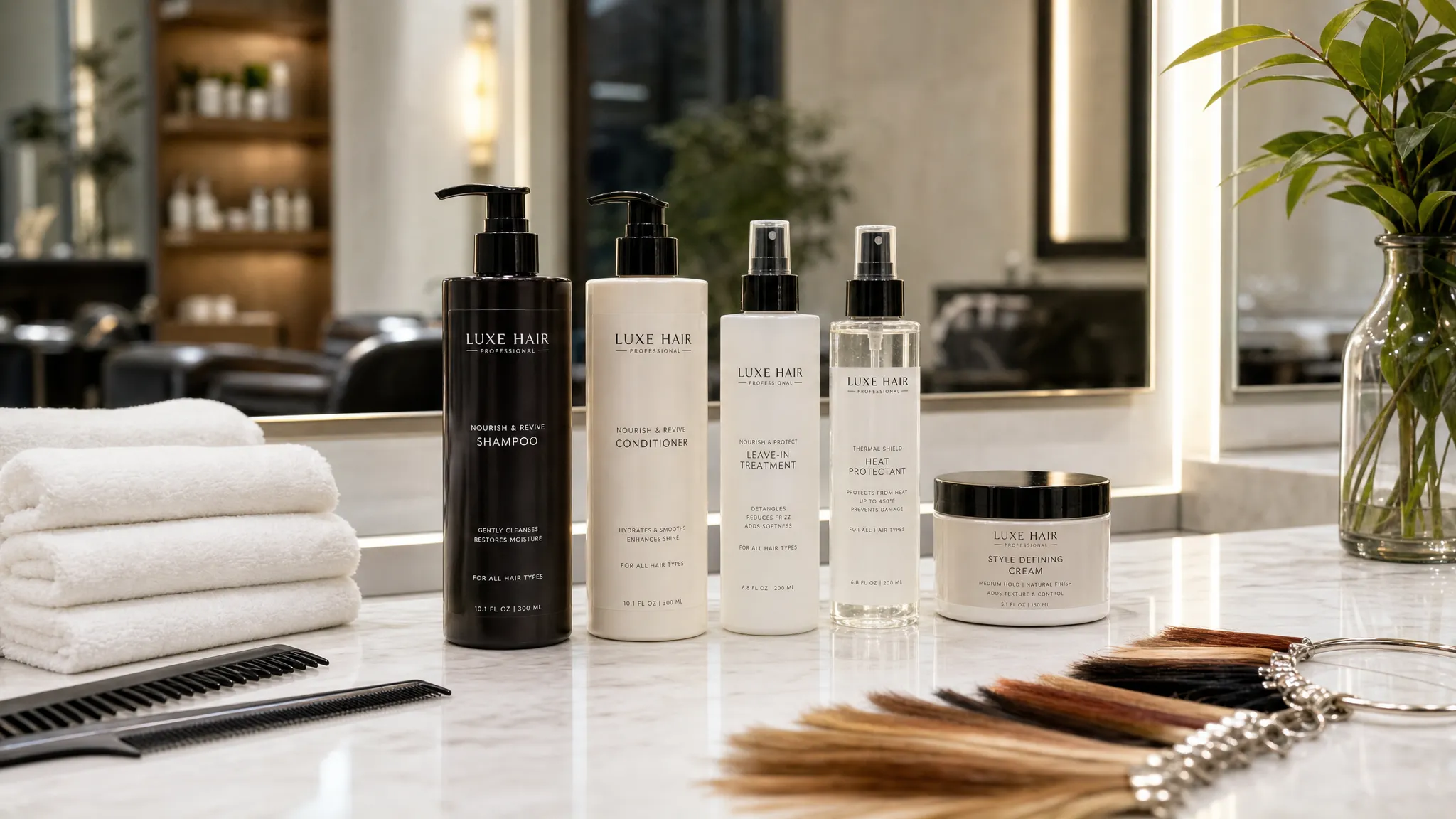
Be Selective About Product Advice #
Product advice is everywhere, from social media routines to influencer shelves to reviews written by people with totally different hair. Reviews can be helpful, but they cannot replace a professional evaluation.
The safest filter is expertise. In other parts of life, you would look for qualified guidance too. For legal questions in New York or Connecticut, a professional resource such as Clair Gjertsen & Weathers PLLC is more appropriate than a random comment thread. Hair care works the same way at a different scale: ask the person trained to evaluate your specific situation, not the loudest trend.
When you watch product content online, pay attention to whether the person has your texture, density, color history, styling habits, climate, and goals. If not, treat the recommendation as inspiration, not instruction.
Read Labels Like a Stylist #
You do not need to become a cosmetic chemist to choose better hair products, but a few label basics can help.
Sulfate-free does not automatically mean gentle for everyone, and sulfates do not automatically mean bad. Some hair needs a deeper cleanse at times, especially if there is heavy oil, sweat, dry shampoo, or styling buildup. The issue is frequency and fit.
Silicones are similar. Some people avoid them, but many professional smoothing and heat-protecting formulas use silicones because they can improve slip, shine, and manageability. The problem is not always the ingredient itself. The problem is using too much, failing to cleanse properly, or choosing a formula that is too heavy for your hair.
Protein is another category to handle thoughtfully. Ingredients such as hydrolyzed keratin, wheat protein, silk protein, or amino acids may help hair feel stronger, especially after coloring or heat styling. But too much strengthening product without enough moisture can make hair feel dry or rigid.
Humectants, oils, butters, polymers, conditioning agents, and bond-support products can all be useful. The right choice depends on what your hair is missing and what result you want.
Build a Routine Around Categories, Not Clutter #
A working routine does not need ten steps. Most people need a few reliable categories used consistently and correctly.
| Product category | What it does | Who usually needs it |
|---|---|---|
| Shampoo or cleanser | Removes oil, sweat, product buildup, and environmental residue | Everyone, with frequency adjusted to scalp and style |
| Conditioner | Softens, detangles, and improves manageability | Everyone, especially textured, colored, or heat-styled hair |
| Mask or treatment | Adds deeper moisture, strength, or repair support | Dry, damaged, color-treated, or frequently styled hair |
| Leave-in conditioner | Adds lightweight hydration and slip after washing | Curly, coily, dry, long, or tangle-prone hair |
| Heat protectant | Helps reduce heat-styling stress | Anyone using blow dryers, flat irons, curling irons, or hot brushes |
| Styling product | Creates hold, definition, smoothness, or volume | Anyone who wants their finish to last |
| Scalp product | Supports comfort, balance, or targeted scalp care | Anyone with dryness, oiliness, tightness, flakes, or irritation concerns |
If your routine feels overwhelming, simplify it. A shampoo, conditioner, heat protectant, and one styling product may be enough for many people. Add treatments only when there is a clear reason.
Use the Product Correctly Before You Judge It #
Sometimes the product is not the problem. The application is.
A salon-quality product may be more concentrated than what you are used to, so using too much can make hair limp or coated. Start small, especially with leave-ins, creams, oils, serums, and masks. You can always add more, but removing too much product usually means washing again.
Where you apply the product matters too. Conditioner usually belongs on mid-lengths and ends, not directly on an oily scalp. Scalp treatments belong on the scalp, not just the hair. Heat protectant should be distributed evenly before hot tools. Curl products often work best on damp hair, while finishing products are usually used after styling.
Timing matters as well. A deep conditioner rinsed out after thirty seconds may not perform as intended. A mask left on far longer than directed may not give extra benefits and can sometimes leave hair feeling heavy.
Before deciding a product failed, ask yourself whether you used the right amount, applied it to the right area, followed the directions, and gave it a fair trial.
Watch for Red Flags #
Good hair salon hair products should make your hair easier to manage over time, not more confusing. Be cautious if a product or routine creates problems that were not there before.
Red flags include:
- Your hair feels coated even after washing
- Your scalp becomes itchy, tight, flaky, or irritated
- Your color fades faster than expected
- Your ends feel brittle or rough after repeated use
- Your style collapses quickly because the product is too heavy
- Your curls lose definition or develop flakes
- You need more and more product to get the same result
If you notice irritation, stop using the product and consider speaking with a licensed professional or healthcare provider, especially if the reaction is persistent. If the issue is texture, weight, buildup, or styling performance, your stylist can usually help adjust the routine.
Know When Salon-Recommended Products Matter Most #
Some services are more product-sensitive than others. If you invest in color, extensions, smoothing, a silk press, relaxer maintenance, bridal styling, or a major cut transformation, your at-home products can either protect the investment or shorten its life.
After color, the wrong shampoo can dull tone faster. After extensions, the wrong oil or conditioner placement can create slippage or buildup. After a silk press, skipping heat protection can increase dryness and breakage. After a conditioning treatment, returning to a harsh routine can undo the soft, healthy feel quickly.
This does not mean you must buy everything recommended. It means you should understand the reason behind each recommendation. A trustworthy stylist should be able to explain what the product does, how to use it, and why it fits your hair.
Frequently Asked Questions #
Are salon hair products always better than drugstore products? Not always. Some drugstore products work well for some hair types, and some salon products may not fit your needs. The advantage of salon products is often professional guidance, targeted formulation, and better alignment with your service history.
How do I know if a product is too heavy for my hair? Your hair may feel greasy, flat, coated, hard to dry, or difficult to restyle. Fine hair and low-density hair usually need lighter formulas, while thicker or drier hair may tolerate richer products.
Should I use the same brand for shampoo, conditioner, and styling products? Not necessarily. Products from the same line are often formulated to work together, but your stylist may recommend mixing categories based on your hair. What matters most is that the routine works as a system.
What product should everyone use before heat styling? A heat protectant is essential if you use blow dryers, flat irons, curling irons, hot brushes, or other hot tools. It will not make heat damage impossible, but it helps reduce styling stress when used correctly.
How often should I change my hair products? Change products when your hair goals, season, style, chemical services, scalp needs, or results change. If your routine is working, you do not need to replace it just because a new trend appears.
Ready to Stop Guessing? #
The right products should make your hair easier to care for, not add more stress to your routine. If you are in Warner Robins, GA and want a product plan built around your hair, your style, and your goals, book a personalized consultation at Kingdom Cute. A thoughtful salon routine can help you protect your look, love your wash days, and feel confident between appointments.
Tags: hair salon hair products