Publish on by Kingdom Cute Luxury Hair Salon
- What healthy styling means for natural hair
- Start with your hair goals before comparing salons
- Look for true texture expertise, not just trendy photos
- Pay attention to the consultation
- Ask how the salon handles heat, color, and tension
- Make sure aftercare is part of the service
- Know the red flags before you book
- Compare value, not just price
- Choose a salon environment where you feel heard
- Frequently Asked Questions
- Ready for healthy styling that fits your hair?
Natural hair can be soft, strong, versatile, and expressive, but it needs the right kind of salon care to thrive. A beautiful twist-out, silk press, color service, extension install, or updo should not leave you with breakage, scalp soreness, dry ends, or thinning edges a few weeks later.
That is why choosing a natural hair salon is about more than finding a stylist who can create a pretty finished look. It is about finding someone who understands texture, density, shrinkage, porosity, heat safety, scalp comfort, and long-term hair goals.
If you have ever searched for a “natural hair salon near me” and felt overwhelmed by options, this guide will help you choose with confidence.
What healthy styling means for natural hair #
Healthy styling means your hair looks good today without sacrificing how it grows, feels, and behaves tomorrow. For natural hair, that often means preserving moisture, avoiding unnecessary tension, using heat with care, and choosing services that match the current condition of your hair.
Natural hair is not one single texture. It can include waves, curls, coils, kinks, locs, transitioning hair, color-treated natural hair, and hair that is sometimes worn straight through silk presses. A salon that truly understands natural hair will not use one technique for every client. They will adjust their approach based on your curl pattern, strand thickness, density, scalp sensitivity, lifestyle, and styling history.
The American Academy of Dermatology notes that textured hair can be more prone to dryness and recommends gentle care practices, regular conditioning, and caution with heat styling. Those basics may sound simple, but in a salon setting they make a major difference. A health-focused stylist knows when to detangle more slowly, when to recommend a treatment, when to avoid excessive heat, and when a style is too tight for your scalp.
Start with your hair goals before comparing salons #
Before you book, get clear on what you want your salon experience to accomplish. Are you trying to grow out heat damage? Maintain a silk press routine? Transition from relaxer to natural? Protect your hair with extensions or braids? Prepare for a wedding or event? Refresh your curls after color?
Your goal determines the type of salon and stylist you should choose. A stylist who is excellent at precision cuts may not be the best match for a complex color correction. A stylist who does beautiful protective styles may not specialize in short natural cuts. A natural hair salon should be able to explain which services fit your goal and which ones may need to wait until your hair is stronger.
A helpful way to prepare is to bring a few inspiration photos, but also bring photos of your current hair in its natural state. A great stylist wants to see the real texture, not only the goal image. If your hair is usually stretched, pressed, braided, or in a wig, showing your natural curl pattern helps the stylist understand shrinkage, density, and possible areas of concern.
Look for true texture expertise, not just trendy photos #
A salon portfolio can tell you a lot, but only if you know what to look for. Beautiful after photos are helpful, yet they do not always show whether the hair was handled gently or whether the client’s hair stayed healthy afterward.
When reviewing a salon’s website, social media, or reviews, look for consistency across different natural textures. You want to see healthy-looking ends, neat parts that do not appear overly tight, polished finishes without obvious stress on the edges, and styles that suit the client’s hair density. If every result looks identical, the salon may be styling to a trend instead of customizing the service.
Texture expertise also shows up in language. A knowledgeable natural hair stylist can talk comfortably about moisture balance, scalp health, detangling, shrinkage, trimming, breakage, tension, and maintenance. They should not make you feel embarrassed about your hair’s current condition. They should help you understand what is possible and what will protect your hair along the way.
If you are specifically comparing salons that serve textured and Black hair, this guide on choosing a Black hair salon that protects hair health offers a deeper look at scalp care, edges, and gentle technique.
Pay attention to the consultation #
A consultation is one of the clearest signs that a salon takes hair health seriously. It does not have to be complicated, but it should feel personal. The stylist should ask about your hair history, current routine, past chemical services, color history, heat habits, scalp concerns, and the way you want to wear your hair day to day.
If you are booking a color service, relaxer-related maintenance, extensions, or a major transformation, the consultation matters even more. Your stylist may need to assess elasticity, porosity, breakage, previous color, or scalp comfort before deciding what is safe.
| Consultation sign | Why it matters | What to ask |
|---|---|---|
| The stylist asks about your hair history | Past color, heat, relaxers, and protective styles affect what your hair can handle | “What do you need to know before this service?” |
| They examine your scalp and ends | Scalp irritation and split ends can change the best service plan | “Do you see anything we should treat first?” |
| They explain maintenance | Natural styles often need the right home care to last | “How should I care for this style between appointments?” |
| They discuss realistic results | Some transformations take more than one visit | “Can this be done safely today, or should we work in stages?” |
| They welcome questions | Trust grows when you understand the process | “What products or techniques will you use and why?” |
A rushed consultation is a warning sign, especially if you are booking a service that involves heat, color, extensions, or tension. You should leave the conversation knowing what will happen, why it is being recommended, and how it supports your hair goals.
Ask how the salon handles heat, color, and tension #
Natural hair can be styled in many ways, but some services require extra care. Heat, color, and tension are not automatically bad. The issue is how they are used, how often they are repeated, and whether your hair is strong enough for them at the time of service.
For silk presses, ask how the salon prepares the hair before heat. Healthy heat styling usually starts with proper cleansing, conditioning, detangling, heat protection, and controlled technique. A stylist should not need to pass a hot tool over the same section repeatedly to get a smooth finish. If your hair is already showing signs of heat damage, the stylist should be honest about what can and cannot be corrected in one appointment.
For color, ask about strand testing, conditioning support, maintenance, and whether your goal is realistic for your starting point. Going significantly lighter can be beautiful, but natural hair that is dry, fragile, or previously processed may need a slower plan.
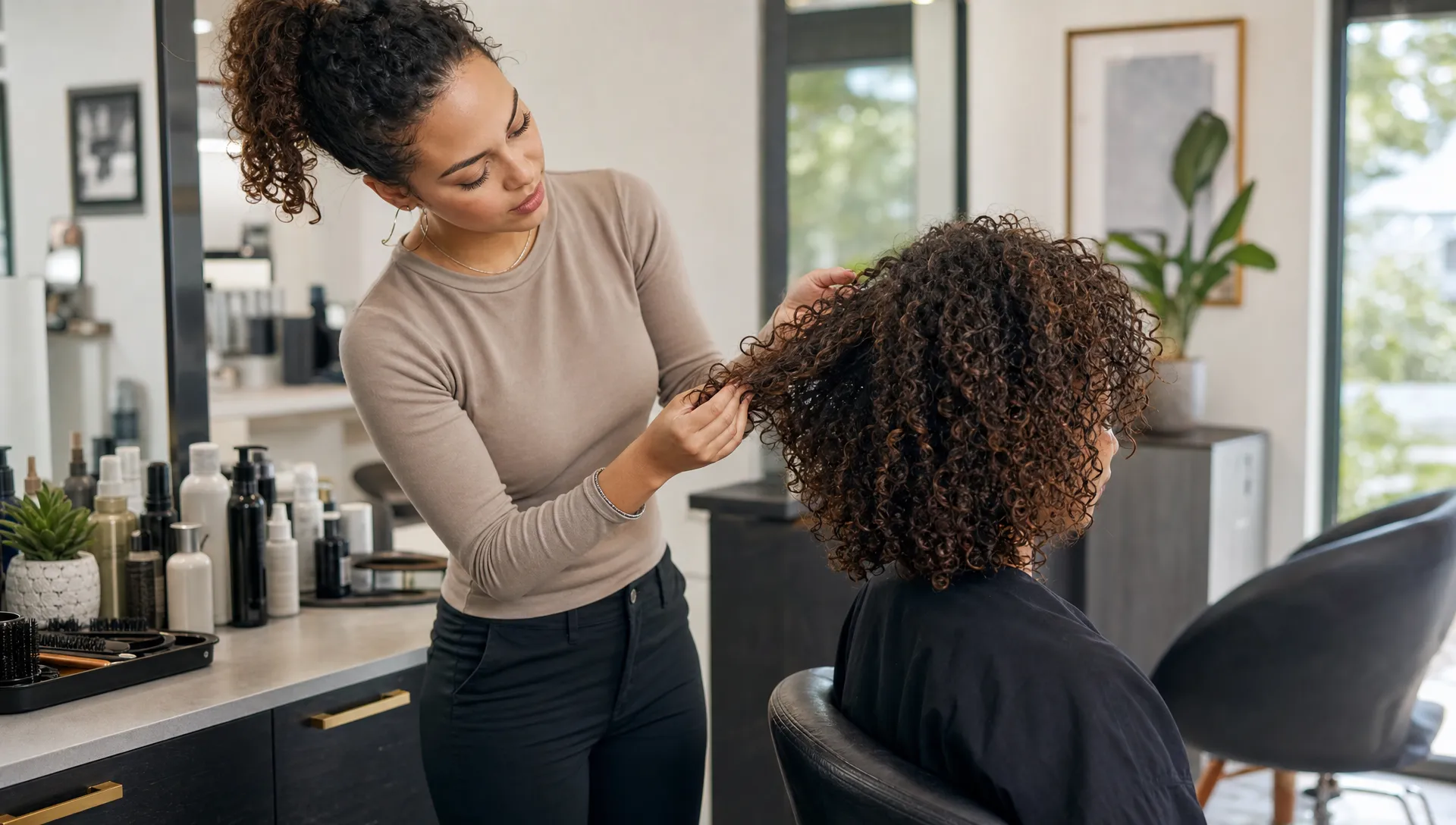
For braids, sew-ins, wigs, ponytails, and other protective styles, focus on tension. A protective style is only protective if it protects the scalp, edges, and strands. The American Academy of Dermatology warns that hairstyles that pull tightly can contribute to hair loss over time. A skilled stylist should never treat pain as proof that a style will last.
Make sure aftercare is part of the service #
The right salon experience does not end when you leave the chair. Natural hair needs maintenance between appointments, and your stylist should explain what to do at home.
Aftercare may include how often to moisturize, how to wrap or preserve a silk press, when to cleanse your scalp in a protective style, how to avoid frizz without product buildup, or when to return for a trim or treatment. This guidance helps your style last longer and reduces the chance of breakage.
Product knowledge matters here. You do not need a cabinet full of products, but you do need the right categories for your hair. A salon should be able to explain whether your hair needs more moisture, protein support, scalp care, heat protection, or lightweight styling products. If you want to understand this better before your appointment, read this guide on choosing hair salon hair products that work.
Know the red flags before you book #
A salon can be popular and still not be the right fit for your hair. Pay attention to how the salon communicates before, during, and after booking. Healthy hair care requires professionalism, patience, and respect for your concerns.
Watch for these red flags:
- The stylist dismisses breakage, shedding, or scalp pain as normal.
- The salon cannot explain how they protect natural hair during heat or color services.
- Protective styles are installed so tightly that discomfort is expected.
- The stylist refuses to discuss maintenance or at-home care.
- The portfolio shows only finished styles with no variety in texture or hair condition.
- The consultation feels rushed, vague, or focused only on the final look.
- The salon pushes a major service without assessing your hair first.
One red flag does not always mean a salon is careless, but it should make you pause. Your hair deserves a stylist who listens, explains, and adjusts when needed.
Compare value, not just price #
It is natural to compare prices when choosing a salon, especially for services like color, extensions, bridal styling, or regular natural hair maintenance. Still, the lowest price is not always the best value if the service leads to breakage, dryness, scalp irritation, or a result you have to fix later.
Think of salon care as a long-term investment in your confidence and hair health. If you like making decisions with a long-term mindset, the same logic behind investing education resources applies here: understand the risks, compare your options, and choose what supports your goals over time.
A higher-quality salon experience often includes a better consultation, cleaner sectioning, gentler detangling, more thoughtful product use, and a maintenance plan. Those details may not be as obvious as the finished photo, but they are often what keep your hair healthy month after month.
Choose a salon environment where you feel heard #
The best natural hair salon for you is not only technically skilled. It should also feel comfortable, clean, and respectful. You should be able to ask questions without feeling rushed or judged. Your stylist should explain their recommendations in plain language and make sure you understand how to maintain the look.
For many clients, the right environment also matters emotionally. Hair is personal. Whether you are recovering from damage, preparing for a big event, trying a new color, or learning how to care for your natural texture, you deserve a salon experience that feels supportive.
If you are in Warner Robins, GA, Kingdom Cute offers a luxury salon setting with personalized consultations, precision haircuts, coloring, styling, extensions, silk press and relaxer treatments, protective styles, scalp and conditioning treatments, and bridal or event styling. The goal is not only to create a beautiful look, but to help you feel confident in the health and direction of your hair.
Frequently Asked Questions #
What should I ask before booking a natural hair salon? Ask about the stylist’s experience with your texture, how they handle detangling, heat, color, protective styles, and what aftercare they recommend. You can also ask whether a consultation is needed before your service.
How do I know if a salon is safe for a silk press? A health-focused salon will cleanse and condition properly, detangle gently, use heat protection, and avoid excessive passes with hot tools. They should also be honest if your hair needs treatment before regular heat styling.
Are protective styles always healthy for natural hair? No. Protective styles can help reduce daily manipulation, but they can also cause damage if they are too tight, too heavy, left in too long, or installed on hair that needs treatment first.
Should I choose a natural hair salon based on reviews? Reviews are useful, but they should not be your only factor. Also check portfolios, consultation quality, cleanliness, communication, and whether the salon explains how it protects hair health.
How often should I visit a salon for natural hair maintenance? It depends on your style, hair goals, and hair condition. Some clients need regular trims, treatments, or silk press maintenance, while others visit for seasonal protective styles or special events. A stylist can recommend a schedule after seeing your hair.
Ready for healthy styling that fits your hair? #
Choosing a natural hair salon is really choosing a partner for your hair journey. The right stylist will care about the finished look, but also about your scalp, edges, ends, moisture balance, and long-term confidence.
If you are ready for a salon experience that combines beauty, comfort, and personalized care, book your appointment with Kingdom Cute in Warner Robins, GA, and take the next step toward healthy styling you can feel good about.