Publish on by Kingdom Cute Luxury Hair Salon
- Look for texture expertise, not just general styling skill
- Pay close attention to the consultation
- Healthy technique should be visible in the chair
- Match the salon’s specialty to your actual goal
- Notice the products, tools, and professional standards
- Read reviews for long-term care, not just first impressions
- Be alert to red flags
- Ask about maintenance before you book
- Choose a salon that makes you feel respected
- Frequently Asked Questions
- Ready to book with confidence?
Searching for black salons near me can bring up dozens of options, but the best choice is not always the closest chair or the flashiest photo. Great Black salons understand that textured hair care is both technical and personal. Your curl pattern matters, but so do density, porosity, scalp sensitivity, heat history, color history, lifestyle, and the way you want to feel when you leave the salon.
A strong salon does more than create a beautiful finished look. It protects your edges, respects your scalp, explains your options, and helps you maintain your hair between appointments. Whether you wear your hair natural, relaxed, silk pressed, braided, colored, extended, or in a protective style, the right salon should treat healthy hair as the foundation of every service.
Here is how to spot a great Black salon for texture and care before you book.
Look for texture expertise, not just general styling skill #
A stylist can be talented and still not be the right fit for your hair. Textured hair requires experience with shrinkage, curl patterns, heat control, hydration balance, tension, detangling, and chemical timing. The best Black salons know that two clients can both have “natural hair” and still need completely different service plans.
Start by reviewing the salon’s portfolio. Look for hair that resembles yours in texture, length, density, and condition. Pay attention to more than the final photo. A polished curl set, silk press, color transformation, or install should still show healthy-looking ends, a comfortable hairline, and a finish that suits the client rather than copying the same look on everyone.
Reviews are helpful too, but read them closely. A five-star rating is a good sign, yet the most useful reviews mention specific services, texture types, scalp care, communication, or long-term results. If several clients say their hair felt healthier after repeat visits, that is stronger evidence than a review that only says “cute style.”
If you want a broader checklist before booking, Kingdom Cute’s guide on what to look for in a salon for Black hair is a helpful companion to this texture-focused approach.
Pay close attention to the consultation #
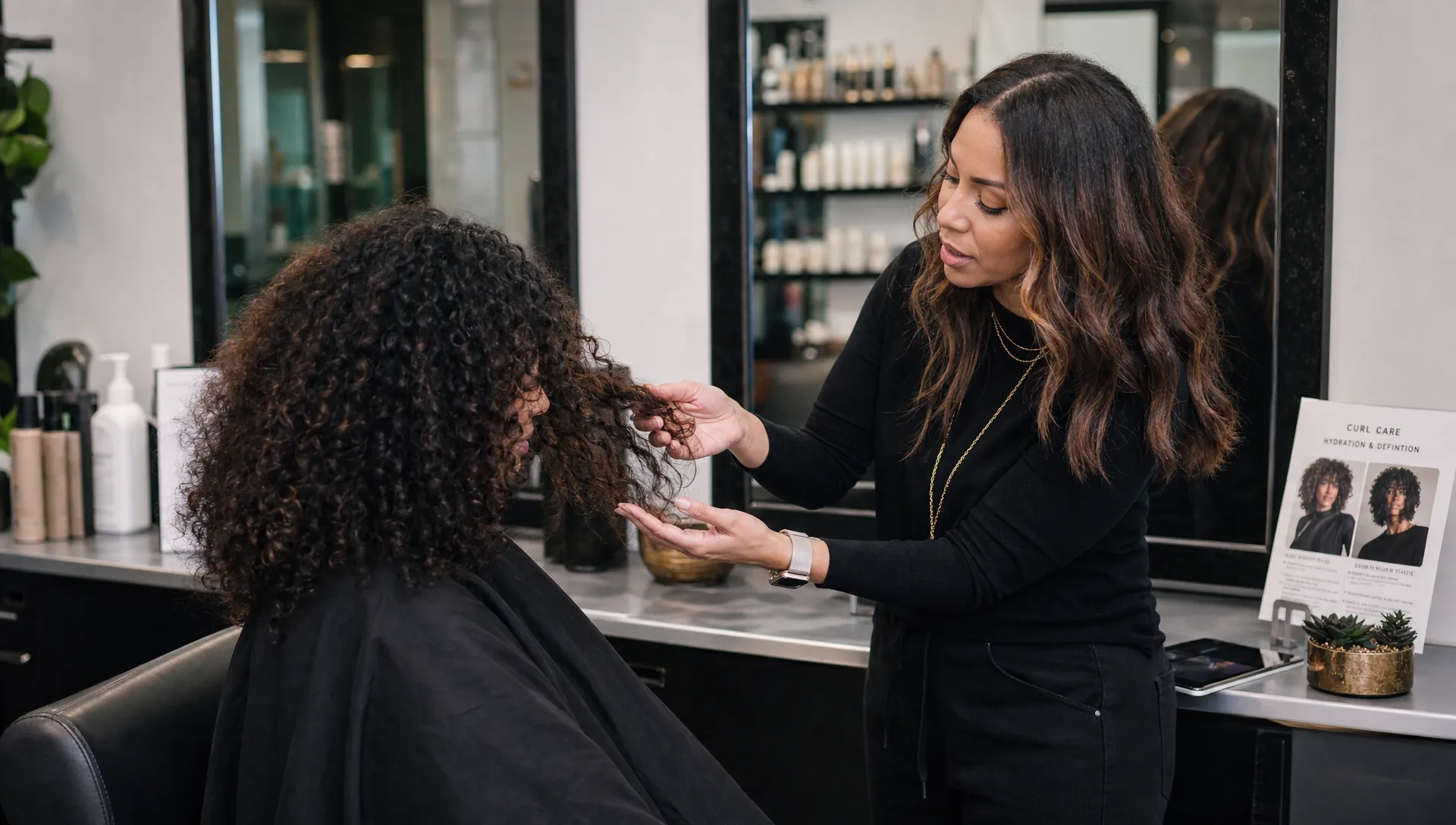
The consultation is where a great salon separates itself from a convenient one. A stylist who cares about hair health will not jump straight into shampooing, coloring, relaxing, pressing, braiding, or installing extensions without understanding your hair first.
A strong consultation should include questions about your hair history, current routine, past chemical services, heat use, shedding, breakage, scalp concerns, and styling goals. The stylist should also ask how you wear your hair day to day. A look that works beautifully for someone who wraps their hair nightly may not be ideal for someone who works out often, sweats heavily, or needs low-maintenance styling.
The best consultations are honest. If your hair needs a trim before a silk press, a conditioning plan before color, or a lower-tension option for protective styling, the stylist should say so clearly and respectfully. Great salons do not promise every transformation in one visit. They build a plan that supports the hair you have now and the hair you want later.
| Consultation sign | What it tells you | Why it matters |
|---|---|---|
| The stylist asks about your full hair history | They are looking beyond today’s style | Previous color, relaxers, heat, and extensions affect what your hair can safely handle |
| They examine the scalp and ends | They care about condition, not just appearance | Breakage, dryness, and irritation can change the service plan |
| They explain tradeoffs | They are being realistic | Healthy results often require timing, maintenance, and sometimes compromise |
| They discuss at-home care | They want the style to last safely | Maintenance determines how your hair looks and feels after the appointment |
Healthy technique should be visible in the chair #
Great Black salons protect the hair during every step of the appointment. That includes the shampoo bowl, detangling process, blow-dry, heat styling, braiding, extension prep, and finishing. You should not have to tolerate excessive pulling, burning, tightness, rough detangling, or dismissive comments about pain.
For textured hair, healthy technique often shows up in small details. The stylist detangles gently, usually starting near the ends and working upward. They use products that match the service goal rather than layering on heavy products to hide dryness. They avoid extreme tension around the hairline. They check heat levels instead of assuming every client can handle the same temperature.
This is especially important for styles that can stress the scalp, including braids, sew-ins, ponytails, wigs, and some updos. Protective styling is only protective when the hair underneath is respected. If a style feels painfully tight at installation, it is not a good sign. The American Academy of Dermatology has long warned that hairstyles pulling tightly on the hairline can contribute to traction-related hair loss, so comfort is not just a preference. It is part of hair care.
If hair health is your top priority, you may also want to review this guide on choosing a Black hair salon that protects hair health before you decide.
Match the salon’s specialty to your actual goal #
Not every Black salon specializes in every service, and that is okay. What matters is whether the salon’s strengths match your goal. A stylist who is excellent at short precision cuts may not be the same person you choose for waist-length knotless braids. A color expert may approach your hair differently than a stylist who focuses on silk presses or bridal styling.
Before booking, identify your main priority. Do you want a silk press that moves without heat damage? A color service that respects the health of your curls? A protective style with clean parts and low tension? A bridal look that holds through photos, humidity, and dancing? A scalp or conditioning treatment because your hair feels dry, itchy, or fragile?
Once you know the goal, look for proof. The salon’s photos, service menu, consultation style, and reviews should all point in the same direction. Great salons are also comfortable telling you when another approach would serve you better. That honesty is a green flag.
Notice the products, tools, and professional standards #
A salon does not need to show off every product it owns, but it should feel clean, organized, and intentional. Towels, capes, combs, brushes, clips, and hot tools should be handled professionally. Product choices should make sense for your texture and service, not feel random or overly heavy.
Professional presentation matters because it reflects how seriously a business treats the client experience. This is true across industries: salons rely on clean capes, quality tools, and service-appropriate products, just as athletic brands may work with a specialized MMA apparel manufacturer when they need durable, branded gear for performance settings. In both cases, the right materials support the quality of the final result.
In a salon, details like tool sanitation, clean workstations, organized product storage, and thoughtful timing help build trust. A beautiful salon environment is nice, but beauty alone is not enough. The space should also feel safe, professional, and focused on your comfort.
Read reviews for long-term care, not just first impressions #
A great style on day one matters, but textured hair care is about what happens after day one too. When reading reviews, look for signs that clients return regularly and still trust the salon. Repeat clients often mention consistency, healthy growth, punctuality, communication, or how well the stylist explains maintenance.
Be cautious with reviews that only focus on speed or low price. Fast service can be wonderful when quality is maintained, but rushed detangling, rushed chemical processing, or rushed braiding can create problems later. Low pricing may also be fine, but it should not come at the cost of comfort, cleanliness, or hair health.
Look for review language such as:
- “My hair still felt soft after the style came down.”
- “She explained how to maintain my silk press at home.”
- “My edges were not tight or sore.”
- “They told me what my hair could handle before coloring.”
- “The consultation made me feel heard.”
These details tell you more than a generic compliment because they point to care, not just appearance.
Be alert to red flags #
Even if a salon is popular, certain warning signs should make you pause. A great Black salon will respect your questions, explain the process, and prioritize comfort. If you feel pressured, dismissed, or rushed before the appointment even begins, listen to that feeling.
| Red flag | Why it matters | Better sign |
|---|---|---|
| No consultation for a major service | The stylist may not understand your hair history | The salon asks questions before confirming the plan |
| Painful tension is treated as normal | Tight styles can stress the scalp and hairline | The stylist adjusts tension when you speak up |
| Extreme color is promised in one session | Lightening textured hair often requires caution | The stylist explains stages, conditioning, and maintenance |
| Pricing is unclear | Surprise costs damage trust | The salon explains service expectations before starting |
| Aftercare is ignored | Your results may not last safely | You leave with realistic maintenance guidance |
| Your concerns are minimized | Communication affects the whole experience | The stylist listens and explains options respectfully |
The most important red flag is a stylist who refuses to adapt. Textured hair is not one-size-fits-all. If the salon treats every head the same, it may not be the right place for long-term care.
Ask about maintenance before you book #
A great salon will talk about what happens after the appointment. This is especially important for silk presses, color, extensions, relaxers, protective styles, and bridal or event looks. The maintenance plan should fit your schedule, budget, and habits.
For example, a silk press client may need guidance on wrapping, humidity protection, workout care, and when to shampoo again. A color client may need conditioning treatments, heat limits, and realistic retouch timing. A protective style client should know how long to keep the style in, how to care for the scalp, and when to take it down.
Maintenance advice should feel specific. “Just oil it” is not a complete plan. A stronger stylist will explain what your hair needs, why it needs it, and what to avoid.
Choose a salon that makes you feel respected #
Technical skill matters, but the experience matters too. You should feel comfortable asking questions about products, heat, trims, timing, and pricing. You should not feel judged for wearing wigs, relaxing your hair, being natural, wanting color, needing a trim, or not knowing the “right” terminology.
The best Black salons understand the emotional side of hair. They know that a haircut, silk press, color refresh, install, or bridal style can affect how you show up in the world. They also know that many clients have had past experiences where their texture was mishandled or misunderstood. A great salon helps rebuild trust through patience, education, and consistent care.
If you are in the Warner Robins, GA area, Kingdom Cute offers personalized consultations, precision cuts, luxury color, silk press and relaxer services, extensions, protective styles, bridal and event styling, scalp and conditioning treatments, and online booking in a modern salon environment.
Frequently Asked Questions #
How do I know if a Black salon can handle my texture? Look for portfolio photos and reviews from clients with hair similar to yours. During the consultation, the stylist should ask about your hair history, scalp, maintenance routine, and goals before recommending a service.
Should I choose a Black-owned salon or any salon with textured-hair experience? Many clients prefer Black-owned salons because of cultural understanding and lived texture expertise, but the key is proven experience with your hair type and service goal. Choose the salon that demonstrates skill, respect, and healthy technique.
What should I ask before booking a silk press, color service, or protective style? Ask how the stylist protects hair health during the service, what maintenance is required, how long the results should last, and whether your current hair condition is a good fit for the look you want.
Is a tight protective style normal? No. A fresh style may feel secure, but it should not cause sharp pain, bumps, headaches, or scalp soreness. Excessive tension can stress the hairline and scalp.
How often should I visit a salon for textured hair care? It depends on your style, goals, and hair condition. Some clients benefit from regular maintenance every few weeks, while others need seasonal trims, treatment appointments, or service-specific visits. A good stylist will help you create a realistic schedule.
Ready to book with confidence? #
Finding a great Black salon is about more than searching nearby. It is about choosing a stylist who understands texture, protects hair health, communicates clearly, and helps you love your look beyond the day of your appointment.
If you are looking for a luxury salon experience in Warner Robins, GA, book your appointment with Kingdom Cute and start with a consultation designed around your hair, your style, and your confidence.
Tags: black salons near me