Publish on by Kingdom Cute Luxury Hair Salon
- “Holistic” Is a Direction, Not a Guarantee
- Know What You Want the Product to Do
- Read the Ingredient List, Not Just the Promise
- Match the Product to Your Hair Reality
- Patch Test Before You Put It on Your Scalp
- Introduce One Product at a Time
- Be Careful With Oils, Butters and “More Is Better” Thinking
- Know When to Ask a Professional First
- Questions to Ask Before Buying Duafe Holistic Hair Products
- Red Flags to Take Seriously
- Frequently Asked Questions
- Try New Products With a Plan, Not Guesswork
Trying a new hair care line can feel exciting, especially when the brand language speaks to moisture, natural ingredients, scalp care or a more intentional beauty routine. If you are considering Duafe Holistic Hair products, the smartest move is not to buy the full lineup immediately. Start by understanding your hair’s current condition, your scalp needs and how the formulas fit with your salon services.
“Holistic” can be a useful way to think about hair care because healthy hair is affected by more than one bottle. Cleansing habits, heat use, protective styling, color history, stress, nutrition, water quality and scalp health all shape the way your hair responds. A product can support the routine, but it cannot replace a complete plan.
Below is what to check before you add Duafe Holistic Hair products to your wash day, silk press prep, protective style maintenance or color care routine.
“Holistic” Is a Direction, Not a Guarantee #
In beauty, the word holistic often suggests a whole-hair approach that considers scalp comfort, moisture balance, ingredient quality and long-term hair health. That can be a positive sign, especially if you are trying to move away from random product hopping.
Still, holistic does not automatically mean safer, better or right for every texture. Plant oils, butters, botanical extracts and essential oils can be helpful for some people and irritating or too heavy for others. The U.S. Food and Drug Administration explains that cosmetic products and ingredients generally do not need FDA approval before they go to market, except for color additives. That makes label reading and personal testing especially valuable.
The takeaway is simple: treat the holistic positioning as one clue, not the whole decision. Your hair history matters more than the front label.
Know What You Want the Product to Do #
Before trying Duafe Holistic Hair products, name the exact result you want. A shampoo meant to cleanse buildup will not perform like a co-wash. A rich butter may seal moisture beautifully on dense coils but make fine hair feel coated. A protein treatment may help weak, high-porosity strands but leave protein-sensitive hair feeling stiff.
Common goals include:
- More moisture between wash days
- Less breakage during detangling
- Better curl definition
- Scalp comfort under protective styles
- Less frizz after blow drying or silk pressing
- Support for color-treated or chemically treated hair
- A cleaner ingredient profile without sacrificing performance
If you are unsure which goal matters most, look at your hair over the last month. Are you seeing short broken pieces on your sink? Does your scalp itch after three days? Does your hair feel greasy but still dry? Does your silk press revert too fast? Each of those signs points to a different need.
For a broader product-selection framework, Kingdom Cute’s guide on how to choose hair salon hair products that work can help you connect your routine to your texture, density, porosity and hair history.
Read the Ingredient List, Not Just the Promise #
Product marketing tells you what the formula is meant to do. The ingredient list tells you how it may try to do it. Since formulas can change, always check the current label on the product you plan to buy.
A few ingredient categories deserve attention:
- Cleansers: Shampoos may use stronger or gentler surfactants. A clarifying feel can be helpful for buildup, but it may be too frequent for dry, color-treated or chemically treated hair.
- Conditioning agents: Ingredients such as fatty alcohols, cationic conditioners and slip agents help soften the hair and support detangling.
- Oils and butters: Coconut oil, shea butter, castor oil and similar ingredients can seal and soften, but heavy use may weigh down fine strands or create buildup.
- Humectants: Ingredients such as glycerin can help attract moisture, but results vary depending on climate and styling method.
- Proteins: Hydrolyzed proteins can temporarily strengthen the feel of damaged hair, but too much protein can make some hair feel rigid.
- Fragrance and essential oils: These can make a product enjoyable to use, but they are also common triggers for sensitive scalps.
- Preservatives: A preserved water-based product is usually safer than an unpreserved formula because preservatives help reduce microbial growth.
No single ingredient is automatically good or bad. What matters is the full formula, your hair’s tolerance and how often you use it.
Match the Product to Your Hair Reality #
Duafe Holistic Hair products may appeal to clients with natural hair, textured hair, protective styles or a preference for more ingredient-conscious routines. The right fit depends on how your hair behaves in real life, not only on your curl pattern.
| Hair or scalp situation | What to watch for | What to ask or look for |
|---|---|---|
| Fine strands or low-density hair | Heavy creams, oils and butters may flatten volume | Lightweight leave-ins, controlled amounts and rinse-out conditioning |
| Dense coils or very dry ends | Light products may not provide enough sealing or slip | Richer conditioners, detangling slip and a moisturizing layering method |
| Low-porosity hair | Product may sit on top instead of absorbing | Lightweight hydration, warm water rinsing and careful product amounts |
| High-porosity or color-treated hair | Hair may lose moisture quickly and feel rough | Bond-supporting salon care, masks and balanced moisture with occasional protein |
| Silk press or heat-styled hair | Heavy oils before heat can increase limpness or smoke risk | Heat protection, lightweight finishing products and clean hair before styling |
| Protective styles or extensions | Scalp can collect oil, sweat and product residue | Scalp-safe application, light hydration and a plan for cleansing between installs |
| Itchy, flaky or painful scalp | Cosmetic products may not address the cause | Stylist guidance and medical advice if symptoms persist or worsen |
This is where a salon consultation helps. A stylist can feel your strands, check density, look at your ends and ask about your habits in a way an online product description cannot.
Patch Test Before You Put It on Your Scalp #
A new product may smell good and feel smooth in your hands, but your scalp still gets the final vote. Patch testing is especially wise if you have eczema, psoriasis, known allergies, fragrance sensitivity, a history of scalp irritation or a recent chemical service.
Apply a small amount of the product to a discreet area such as the inner arm or behind the ear, then wait at least 24 hours. If you notice itching, burning, redness, swelling or rash, do not apply it to your scalp. Rinse the area and consider speaking with a healthcare professional if the reaction is strong or does not improve.
For rinse-off shampoos, a patch test does not perfectly predict how your scalp will respond during a full wash day, but it can help you avoid obvious irritation. For leave-ins, oils, creams and scalp products, this step is even more useful because the product stays on your skin longer.
Introduce One Product at a Time #
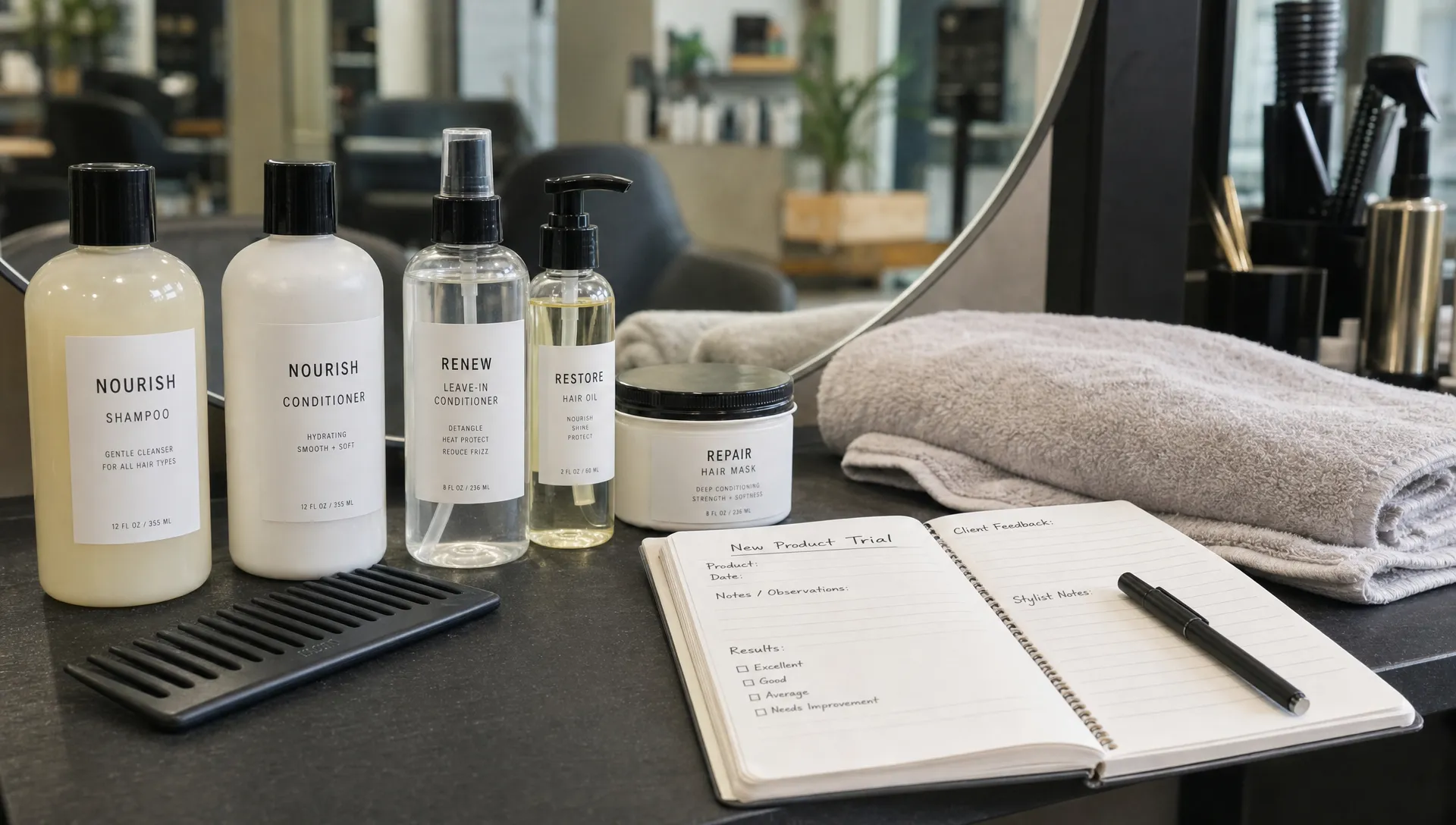
If you buy a shampoo, conditioner, mask, leave-in, oil and styling cream all at once, you will not know which one helped or caused a problem. A slower trial gives you better information.
Start with one product that matches your main goal. Use it for two to four wash days while keeping the rest of your routine familiar. Pay attention to how your hair feels when wet, how easily it detangles, how it dries, how your scalp feels after a few days and how much buildup you notice by the next wash.
You can track four simple signs: softness, manageability, shine and scalp comfort. If your hair looks better on day one but feels coated by day four, the formula may be too heavy or you may be using too much. If your hair feels clean but squeaky, your cleanser may need to be followed with a richer conditioner or used less often.
Be Careful With Oils, Butters and “More Is Better” Thinking #
Many holistic hair routines lean into oils and butters, which can be helpful when used thoughtfully. The problem starts when every step adds another layer of richness. Shampoo, mask, leave-in, cream, oil and edge control can leave some hair feeling coated instead of moisturized.
Moisture comes from water and water-attracting ingredients. Oils and butters mainly help reduce moisture loss and add softness or lubrication. If your hair feels dry under an oily layer, you may need a better wash and conditioning process, not more oil.
Clients who wear silk presses should be especially cautious. Too much oil before or after heat styling can reduce movement, attract dust and shorten the life of the style. Clients with protective styles should also avoid using heavy products directly on the scalp too often, since buildup can contribute to itching and odor.
If your current routine already feels heavy, clarify before judging the new product. Sometimes the issue is not the new formula, but old residue blocking it from working well.
Know When to Ask a Professional First #
Holistic care does not mean handling every concern at home. It means choosing the right tool for the right problem. For oral health, you would choose a qualified provider such as a professional dentist in Beenleigh instead of expecting a toothpaste to solve every issue; for scalp pain, sudden shedding, sores, severe flakes or burning, a licensed stylist or dermatologist is a better starting point than a new hair product.
A stylist can also help you avoid conflicts with salon services. If you color your hair, relax it, wear extensions, get silk presses or switch between natural and heat-styled looks, your home products should support that plan. For example, some heavy oils can interfere with clean color application if they are not removed properly, and some shampoos may be too stripping for recently colored hair.
If you want a salon that understands textured hair care, scalp comfort and healthy styling, this guide on choosing a natural hair salon for healthy styling explains what to look for before booking.
Questions to Ask Before Buying Duafe Holistic Hair Products #
A few questions can save you from wasting money or irritating your scalp:
- Is this product for cleansing, conditioning, sealing, styling or scalp care?
- Does the label match my hair density, porosity and styling habits?
- Is it safe for my color, relaxer, extensions or silk press routine?
- Does it contain fragrance, essential oils or allergens I already know I react to?
- How often is it meant to be used?
- Will it replace something in my routine or add another layer?
- Can I buy a smaller size or sample before committing?
You do not need a complicated routine to have healthy hair. In many cases, a consistent cleanser, a reliable conditioner, a leave-in that suits your texture and a heat protectant when needed will do more than a crowded shelf. Kingdom Cute’s article on healthy hair habits your stylist wishes you knew is a helpful companion if your goal is stronger hair, not just new products.
Red Flags to Take Seriously #
Be cautious with any product line that promises guaranteed hair growth, instant repair of severe damage or one formula that works perfectly for every texture. Hair growth is influenced by genetics, health, hormones, age, nutrition and scalp condition. Cosmetic products can improve the feel, appearance and manageability of hair, but they cannot reverse every cause of shedding or breakage.
Also be skeptical of routines that tell you to ignore professional advice, skip cleansing for long periods or apply irritating ingredients to “stimulate” the scalp. Tingling is not always a sign that a product is working. Burning, pain and persistent itching are signs to stop.
A good product should make your routine easier, not more confusing. If you need five extra steps to make it behave, it may not be the best match.
Frequently Asked Questions #
Are Duafe Holistic Hair products good for natural hair? They may be a good fit for some natural hair routines, but it depends on the formula, your texture, porosity, density and scalp sensitivity. Check the ingredient list and introduce one product at a time.
Can holistic hair products help with hair growth? They may support a healthier routine by reducing dryness, breakage or scalp discomfort, but no cosmetic product can guarantee growth. Sudden shedding, bald patches or scalp pain should be evaluated by a medical professional.
Should I use Duafe Holistic Hair products on color-treated hair? Check whether the specific product is appropriate for color-treated hair. If you recently colored your hair, ask your stylist before using strong cleansers, heavy oils or treatments that may affect tone, softness or longevity.
How long should I try a new hair product before deciding? Two to four wash days is usually enough to notice softness, buildup, scalp comfort and manageability. Stop sooner if you experience burning, rash, swelling or strong irritation.
Can I bring Duafe Holistic Hair products to my salon appointment? Yes. Bringing the bottle or ingredient list can help your stylist understand what you are using at home and whether it supports your cut, color, silk press, extensions or protective style.
Try New Products With a Plan, Not Guesswork #
If you are curious about Duafe Holistic Hair products, start with your hair goals, read the label and test carefully. The best routine is not the most expensive or the most natural sounding. It is the one that keeps your scalp comfortable, your strands manageable and your salon results looking fresh longer.
At Kingdom Cute Hair Salon, clients receive personalized consultations for cuts, color, silk presses, extensions, protective styles, conditioning treatments and event styling. If you are unsure whether a new product belongs in your routine, bring it to your appointment and let your stylist help you make a confident choice.
Tags: duafe holistic hair