Publish on by Kingdom Cute Luxury Hair Salon
- Plan the updo and veil as one look
- Match hair extensions for wedding updos in daylight
- Compare the hair that will actually show
- Match texture after styling
- Choose length and fullness for the finished shape
- Compare temporary and installed extensions
- Give the veil its own secure anchor
- Test the actual veil and accessories
- Check scalp comfort before committing
- Work backward from the wedding date
- Test the look for weather, photos and veil removal
- Frequently Asked Questions
- Plan your bridal look at Kingdom Cute
Choosing hair extensions for wedding updos is about more than adding length. The best match gives your stylist enough hair to build the shape you want while keeping attachment points hidden, your scalp comfortable and your veil secure. A beautiful bun can still feel wrong if the extensions are too heavy or the veil pulls whenever you turn your head.
Start with the finished hairstyle and veil, then choose the extensions that support both.
Plan the updo and veil as one look #
Bring your stylist front, side and back views of your preferred hairstyle, along with the actual veil if you already have it. A photo of a low bun does not reveal whether its fullness comes from extensions, padding or the wearer’s natural density.
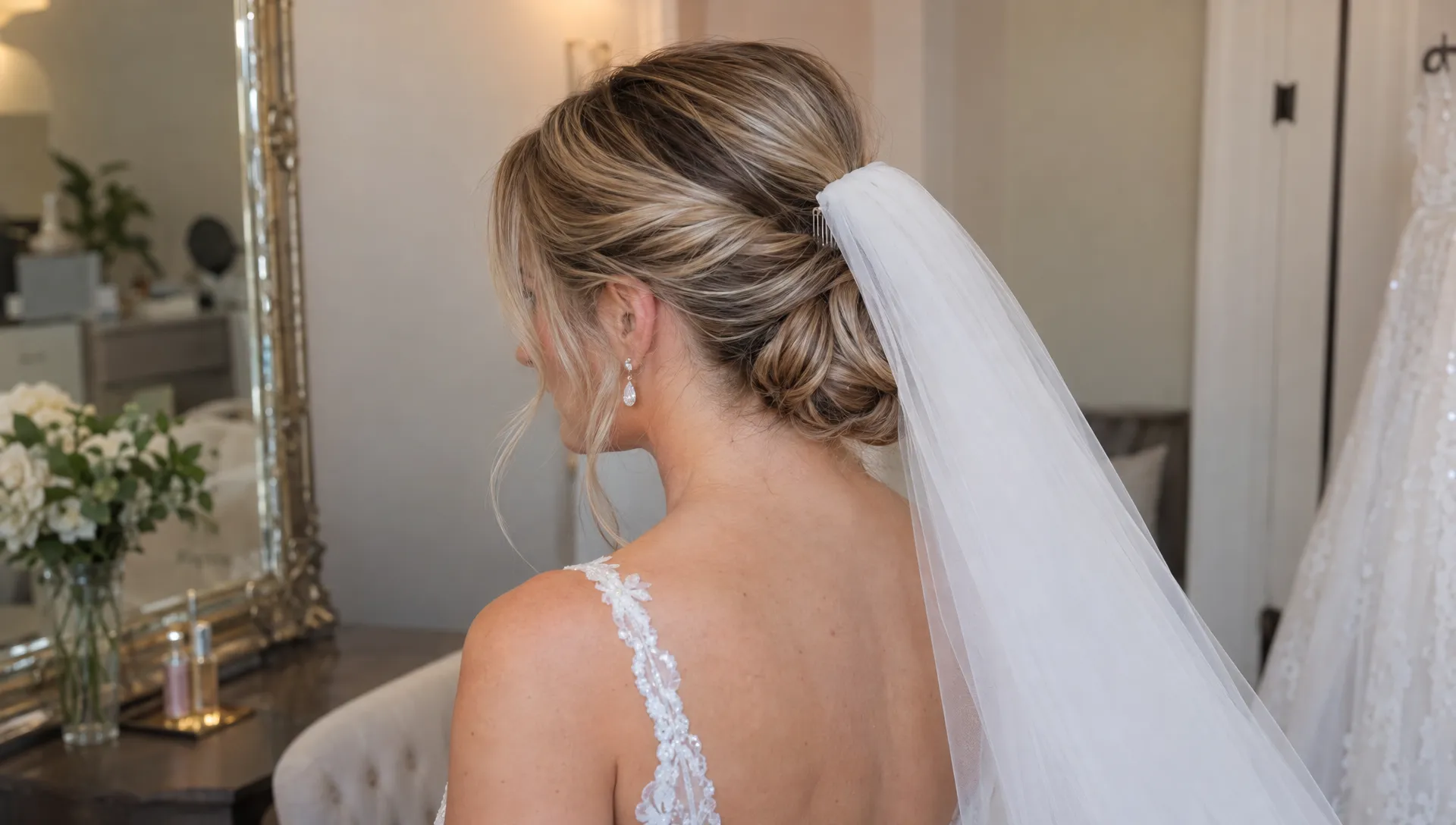
Decide where the veil should sit before planning extension placement. Above-the-bun placement needs a concealed anchoring area above the style. Below-the-bun placement needs accessible support underneath without exposing clips or attachment rows.
Also discuss whether you will remove the veil after the ceremony. Your updo should look finished both with and without it, rather than depending on the comb to hold part of the hairstyle together.
A useful consultation brief includes your desired bun position, visible part, face-framing pieces and any second accessory you plan to wear at the reception. Those details determine where your natural hair needs to cover the extensions.
Match hair extensions for wedding updos in daylight #
Compare the hair that will actually show #
Match extensions to your visible mid-lengths and ends, not just your roots. In a twisted bun, several sections of hair sit beside one another, making an abrupt color difference easier to notice.
Ask your stylist to compare swatches against your hair in indirect daylight and salon lighting. Look at undertone as well as depth: two shades can both appear medium brown while one looks golden and the other looks cool.
For highlighted hair, a blend of shades may look more natural than a single flat color. Check how the colors appear when twisted together, since loose-hair matching does not always predict the finished updo.
Match texture after styling #
Compare extensions with your hair in the state you will wear it. Naturally curly hair styled into a textured updo needs a different match from the same hair worn smooth.
If heat styling is planned, confirm that the extension fiber allows it and follow its temperature limits. Human hair and synthetic fibers do not necessarily respond alike. Your trial should test whether both your hair and the extensions hold the intended finish.
Choose length and fullness for the finished shape #
When selecting hair extensions for wedding styles, buy for the finished shape rather than the longest length available. More hair can create extra bulk without improving the result.
| Updo | What added hair can contribute | What to check at the trial |
|---|---|---|
| Low chignon | A fuller roll or more defined loops | Whether the bun interferes with the veil comb |
| High bun | Volume and length for wrapping | Whether attachments stay covered as hair lifts upward |
| Braided updo | Fuller braids and longer sections | Whether clips or rows show between braid sections |
| Textured pinned curls | More curl clusters and balanced fullness | Whether added hair matches the natural curl pattern |
A compact chignon may need fullness more than length. A wrapped high bun may need usable length, but excessive density can make it heavy or difficult to pin.
Short layers deserve special attention because they may escape when the hair is lifted. Extensions do not automatically conceal them. Ask your stylist to demonstrate how those layers will be tucked, pinned or intentionally left out.
If your inspiration photo shows a very large bun, discuss whether lightweight padding could create some of that shape without adding unnecessary extension weight.
Compare temporary and installed extensions #
The right hair extensions for wedding wear depend partly on whether you want them for one event or for the weeks around it. Temporary pieces and installed methods have different preparation and removal needs.
| Method | Why it may suit a wedding | Main planning consideration |
|---|---|---|
| Clip-ins | Can be fitted for the event and removed afterward | Clips need adequate coverage and comfortable placement |
| Tape-ins | Can remain in place through related events | Adhesive attachment areas must stay concealed in the updo |
| Sew-ins | Can support ongoing wear beyond the wedding | The foundation, tension and row placement must suit your hair |
Clip-ins are not automatically the best option for fine hair. A clip can show through sparse coverage or feel uncomfortable if too much weight rests on a small section.
Installed extensions also need a wedding-specific placement plan. A row that disappears when your hair is down may become visible when everything is swept upward. Tell the extension stylist about the updo before installation, not afterward.
If you are weighing longer-term wear, Kingdom Cute’s guide to choosing extensions for your lifestyle and hair health can help you consider maintenance beyond the ceremony. Ask about removal and follow-up appointments before choosing a method.
Give the veil its own secure anchor #
Your veil and extensions perform different jobs. Extensions create the hairstyle’s shape; the veil needs a stable anchoring area that does not disturb that shape.
When planning hair extensions for wedding updos, ask your stylist to keep the veil’s anchoring area separate from extension attachment points. A veil comb should not simply be pushed through clips, tape tabs or bonds. Its placement needs to work with the finished style and distribute tension comfortably.
Test the actual veil and accessories #
Bring the real veil to your trial whenever possible. Comb size, fabric weight and embellishments affect how it sits. Length alone does not tell you how heavy a veil will feel.
Wear any tiara, headband or decorative pins at the same time. Several accessories can compete for the same space, especially around a low bun.
Turn your head, sit down and practice a gentle hug. The veil should not lever the bun away from your head or pull at the hairline. If it catches on a chair or clothing, stop and adjust rather than tugging it free.
Have the stylist demonstrate removal to the person helping you on the day. Agree on which pins secure the veil and which must stay in the updo. That small distinction can prevent an accidental reception restyle.
Check scalp comfort before committing #
A comfortable trial is essential when choosing hair extensions for wedding wear, particularly if your hair is fine, fragile or prone to breakage. Ask your stylist to assess whether the proposed attachment areas can support the added hair without excessive tension.
The American Academy of Dermatology’s guidance on traction alopecia explains that repeated pulling from hairstyles can cause hair loss. Pain is not a sign that a style is properly secured.
During your trial, report pulling, stinging, tenderness or a headache. Do not assume discomfort will settle after several hours. The solution may be fewer pieces, different placement, a lighter accessory or another hairstyle.
If you have a history of reactions to adhesives, metals or hair products, tell the stylist before installation. Ask what materials will touch your skin and whether manufacturer-directed testing is appropriate. Avoid attaching extensions over an irritated scalp, and seek medical advice for persistent inflammation or unexplained hair loss.
Work backward from the wedding date #
Use a schedule that leaves room for adjustments rather than making the wedding your first full test. The timeline below is a planning framework, not a fixed installation schedule; your stylist should adapt it to your chosen method and hair condition.
| Planning window | What to arrange |
|---|---|
| About 8 to 12 weeks before | Discuss the updo, veil, hair condition and extension options |
| About 4 to 6 weeks before | Complete the color plan and trial with the intended extensions and accessories |
| About 1 to 2 weeks before | Confirm any maintenance, preparation instructions and removal arrangements |
| Wedding week | Follow the agreed washing and styling plan without introducing unfamiliar treatments |
Ordering hair extensions for wedding styling early gives you time to address an unsuitable shade, texture or amount of hair. Confirm return and alteration policies before the pieces are cut, colored or otherwise customized.
Do not assume freshly washed or heavily conditioned hair is always the correct preparation. Your stylist should give instructions for both your natural hair and the extension method. Installed attachments may have product restrictions, while temporary pieces may need separate preparation.
If you are still choosing a bridal stylist, use the trial and logistics questions in Kingdom Cute’s guide to comparing bridal hair services. Confirm who will prepare the extensions and who will handle any installation or removal appointments.
Test the look for weather, photos and veil removal #
Warner Robins weddings can involve humid outdoor conditions, so include your venue and photography plans in the consultation. Natural hair and extensions may react differently to moisture, making a perfectly blended indoor trial less predictive of an outdoor ceremony.
Wear the trial style long enough to assess comfort and how it settles. Take photos from the back, both sides and slightly above, where a camera may catch attachment points near the crown. Check the style in daylight as well as indoor lighting.
Practice removing the veil without changing the bun. Then check whether the hair underneath needs smoothing or whether a decorative pin should replace the comb.
Your stylist can suggest a small touch-up kit, such as suitable pins, a compact mirror and a finishing product compatible with your extensions. A helper should know how to adjust a loose decorative piece without pulling apart the foundation.
The final test for hair extensions for wedding updos is not whether they look impressive loose. It is whether the finished style stays blended, comfortable and secure through the movements you will make, from looking down at your vows to dancing without the veil.
Frequently Asked Questions #
Are clip-ins or installed extensions better for a bridal updo? Neither is universally better. Clip-ins may suit one-day wear, while installed methods may suit several events. Coverage, scalp comfort, hairstyle placement and your willingness to manage maintenance should guide the choice.
Can I wear hair extensions for wedding hairstyles if my hair is fine? Sometimes, but the amount and attachment method need careful assessment. Fine hair may provide less coverage and tolerate less added weight. A stylist may recommend fewer pieces, another placement or a lighter shape rather than a large extension-heavy bun.
Should I buy extensions before my bridal trial? Consult the stylist before purchasing. Ideally, the full trial uses the actual extensions and veil so you can assess blending, placement and comfort together. If you have already bought hair, bring it to the consultation before altering it.
Can a veil pull out my extensions? A snagged veil can place stress on the hairstyle and its attachments. Separate anchoring, a movement test and a demonstrated removal technique help reduce that risk. If the veil pulls during the trial, have the placement adjusted rather than accepting it.
Plan your bridal look at Kingdom Cute #
Kingdom Cute in Warner Robins, GA offers personalized consultations, hair extensions and bridal styling. Bring your inspiration photos, veil and any accessories so you can discuss how they will work together. Book a consultation with Kingdom Cute to plan a bridal look around your hair, comfort and wedding-day schedule.