Publish on by Kingdom Cute Luxury Hair Salon
- Why fine hair falls flat so easily
- The haircut formula that keeps fine hair from going limp
- Layered haircut ideas that add lift without thinning the ends
- What to say during your salon consultation
- How to style a layered haircut so it holds volume
- Color can make layers look fuller, if it is placed carefully
- The mistakes that make fine hair look flatter
- Why the right salon experience matters
- Frequently Asked Questions
- Ready for layers that actually hold their shape?
Fine hair can look soft, polished and expensive when it has the right shape. The problem is that not every layer helps. Cut too much away and the ends become see-through. Leave everything one length and the hair may sit close to the head with little movement. A layered haircut for fine hair has to land in the sweet spot, where the cut creates lift without stealing the fullness you already have.
That balance starts before the first snip. Your stylist needs to look at strand size, density, growth patterns, damage, daily styling habits and the way your hair behaves when it is clean, dry and lived in. At Kingdom Cute in Warner Robins, GA, that is where a personalized consultation matters most. Fine hair is not a problem to hide. It is a texture that needs a precise plan.
Why fine hair falls flat so easily #
Fine hair refers to the diameter of each strand, not necessarily the number of strands on your head. You can have fine hair and a lot of it, or fine hair with lower density. That distinction changes the haircut completely.
Because each strand is smaller, fine hair can be weighed down quickly by heavy products, long lengths, oil buildup or layers that are cut in the wrong place. When the ends are over-texturized, the shape may look airy at first, then collapse a few hours later. When the crown is left too heavy, the hair can part flat and cling to the scalp.
A layered haircut for fine hair should not rely on removing bulk the way a thick-hair haircut might. Instead, it should create support. The best layers lift the surface, release movement around the face and keep enough weight through the bottom so the hair still looks full.
The American Academy of Dermatology also recommends gentle hair care habits to reduce breakage, including avoiding harsh brushing and limiting heat damage. That advice is especially useful for fine hair, because breakage can make already delicate ends look thinner.
The haircut formula that keeps fine hair from going limp #
The best layered haircut for fine hair usually follows three principles: keep the perimeter strong, layer softly through the interior and avoid aggressive thinning. Those details may sound small, but they are the difference between volume that lasts and hair that looks wispy by lunchtime.
A strong perimeter means the bottom edge still has presence. It may be blunt, softly beveled or slightly rounded, but it should not look shredded. This gives fine hair a visual base, especially in bobs, lobs and medium-length cuts.
Interior layering adds movement without exposing the scalp or thinning the ends. These layers are often subtle, sometimes called invisible layers, because they work inside the shape rather than sitting as obvious steps. They help hair bend, bounce and respond better to styling.
Face-framing pieces can make the cut feel modern without sacrificing density. Instead of cutting heavy layers everywhere, your stylist can place softness near the cheekbones, jawline or collarbone, depending on your face shape and preferred part.
If you want a deeper look at what should be evaluated before the cut, this guide on what a hairdresser for fine hair should consider before cutting explains why density, damage and styling routine matter so much.
Layered haircut ideas that add lift without thinning the ends #
There is no single perfect cut for every fine-haired client. Your ideal shape depends on your length, texture, lifestyle and how much styling you actually want to do. Still, some layered shapes tend to work especially well.
| Layered shape | Why it works for fine hair | What to ask your stylist |
|---|---|---|
| Collarbone lob with soft layers | Keeps weight at the bottom while adding swing | A full perimeter with light interior movement |
| Long face-framing layers | Adds shape without cutting into the back too much | Face-framing that starts around the cheekbone or jaw |
| Soft layered bob | Creates the look of density with a clean outline | A beveled edge and subtle crown movement |
| Invisible layers | Gives movement without obvious choppy pieces | Internal layers that do not thin the ends |
| Layered pixie or bixie | Builds crown lift and shape on shorter lengths | Controlled crown layering with a polished neckline |
A collarbone lob is one of the most reliable options because it is long enough to style in different ways but short enough to avoid dragging the hair down. When paired with light layers through the mid-lengths, it can look fuller than longer hair that has lost its bounce.
A soft layered bob works well when the bottom edge is protected. Fine hair often looks thicker when the ends hit around the chin, jaw or just above the shoulders. The layers should support the shape instead of turning it into a shag unless that is the exact look you want.
Long fine hair can still be layered, but it needs restraint. If too many short layers are placed around the crown or through the back, the longest pieces can start to look sparse. For long hair, subtle face-framing and invisible layers are often more flattering than dramatic stair-step layers.
Short cuts can also be beautiful on fine hair, especially when the crown is shaped carefully. If you are considering going shorter, Kingdom Cute’s guide to pixie haircuts for fine hair that build shape and lift explains how a shorter silhouette can create the look of more volume.
What to say during your salon consultation #
Before committing to a layered haircut for fine hair, bring more than a photo. Bring context. A style that looks full in a picture may have been curled, sprayed, backcombed or photographed from the most flattering angle. Your stylist can use the photo as direction, but your real hair needs to guide the final cut.
Helpful consultation details include how often you wash your hair, whether you air-dry or blow-dry, where your hair naturally parts, how well it holds curl and which products make it feel heavy. If your hair has been lightened, relaxed, silk pressed often or chemically treated, that also affects how much layering it can handle.
Use clear language. Instead of saying, “I want lots of layers,” try saying, “I want movement and lift, but I do not want my ends to look thin.” That gives your stylist permission to be strategic rather than simply cutting more.
You can also ask where the shortest layer will fall. For fine hair, that one detail matters. A shortest layer that sits too high can create flyaways or separate from the rest of the cut. A shortest layer that is too long may not give enough movement. The right answer depends on your face shape, density and styling habits.
How to style a layered haircut so it holds volume #
A great cut should make styling easier, not turn your mornings into a full production. A layered haircut for fine hair should respond to lightweight products and simple techniques. The goal is controlled lift, not stiff volume.
Start with clean roots. Fine hair shows oil quickly, so buildup can flatten even the best haircut. Use conditioner mainly from the mid-lengths to the ends unless your scalp needs a specific treatment. If your hair tangles easily, choose a lightweight leave-in and use only what your strands need.
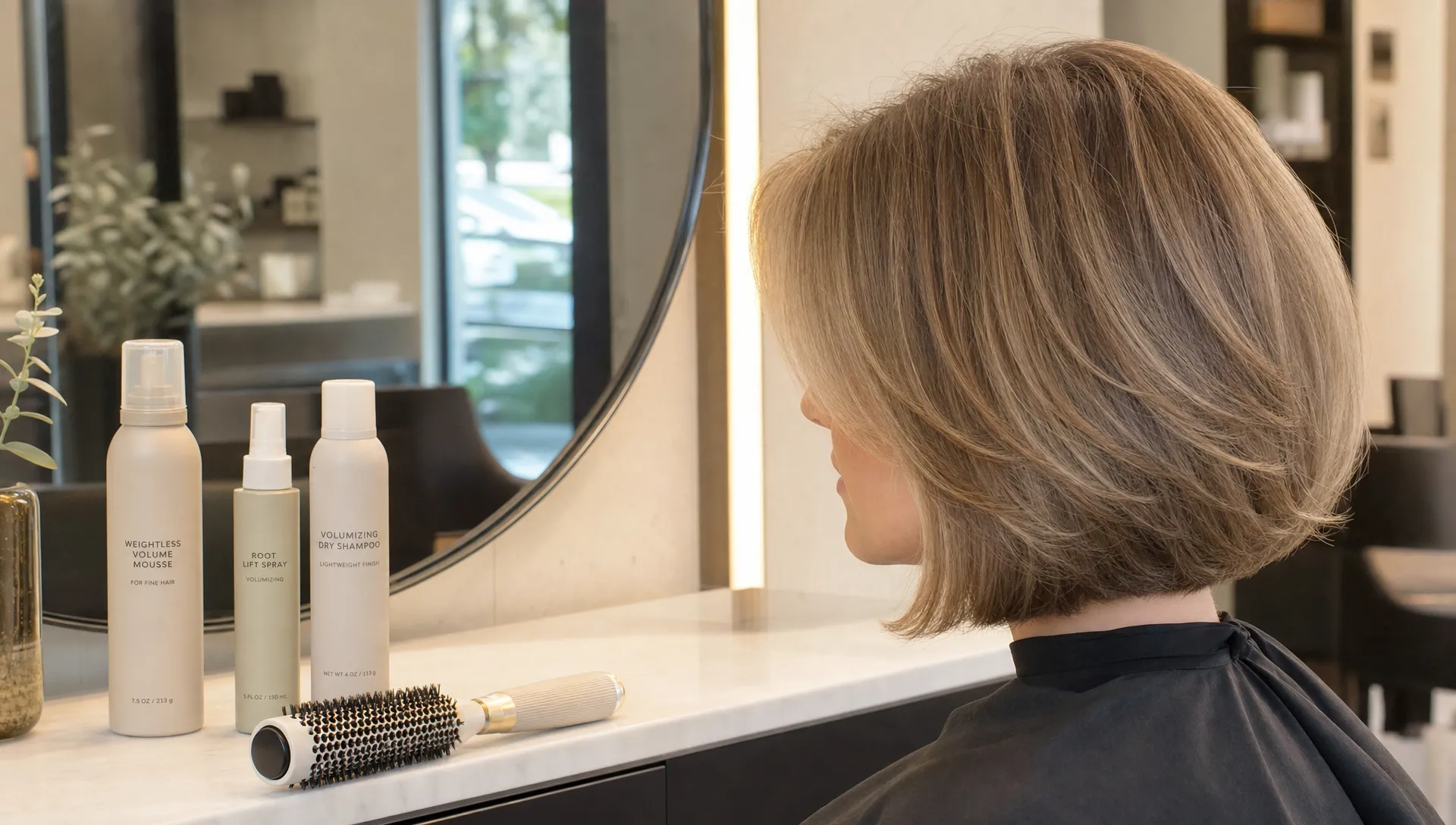
For lift, apply a volumizing mousse or root spray before drying. Concentrate product near the root and keep heavier creams away from the crown. Blow-dry with your head tilted slightly or lift sections at the root with a round brush. Once the hair is almost dry, set the front or crown with Velcro rollers for a few minutes if you want extra body.
Heat tools can help shape fine hair, but too much heat can make it fragile. Use a heat protectant, keep passes minimal and avoid clamping the ends repeatedly. Soft bends usually look fuller than tight curls because they expand the shape without making the ends look stringy.
Color can make layers look fuller, if it is placed carefully #
Color does not physically change how many strands you have, but it can change how the shape is perceived. Subtle dimension can make layers easier to see and give fine hair a fuller look. The key is placement.
Soft brightness around the face can highlight movement. Low-contrast dimension through the interior can make hair look thicker because it creates visual depth. A gloss can add shine, which helps fine hair look healthier and more polished.
Over-lightening is where fine hair can get into trouble. If the ends become fragile, the cut loses its clean shape. That is why a luxury color service should be paired with a realistic maintenance plan, conditioning treatments and at-home care that protects the hair between appointments.
At Kingdom Cute, services like luxury hair coloring, scalp treatments, conditioning treatments and styling can work together so the cut and color support each other. The prettiest layered style is not just about the haircut. It is about keeping the hair healthy enough to hold the shape.
The mistakes that make fine hair look flatter #
The most common mistake is asking for layers without discussing density. More layers do not always mean more volume. On fine hair, too much removal can make the shape collapse because there is not enough weight left to support the style.
Another mistake is over-texturizing the ends. Fine hair rarely needs heavy thinning shears through the bottom. Soft point cutting may be useful in the right places, but aggressive texturizing can create frizz, transparency and uneven grow-out.
Heavy styling products can undo a good cut. Thick oils, dense creams and strong waxes often sit on fine strands instead of blending in. If you love shine, use a lightweight mist or apply a tiny amount of serum only to the ends.
Skipping maintenance can also flatten the shape. As fine hair grows, the perimeter can lose its crispness and layers can stop sitting where they were designed to sit. Many clients do well with trims every 6 to 10 weeks, though your ideal schedule depends on length, color history and growth rate.
For more examples of smart layer placement, this article on the best layers for thin hair without sacrificing fullness is a helpful companion if your concern is both fine texture and lower density.
Why the right salon experience matters #
Fine hair rewards precision. A small change in angle, elevation or length can make a big visual difference, so this is not the place for a rushed cut. The consultation, sectioning, cutting technique and finishing routine all work together.
Trends can inspire your look, but your haircut has to work in real life. For salon owners and beauty brands reading along, visibility tools like press release distribution for beauty brands and local businesses can help announce new services, awards or launch news, but client trust is built when the style looks just as good after the first wash.
For clients, the takeaway is simple: choose a stylist who talks through your texture, your routine and your goals before deciding how much hair to remove. A layered haircut for fine hair should feel personalized, not copied from a template.
Frequently Asked Questions #
Should fine hair be layered or kept one length? Fine hair can be layered, but the layers need to be soft and strategic. A strong perimeter with subtle interior movement often gives more fullness than heavy layering or a completely flat one-length cut.
What length is best for fine hair that falls flat? Chin-length, collarbone-length and shoulder-grazing cuts are often flattering because they reduce weight while keeping the ends full. Long hair can work too, but the layers should be minimal and carefully placed.
Are face-framing layers good for fine hair? Yes, face-framing layers can add shape and movement without removing too much density from the back. The starting point should be customized to your face shape, part and styling routine.
How do I keep layered fine hair from looking stringy? Use lightweight products, condition mainly through the ends, avoid heavy oils near the roots and keep up with trims. Styling with soft bends or root lift can also make the layers look fuller.
Can extensions help fine hair look fuller with layers? Extensions may help add fullness when they are installed and blended properly. Fine hair needs careful placement so the extensions do not create tension or show through the natural hair.
Ready for layers that actually hold their shape? #
If your fine hair keeps falling flat, the solution may not be more product. It may be a better cut. Kingdom Cute Hair Salon in Warner Robins, GA offers precision haircuts, luxury color, styling, extensions, silk press services, relaxer treatments, protective styles, bridal styling and conditioning treatments in a modern salon environment.
Book a personalized consultation through Kingdom Cute Hair Salon and let your stylist design a shape that gives your fine hair lift, movement and a fuller-looking finish.