Publish on by Kingdom Cute Luxury Hair Salon
- What semi permanent hair color can and cannot do
- What will show on your starting shade?
- Which shades are most likely to be noticeable?
- When you need lightening for a visible result
- Test before coloring your whole head
- How long will the tint last, and will it wash out completely?
- Frequently asked questions
- Choose a result that fits your starting color
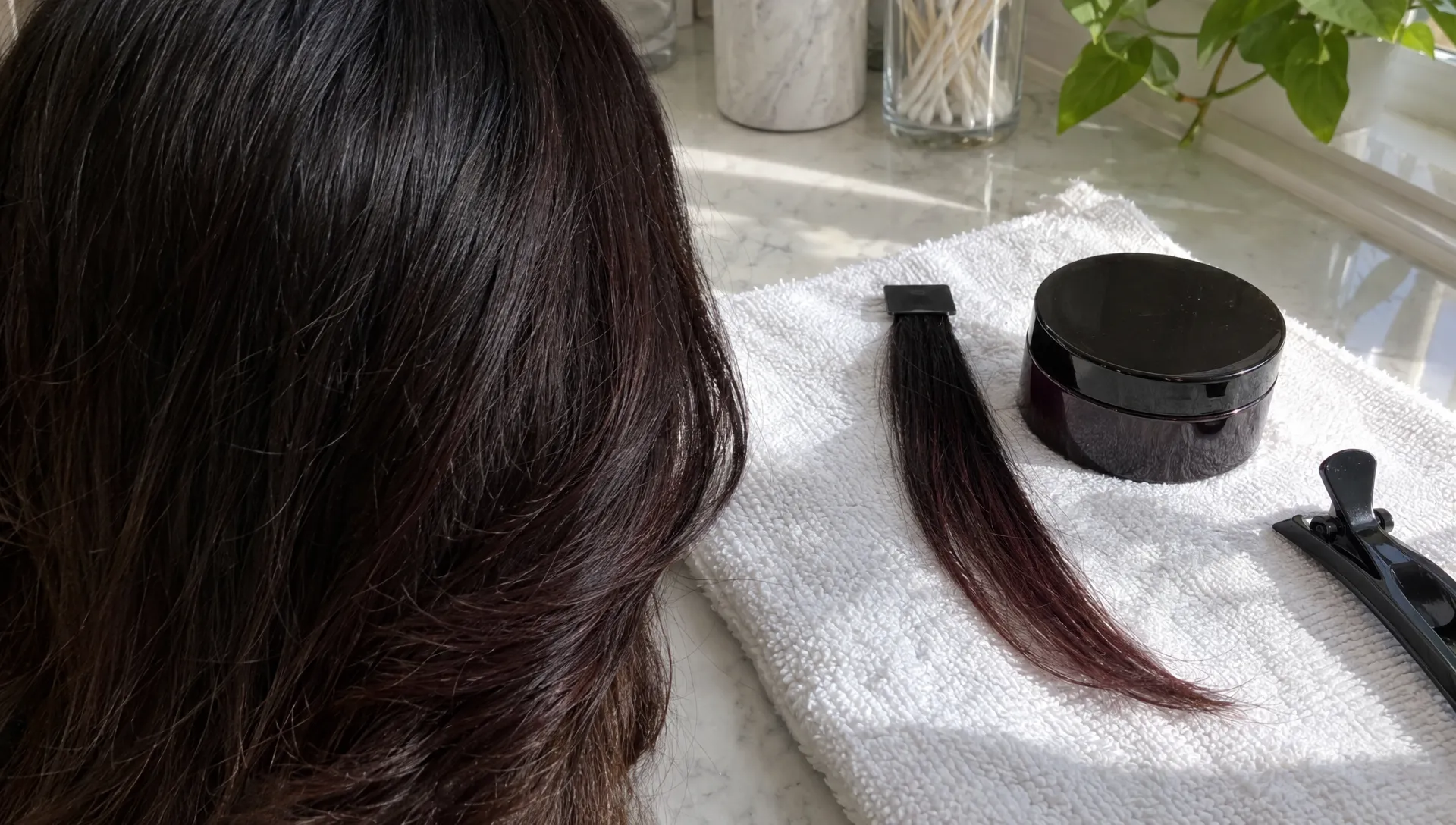
Yes, semi permanent hair color can show up on dark hair, but expect a tint rather than a lighter shade. On naturally black or deep brown hair, rich reds, burgundies and some purples may create a reflection that is easiest to see in sunlight. They will not turn an unlightened dark base into pastel pink, bright copper or vivid blue.
The deciding factors are your starting color, previous chemical services and the shade you choose. A bottle labeled “for dark hair” still cannot make your natural pigment lighter if it is a deposit-only formula. Before choosing a color, decide whether you want a subtle change that catches the light or an obvious new shade indoors. Those goals usually require different approaches.
What semi permanent hair color can and cannot do #
Most true semi-permanent dyes use direct pigments that deposit color without a developer. They add pigment, but they do not lighten your existing hair color. That distinction explains why the same purple dye can look vivid on blonde hair and nearly invisible on black hair.
Your starting shade remains part of the finished result. Warm brown underneath a red dye may produce a wine-colored reflection. A very dark base underneath a blue dye may still look almost black, especially in indoor lighting.
Semi-permanent and demi-permanent color are also different. Demi-permanent formulas generally use a developer and can provide a longer-lasting deposit or gray blending, depending on the product. They are not a reliable route to a substantially lighter result either.
Check the actual mixing instructions rather than relying only on the front label. Products described as glosses, rinses and color masks do not all work the same way. If a formula requires developer, it is not the same kind of direct-dye service discussed here.
What will show on your starting shade? #
With semi permanent hair color, the darkest parts of your hair usually show the least visible change. Lighter pieces, gray strands and previously highlighted ends can take on a much stronger shade.
| Starting hair color or condition | Realistic deposit-only result | Main limitation |
|---|---|---|
| Natural black hair | A subtle reflection from some saturated shades | The result may be difficult to see indoors |
| Natural dark brown hair | A burgundy, plum or red-brown tint, depending on the formula | Hair stays at roughly the same depth |
| Medium brown hair | More noticeable warmth or a colored cast | Bright shades still look deeper than on a light base |
| Dark hair with old highlights | Stronger color on the highlighted pieces | Roots and ends may look very different |
| Dark hair with scattered gray | Brighter or more translucent color on some gray strands | Coverage can be uneven or incomplete |
| Previously dyed dark hair | Additional pigment over the existing color | The dye does not remove old artificial pigment |
These are expectations, not guaranteed swatches. Two people with dark brown hair can get different results if one has untouched hair and the other has porous, previously lightened ends.
For a useful comparison, judge your test strand when it is fully dry in both daylight and your usual indoor lighting. Wet hair can make the outcome harder to assess.
Which shades are most likely to be noticeable? #
Deep burgundy, wine red and plum are reasonable options when the goal is a visible reflection rather than a dramatic transformation. A saturated formula can add a richer cast to brown hair without requiring an all-over lightening service.
Still, shade names are not promises of brightness. A “cherry” shade might look red on light brown hair but read as dark mahogany on a much deeper base. Product examples photographed on bleached hair are not a reliable preview for unlightened brunettes.
Choosing semi permanent hair color means considering both the pigment you add and the color already underneath it. Blue and green can be especially difficult to predict over warm, uneven or previously colored hair. Depending on the base, they may look muted or develop an unwanted cast rather than matching the bottle.
Pastels need a particularly light starting canvas to look pastel. Lavender placed over black hair will not create lavender hair, and choosing a paler dye does not make dark strands lighter.
If you want to keep your depth, look for examples on hair close to your own starting shade. A similar hair history matters more than a matching shade name.
When you need lightening for a visible result #
Pre-lightening is usually necessary when your goal is clearly brighter than your current base: vivid purple on black hair, true pink on dark brown hair or a pastel shade, for example. How much lift is needed depends on the target color and the underlying warmth that appears during lightening.
You do not necessarily need to lighten your entire head. A few strategically placed pieces can provide a lighter canvas for a stronger accent while leaving most of your natural depth intact.
Semi permanent hair color can then supply the fashion shade, but the lightening underneath is a separate chemical process. The added dye fades; the lightened sections do not return to their original dark color on their own.
If that maintenance commitment does not suit you, a subtle tint may be the better choice. For hair that is already fragile, relaxed or repeatedly colored, discuss whether lightening is appropriate before committing. Our guide to how salons protect hair during lightening explains the assessment behind that decision.
Test before coloring your whole head #
A strand test answers the question a shade chart cannot: what will this formula do on your hair? Choose a small, discreet section that represents the area you plan to color. If your roots and ends have different histories, testing only one of them may miss a potential mismatch.
Follow the product’s directions for preparation, processing and rinsing. Leaving dye on longer than instructed is not a dependable way to make it show on a dark base.
When testing semi permanent hair color, check more than brightness. Look for uneven uptake, overly dark ends and a result that appears different under indoor lighting. Previously bleached sections may grab pigment more strongly than untouched roots. Our explanation of why a colorist may recommend a strand test covers when this step is particularly useful.
A strand test is different from a skin allergy test. Follow the product’s allergy-testing instructions before each use, even if you have colored your hair before. The FDA’s hair-dye safety guidance recommends testing each time and following package directions. “Semi-permanent” does not mean allergy-free, and a negative test cannot guarantee that a reaction will not occur.
How long will the tint last, and will it wash out completely? #
There is no single wash count that applies to every formula and head of hair. Product concentration, washing frequency, porosity and previous lightening all affect how long the color remains noticeable. Treat the manufacturer’s stated longevity as a guide, not a guarantee.
Semi permanent hair color generally fades with washing, but “semi-permanent” does not promise a complete return to your exact starting shade. Strong pigments can leave residual staining, particularly on porous or lightened sections. A color that looks subtle at your roots may linger much longer on old highlights.
To help preserve the result:
- Follow the formula’s aftercare instructions and use a shampoo intended for color-treated hair.
- Wash as needed rather than repeatedly shampooing to check whether the tint is still there.
- Use comfortably lukewarm water and rinse thoroughly, following the product directions.
- Protect light towels, pillowcases and clothing if the dye transfers, especially when hair is damp.
If you dislike the result, avoid immediately bleaching over it or repeatedly using harsh cleansers. Removal depends on the specific dye and your hair’s condition. Tell your colorist exactly what you used before another color service, even if most of the visible tint has faded.
Frequently asked questions #
Can I get burgundy hair without bleaching dark brown hair? You may get a burgundy reflection or a deeper wine-colored cast without bleach. A clearly red result in ordinary indoor lighting is less certain, especially on very dark brown or black hair. A test strand helps establish whether the subtle version meets your goal.
Will semi permanent hair color show over black box dye? It may add a slight reflection, but it cannot lift the black artificial pigment. If you want a substantially lighter or brighter result, have the existing color assessed before trying to remove or lighten it yourself.
Will it cover gray hair in a dark base? Some formulas tint gray strands, but opaque, uniform coverage is not guaranteed. The gray may look brighter than the surrounding dark hair or resist the color. If consistent gray coverage is your priority, ask a colorist which type of formula fits that goal.
Is it damaging if I skip bleach? A direct-dye service avoids the lightening step, but that does not make every product suitable for every scalp or hair condition. Follow the directions, complete the required allergy test and avoid applying dye to an irritated or damaged scalp.
Choose a result that fits your starting color #
A rich reflection and a vivid fashion shade are different goals. For the first, semi permanent hair color may give dark hair a noticeable shift without lightening. For the second, you may need a lighter canvas and a plan for maintaining it.
Kingdom Cute in Warner Robins, GA offers personalized consultations and hair coloring services. Book a consultation with Kingdom Cute to discuss your starting shade, previous treatments and how visible you want the finished color to be.