Publish on by Kingdom Cute Luxury Hair Salon
- What a strand test actually checks
- Why a colorist for natural hair may recommend testing first
- What happens during the test
- How the result can change your color plan
- A strand test is not an allergy test
- What the test means for your routine afterward
- Frequently asked questions
- Start with a consultation, not a color promise
A colorist for natural hair may recommend a strand test before agreeing to your color goal, especially when lightener, previous dye or fragile ends are involved. That recommendation is not necessarily a sign that your desired look is impossible. It is a way to check how a small sample of your hair responds before treating a larger area.
For curls and coils, the conversation goes beyond getting the shade right. You may also want to preserve curl definition, retain length and avoid making wash-day detangling harder. A strand test helps your stylist plan around those priorities.
What a strand test actually checks #
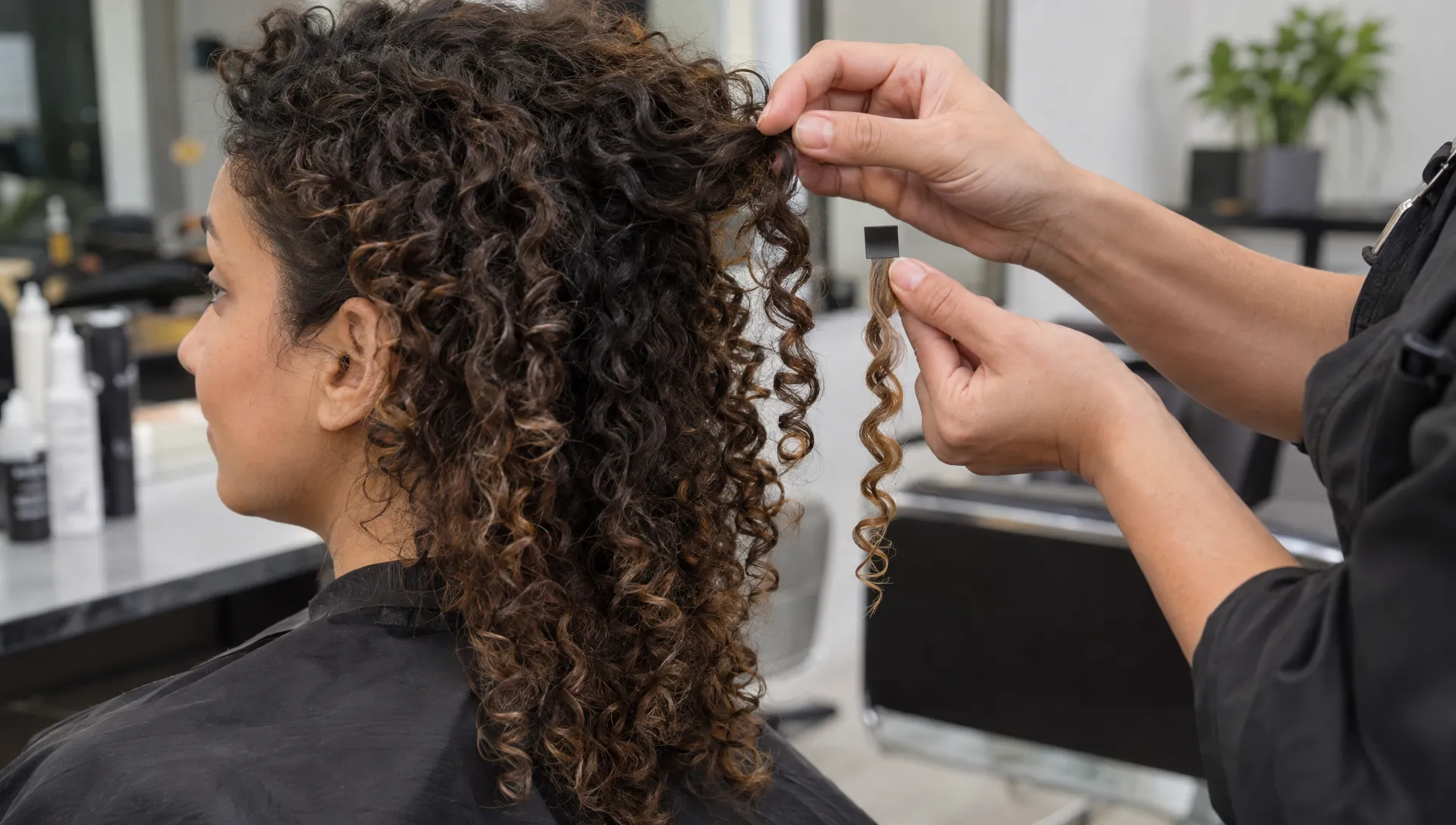
A strand test applies a proposed color or lightening formula to a small, representative section of hair. The stylist then evaluates both the color result and the condition of that section.
Your starting shade alone cannot reveal everything. Two people with similar-looking dark hair may get different results because of previous coloring, heat exposure or differences between their roots and ends.
A colorist for natural hair can use the sample to assess several practical questions:
- Color response: Does the hair lighten as expected, stay darker than planned or reveal unexpected bands?
- Underlying warmth: What red, orange or yellow tones emerge, and how might they affect the target shade?
- Hair integrity: Does the treated section remain manageable, or does it show concerning fragility, excessive stretching or breakage?
- Texture response: How does the curl pattern look after the sample is rinsed, conditioned and dried?
The test is more informative than a swatch book, but it is still a sample. It cannot promise that every strand on your head will behave identically. Likewise, a hair-color app can help communicate your shade preference, but it cannot test your hair’s chemical response.
Why a colorist for natural hair may recommend testing first #
“Natural hair” often means hair that has not been chemically relaxed. It does not necessarily mean hair that has never been colored or otherwise processed. A person can have natural curls and still have permanent dye, old highlights or several layers of color on their lengths.
That distinction matters when planning a change. Previously colored ends may respond differently from new growth, even when the whole head appears to be one shade.
Testing becomes particularly useful when you want a substantial lift, have an uncertain color history or notice fragile areas. Share any use of box dye, henna, indigo, color removers, relaxers or smoothing treatments. Product names and approximate application dates are more useful than simply saying the color was “a long time ago.”
Frequent high-heat styling and existing breakage also belong in the consultation. The purpose is not to judge your routine. It is to avoid choosing a formula based on incomplete information.
Curl type alone does not determine whether your hair can tolerate a color service. A tighter curl pattern is not an automatic reason to refuse color, and a looser pattern is not proof that aggressive lightening will be well tolerated. The individual hair’s condition and history matter more than a curl-chart label.
What happens during the test #
Your colorist for natural hair should explain what the sample is intended to answer. Testing whether old dark dye will lift is a different task from checking how a subtle deposit-only shade will look.
The stylist may work on a discreet attached section or, with your permission, a small cut sample. If your hair has visibly different zones, such as old highlights and untouched roots, more than one sample may be useful. Testing only the strongest section would give an incomplete picture of fragile ends.
The formula and technique should reflect the proposed service as closely as practical. Processing follows the product’s directions and the professional assessment, not a universal timing rule. A test that goes well does not justify leaving lightener on longer than directed.
After rinsing and appropriate conditioning, the stylist can examine the sample’s appearance, feel and strength. For someone who regularly wears a wash-and-go, seeing the section dry in its natural pattern may be especially helpful. A stretched or straightened finish alone does not show how those curls will sit afterward.
Ask whether testing needs a separate visit, whether there is a fee and when you will discuss the result. Those details vary by salon and service. Do not assume that a full color appointment will automatically follow the test that day.
How the result can change your color plan #
A useful test leads to a decision, not simply a “pass” or “fail.” Your colorist for natural hair may recommend changing the shade, placement or amount of hair treated based on what the sample reveals.
| What the sample shows | What it may mean for the plan |
|---|---|
| The desired lift with acceptable condition | The proposed approach may be reasonable, with monitoring during the service |
| Strong warmth or limited lift | A warmer or deeper target may be more realistic than the original inspiration photo |
| Uneven bands through the length | Different areas may need separate formulas or a revised corrective-color plan |
| Concerning fragility or breakage | Lightening may need to be postponed, reduced or avoided |
| An unwanted texture change | The formula, placement or overall goal may need reconsideration |
These are possible responses, not automatic rules. For example, an unexpectedly warm result does not always mean the stylist should keep lifting. The hair’s condition may make a warmer finish the better choice.
A staged approach can reduce how much change is attempted at once, but multiple appointments do not guarantee that a particular shade will become achievable. Previously damaged lengths do not become untouched hair simply because time passes.
Ask your stylist to describe the trade-off plainly: what shade appears achievable, what condition concerns remain and what maintenance the revised plan would require.
A strand test is not an allergy test #
A strand test evaluates the hair’s response. A skin allergy test checks for a possible reaction to a coloring product. One does not replace the other.
The FDA’s guidance on hair dyes advises following product directions and performing the directed skin test before each use. Follow the applicable product instructions, including their timing, even if you have used hair color before without a reaction.
Neither test guarantees that no problem will occur during a full service. Tell your stylist about previous reactions to hair dye, scalp irritation or current skin concerns before products are applied. A history of a significant reaction may require medical advice rather than another salon experiment.
During any service, report burning, unusual discomfort or other symptoms immediately. Do not treat discomfort as proof that the color is working. Seek urgent medical care for symptoms such as trouble breathing or swelling of the face or throat.
What the test means for your routine afterward #
Your colorist for natural hair can use the result to discuss whether the proposed change fits your everyday routine. A shade that requires more conditioning, careful detangling or frequent salon maintenance may not suit someone seeking a low-effort change.
Ask how coloring could affect your current use of heat, protective styles and wash-day products. Recommendations should fit the service performed and the condition of your hair rather than a universal schedule. Our guide to preparing your hair before going lighter covers the broader preparation conversation.
Conditioning can improve softness, slip and manageability, but it should not be presented as a guarantee against chemical damage. No aftercare routine makes an unsuitable lightening plan risk-free.
If you prefer naturally derived ingredients, Passion Marine’s French-language guide to natural hair care offers an ingredient-focused perspective, including marine-derived options. Choose products for their suitability and your tolerance, not because a “natural” label guarantees safety or structural repair.
The most useful aftercare plan is one you can realistically follow, with clear instructions about cleansing, conditioning, detangling and when to contact the salon about unexpected changes.
Frequently asked questions #
Does every natural-hair color service need a strand test? Not every service presents the same uncertainty. A colorist for natural hair may be more likely to recommend one for significant lightening, corrective work, fragile hair or an unclear processing history. The decision should follow the consultation and product requirements.
How long does a strand test take? There is no single processing time for every formula. The appointment may also include consultation, rinsing, drying and assessment. Ask the salon how much time to reserve and whether testing happens before the main service date.
Does a good result mean my curls cannot be damaged? No. A favorable sample reduces some uncertainty but cannot represent every strand or eliminate risk. Full-service application, existing condition and differences across the head still matter.
What if the test result is disappointing? Ask which part of the goal needs to change. A deeper shade, different placement or postponing lightening may be appropriate. You can decline a revised plan if it no longer matches your priorities.
Start with a consultation, not a color promise #
At Kingdom Cute in Warner Robins, GA, personalized consultations are part of the salon’s approach to hair services. Bring inspiration photos, your product and color history, and a clear sense of how you usually wear your hair.
Book a consultation with Kingdom Cute to discuss your color goals and whether a strand test would help guide the next step.