Publish on by Kingdom Cute Luxury Hair Salon
- Why copper loses its fresh-from-the-salon glow
- Pigment changes reveal what is underneath
- Porosity makes fading less predictable
- Choose a shade and formula you can maintain
- What does 7C mean?
- Dark or previously dyed hair needs a realistic starting plan
- Patch testing and strand testing serve different purposes
- How to keep copper hair color vibrant at home
- Wash according to your scalp, not a rigid calendar
- Reduce heat, sun and pool exposure
- Refresh warmth without repeatedly processing the ends
- Work out whether you are seeing fading, buildup or damage
- Plan salon maintenance around roots and lengths separately
- Frequently asked questions
- Build a copper maintenance plan that fits your hair
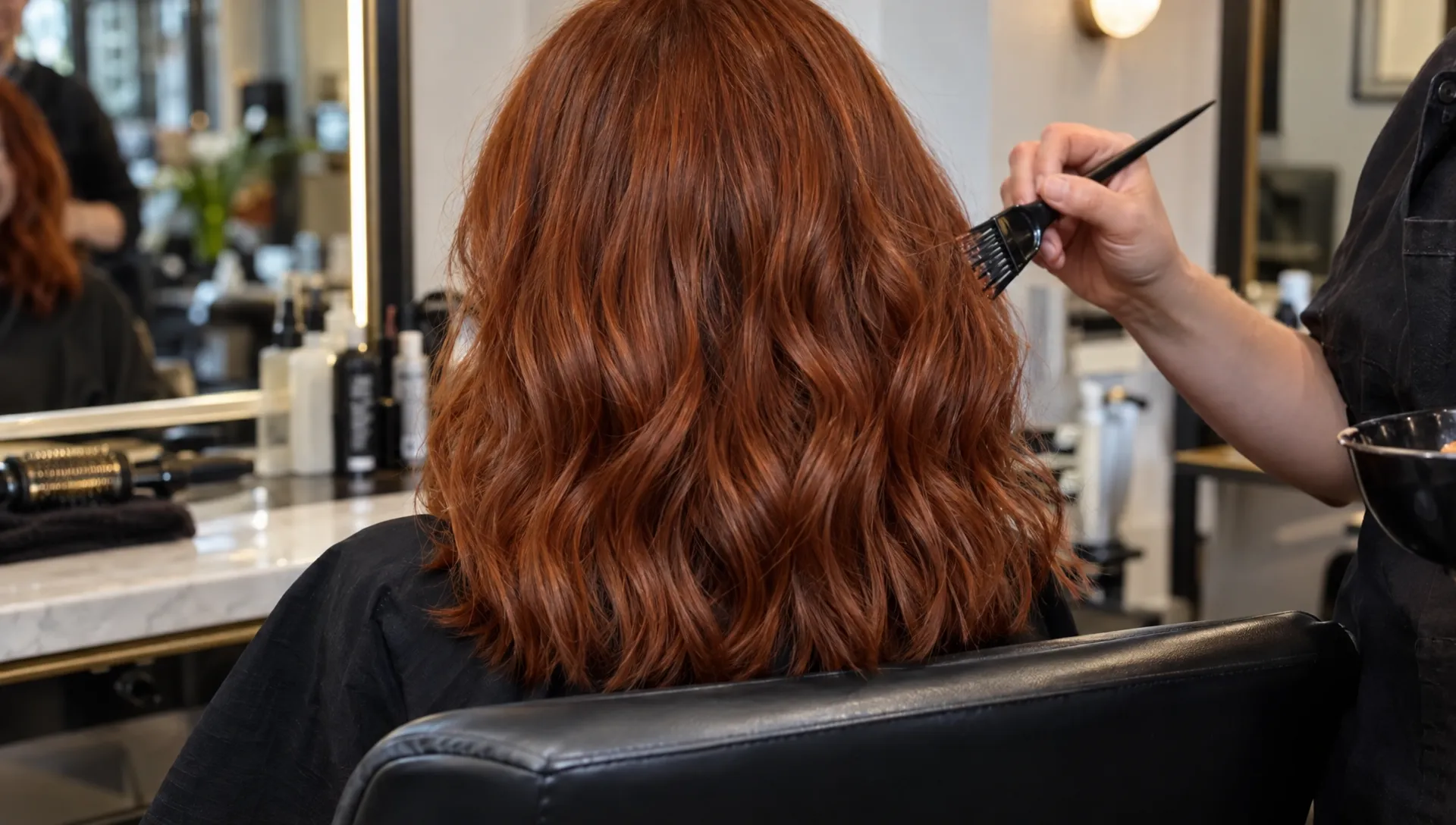
Fresh copper can look luminous in the salon, then seem softer, flatter or more orange a few weeks later. Copper hair color fades because washing, heat and sunlight gradually remove or alter artificial pigment, while the condition of your hair affects how evenly that pigment holds.
The solution is not always another permanent color application. Often, a gentler washing routine, better heat protection and a carefully chosen refresh will preserve the warmth without adding unnecessary damage. Here is how to tell what your copper needs, what to change at home and when your colorist should step in.
Why copper loses its fresh-from-the-salon glow #
Pigment changes reveal what is underneath #
Copper is a family of shades built around orange warmth, often balanced with red, gold or brown. When some of that deposited color washes out or changes through exposure, the balance shifts. A rich auburn copper might look lighter and more orange, while a delicate peach copper may become pale and golden.
If your hair was lightened first, fading can expose more of that underlying base. That does not necessarily mean the original formula was wrong.
Permanent dye is not fade-proof, either. It creates lasting changes inside the hair, but its cosmetic tone can still lose intensity. With copper hair color, a small shift can be especially noticeable because the appeal depends on a particular balance of warmth and saturation.
Porosity makes fading less predictable #
The hair cuticle is its outer protective layer. Bleaching, overlapping chemical services and repeated high heat can damage that layer, making hair more porous.
Porous sections may absorb color quickly yet release it unevenly. This explains why older ends sometimes look dull or washed out while the newer hair near the scalp stays richer. Repeatedly applying stronger dye over those ends can make the problem worse rather than solve it.
Choose a shade and formula you can maintain #
A bright orange copper over a lightened base usually demands more visible upkeep than a deeper copper-brown close to your natural depth. That is partly about contrast: a softened vivid shade is easier to notice, and a pale base becomes more apparent as pigment leaves.
For copper hair color that fits your schedule, discuss both the first-day result and how it will look between appointments. Bring a reference photo in natural light and tell your stylist how often you wash, swim and use hot tools.
Different color categories also involve different commitments:
| Color category | What it generally does | Maintenance consideration |
|---|---|---|
| Temporary color | Adds surface color that usually washes away quickly | Useful for experimentation, although porous hair can stain |
| Semi-permanent color | Deposits color without lifting the natural base | Can refresh warmth but may fade unevenly on damaged lengths |
| Demi-permanent color | Typically uses a low-strength developer to deposit tone | Often used for tonal refreshes, with results dependent on the formula and starting hair |
| Permanent color | Can alter natural pigment and deposit lasting color | Still fades and should not automatically be reapplied through the ends |
Product terminology varies. A service called a “gloss” may use different chemistry depending on the brand, so ask what is being applied rather than judging by the service name alone.
What does 7C mean? #
In many professional shade systems, the number describes depth and the letter describes tone. A code such as 7C often means a level-7 shade with a copper tone.
That code is not universal. Brands differ in their numbering, tone letters and pigment balance. It also cannot tell you how a shade will look over old brown dye, highlighted ends or gray hair. A swatch is a reference, not a guaranteed result.
Dark or previously dyed hair needs a realistic starting plan #
On natural dark brown hair, copper hair color may appear as a subtle warm reflection unless the hair is lightened. A brighter result depends on the starting depth, formula and condition of the hair.
Previously dyed dark hair is different: applying a lighter copper box dye will not reliably lift old artificial pigment into an even, brighter shade. Color correction or controlled lightening may be necessary. Understanding how salons protect hair while lifting color can help you prepare for that conversation.
If you have relaxed hair, fragile curls, old highlights or an uncertain color history, disclose it before the service. A staged change may be more sensible than pushing for maximum brightness in one visit.
Patch testing and strand testing serve different purposes #
A patch test checks for a possible skin reaction; a strand test helps assess the likely color result and the hair’s response to processing. Neither replaces the other.
The FDA’s hair dye safety guidance recommends following package directions and performing the instructed skin test before each use. A previous trouble-free application does not rule out a later allergy. Do not color over an irritated or damaged scalp.
How to keep copper hair color vibrant at home #
Wash according to your scalp, not a rigid calendar #
Every shampoo is another opportunity for some pigment to leave the hair. Reducing unnecessary washes can help, but stretching wash day until your scalp is itchy or uncomfortable is not a good trade.
If you wash daily, consider whether alternating with non-wash days suits your scalp and lifestyle. If you already wash less frequently, changing the cleanser or water temperature may matter more than waiting another day.
Use a gentle shampoo intended for color-treated hair, concentrate it on the scalp and let the rinse carry suds through the lengths. Follow with conditioner, especially on older ends. “Sulfate-free” alone does not guarantee that a cleanser is gentle or suitable for your hair.
Choose comfortably lukewarm water rather than very hot water. An icy rinse is not required, and it will not permanently lock pigment into the strand. After your appointment, follow your stylist’s washing instructions rather than treating a universal 48- or 72-hour rule as mandatory for every formula.
Reduce heat, sun and pool exposure #
Protecting copper hair color also means limiting the exposures between wash days. Frequent flat-ironing or curling can worsen damage and contribute to color changes, especially on already-lightened ends.
Use a heat protectant as directed, choose the lowest effective tool setting and avoid repeated passes over the same section. The American Academy of Dermatology’s advice on preventing hair damage supports reducing excessive heat exposure. A protectant reduces risk; it does not make unlimited heat harmless.
For extended outdoor time, a hat offers straightforward protection from sunlight. Before swimming, wet your hair with clean water and use a swim cap where practical. Rinse promptly afterward and cleanse as needed. Pool disinfectants and repeated swimming can affect both color and feel, so tell your stylist if swimming is part of your weekly routine.
Refresh warmth without repeatedly processing the ends #
A color-depositing conditioner or mask can help maintain warmth between appointments, but the shade matters. A strongly red product can push a soft copper toward cherry, while an intense orange mask can overwhelm a muted copper-brown.
Ask your stylist to recommend the tone, frequency and application method. Test an inconspicuous strand first, especially if you have blonde highlights or porous ends. Wear gloves and follow the product’s timing instructions rather than assuming longer means better.
Do not automatically reach for a toning shampoo when the color looks warmer. Blue pigments are designed to counter orange, which may remove the very tone you want. Our guide to when blue shampoo helps and when to skip it explains that distinction.
Conditioning can improve softness and manageability, but an ordinary mask will not replace missing pigment. Likewise, a pigmented mask cannot repair damaged hair simply because it makes the surface look richer.
Work out whether you are seeing fading, buildup or damage #
Not every dull result needs more dye. Hard-water mineral deposits, styling residue and uneven porosity can change how the color reflects light. Adding pigment without identifying the cause may leave you with darker, muddier lengths.
Use these differences as a starting point, not a home diagnosis:
| What you notice | What may be happening | A sensible next step |
|---|---|---|
| The shade is lighter but still even | Gradual pigment loss | Ask about a compatible tonal refresh |
| Ends fade much faster than the roots | Different porosity or processing history | Have the ends assessed before adding more color |
| Hair looks coated, dull or unusually rough | Product or mineral buildup may contribute | Ask whether targeted clarifying or chelating is appropriate |
| Warmth looks stronger after several washes | The underlying base is becoming more visible | Have the tone checked before using a neutralizing shampoo |
| Hair feels gummy, breaks or tangles severely | Significant structural damage may be present | Pause chemical services and consult a professional |
Photograph copper hair color in the same natural lighting every week or two. Bathroom bulbs, direct sunlight and phone filters can make one shade look dramatically different, so consistent photos are more useful than comparing unrelated selfies.
Avoid an aggressive clarifying treatment immediately before a home color refresh unless a professional has recommended that sequence. Clarifying can remove residue, but it may also strip more of the tone you are trying to preserve.
Plan salon maintenance around roots and lengths separately #
Root regrowth and fading are different maintenance needs. Your natural roots may need attention while the lengths still look vibrant, or the ends may need a tonal adjustment before regrowth becomes noticeable.
Ask your colorist to separate the plan into root work, a possible refresh for the lengths and conditioning needs. A permanent formula does not automatically need to be pulled through the entire head at every appointment.
For copper hair color, there is no single correct refresh interval. Washing frequency, shade intensity, gray coverage and previous lightening all affect the schedule. Arrange a check-in based on how your actual hair wears rather than committing to increasingly frequent full-color applications.
If the upkeep feels excessive, consider a deeper copper-brown, softer saturation or a root blend closer to your natural shade. These choices do not prevent fading, but they can make the transition less obvious and reduce the pressure to chase a freshly colored look every week.
Frequently asked questions #
Why does my copper turn orange as it fades? Copper already contains orange warmth. As the formula loses intensity or some balancing tones, that warmth can become more obvious. A lightened base may also show through. Your colorist can determine whether you need added depth, a different tonal balance or simply a refresh.
Does permanent copper last longer than semi-permanent color? Permanent color changes the hair more durably, but it does not guarantee longer-lasting vibrancy in every case. Porosity, the formula and aftercare all matter. Semi-permanent color can be useful for maintaining copper hair color without repeatedly lifting the lengths, although it may still stain porous sections.
Should I use purple shampoo on copper? Usually not as a routine maintenance step. Purple shampoo targets yellow tones rather than replenishing copper warmth. It may change the balance of pale or highlighted sections. Use it only if your colorist identifies a specific reason.
Can I keep copper vibrant without washing less often? You can still improve retention by choosing an appropriate cleanser, avoiding very hot water, reducing heat styling and using a suitable depositing product when advised. Scalp comfort and cleanliness should remain part of the plan.
Can I refresh faded ends with permanent dye at home? Repeated permanent applications can create excessive depth, uneven results and additional damage. A deposit-only option may be more appropriate, but previously colored or fragile hair should be assessed before you experiment.
Build a copper maintenance plan that fits your hair #
Kingdom Cute in Warner Robins, GA, offers personalized consultations, luxury hair coloring and conditioning treatments. Bring your inspiration photos, recent color history and usual wash-and-style routine so the conversation includes upkeep, not just the initial shade.
Book a consultation with Kingdom Cute to discuss a copper look and a maintenance plan suited to your starting color, hair condition and schedule.
Tags: copper hair color