Publish on by Kingdom Cute Luxury Hair Salon
- Personalized care begins with being heard
- Texture fluency makes recommendations more accurate
- Personalized care protects hair health, not just the finished style
- Cultural understanding creates a more comfortable experience
- The best personalization includes clear expectations
- A relationship-based salon learns your hair over time
- How to tell when a salon truly personalizes care
- Why this matters for luxury salon services
- Frequently Asked Questions
- Ready for a salon experience designed around you?
When someone searches for black owned salons near me, they are often looking for more than a convenient appointment. They are looking for a stylist who understands their hair, listens carefully, respects their preferences, and can translate their vision into a look that feels like them.
That is where Black owned salons often shine. Personalized care is not treated as an extra. It is part of the relationship, from the first consultation to the final style check. For many clients, that difference shows up in the way the stylist asks questions, reads the hair, explains options, and helps protect long-term hair health.
Personalized care is especially important for textured hair because no two heads of hair behave exactly the same. Curl pattern, density, porosity, scalp condition, previous chemical services, heat history, and lifestyle all influence what will work best. A salon that takes time to understand those details can create results that look beautiful on day one and remain manageable after you leave the chair.
Personalized care begins with being heard #
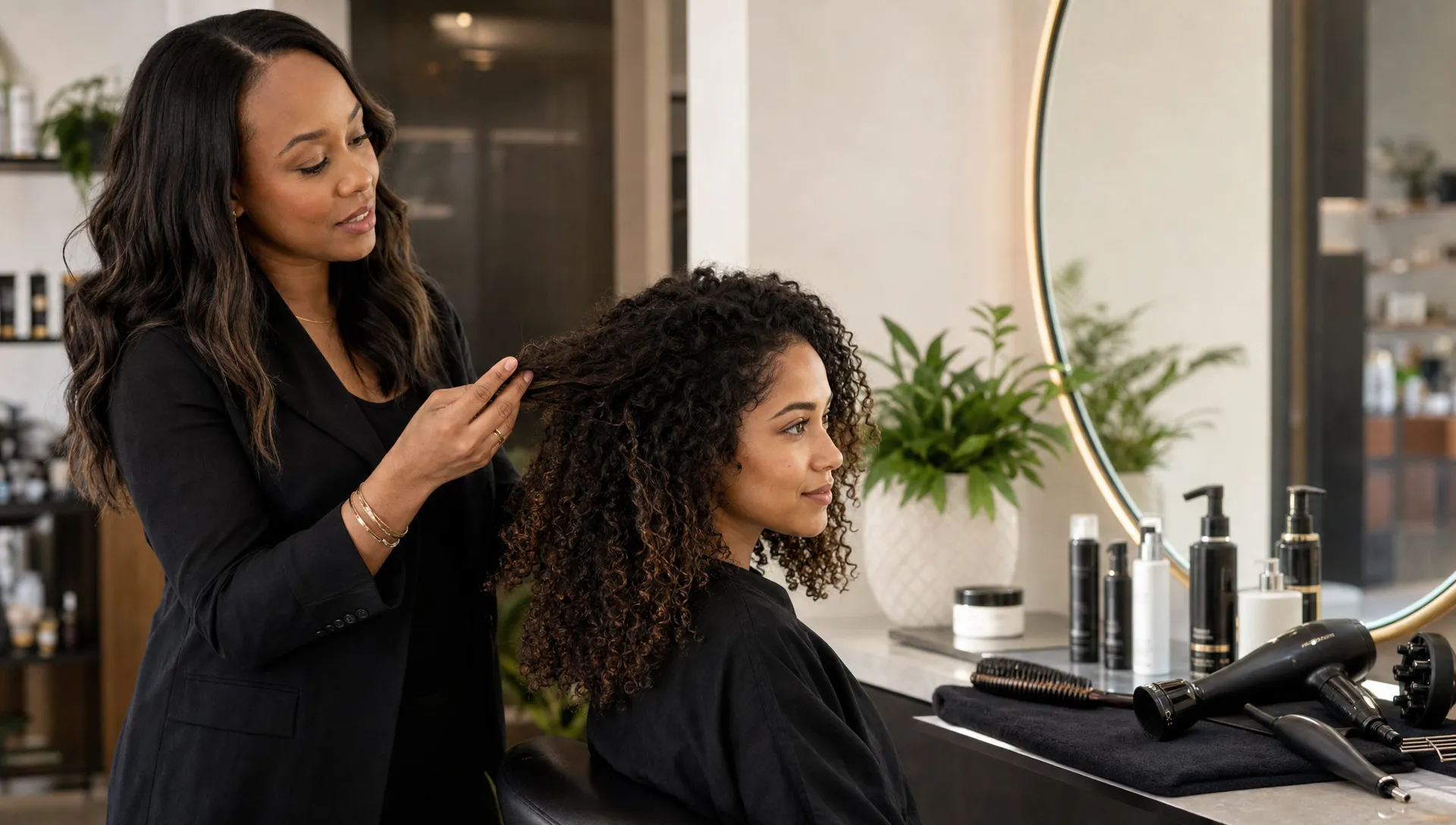
A great salon experience starts before the cape goes on. In a personalized consultation, the stylist is not just asking what style you want. They are learning your hair story.
That may include whether your hair is natural, relaxed, transitioning, color-treated, heat-trained, braided often, worn under wigs, or recovering from damage. It may also include how much time you have for daily styling, whether you work out often, what products you currently use, and what problems keep coming back.
This matters because the same inspiration photo can require a very different approach from one client to another. A silk press on fine, high-porosity hair needs different preparation than a silk press on dense, low-porosity hair. A color service on previously lightened curls requires a different plan than color on virgin hair. Extensions for a client with strong edges are not approached the same way as extensions for a client recovering from traction or thinning.
Black owned salons often stand out because the consultation feels personal, not rushed or generic. The stylist is more likely to ask follow-up questions that reveal what the client actually needs, not just what the client initially requested.
Texture fluency makes recommendations more accurate #
Textured hair is beautifully diverse. It can be tightly coiled, softly curled, kinky, wavy, fine, coarse, dense, fragile, highly elastic, low elasticity, moisture-loving, protein-sensitive, or somewhere in between. Even within one head, there may be multiple textures.
Texture fluency means a stylist can look beyond broad labels and choose techniques that fit the individual. It is the difference between saying, “Your hair is natural, so do this,” and saying, “Your crown needs more hydration, your ends need a careful trim, and this style will last longer if we prep your hair this way.”
That kind of care builds trust because the recommendation feels specific. Clients can tell when a stylist understands their hair in real time. They can also tell when a stylist is guessing.
If you are still comparing options, Kingdom Cute has a helpful guide on how to spot great Black salons for texture and care that can make your search more focused.
Personalized care protects hair health, not just the finished style #
A beautiful result should not come at the cost of breakage, thinning edges, scalp irritation, or preventable dryness. One reason Black owned salons stand out is that many stylists are deeply familiar with the balance between style and hair health.
That balance matters across services. With silk presses, it may mean using the right prep, heat level, and pass count. With color, it may mean realistic lift goals and conditioning support. With braids or extensions, it may mean proper tension, parting, weight distribution, and aftercare. With relaxers, it may mean careful timing, scalp awareness, and strand assessment.
Personalized care does not always mean saying yes. Sometimes it means telling a client that a requested service should wait, be modified, or be paired with treatment first. That kind of honesty can be disappointing in the moment, but it is often what keeps hair strong over time.
| Personalized care moment | What it looks like in the salon | Why it matters |
|---|---|---|
| Consultation | The stylist asks about hair history, goals, lifestyle, and concerns | The service is based on your real needs, not assumptions |
| Service selection | Options are explained with pros, limits, and maintenance requirements | You can choose a style that fits your routine and budget |
| Technique | Heat, tension, color processing, and styling methods are adjusted to your hair | Your hair is less likely to experience unnecessary stress |
| Product choice | Products are chosen for moisture, hold, scalp comfort, or repair needs | Your finish looks better and lasts longer |
| Aftercare | You leave with realistic maintenance guidance | You know how to preserve the result at home |
Cultural understanding creates a more comfortable experience #
Personalized care is not only technical. It is emotional, too.
Many clients want a salon where they do not have to overexplain their hair, defend their style choices, or feel anxious about whether the stylist understands their texture. A Black owned salon can offer a sense of ease because cultural knowledge is often built into the service experience.
That may show up in small but meaningful ways. A stylist may understand why a client wants a protective style before vacation, why humidity matters for a silk press, why a bride needs her install to last through multiple events, or why a client is nervous after a past bad salon experience.
This comfort can make the consultation more honest. Clients are more likely to speak up about scalp sensitivity, hair loss concerns, previous damage, product reactions, or styling preferences when they feel understood. Better communication leads to better results.
The best personalization includes clear expectations #
A personalized salon visit should also bring clarity. Before a major service, clients deserve to understand what the process involves, how long it may take, what upkeep looks like, and what result is realistic for their hair.
This is where transparency becomes part of care. In home services, people often use resources that help them compare tradespeople costs before booking so they can make confident decisions. Salon clients benefit from the same principle: clear information helps prevent surprises and supports trust.
For hair services, that clarity may include discussing the condition of the hair before color, explaining why a trim is recommended, reviewing maintenance for extensions, or setting expectations for how long a style may last. Personalized care is not vague. It gives the client enough information to choose confidently.
A relationship-based salon learns your hair over time #
One of the biggest benefits of returning to a trusted Black owned salon is continuity. Your stylist gets to know your hair across seasons, services, and life changes.
That history matters. Hair may respond differently after pregnancy, stress, medication changes, illness, color, protective styling, or major routine shifts. A stylist who has seen your hair over time can notice changes more quickly and adjust your care plan.
This relationship-based approach is especially valuable for clients with long-term goals, such as growing out a cut, transitioning from relaxed to natural hair, restoring edges, improving scalp comfort, maintaining healthy color, or preparing for a wedding. Each appointment becomes part of a larger plan instead of a one-time transaction.
If hair health is one of your main concerns, you may also find value in this guide on choosing a Black hair salon that protects hair health.
How to tell when a salon truly personalizes care #
Not every salon experience is equally tailored. A salon that is serious about personalized care will usually show it in the details.
Look for signs such as:
- The stylist asks about your hair history before making recommendations.
- Your scalp, ends, density, and texture are considered before the service begins.
- The stylist explains what is possible and what may not be best for your hair right now.
- Product and technique choices are adjusted to your needs.
- You receive aftercare guidance that fits your actual routine.
- The salon environment feels professional, respectful, and relaxed.
- Pricing, timing, and maintenance expectations are discussed clearly.
These details help separate a standard appointment from a truly customized experience. They also help clients feel more confident that the salon is focused on both beauty and care.
Why this matters for luxury salon services #
Personalized care becomes even more important when you are investing in luxury hair services. Precision cuts, dimensional color, silk press services, extensions, bridal styling, relaxer treatments, conditioning services, and protective styles all require thoughtful planning.
A luxury salon experience should not feel one-size-fits-all. It should feel intentional. The stylist should understand the occasion, the desired finish, the condition of the hair, and the level of upkeep the client can maintain.
At Kingdom Cute Hair Salon in Warner Robins, GA, the focus is on helping clients feel confident through expert haircuts, coloring, styling, extensions, bridal services, scalp and conditioning treatments, and personalized consultations. For clients who want an elevated appointment experience, booking with Kingdom Cute is a way to pair style goals with thoughtful care.
Frequently Asked Questions #
Why do people search for black owned salons near me? Many people search for Black owned salons because they want texture expertise, cultural understanding, personalized consultations, and services that respect the health and beauty of textured hair.
Are Black owned salons only for Black clients? No. Black owned salons may specialize in textured hair, but many welcome clients of all backgrounds. The key is choosing a salon whose services, portfolio, and consultation style match your hair needs.
What should I ask during a salon consultation? Ask what approach the stylist recommends for your hair type, how the service may affect hair health, what maintenance is required, how long the result should last, and what products or routines will help preserve the style.
How do I know if a salon cares about hair health? Look for careful consultations, realistic recommendations, gentle technique, attention to scalp and edges, clean tools, clear aftercare guidance, and a willingness to say no when a service could compromise your hair.
What makes personalized care different from regular salon service? Personalized care considers your hair history, texture, goals, lifestyle, and maintenance habits. Instead of applying the same method to every client, the stylist adapts the service to you.
Ready for a salon experience designed around you? #
Your hair deserves more than a quick appointment. It deserves a stylist who listens, understands your texture, protects your hair health, and helps you leave feeling confident.
If you are looking for a luxury Black owned hair salon in Warner Robins, GA, Kingdom Cute offers personalized consultations, expert styling, premium products, and a relaxing salon environment created to help every client love their look.