Publish on by Kingdom Cute Luxury Hair Salon
- When a leave in hair treatment makes sense
- What it can do, and what it cannot
- Match the formula to how your hair behaves
- Fine hair or roots that get oily quickly
- Curls, coils or coarse strands
- Color-treated or chemically processed hair
- Apply it where it helps, not where it accumulates
- How often should you use it?
- Adjust the routine for silk presses, extensions and protective styles
- After a silk press
- With extensions or protective styles
- When to ask for professional advice
- Frequently asked questions
- Build a routine around your hair
A leave in hair treatment belongs in your routine when it solves a problem you can actually feel: tangles after washing, rough ends, frizz that makes styling difficult or strands that need more slip. It does not belong there simply because every hair-care routine on social media includes one.
The right formula can make hair easier to manage between salon visits. The wrong formula, or too much of a good one, can leave it flat, coated or harder to style. Start with what your hair needs, then choose the lightest product that does the job.
When a leave in hair treatment makes sense #
Notice how your hair behaves after shampooing and rinse-out conditioning. If it already feels soft, detangles easily and holds your preferred style, another conditioning layer may not help.
A leave-in is more useful when you regularly notice these signs:
- Tangles through the lengths: Detangling takes effort even after you have used rinse-out conditioner.
- Rough or dry-feeling ends: The ends feel less smooth than the hair closer to your roots.
- Difficult styling: Curls snag during sectioning or strands lack the slip needed for gentle handling.
- Recurring frizz: You want help smoothing the hair surface without immediately reaching for more heat.
These are manageability concerns, not diagnoses. Sudden shedding, bald patches or a painful scalp need a different kind of attention.
You also do not have to use the product everywhere. A leave in hair treatment may belong only on your ends, especially if your roots become oily quickly. Targeted application often works better than coating every strand equally.
What it can do, and what it cannot #
Most leave-in conditioners help soften hair, reduce friction during detangling and improve the way strands feel. Results depend on the formula and your hair’s condition. They cannot permanently mend split ends or reverse every effect of bleaching, relaxing or repeated heat styling.
The word “treatment” can also make different products sound interchangeable. Check the intended use before adding another step.
| Product | Main role | What to check |
|---|---|---|
| Rinse-out conditioner | Conditions after shampooing and helps with detangling | Rinse as directed rather than using it as a leave-in |
| Leave-in conditioner | Provides conditioning that stays on the hair | Apply the recommended amount to the intended areas |
| Deep-conditioning mask | Provides a timed conditioning step | Most formulas need rinsing out |
| Styling cream or gel | Shapes hair or provides hold | Conditioning benefits vary by formula |
| Heat protectant | Helps limit damage from heat styling | Follow its application instructions and heat-use guidance |
A leave in hair treatment is not automatically a heat protectant. Use it for that purpose only if the label specifically says it provides heat protection.
If softness disappears almost immediately after washing, our guide to treatments for dry, stressed strands explains other options worth discussing with your stylist.
Match the formula to how your hair behaves #
Texture matters, but so do strand thickness, density, recent chemical services and your styling routine. Two people with similar curl patterns may need very different amounts of conditioner.
Fine hair or roots that get oily quickly #
Start with a lightweight spray or fluid rather than a rich cream. Apply a small amount through the ends and assess the result once your hair is dry. Some formulas look weightless during application but leave fine strands limp afterward.
If your roots look greasy while your ends feel rough, avoid treating those areas the same way. Keeping conditioner away from the scalp can preserve movement without leaving the ends unprotected.
Curls, coils or coarse strands #
A creamier formula may provide useful slip for sectioning and detangling. Work through manageable sections instead of applying a large amount to the outer layer and hoping it distributes evenly.
For curls and coils, a leave in hair treatment can support manageability without replacing a styling gel or other product needed for hold. Judge it by easier handling and softer-feeling hair, not by whether it creates a completely finished style on its own.
Color-treated or chemically processed hair #
Tell your stylist about highlights, permanent color, relaxers and other recent services. Roughness after processing may call for more than a richer conditioner, especially if you also notice breakage.
Do not assume that every protein, bond-care or moisturizing formula addresses the same concern. Follow the specific product directions rather than stacking several treatments because they all promise “repair.”
Apply it where it helps, not where it accumulates #
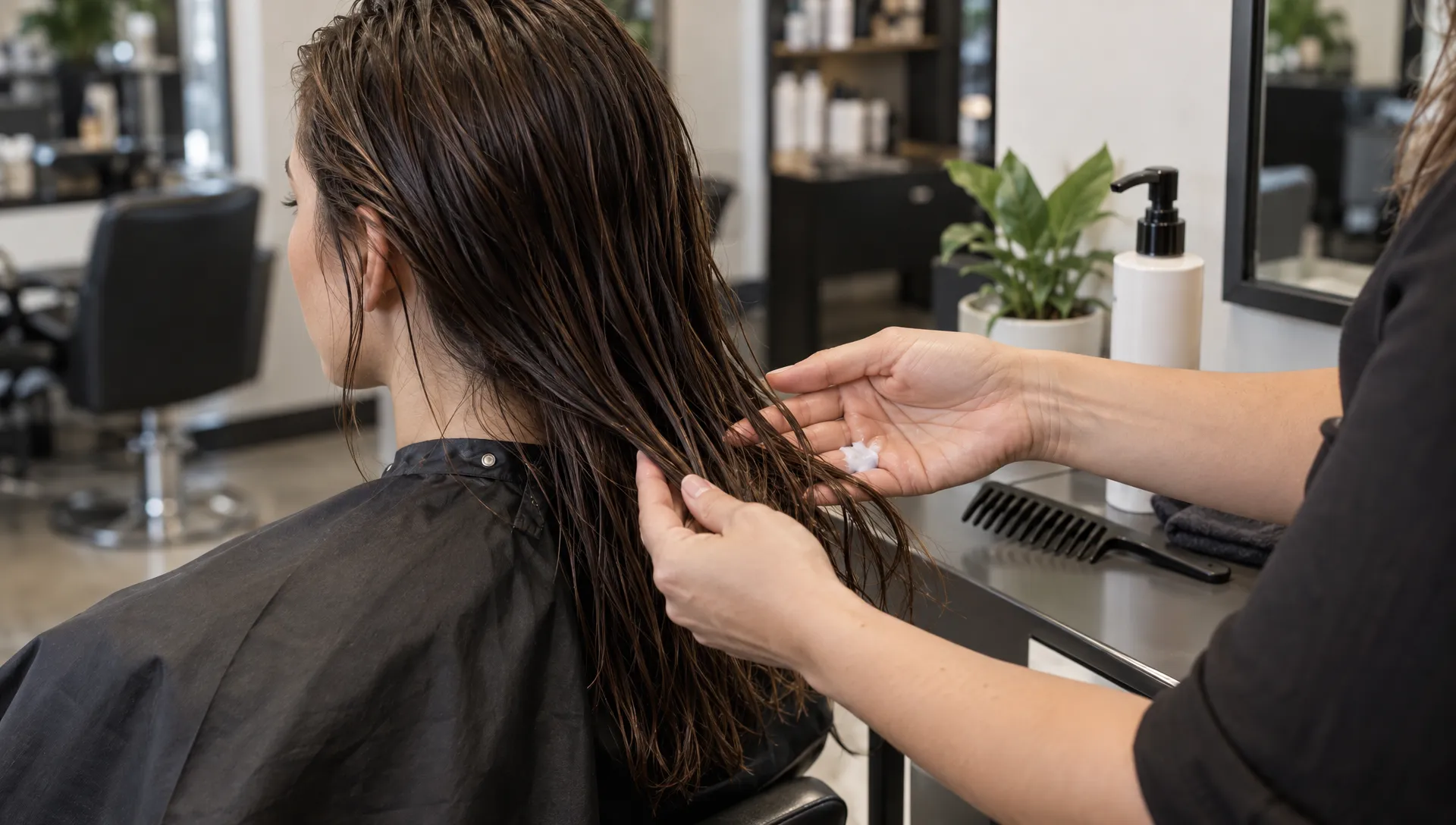
Many leave-ins are designed for damp hair, although some can also be used on dry hair. The label should determine the application method. When using a damp-hair formula, gently blot away excess water rather than rubbing the lengths with a towel.
A simple application process keeps the amount under control:
- Start small: Follow the label’s quantity guidance, using less initially if your hair is fine or easily weighed down.
- Target the lengths: Focus on the mid-lengths and ends unless the product is specifically intended for scalp use.
- Distribute gently: Use your fingers or an appropriate detangling tool, working from the ends upward without pulling through knots.
- Check the dry result: Notice softness, movement, residue and how well your style holds before deciding to add more next time.
The American Academy of Dermatology’s guidance on preventing hair damage emphasizes conditioning and gentle handling. More product does not compensate for forceful brushing or excessive heat.
If a leave in hair treatment makes your hair feel coated, reduce the amount before buying a stronger shampoo or adding another treatment. A smaller application may solve the problem.
How often should you use it? #
Start on wash day rather than assuming you need a daily application. After your hair dries, check whether it feels comfortable and manageable through the next day or two.
How often you need a leave in hair treatment depends on how frequently you wash, the formula you use and whether your hair benefits from another application. A fine-haired client might need it only after shampooing, while someone with dry-feeling curls may benefit from a light refresh between washes if the product allows it.
Avoid repeatedly layering conditioner onto hair that already feels waxy, sticky or limp. Those signs can reflect too much product or a formula that does not suit your routine. Wash as needed and reassess.
The goal is consistent manageability, not a daily product quota. If rinse-out conditioner already gives you the result you want, skipping the leave-in is reasonable.
Adjust the routine for silk presses, extensions and protective styles #
After a silk press #
Do not automatically apply a water-based leave-in to a finished silk press. Moisture can cause straightened textured hair to revert, so the product and timing need to fit the style.
A leave in hair treatment may be useful during wash-day preparation, before drying and styling, but it should fit your stylist’s plan. Confirm whether you also need a separate heat protectant and what, if anything, to apply afterward.
With extensions or protective styles #
Follow the extension supplier’s and installer’s aftercare instructions. Some conditioning products need to stay away from attachment points, while heavy application can leave residue around braids or other protective styles.
Protective styling does not eliminate the need for cleansing or appropriate scalp care. Avoid saturating a style with conditioner to cover itching, tenderness or persistent buildup. Those symptoms call for reassessment, not another layer.
Your natural hair and any added hair may also have different care requirements. Ask where the product should go and how to remove it during cleansing.
When to ask for professional advice #
If you have tried a smaller amount and a better-matched formula but still have significant roughness or breakage, bring your current products to a consultation. Describe when the problem began and mention recent chemical services, heat use and changes in your routine.
Our guide to when professional hair treatment is worth the investment can help you decide when home conditioning needs more support. Persistent scalp irritation or unexplained hair loss should be assessed by a dermatologist or another qualified medical professional.
Before a wedding or special event, test your leave in hair treatment well ahead of the final styling appointment. Your stylist needs to know whether it leaves residue or changes how your hair holds a style.
If event preparations also include dental care, keep that consultation separate from salon planning. A dental provider such as Nacka Strand Dental in Nacka Strand, Sweden addresses oral-health concerns, while your stylist focuses on hair condition and styling. Choose professional guidance for the specific concern rather than expecting a grooming product to do more than its intended job.
Frequently asked questions #
Can I use leave-in conditioner instead of rinse-out conditioner? They serve different purposes. Rinse-out conditioner is the conditioning step after shampooing, while a leave-in adds ongoing manageability. Follow each product’s directions rather than assuming one replaces the other.
Can I apply it to dry hair? Yes, if the label allows it. Start with a small amount on the areas that need help. Some formulas distribute better on damp hair and may leave dry hair feeling coated.
Should I use a leave in hair treatment every day? Not automatically. Use it when your hair benefits from it, and avoid adding more if your strands already feel soft or show signs of residue.
Will it fix split ends? No. It can temporarily improve how damaged ends feel or look, but split ends need trimming. Conditioning and gentler styling can help limit further damage.
Build a routine around your hair #
At Kingdom Cute in Warner Robins, personalized consultations can help you connect your home routine with your haircut, color, silk press or protective style. Bring the names of the products you use and explain what happens between wash days.
Book an appointment with Kingdom Cute to discuss whether a leave-in belongs in your routine, which formula suits your needs and where a simpler approach may work better.
Tags: leave in hair treatment