Publish on by Kingdom Cute Luxury Hair Salon
- How ombre hair differs from balayage
- Choose the finish you want to see
- Choose a stronger gradient for noticeably lighter ends
- Choose scattered brightness for more dimension
- Combine them when you want both effects
- Your starting color changes what is realistic
- Naturally dark hair needs a plan for warmth
- Previous color and chemical treatments matter
- Where should the darker-to-lighter transition begin?
- Maintenance depends on more than dark roots
- Separate placement upkeep from tone upkeep
- Match home care to the color you actually have
- What to discuss before booking your color service
- Frequently asked questions
- Plan your color around your hair
Dark roots and lighter ends can create a bold contrast or a barely noticeable shift in color. If you’re comparing ombre hair with balayage, the most useful distinction is this: ombre describes a color pattern, while balayage describes a highlighting technique. They aren’t necessarily competing services, and a colorist can use both to create the same finished look.
Your choice depends on where you want brightness to begin, how much darkness you want to keep and how your hair behaves between appointments. Before choosing a service name, decide whether you want visibly lighter ends, scattered ribbons of brightness or a combination of the two.
How ombre hair differs from balayage #
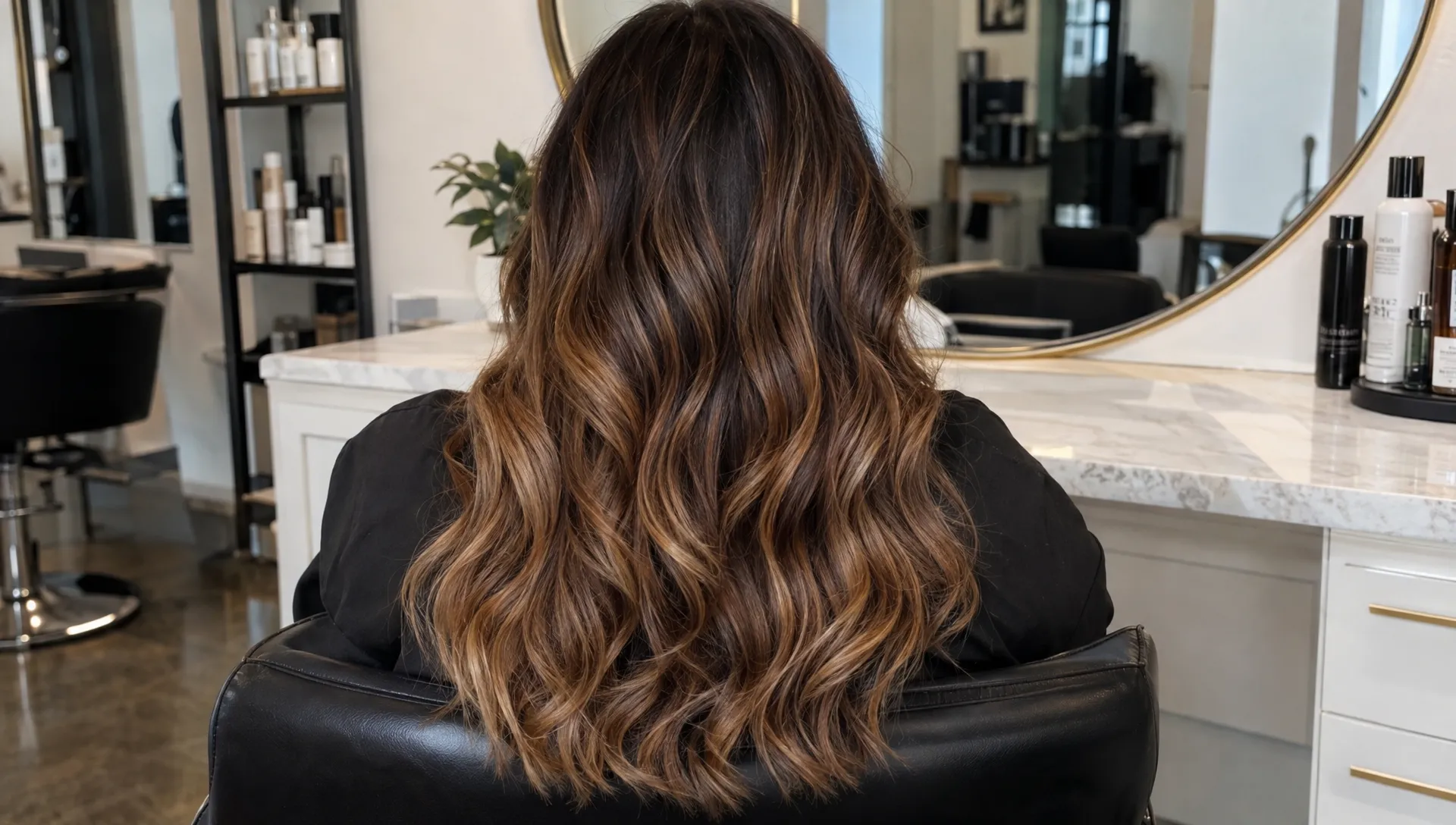
Ombré means “shaded” in French. In hair color, it describes a transition from one shade to another, typically darker near the roots and lighter toward the ends. The change can be dramatic or subtle, but the overall pattern moves from dark to light down the length of the hair.
Balayage is a hand-painted highlighting technique. A colorist places lightener on selected sections rather than lightening every strand evenly. Depending on the placement, the result can include brightness around the face, ribbons through the lengths and darker pieces between lighter sections.
That means ombre hair can be created with balayage, although colorists may also use foils or other techniques to achieve the desired lift and blend.
| Detail | Ombre finish | Balayage placement |
|---|---|---|
| What the term describes | A darker-to-lighter color pattern | A method of painting selected sections |
| Typical brightness | Concentrated toward the ends | Distributed in chosen ribbons or sections |
| Overall effect | A noticeable shift down the hair | Dimension with light and dark pieces |
| Root appearance | Usually darker than the ends | Can preserve natural depth near the scalp |
| Can they overlap? | Yes, the transition can be hand-painted | Yes, painting can produce an ombre finish |
Neither term guarantees a particular shade, level of lightness or maintenance schedule. Those details come from the actual color plan.
Choose the finish you want to see #
Choose a stronger gradient for noticeably lighter ends #
A gradient makes sense when your main goal is to keep a dark upper section while changing the color of the lower lengths. Think deep brown roots moving through chestnut into caramel, or a brunette base graduating into lighter beige ends.
Well-blended ombre hair does not need a visible horizontal stripe. The transition can be diffused while still leaving a clear difference between the top and bottom. Ask for a gradual shift rather than an abrupt line if you want contrast without a dip-dyed appearance.
Choose scattered brightness for more dimension #
Balayage may suit you better if you want your natural color to remain visible throughout the lengths. Instead of making most of the ends similarly light, your colorist can preserve darker sections between highlighted pieces.
This placement can work especially well when you want brightness around the face without changing the entire bottom half of your hair. Bring reference photos showing the back as well as the front, since face-framing highlights alone don’t show the full distribution of color.
Combine them when you want both effects #
You don’t have to choose between dimension and lighter ends. A blended plan can keep depth at the crown, introduce selective ribbons through the middle and build more brightness toward the bottom.
Describe that outcome directly: “I want my roots to stay dark, some darker pieces through the lengths and the most brightness at the ends.” That is more useful than requesting a technique without explaining the finish you expect.
Your starting color changes what is realistic #
Naturally dark hair needs a plan for warmth #
Dark hair reveals underlying warm pigments as it lightens. Depending on the starting shade and how far it lifts, those tones may appear red, orange or yellow. A cool inspiration photo doesn’t mean those stages can be skipped.
On a very dark base, ombre hair in chocolate-to-caramel tones may be a more manageable starting point than pale blonde ends. That isn’t a rule against going lighter. It means the target should reflect your hair’s condition, its response to lightener and the number of appointments you’re willing to consider.
Also distinguish warmth from brassiness. Golden caramel can be intentional. An unwanted orange cast is a different concern, and the right adjustment depends on the actual tone left in the hair.
Previous color and chemical treatments matter #
Previously dyed dark lengths may lift differently from untreated roots. Old highlights, permanent color, relaxers and other chemical services can also affect how much additional processing your hair can tolerate.
Be specific about your history, including at-home dye and treatments applied months ago. A strand test can help assess lift and condition, although it cannot guarantee that every section will behave identically.
If the ends are already fragile, making them the lightest part of the style may require changing the goal, trimming first or postponing lightening. Kingdom Cute’s guide to preparing your hair before going lighter explains the preparation questions worth addressing before your appointment.
Where should the darker-to-lighter transition begin? #
Placement can change the result as much as the shade itself. A lower transition preserves more brunette depth. Brightness beginning higher up creates a lighter overall impression, even when the ends are the same color.
For ombre hair, ask your colorist to show you where the transition would sit on your actual haircut. There is no universal rule that it should begin at the chin or shoulders. Length, layers, face-framing pieces and how you usually style your hair all affect that decision.
On curls and coils, placement should account for shrinkage and how sections group together in your usual style. On straight hair, an abrupt transition may be more visible because the surface shows a relatively uninterrupted line. Neither texture rules out the look, but both deserve intentional placement.
If you switch between natural texture and a silk press, say so during the consultation. Reference photos in both finishes can help communicate what you want the color to look like day to day.
Maintenance depends on more than dark roots #
Keeping your natural root color can reduce the need to disguise a sharp regrowth line. It does not eliminate maintenance for the lighter lengths.
The upkeep for ombre hair depends on how light the ends are, how quickly the tone changes and whether the darker root area is natural or colored. A root shadow, which uses color to deepen or soften the root area, may need refreshing even when the overall design looks grown-in.
Separate placement upkeep from tone upkeep #
You may still like the placement long after the original toner has faded. In that case, a gloss or toner appointment might address the shade without moving the highlights higher or adding more lightener. Your colorist should assess whether that is appropriate for your hair.
Ask for two separate recommendations: when to reassess the lightened placement and when to refresh the tone. A single promise of “low maintenance” doesn’t tell you enough about either.
Match home care to the color you actually have #
Conditioning and gentler styling help care for processed lengths. The American Academy of Dermatology’s guidance on preventing hair damage includes using conditioner after shampooing and reducing excessive heat exposure.
Don’t automatically reach for purple shampoo because your ends are lighter. Violet pigments address yellow tones, while blue pigments can help counter orange. Neither is necessary just because a shade is warm. This guide to when blue shampoo helps brunettes explains why the unwanted tone matters more than the product label.
What to discuss before booking your color service #
Bring two or three photos and identify the specific detail you like in each one. Perhaps you want the root depth from one image, the transition from another and a warmer shade than either photo shows.
For ombre hair or balayage, the consultation should establish a shared picture of the result rather than simply confirm a service name. These questions help make that conversation concrete:
- Root depth: Do you want to keep your natural roots, cover gray or create a darker root with color?
- Brightness placement: Should the lighter color stay near the ends or extend through selected sections higher up?
- Target tone: Do you prefer caramel, copper, beige or a cooler blonde, and what is realistic from your starting point?
- Upkeep: What salon visits and home care would the proposed result require?
Also ask what the first appointment can reasonably achieve and whether the goal may need to be staged. Pricing and timing should follow the assessment of your length, density, color history and desired change, not a generic comparison between two labels.
Frequently asked questions #
Is ombre better than balayage for dark roots? Neither is automatically better. Both can preserve dark roots. Choose a gradient if you want the ends to look distinctly lighter overall, or selective painted highlights if you prefer more dark pieces throughout. The two approaches can also be combined.
Can ombre hair help blend gray roots? Lighter ends alone won’t blend gray at the scalp. If gray blending is a priority, your colorist may recommend additional placement near the roots or a separate root-color plan. Keeping a dark root area can leave silver regrowth more noticeable, depending on the contrast.
Will this look work on short hair? It can, but there is less length available for the transition. A bob may suit a compact gradient or selective lighter pieces better than a long progression through several shades. The haircut should guide the placement.
Does ombre still look current in 2026? It can. For a softer contemporary finish, focus on a diffused transition, a tone that works with your base and brightness placed to suit your haircut. A strong contrast is also a valid choice if that is the look you prefer.
Plan your color around your hair #
The best choice is the one that gives you the right distribution of depth and brightness without asking more of your hair or schedule than you want to commit to.
Kingdom Cute Hair Salon in Warner Robins, GA, offers personalized consultations and luxury hair coloring. Book an appointment with Kingdom Cute to discuss your starting color, preferred finish and a realistic plan for darker roots with lighter ends.
Tags: ombre hair