Publish on by Kingdom Cute Luxury Hair Salon
- What makes long hair look healthy?
- Long haircut styles that keep length looking fresh
- How to choose the right long cut for your hair type
- The trim strategy that protects your length
- What to ask for at the salon
- Long hair, color and heat styling
- Styling details that make long hair look more polished
- Signs your long haircut needs a refresh
- Frequently Asked Questions
- Keep your long hair looking intentional
Long hair can look soft, feminine, dramatic and polished, but it is also honest. Dry ends, uneven density and heavy layers show quickly when hair passes the shoulders. The right cut makes the difference between hair that simply is long and hair that looks intentionally healthy.
That is why the best long haircuts for women are not about taking off as little as possible. They are about removing what weakens the shape, balancing weight and giving the hair enough movement to look fresh without sacrificing the length you love.
If you have been growing your hair for months or years, a salon visit should feel reassuring, not stressful. A good long haircut protects your goal, respects your texture and gives your ends a cleaner finish so your length looks fuller, shinier and easier to style.
What makes long hair look healthy? #
Healthy-looking long hair starts with the perimeter, which is the outer line of the haircut. When the ends are thin, transparent or uneven, the entire style can look tired even if the hair near the roots is strong. A clean perimeter gives long hair visual density, especially when worn straight, curled or in a sleek ponytail.
Layers matter too, but they need to be placed with purpose. Too many short layers can make the bottom look stringy, especially on fine or chemically treated hair. Not enough shaping can make thick hair feel heavy, triangular or hard to style. The sweet spot is a cut that removes weight where needed while keeping fullness through the ends.
Face-framing pieces are another key detail. They soften the front, highlight cheekbones and help long hair move when it is worn down. For many women, even a subtle face frame makes long hair feel like a style rather than simply length.
Texture also changes everything. Straight hair shows every line, so precision is important. Wavy hair benefits from soft layering that encourages bend. Curly and coily hair need shape that accounts for shrinkage, density and curl pattern. A stylist who understands those differences can preserve length while making the cut look healthier from every angle.
Long haircut styles that keep length looking fresh #
When people search for long hair cuts for women, they are usually looking for a style that feels updated without a dramatic chop. These options keep the focus on length while solving common problems like flatness, bulk, split ends or a heavy shape.
| Long haircut style | Best for | Why it keeps length looking healthy |
|---|---|---|
| Blunt long cut | Fine to medium hair, sleek styles | Creates a dense, polished edge that makes ends look fuller |
| Soft U-shaped cut | Most long hair textures | Keeps length in the back while softly rounding the perimeter |
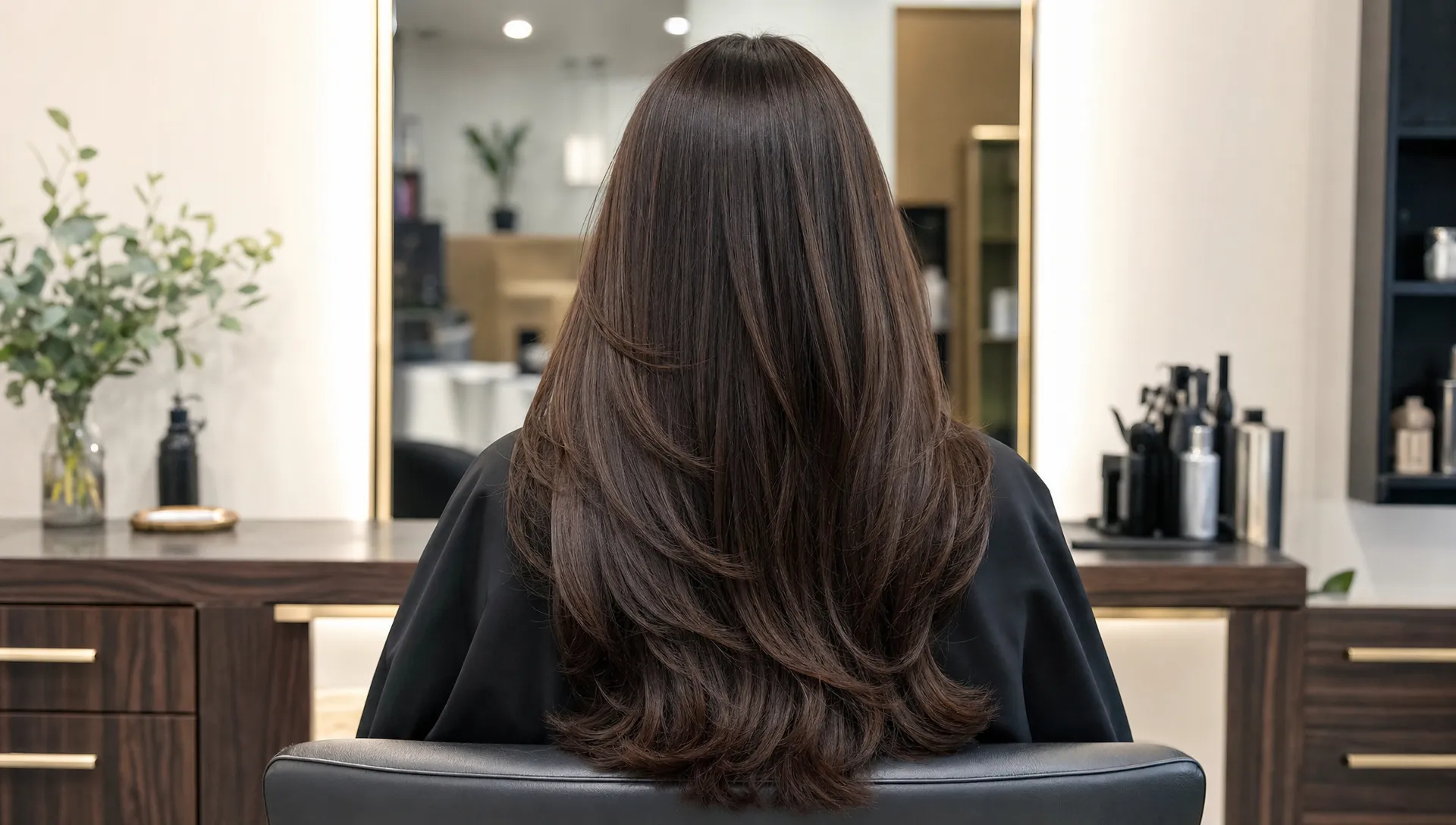
| Long layers | Medium to thick hair, waves, blowouts | Adds movement without removing too much from the bottom |
| Face-framing layers | Long hair that feels plain around the face | Brightens the front and gives shape without changing overall length |
| Butterfly-inspired long cut | Thick hair, bouncy styling, curtain bangs | Creates lift and movement while preserving the longest layers |
| Long curly cut | Curly and coily textures | Shapes volume while respecting shrinkage and natural curl movement |
| Long cut with curtain bangs | Straight, wavy or softly curled hair | Adds style around the face while the back stays long |
A blunt long cut is often the smartest choice when the ends look thin. It may feel simple, but it can make long hair appear instantly healthier because the eye reads the bottom line as fuller. This is especially helpful for fine hair, hair that has been lightened or hair recovering from breakage.
A U-shaped cut is one of the most wearable long haircut shapes. The longest point stays in the back while the sides curve gently forward. It avoids the severe look of a straight-across cut, but it still keeps enough weight at the ends to look lush.
Long layers are ideal when hair feels heavy or shapeless. The goal is not to stack layers all the way up the head. Instead, the stylist removes weight in a way that helps the hair swing, curl or blow dry with more movement. If you love this kind of soft shape, Kingdom Cute has a deeper guide to layered haircuts for women that add movement without fuss.
How to choose the right long cut for your hair type #
Long hair should never be cut as if every strand behaves the same. Your density, texture, color history and styling routine all affect how much layering your hair can support.
Fine hair usually needs a stronger perimeter. A few soft face-framing pieces can be flattering, but heavy internal layering may make the ends look sparse. If your main goal is fuller-looking length, ask for a clean baseline with minimal layering through the bottom.
Thick hair often needs hidden weight removal, long layers or a U-shaped perimeter. Without shaping, thick long hair can feel bulky and take too long to dry. The right cut removes heaviness without creating a choppy finish.
Wavy hair benefits from layers that support the natural bend. If the layers are too blunt, waves can stack awkwardly. If they are too short, the shape may puff out. A balanced long layered cut gives waves room to form while keeping the bottom strong.
Curly and coily long hair should be shaped with shrinkage in mind. A cut that looks long when stretched may sit much shorter once curls spring back. For textured hair, preserving healthy length often means shaping gradually and focusing on balance rather than taking away too much at once.
Chemically treated hair, including relaxed, silk pressed, highlighted or color-treated hair, needs extra attention at the ends. These services can be beautiful, but long-term strength depends on regular conditioning, careful heat use and trims before split ends travel upward.
The trim strategy that protects your length #
Many clients avoid trims because they are afraid of losing progress. The problem is that skipping trims for too long often leads to more breakage, not more length. Once a split end continues up the strand, the hair may break higher than it would have if it had been trimmed earlier.
For most long hair goals, a micro trim every few months is easier to maintain than waiting until the ends are visibly damaged. The exact timing depends on your hair texture, heat habits, color services and how often you wear high-tension styles.
A healthy trim does not have to mean a big cut. It may involve dusting the ends, cleaning up the perimeter, adjusting face-framing pieces or removing only the fragile tips. The goal is to keep the longest hair strong enough to stay long.
The American Academy of Dermatology Association advises gentle hair care habits such as using conditioner, limiting high heat and avoiding rough handling to reduce breakage. In salon terms, that means your haircut and your home routine should support each other. A beautiful cut cannot do all the work if the hair is being overheated, under-conditioned or brushed aggressively between appointments.
For practical care habits between salon visits, this guide to healthy hair habits your stylist wishes you knew is a helpful next step.
What to ask for at the salon #
A clear consultation helps your stylist protect your length and still give you a noticeable refresh. Instead of saying “just a trim,” be specific about what bothers you and what you want to keep.
Helpful consultation phrases include:
- “I want to keep as much length as possible, but I want the ends to look fuller.”
- “My hair feels heavy, but I do not want short layers.”
- “I wear my hair both straight and curled, so I need the cut to work both ways.”
- “I want face-framing pieces, but I still need to pull my hair back.”
- “My ends are breaking, so I want a realistic plan to grow healthier length.”
Bring photos, but use them as a direction rather than a demand. Your stylist should explain how the inspiration cut will translate to your density, texture and styling habits. If you are unsure whether a stylist is the right fit for your long-term goals, Kingdom Cute also shares advice on choosing a hairdresser who understands women’s hair goals.
Long hair, color and heat styling #
Long hair often carries years of color, heat and environmental exposure. That history matters. The ends may have been highlighted multiple times, flat ironed often or exposed to summer sun and Georgia humidity. A healthy-looking long cut has to account for that.
If you color your hair, the cut should support shine and dimension. Long layers can help balayage or highlights show more movement, while a blunt perimeter can make darker glossy color look richer. If your hair is lightened, your stylist may recommend strengthening treatments, conditioning services or a more conservative approach to layering so fragile ends are not overexposed.
For silk presses and sleek styles, the baseline of the haircut becomes especially visible. Clean ends make the press look more expensive, and careful trimming helps prevent the see-through effect that can happen when the bottom has uneven breakage.
For extensions, the natural hair and added hair need to blend smoothly. The cut should connect the two without removing too much density. Protective styles also benefit from regular scalp care and trims, since healthy natural hair underneath is what keeps long-term styling options open.
Styling details that make long hair look more polished #
A healthy long haircut does not need complicated styling every day. Often, the most elegant long hair looks come from clean ends, shine and controlled movement.
Soft waves can show off layers and color dimension. A round-brush blowout gives long hair body without making it look stiff. A sleek middle part can make a blunt or U-shaped cut feel modern. A low ponytail or smooth bun highlights the quality of the ends and the shine of the hair.
For weddings, portraits, formal dinners or professional events, long hair looks best when the finish matches the overall styling. A smooth blowout, sculpted waves or a polished ponytail pairs beautifully with timeless accessories, including refined pieces like certified luxury timepieces that complement a clean, elevated look without overwhelming it.
The main rule is restraint. If the haircut already has shape, you do not have to force volume, curls and accessories all at once. Let the condition of the hair be part of the style.
Signs your long haircut needs a refresh #
Long hair can still grow and look unhealthy at the same time. If your length is important to you, pay attention to small changes before they become major damage.
You may be ready for a shaping appointment if your ends tangle more than usual, your curls or waves no longer sit evenly, your blowout falls flat quickly or your hair looks thinner at the bottom than it does through the mid-lengths. Another sign is when ponytails and braids look frayed at the ends even after styling.
A good stylist will not pressure you into losing length you are not ready to lose. Instead, they should help you decide what needs to come off now, what can be corrected gradually and how to care for the hair so your next appointment feels easier.
Frequently Asked Questions #
What is the healthiest haircut for long hair? The healthiest haircut is usually one that removes damaged ends, keeps enough weight through the perimeter and adds only the layers your texture can support. For many women, a soft U-shaped cut, blunt long cut or long layers are the most reliable options.
Do layers make long hair look healthier? Layers can make long hair look healthier when they are placed correctly. They add movement and reduce heaviness, but too many short layers can make the ends look thinner. The right layering depends on your density, texture and styling routine.
How often should long hair be trimmed? Many women benefit from a light trim every few months, but the best schedule depends on heat styling, color services, texture and breakage. If your ends split easily or tangle often, you may need more frequent maintenance.
Can I keep my length if my ends are damaged? You can often keep most of your length with a gradual plan, but severely split or broken ends usually need to be trimmed. A stylist can remove the weakest areas first and help you build healthier length over time.
What long haircut is best for fine hair? Fine long hair often looks best with a clean blunt perimeter, very soft face-framing pieces or minimal long layers. Keeping density at the bottom helps the hair appear fuller.
Keep your long hair looking intentional #
Long hair is at its best when it looks cared for, shaped and healthy from roots to ends. The right haircut should protect your length while giving your hair a cleaner edge, better movement and a style that fits your everyday life.
If you are in Warner Robins, GA, Kingdom Cute offers personalized consultations, precision haircuts, luxury coloring, silk press services, extensions, protective styling and conditioning treatments in a relaxing salon environment. To refresh your length without losing the look you love, book your appointment with Kingdom Cute and let your next long haircut feel like progress.
Tags: long hair cuts for women