Publish on by Kingdom Cute Luxury Hair Salon
- What gives layered bob hairstyles for over 50 soft movement?
- Five bob shapes worth considering
- 1. Jaw-skimming bob with long, blended layers
- 2. Collarbone bob with subtle internal layers
- 3. Softly graduated bob with a gentle front angle
- 4. Wavy bob with relaxed, connected layers
- 5. Rounded curly bob with room for shrinkage
- Match the layers to your hair, not your age
- Personalize the face framing and finish
- Choose front pieces for everyday wear
- Let gray or color support the shape
- Style for softness without overworking the ends
- What to ask for at your salon appointment
- Frequently asked questions
- Find your version of a soft, modern bob
A bob can feel polished without looking rigid, and layered bob hairstyles for over 50 offer plenty of room for softness, texture and personal style. The key is not adding as many layers as possible. It is choosing a length and layer pattern that let your hair move while keeping the outline full and intentional.
That might mean a jaw-skimming shape with barely visible layers, a longer bob that brushes the collarbone or a rounded cut that lets curls settle naturally. Your hair density, texture and preferred styling routine matter more than your age.
Use these ideas to narrow down the shape you like, understand the trade-offs and explain what “soft movement” means to you at your next salon consultation.
What gives layered bob hairstyles for over 50 soft movement? #
Soft movement comes from the relationship between the layers and the perimeter, the bottom outline of the haircut. Layers create variation within the shape, while a reasonably substantial perimeter keeps the ends from looking sparse.
A heavily stacked back or very short crown layers can create a more sculpted silhouette. For a softer finish, ask about longer layers, gentle graduation or internal layering that releases weight without making every layer visible.
The front matters, too. A face-framing piece should blend into the rest of the bob rather than look like a separate haircut. How it falls will depend on your part, growth pattern and whether you tuck your hair behind your ears.
Bring reference photos showing both the front and back. A beautiful front view can hide a nape shape or amount of layering you would not choose for yourself.
Five bob shapes worth considering #
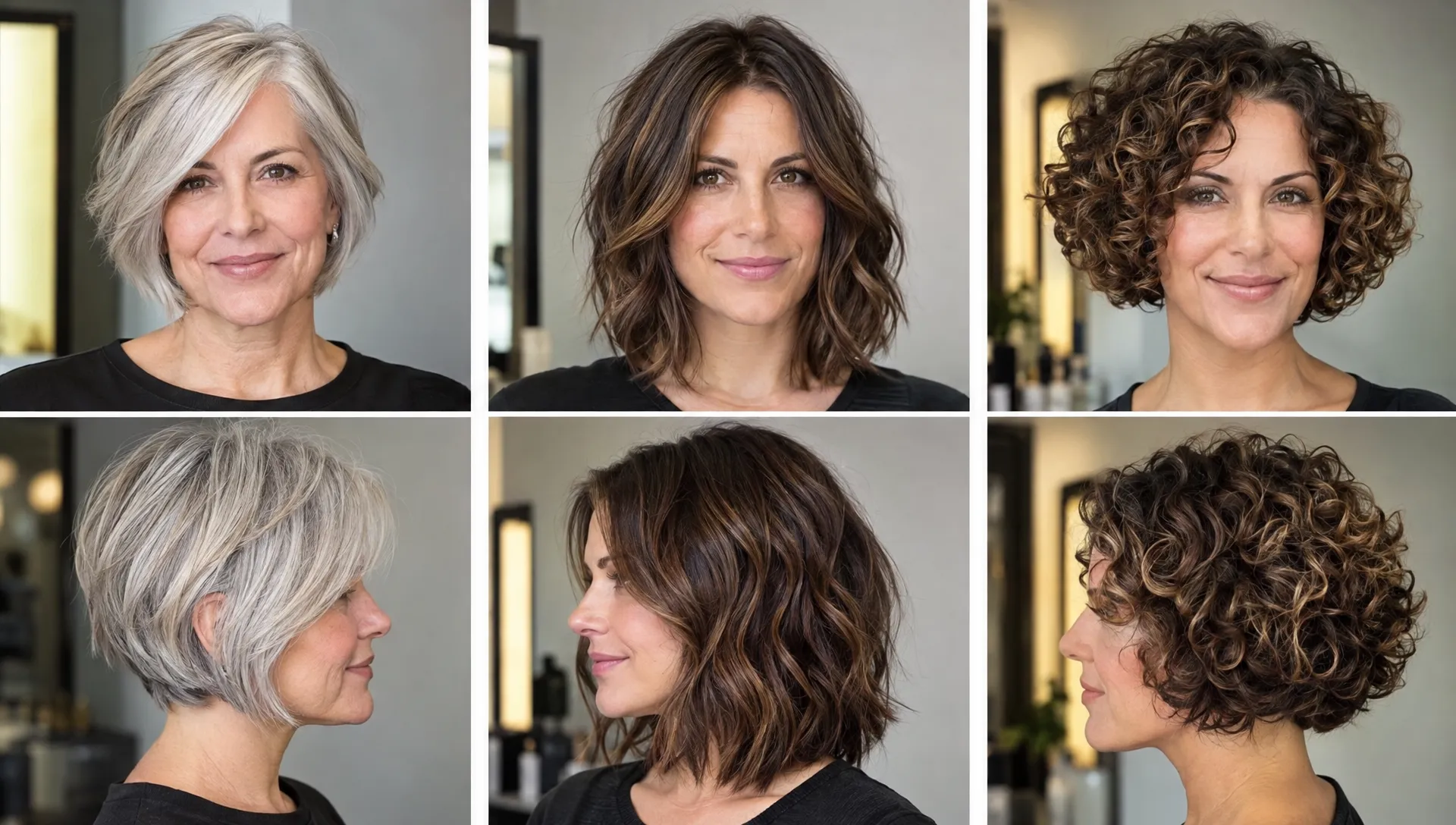
The most useful way to compare layered bob hairstyles for over 50 is by silhouette rather than by trend name. Start with where you want the ends to sit, then consider how much texture you want to see. These five options offer different versions of a soft, modern finish.
1. Jaw-skimming bob with long, blended layers #
This shape keeps the outline close to the jaw while using longer layers to prevent the sides from feeling solid or heavy. It works particularly well when you want a recognizable bob rather than a shaggy cut.
Ask for ends that look substantial, with enough blending to let the front move when you turn your head. A side part can create an asymmetric sweep without changing the entire haircut.
The trade-off is precision: a jaw-length outline can show growth quickly. If you prefer stretching the time between appointments, consider starting slightly longer rather than relying on frequent reshaping.
2. Collarbone bob with subtle internal layers #
A collarbone-length bob, often called a lob, offers movement without committing to a very short cut. Depending on your hairline and layering, you may still be able to gather some or all of it into a small ponytail.
Internal layers can reduce bulk while leaving the outer outline relatively smooth. This makes the shape appealing if you like a sleek finish some days and loose bends on others.
Check where the ends land against your shoulders. Contact with the shoulders can encourage flipping, which may suit your style or require extra attention during a blow-dry. Neither outcome is wrong, but it should be part of the plan.
3. Softly graduated bob with a gentle front angle #
Among layered bob hairstyles for over 50, a softly graduated shape offers a middle ground between a straight bob and a pronounced stacked cut. The back has a little lift and contour, while the front remains slightly longer.
Ask your stylist to keep the graduation subtle if you do not want a rounded, highly structured back. The goal is a connected shape, not a dramatic contrast between the nape and front pieces.
This option deserves a side-view reference photo. “A little shorter in back” can mean very different things, so show the angle you want and discuss how the nape will look as it grows.
4. Wavy bob with relaxed, connected layers #
For naturally wavy hair, movement often comes from allowing the existing wave pattern to develop rather than cutting lots of short pieces. Connected layers can help the waves sit together without creating an overly wide or uneven outline.
Choose reference photos with a wave pattern similar to yours. A bob styled with a curling iron may not represent what your hair will do after air-drying.
Ask how the front pieces will behave without heat styling. If you want an air-dried finish, the ideas in our guide to layered hairstyles that air-dry beautifully can help you discuss that preference clearly.
5. Rounded curly bob with room for shrinkage #
A curly bob can have a soft, rounded silhouette without becoming a uniform ball of hair. Layer placement should account for differences in curl pattern, density and how much the hair shortens as it dries.
Decide where you want the finished, dry length to sit before discussing the cut. A wet length at the jaw may sit noticeably higher once the curls settle.
The front does not need to be straightened to look intentional. Blended curl framing can create an open shape around the face, while a carefully balanced perimeter keeps the overall bob cohesive.
Match the layers to your hair, not your age #
The best layered bob hairstyles for over 50 respond to what your hair is doing now. Fine strands, low density, coarse texture and strong curls are different considerations, even when two people have the same overall length.
Fine hair describes strand thickness. Thin or low-density hair describes how much hair is present. Someone can have fine strands and plenty of them, so a recommendation based only on “fine hair” may miss the real issue.
| Hair characteristic | Useful starting point | What to discuss with your stylist |
|---|---|---|
| Fine strands with low density | A fuller perimeter with restrained layering | Whether extra layers would make the ends look transparent |
| Fine strands with high density | Long layers or selective internal shaping | How to release weight without losing the outline |
| Thick or coarse hair | Targeted weight removal | Where bulk collects and how the hair behaves without a blowout |
| Naturally wavy hair | Layers that follow the wave pattern | The difference between the air-dried and heat-styled result |
| Curly hair | A curl-aware shape with balanced layering | Dry length, shrinkage and variation between curl sections |
If preserving fullness is your priority, our guide to layers for thin hair without sacrificing fullness explains why more layering is not always better.
Personalize the face framing and finish #
Choose front pieces for everyday wear #
Rather than treating face shape as a strict rule, consider which features you want to highlight and how you wear your hair. Cheekbone-length pieces draw attention higher on the face, while longer framing creates a more continuous line toward the jaw or collarbone.
Bring your usual glasses to the consultation. Front pieces that look lovely without frames may catch on the arms or fall into your eyes when you put them on.
Curtain bangs and side-swept fringes are options, not requirements. For layered bob hairstyles for over 50, a blended, bang-free front can look just as current and may be easier if you dislike styling your fringe each morning.
Let gray or color support the shape #
A bob does not need highlights to show movement. Natural gray, silver and white hair can reveal the shape beautifully, particularly when the ends are well maintained.
If you enjoy color, discuss placement around the face and through the moving sections. Color and cutting should work together, but keeping your current shade is a valid choice. If gray blending interests you, ask how the proposed color will look as your roots grow.
Style for softness without overworking the ends #
Start with the finish you actually enjoy. A smooth bob with a slight bend needs a different routine from an airy, wavy shape. Your stylist should be able to demonstrate the version you plan to wear at home, not only a more elaborate salon finish.
For a blow-dried bob, direct the roots where you want lift, then guide the lengths with a brush suited to your hair. You do not need to curl every end tightly under. A gentle bend can leave the outline looking less fixed.
For waves or curls, distribute an appropriate styling product through damp hair and limit unnecessary handling as it dries. Ask your stylist to show you where to scrunch, smooth or separate sections based on your pattern.
With layered bob hairstyles for over 50, softness should come from the shape, not repeated passes with a hot tool. The American Academy of Dermatology’s guidance on preventing hair damage recommends reducing excessive heat and using the lowest effective heat setting. Follow product directions when using heat protection, and avoid heavy finishing products if they flatten your hair.
What to ask for at your salon appointment #
A useful consultation describes both the look and its limits. You could say: “I want a bob with movement, but I want the ends to stay full. I usually spend ten minutes styling, and I need the front to tuck behind my ears.”
Be specific about your non-negotiables. That might be enough length to tie back, no short crown layers or a shape that works without straightening. Show your stylist how your hair looks on an ordinary day, especially if you arrive with a blowout that hides your natural texture.
Ask where the shortest layer will sit, how the back will look and what maintenance the shape requires. Many precise bobs benefit from reshaping around every six to eight weeks, but your growth rate, chosen length and tolerance for a softer outline will affect the schedule.
Before committing to layered bob hairstyles for over 50, make sure the reference photo and the proposed daily routine describe the same haircut.
Frequently asked questions #
Are layers a good idea if my hair is thinning? Sometimes, but they should be selective. Too much layering can reduce visible fullness at the ends. A substantial perimeter with limited internal or face-framing layers may be a better starting point. New or noticeable hair loss also deserves a conversation with a healthcare professional.
Do I need bangs to make a bob look modern? No. A clean outline, connected layers and a finish that suits your texture can look modern without bangs. Choose a fringe because you like wearing it, not because you feel an age-based obligation.
Can a layered bob work without daily heat styling? Yes, if the cut is planned around your natural texture. Ask for an air-dried or diffused demonstration and choose reference photos that resemble your actual wave or curl pattern.
How do I avoid a bob that looks too choppy? Ask for blended layers and show examples of the amount of visible separation you like. Discuss keeping enough weight at the perimeter rather than requesting “lots of texture,” which can produce a different result.
Find your version of a soft, modern bob #
At Kingdom Cute in Warner Robins, GA, personalized consultations can help you connect your preferred length, natural texture and styling habits with a suitable cut. Bring a few reference photos and a clear sense of what you want to keep, not just what you want to change.
Explore Kingdom Cute’s salon services and online appointment booking to plan your consultation. The goal is a bob that moves naturally and feels like your style, not a haircut chosen simply because of your age.