Publish on by Kingdom Cute Luxury Hair Salon
- A practical starting schedule
- How purple shampoo for gray hair works
- Match frequency to your shade and porosity
- White, silver and salt-and-pepper hair
- Porous ends and mixed color histories
- How to apply it without overtoning
- What to change if your hair looks violet, dull or dry
- If you see lavender or purple patches
- If your silver looks flat or feels rough
- When yellowing needs more than toning
- Choose a formula you can control
- Frequently asked questions
- Get a routine tailored to your silver
For most people, purple shampoo for gray hair is a once-a-week treatment, not an every-wash shampoo. If your silver stays bright with little yellowing, once every two weeks may be enough. Start conservatively, follow the bottle’s directions and increase use only if unwanted warmth returns without dryness or a violet cast.
Your washing schedule matters too. Someone who shampoos daily has more opportunities to overdo toning than someone who washes once a week. The goal is to maintain the shade you like with the fewest pigment-depositing washes necessary.
A practical starting schedule #
Use this table as a starting point rather than a fixed prescription. Product strength, hair condition and the amount of yellowing can change what works for you.
| What you notice | Suggested starting frequency | When to adjust |
|---|---|---|
| Gray or white hair with little yellowing | Once every two weeks, or only when needed | Skip it if your tone already looks balanced |
| Mild yellow tones that return regularly | Once a week | Reduce use if hair begins looking lavender or dull |
| Persistent warmth despite weekly use | Check application and possible buildup first | Increase only within label directions, preferably with stylist guidance |
| Dry, fragile or previously lightened lengths | Start less frequently and test a small section | Prioritize conditioning and watch for uneven pigment pickup |
| An existing violet cast | Pause toning shampoo | Resume less often after excess pigment fades |
Evaluate your hair in daylight before deciding it needs another treatment. Warm bathroom lighting can make clean silver hair look yellower than it really is.
How purple shampoo for gray hair works #
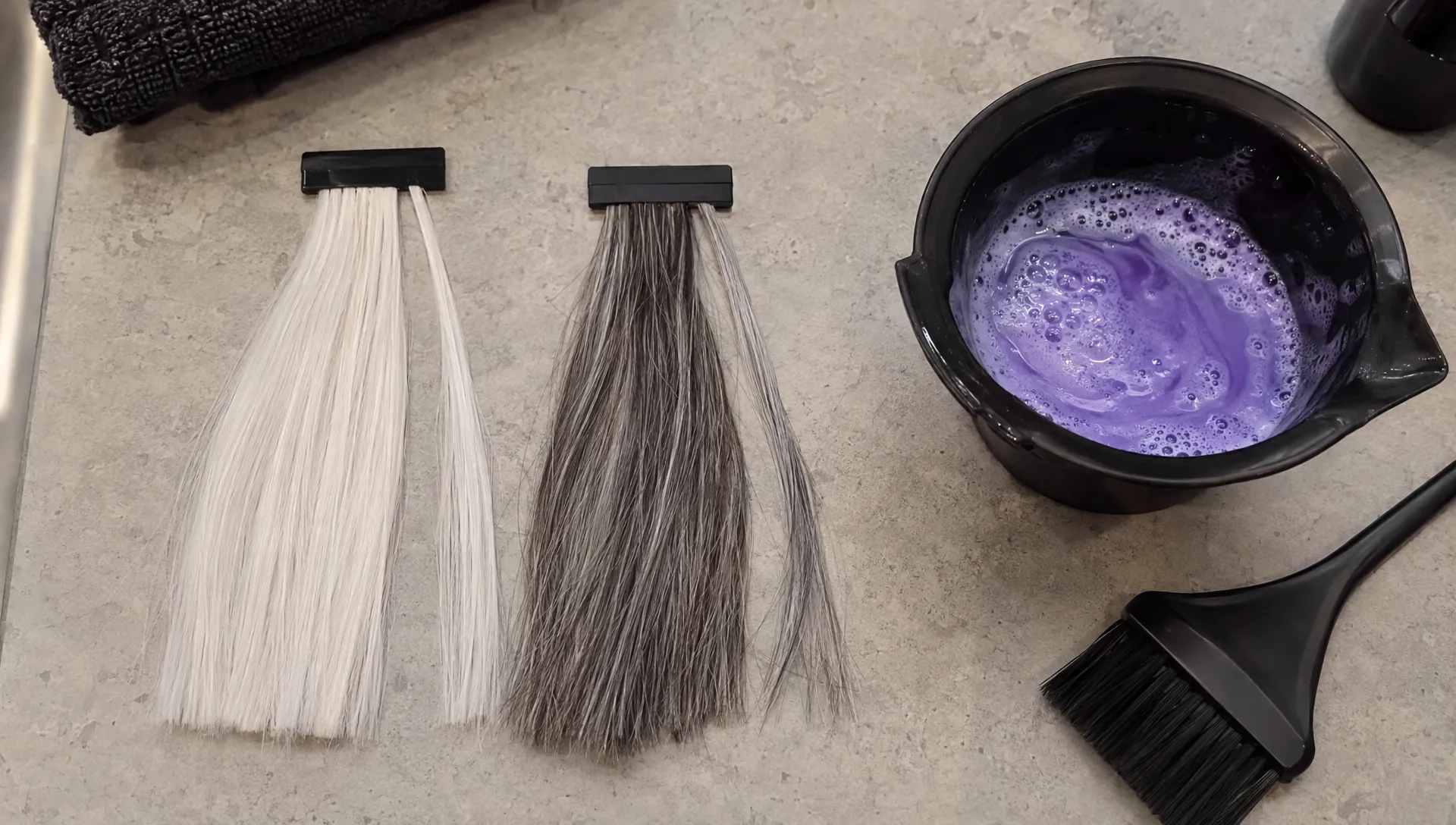
Purple pigment visually counteracts yellow because violet and yellow sit opposite each other on the color wheel. A toning shampoo deposits a small amount of pigment while cleansing, making unwanted yellow tones appear less noticeable.
It does not bleach hair, restore natural pigment or remove every cause of discoloration. Naturally gray hair contains a mixture of pigmented and unpigmented strands. Purple shampoo mainly changes how yellowish areas on the lighter strands look; it does not turn the darker strands silver.
That distinction matters if you are growing out permanent color. A yellowed white root, a warm blonde highlight and an orange-brown dyed end may need different approaches. Adding more violet shampoo across all three will not necessarily create an even result.
Products labeled “silver shampoo” are often violet-toning shampoos, but the name alone does not tell you their pigment strength. Check the intended hair colors, directions and any description of violet or blue pigments. Blue formulas target orange tones rather than yellow. Our guide to when blue shampoo helps brunettes explains that distinction in more detail.
Match frequency to your shade and porosity #
The best schedule for purple shampoo for gray hair depends on how visibly your hair responds, not simply how much gray you have. Two people using the same bottle once a week can get noticeably different results.
White, silver and salt-and-pepper hair #
White and very pale silver strands can show violet deposits quickly because there is little underlying color to disguise them. Start with the shortest contact time allowed by the label and inspect the result before repeating.
Salt-and-pepper hair may look darker or flatter if the light strands become overtoned. Focus on whether the silver pieces look clean and balanced, rather than expecting the shampoo to lighten the darker hair around them.
Porous ends and mixed color histories #
Porosity describes how readily hair takes up and loses moisture and other substances. Bleaching, chemical processing and weathering can leave lengths more porous, which can also make pigment uptake less predictable.
Gray hair is not automatically highly porous. Your service history and the condition of individual sections matter more than the color alone. Previously lightened ends may grab violet while newer growth barely changes.
If your hair has several different textures or color histories, test a discreet section first. A stylist can help decide whether the same product and contact time make sense from roots to ends.
How to apply it without overtoning #
When using purple shampoo for gray hair, frequency and contact time work together. A weekly wash with a strongly pigmented formula left on too long can deposit more color than you intended. Do not compensate for infrequent use by exceeding the label’s timing.
- Read the directions before wetting your hair. Confirm that the product is intended for gray or white hair and check its application method, timing and precautions.
- Wet thoroughly unless the label says otherwise. Do not assume applying it to dry hair is a safe shortcut to stronger toning. That can create concentrated or uneven deposits.
- Distribute the shampoo evenly. Use enough to reach the areas that need toning without scrubbing fragile lengths aggressively. Follow the manufacturer’s instructions about lathering and application.
- Use a timer. Start at the shortest recommended contact time, especially on white hair or previously lightened sections. Do not borrow another brand’s timing.
- Rinse thoroughly and condition. Remove the shampoo completely, then apply a conditioner suited to your texture and treatment history.
The American Academy of Dermatology’s healthy-hair guidance recommends conditioning after shampooing. Conditioning is especially useful when your lengths already feel rough or are difficult to detangle.
Let your hair dry before judging the final tone. Wet hair looks darker and can hide subtle lavender patches. If the result looks balanced, keep the same routine rather than extending the processing time at the next wash.
Avoid introducing a violet shampoo and a heavily pigmented violet mask together for your first trial. Using one toning product at a time makes it easier to understand which step is affecting the color.
What to change if your hair looks violet, dull or dry #
Unwanted results are a reason to reduce or pause toning, not to add another corrective product immediately.
If you see lavender or purple patches #
Stop the toning shampoo temporarily and return to your regular non-pigmented cleanser. Excess surface pigment may fade over several normal washes, but the timing varies with the formula and your hair’s porosity.
Avoid repeated harsh washing, dish soap or DIY mixtures intended to strip the color. If the cast is pronounced, patchy or persistent, ask a colorist to assess it. When you restart, use shorter label-approved contact time or longer intervals between applications.
If your silver looks flat or feels rough #
A flat appearance can come from too much pigment, residue or a combination of both. Roughness may reflect the cleansing formula, an existing conditioning need or damage unrelated to toning.
Pause the product and assess your hair after a normal wash and conditioner. More toning is not the answer to every dull finish. If softness returns but the shade still looks muddy, get advice before adding more pigment or a strong clarifier.
When yellowing needs more than toning #
Purple shampoo for gray hair can soften the appearance of yellow tones, but it cannot remove mineral deposits, smoke residue or every type of product buildup. It also cannot reverse structural damage caused by excessive heat or chemical processing.
Consider the pattern. Discoloration that appeared after a change in water supply, repeated swimming or heavy product use deserves a closer look. Yellowing concentrated on heavily heat-styled sections may need a review of temperature and heat-protection habits rather than more frequent toning.
A clarifying shampoo is designed to remove certain residues. A chelating formula targets mineral or metal deposits. Those are different jobs from depositing violet pigment, and one product does not necessarily do all three. Choose according to the suspected cause and follow its directions, particularly on fragile or color-treated hair.
If you are unsure whether you are seeing buildup, fading artificial color or a mismatch between roots and lengths, a consultation can prevent unnecessary treatments. Our explanation of root touch-ups versus a full color refresh can help you describe where the color has changed.
Choose a formula you can control #
The best purple shampoo for gray hair is not necessarily the darkest-looking one. Pigment concentration, cleansing ingredients and application directions all affect whether a formula suits your routine.
For a first purchase, look for a product explicitly intended for gray, white or silver hair, with clear timing instructions. If your lengths are dry, consider a conditioning formula rather than assuming that stronger cleansing will make your silver brighter. No shampoo can permanently repair damaged ends.
For fine hair, balance softness with a finish that does not feel weighed down. For curls, coils or chemically treated lengths, consider how the toning wash fits your existing cleansing and conditioning routine. Texture alone does not determine how much violet pigment you need.
You also do not need an entire purple product collection. A single toning shampoo paired with your usual suitable conditioner is a simpler starting point than layering multiple pigment-depositing products. Change one variable at a time, then judge both the shade and the feel before changing anything else.
Frequently asked questions #
Can I use purple shampoo for gray hair every day? Daily use is usually unnecessary and can cause unwanted violet buildup or leave some hair feeling dry. Start around once a week, or less often when yellowing is minimal, and follow the product’s directions.
How many minutes should I leave it on? Use the timing printed on your specific bottle. There is no universal processing time across brands. Begin at the shortest recommended time if your hair is white, porous or previously lightened.
Should I use it every time I wash if I only wash weekly? Not automatically. A weekly toning wash may suit hair with recurring yellow tones, but alternating it with a regular shampoo may be enough when warmth is mild. Judge the dry result before the next application.
Does purple shampoo cover gray roots? No. It can adjust unwanted yellow tones on lighter strands, but it does not provide gray coverage like permanent or demi-permanent hair color.
Why is my hair still yellow after using it? The formula or application may not suit your hair, or the discoloration may involve buildup or deposits. Do not keep extending the contact time. Reassess the cause before increasing use.
Get a routine tailored to your silver #
If your roots look bright but your ends stay yellow, or your silver turns lavender before it looks balanced, bring your current products and color history to a consultation. Those details help identify whether you need a different schedule, a different cleanser or a professional color service.
Book a personalized consultation at Kingdom Cute in Warner Robins, GA, to discuss your gray-hair goals and a manageable care routine.