Publish on by Kingdom Cute Luxury Hair Salon
- Why these questions matter more than the haircut
- The questions a great hair dresser should ask (and what they reveal)
- 1) “What do you want your hair to look like today, and what’s the reason for the change?”
- 2) “Do you have inspiration photos? What do you like about them?”
- 3) “How do you wear your hair most days?”
- 4) “How much time are you willing to spend styling at home?”
- 5) “When was your last trim or haircut?”
- 6) “Tell me everything you’ve done to your hair in the last 12 months.”
- 7) “Have you noticed shedding, breakage, thinning edges, or scalp irritation?”
- 8) “Do you have allergies or sensitivities to products or color?”
- 9) “What’s your maintenance comfort level, and how often can you come back?”
- 10) “What do you not want?”
- A quick cheat sheet: questions and why they’re asked
- Red flags: when the consultation is not strong enough
- How to show up prepared (so your hair dresser can do their best work)
- What this looks like at a luxury salon (without the pressure)
- Frequently Asked Questions
- Book a consultation that sets you up for results you’ll love
A salon visit should feel relaxing, but the best results rarely happen by accident. Before you ever sit down, a great hair dresser will slow things down for a real consultation, because the questions they ask determine everything that comes next, from your final look to your hair’s long-term health.
If you have ever left a salon thinking, “That’s not what I asked for,” it is often because key questions were skipped, misunderstood, or rushed.
Why these questions matter more than the haircut #
A professional consultation is not small talk. It is how a stylist:
- Confirms what you actually mean (for example, “trim” and “take off a little” mean different things to different people)
- Evaluates the condition of your hair and scalp before using tools or chemicals
- Chooses the safest process to reach your goal (especially for color, relaxers, silk press, or extensions)
- Sets realistic expectations for timing, upkeep, and cost
The American Academy of Dermatology notes that hair dyes can trigger irritation or allergic reactions in some people, which is one reason professionals take sensitivities seriously and may recommend precautions like patch testing when appropriate. You can read more about hair dye reactions from the American Academy of Dermatology.
The questions a great hair dresser should ask (and what they reveal) #
Below are the most important consultation questions. You might not hear them word-for-word, but a skilled stylist will cover these areas in some form.
1) “What do you want your hair to look like today, and what’s the reason for the change?” #
This is the goal-setting question. It helps your stylist understand whether you want:
- A refresh that still looks like you
- A noticeable change that reads differently on camera
- A corrective service (fixing a previous cut, color, or chemical result)
A great follow-up is, “What do you love about your hair right now, and what do you want to change?” That makes it easier to preserve what is working while improving what is not.
2) “Do you have inspiration photos? What do you like about them?” #
Photos are helpful, but they are not the whole story. A pro will ask what you like in the photo (shape, length, color tone, curl definition, volume, edge control), because two people can point to the same picture and mean completely different things.
A stylist may also ask if you are open to adjusting the look for your face shape, density, hairline, or shrinkage pattern.
3) “How do you wear your hair most days?” #
This question prevents beautiful styles that do not fit real life.
Your hair dresser is listening for lifestyle details like:
- Do you wear your hair straight, curly, in a ponytail, under wigs, or in protective styles?
- Do you work out often or sweat at the scalp?
- Do you need something that looks polished with minimal daily effort?
If you say, “I never blow-dry,” and the cut requires daily heat styling to look like the photo, a good stylist will tell you.
4) “How much time are you willing to spend styling at home?” #
This is where expectations become realistic. It is also how a stylist recommends the right level of maintenance.
Examples:
- If you want wash-and-go simplicity, your cut and product plan should support that.
- If you want a sleek look but avoid heat, your stylist might discuss alternatives, protective styling, or realistic timelines.
5) “When was your last trim or haircut?” #
The answer helps estimate how much needs to come off and whether breakage or split ends are contributing to tangling and poor shape.
It also helps set a maintenance schedule. If you are trying to grow length, a great stylist will talk about strategic trims, not just “cutting it all off.”
6) “Tell me everything you’ve done to your hair in the last 12 months.” #
This is one of the most important questions in the salon.
Your stylist is trying to understand your hair history, including:
- Box dye or professional color
- Bleach, highlights, toners, color removers
- Relaxers, texturizers, keratin treatments
- Silk press frequency and heat habits
- Sew-ins, tape-ins, glue, braids, loc maintenance
Be honest. A pro is not judging you, they are protecting you. Chemical services done in the wrong order (or on compromised hair) can cause breakage fast.
7) “Have you noticed shedding, breakage, thinning edges, or scalp irritation?” #
Hair and scalp health should lead every service.
This question helps your stylist spot concerns like:
- Product buildup or sensitivity
- Tension-related breakage from tight styles
- Dryness that could impact a silk press outcome
- Signs that you may need a gentler approach or a scalp and conditioning treatment first
If something looks outside a stylist’s scope (for example, persistent scalp lesions or sudden patchy hair loss), an ethical professional may recommend you consult a medical provider before proceeding.
8) “Do you have allergies or sensitivities to products or color?” #
This matters for everything from fragrances to adhesives. For color clients, it is especially important.
A good stylist may ask whether you have ever experienced itching, burning, swelling, or rash after color services. If yes, they may recommend precautions and a careful plan, and in some cases advise against certain ingredients or services.
For additional consumer guidance on hair dye safety, the U.S. Food & Drug Administration provides an overview of hair dye basics and safety considerations.
9) “What’s your maintenance comfort level, and how often can you come back?” #
Some looks are low maintenance, others are high maintenance, and neither is “better.” The best look is the one you can realistically keep up.
Your stylist may discuss:
- How quickly your color will fade or shift
- How often you should trim, retouch, or treat
- What at-home care will protect the service
This is also where you talk about your budget and your timeline, especially for transformative color, extensions, or bridal hair.
10) “What do you not want?” #
This question is a quiet secret weapon.
Examples clients often forget to mention:
- “No layers around my face.”
- “No blunt line in the back.”
- “No warm tones, I pull brassy fast.”
- “Please do not thin my hair out with texturizing shears.”
A great hair dresser will clarify these boundaries and repeat them back to you.
A quick cheat sheet: questions and why they’re asked #
| What the stylist asks about | What they’re assessing | Why it matters to your results |
|---|---|---|
| Goal and inspiration | Your definition of the look | Prevents miscommunication and regret |
| Daily styling routine | Lifestyle fit | Avoids a cut or style you cannot maintain |
| Hair history | Chemical and heat risk | Protects against damage and breakage |
| Scalp and shedding | Health, tension, buildup | Guides safe techniques and product choices |
| Time and budget | Maintenance reality | Helps choose a plan you can keep up with |
| “What don’t you want?” | Non-negotiables | Prevents common “almost right” outcomes |
Red flags: when the consultation is not strong enough #
Not every appointment needs a 30-minute interview, but these are warning signs that you may not be set up for success:
- Your stylist starts cutting or mixing color without confirming your goal
- They dismiss your hair history, especially relaxers, box dye, or bleach
- They promise an extreme transformation in one session without talking about risk
- They do not ask about sensitivities before using strong products
- They cannot explain upkeep, timeline, or what your hair will need at home
A professional can be warm and efficient, while still being thorough.
How to show up prepared (so your hair dresser can do their best work) #
You can help the consultation go smoothly with a few simple steps:
- Bring 2 to 4 inspiration photos that show front, side, and back (when relevant)
- Know your “must keep” (length, fullness, edges, curl pattern, ability to put it up)
- Be honest about your hair history, including box dye and adhesives
- Say how much time you actually style your hair on weekdays
- Mention upcoming events (photos, travel, weddings, interviews)
If you are new in town after a relocation, plan your appointment with extra buffer. Moving weeks are chaotic, and even finding your go-to hair routine can take time. If your move involves Northern California, working with a trusted Bay Area moving company can take one big stressor off your plate so you can focus on settling in and finding services you love.
What this looks like at a luxury salon (without the pressure) #
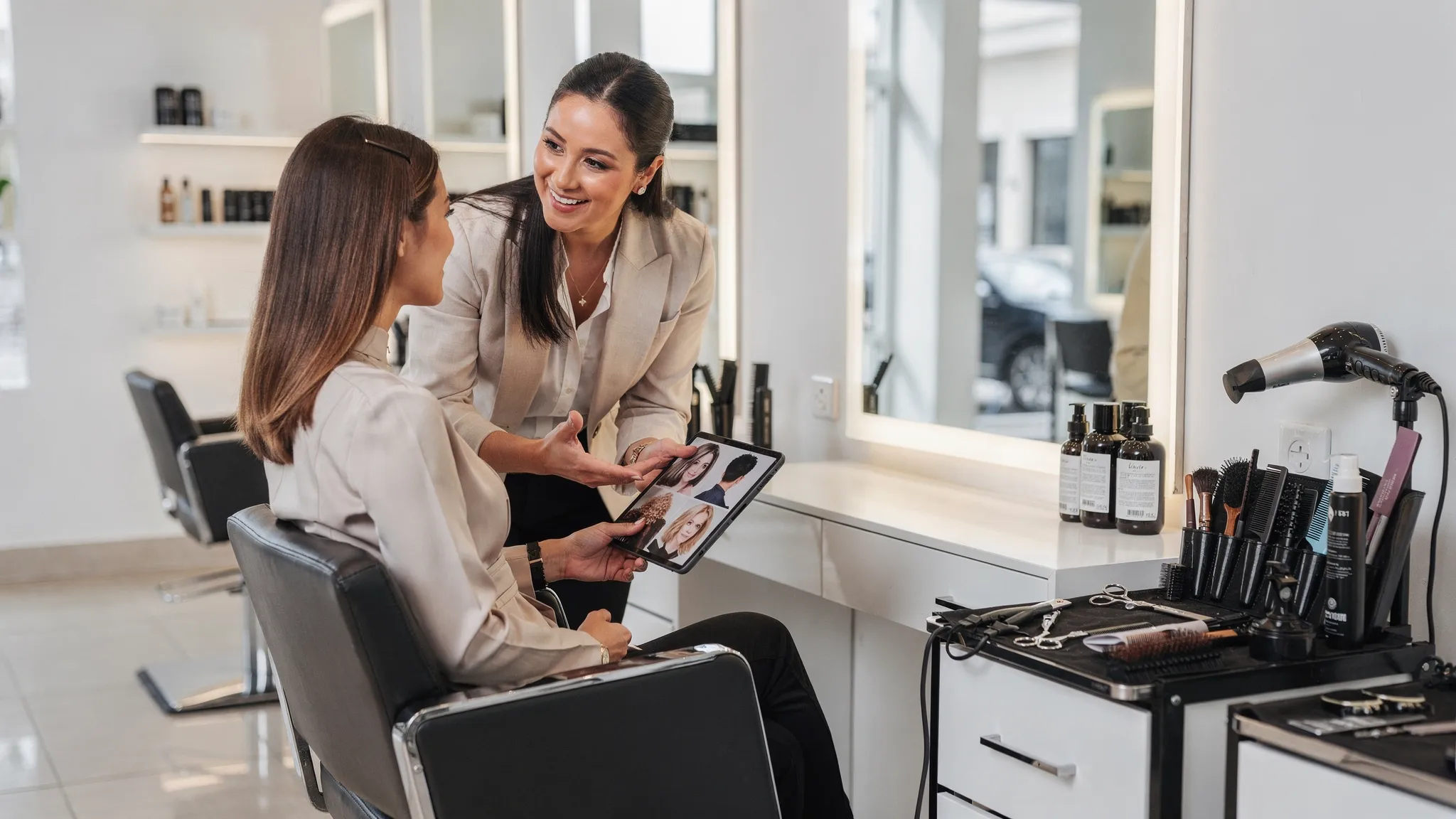
At Kingdom Cute, the goal of a consultation is simple: make sure you feel heard, your hair’s condition is respected, and the plan matches your lifestyle.
That can include discussing:
- Precision haircuts and styling choices that suit your daily routine
- Color strategy that fits your maintenance comfort level
- Silk press, relaxer, extensions, or protective style options with hair health in mind
- Add-on scalp and conditioning treatments when your hair needs support before a major service
If you want to preview haircut options and what a precision appointment can include, you can also explore our haircut services.
Frequently Asked Questions #
How long should a hair consultation take? A simple haircut consultation can take a few minutes, while color corrections, extensions, relaxers, or bridal services may take longer. What matters is that key topics are covered clearly.
What should I tell my hair dresser before color? Share your full color history (including box dye), any previous bleach, your desired tone (warm, neutral, cool), and any sensitivities or past reactions.
Is it okay to show a picture of someone else’s hair? Yes. Photos are helpful, but your stylist should explain how your texture, density, and maintenance routine may change the final result.
What if I don’t know the right hair terminology? That’s normal. Describe what you like and do not like, bring photos, and ask the stylist to repeat back the plan before they start.
Why does my stylist ask about my daily routine? Because the best haircut or color is the one you can maintain. Your routine affects the shape, products, heat use, and service schedule.
What if I’m nervous because I’ve had a bad salon experience before? Say so at the start. A great stylist will slow down, confirm your non-negotiables, and talk through the plan step by step.
Book a consultation that sets you up for results you’ll love #
If you are looking for a hair dresser who takes the time to ask the right questions and tailor the service to you, Kingdom Cute is here for you in Warner Robins, GA.
Book your appointment online at Kingdom Cute Hair Salon and come in ready for a consultation that feels clear, professional, and confidence-boosting.
Tags: hair dresser