Publish on by Kingdom Cute Luxury Hair Salon
- What a relaxer actually changes
- Start with a professional plan, not a one-size-fits-all relaxer
- Protect your hair in the first week after a relaxer
- Build a wash routine that supports moisture and scalp health
- Balance moisture and protein carefully
- Limit heat without giving up a polished style
- Time your relaxer touch-ups wisely
- Detangle with patience and the right tools
- Protect relaxed hair at night
- Be careful with color, extensions, and protective styles
- Choose a salon that prioritizes hair health
- Common relaxer hair care mistakes to avoid
- Frequently Asked Questions
- Get smoother, stronger relaxer results in Warner Robins
Relaxer hair can look smooth, polished, and effortlessly styled, but the best results come from caring for the hair behind the finish. A relaxer permanently changes the structure of the strands that are processed, which means your routine needs to protect strength, elasticity, moisture, and scalp comfort between appointments.
The goal is not just straighter hair. The goal is relaxed hair that still moves, shines, and resists breakage. These relaxer hair care tips will help you maintain smoother, stronger results while reducing the common issues many clients face, including dryness, thinning ends, scalp irritation, and breakage at the new growth line.
If you are experiencing burning, sores, sudden shedding, or severe breakage after a relaxer, pause chemical services and speak with a licensed stylist or medical professional before your next treatment.
What a relaxer actually changes #
Relaxers work by chemically altering the bonds that give textured hair its natural curl pattern. Once a section of hair is relaxed, that section remains chemically treated until it grows out or is cut off. This is why relaxed hair needs consistent care, not occasional rescue treatments.
A healthy relaxer result depends on more than the product used. Formula strength, timing, application technique, scalp condition, previous color, heat habits, and home care all matter. Over-processing, applying relaxer over already relaxed hair, or neglecting conditioning can leave strands weak even if the hair looks sleek right after the appointment.
One of the most fragile areas is the line of demarcation, the point where natural new growth meets previously relaxed hair. This area has two different textures with different needs. Rough detangling, high heat, or tight styles can cause snapping right at that transition point.
Start with a professional plan, not a one-size-fits-all relaxer #
The strongest relaxer hair results begin before the product ever touches your scalp. A professional consultation helps your stylist evaluate density, curl pattern, porosity, scalp sensitivity, previous chemical services, and your styling goals. That information guides the relaxer type, timing, sectioning, and aftercare plan.
Be honest about your full hair history. Tell your stylist if you have used permanent color, bleach, keratin treatments, henna, box dye, at-home relaxers, texturizers, or frequent heat styling. Even treatments that happened months ago can affect how your hair responds. If you want to understand why consultation and assessment make such a difference, Kingdom Cute explains the stylist’s process in this guide to how hair specialists build better results.
Avoid scratching, aggressively brushing, or irritating your scalp before a relaxer appointment. If your scalp is tender, flaky, sunburned, or broken, it is better to reschedule than risk discomfort or chemical irritation. A smooth result is not worth compromising scalp health.
Protect your hair in the first week after a relaxer #
The first week after a relaxer sets the tone for how your hair behaves until the next touch-up. Your stylist should neutralize thoroughly during the service, then style the hair in a way that minimizes stress. Once you leave the salon, your job is to keep manipulation gentle.
Avoid tight ponytails, stiff buns, heavy edge control, and new braids or extensions immediately after relaxing unless your stylist says your hair is ready. The scalp and strands may need a little time before extra tension is added. Sleep with a satin or silk scarf, bonnet, or pillowcase to reduce friction and preserve smoothness.
Try not to chase perfect flatness every morning with a hot tool. A wrap, roller set, soft pin curls, or a low-tension style can help maintain the look with less damage. For more general salon result maintenance, these luxury hair care habits are especially useful for chemically treated hair.
Build a wash routine that supports moisture and scalp health #
Relaxed hair still needs regular cleansing. Skipping wash day for too long can allow sweat, oil, and styling products to build up on the scalp and strands. That buildup can make hair feel dry, coated, itchy, or dull.
Many clients with relaxed hair do well with washing every 7 to 10 days, but the right timing depends on your scalp, workouts, product use, and style. If your scalp gets oily or itchy sooner, waiting longer is not automatically healthier. Clean hair usually accepts moisture better than coated hair.
Choose a moisturizing shampoo for most wash days, then use a clarifying shampoo only when buildup becomes noticeable or your stylist recommends it. Follow with conditioner every time. Deep conditioning every 1 to 2 weeks can help relaxed hair stay flexible, especially if you use heat or wear your hair out often.
Professional formulas can make a noticeable difference because relaxed hair often needs targeted moisture, smoothing, heat protection, and repair support. If you are unsure what belongs in your routine, this guide to professional hair care products can help you understand what each product category is meant to do.
Balance moisture and protein carefully #
Relaxer hair needs both moisture and strength. Moisture helps hair feel soft and flexible. Protein can help reinforce weak areas, especially when hair has been chemically processed or heat styled. The mistake is assuming more of either one is always better.
Too much moisture without enough strengthening support can leave hair feeling limp or overly stretchy. Too much protein without enough hydration can make hair feel stiff, dry, or brittle. Your stylist can help you decide whether your hair needs a hydrating deep conditioner, a light protein treatment, a stronger professional treatment, or a trim.
| If your relaxed hair feels like this | It may need | Better next step |
|---|---|---|
| Dry, rough, or frizzy | More moisture | Use a hydrating conditioner, leave-in, and light sealant on the ends |
| Limp, mushy, or overly stretchy | More strength support | Ask your stylist about a protein or bond-supporting treatment |
| Brittle and snapping | A balance reset | Reduce heat, deep condition, and schedule a professional assessment |
| Coated but still dry | Buildup removal | Clarify when appropriate, then follow with moisture |
| Thin or see-through ends | Shape correction | Book a trim before splits travel higher |
Moisturizing does not mean soaking the hair with product every day. Use a water-based leave-in or lightweight moisturizer when the hair feels dry, then seal the ends with a small amount of oil, serum, or cream if your hair responds well to it. Focus on the mid-lengths and ends, since they are the oldest and most vulnerable parts of your hair.
Limit heat without giving up a polished style #
Heat is not automatically off-limits for relaxed hair, but repeated high heat can weaken strands quickly. The safest approach is to reduce frequency, lower the temperature when possible, and protect the hair every time.
Use a heat protectant before blow-drying, flat ironing, curling, or using a hot comb. Make sure hair is fully dry before using direct heat. Flat ironing damp hair can cause serious damage because water inside the strand heats rapidly.
Instead of using a flat iron daily, consider lower-tension options that keep hair smooth longer. Wrap sets, roller sets, silk wraps, flexi rods, and soft pin curls can refresh your style with less direct heat. If you love a sleek finish, ask your stylist how often your hair can realistically handle thermal styling based on its current condition.
Time your relaxer touch-ups wisely #
Relaxer touch-up timing is personal, but many clients fall somewhere around 8 to 12 weeks. Going too soon increases the risk of overlapping relaxer onto already processed hair. Waiting too long without the right maintenance can also cause breakage, especially at the line of demarcation.
The key is not simply stretching as long as possible. The key is managing new growth safely. If your new growth is dense or your relaxed ends are fragile, your stylist may recommend a schedule and styling approach that protects both textures.
| Relaxer timeline | What to watch for | What to discuss with your stylist |
|---|---|---|
| 4 to 6 weeks | Early new growth and possible dryness | Whether moisture, trims, or styling changes can help before a touch-up |
| 8 to 12 weeks | Common touch-up window for many clients | Applying relaxer only to new growth and protecting previously relaxed hair |
| Beyond 12 weeks | More texture contrast and detangling challenges | How to stretch safely without breakage at the demarcation line |
| Any time scalp feels irritated | Burning risk or discomfort | Rescheduling chemical services until the scalp is healthy |
Detangle with patience and the right tools #
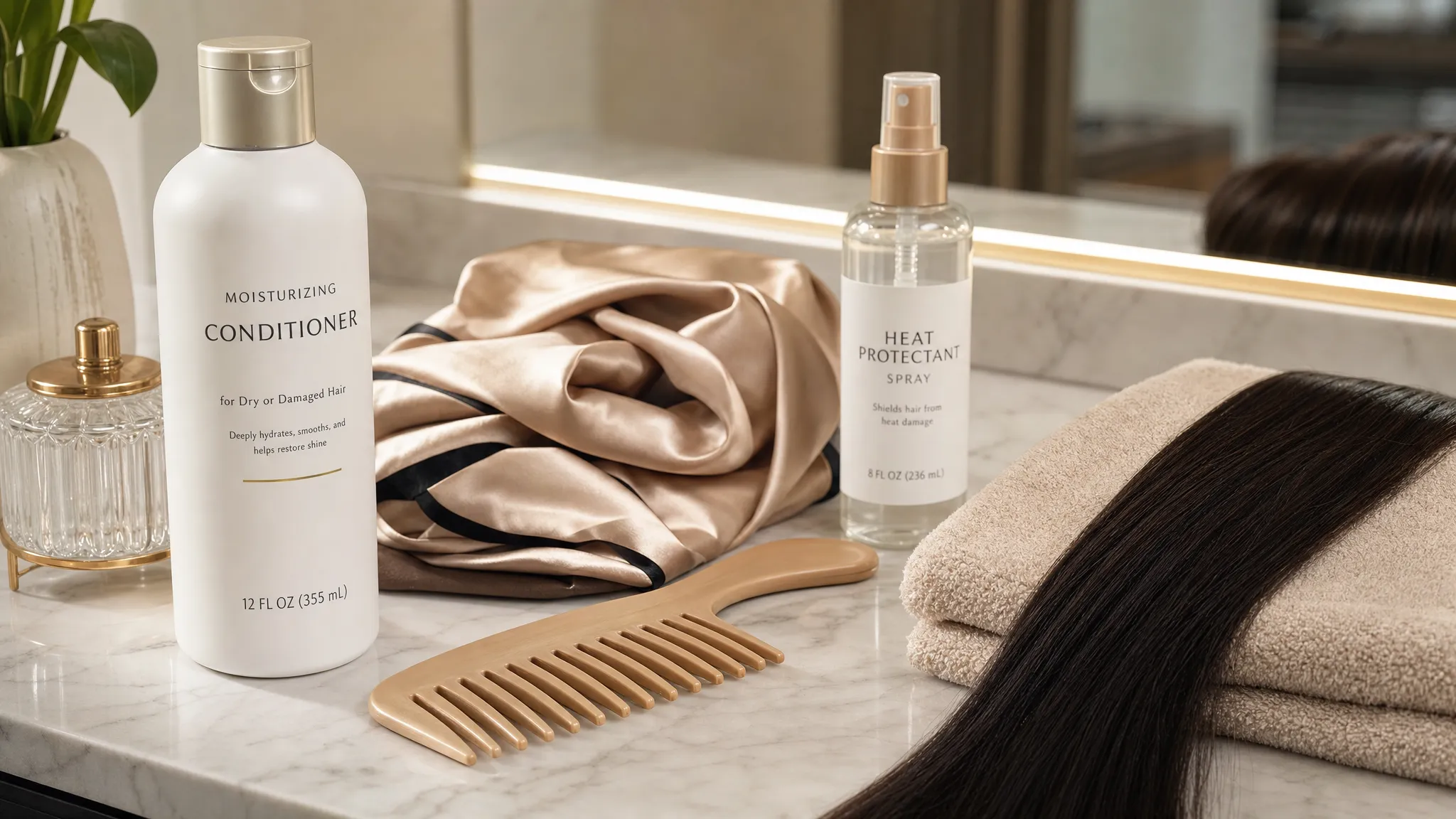
Detangling can make or break relaxed hair care. The hair may look smooth, but it can still snap if it is handled roughly, especially when wet. Use a conditioner with slip, work in sections, and start at the ends before moving upward.
A wide-tooth comb is usually safer than a small comb for detangling. Your fingers can also help separate knots before a tool touches the hair. If you feel resistance, stop and add more conditioner or detangling product rather than forcing the comb through.
Towel drying matters too. Rubbing relaxed hair with a rough towel can lift the cuticle and create frizz or breakage. Gently squeeze excess water out with a soft towel or microfiber towel, then apply leave-in before styling.
Protect relaxed hair at night #
Night care is one of the easiest ways to keep relaxer hair smoother for longer. Cotton pillowcases create friction, which can rough up the cuticle and dry out the ends. Satin and silk reduce friction and help preserve the shape of your style.
Wrapping the hair can maintain smoothness, but do not wrap so tightly that your edges or scalp feel strained. If your hair is layered, short, or curled, loose pin curls or a satin bonnet may work better than a traditional wrap. The best nighttime method is the one that protects your hair without creating tension.
If you work out often or sweat at night, let your scalp dry fully before covering your hair for long periods. Trapping moisture against the scalp can create odor, itching, or flaking. A cool blow-dryer setting can help dry the roots gently when needed.
Be careful with color, extensions, and protective styles #
Relaxer and color can be a beautiful combination, but they require strategy. Lightening relaxed hair is especially delicate because both services can increase dryness and fragility. If you want highlights, a brighter blonde, or a major color shift, ask for a strand test and a realistic plan.
Avoid stacking major chemical services too close together unless your stylist has evaluated your hair and confirms it can handle the process. Sometimes the healthiest option is a slower color journey, a gloss, a deeper tone, or a conditioning phase before any lightening.
Extensions and protective styles can also work with relaxed hair when installed thoughtfully. The style should not pull at the edges, stress the nape, or add excessive weight to fragile strands. Protective styling is only protective when your natural hair and relaxed hair underneath are cleansed, moisturized, and not under constant tension.
Choose a salon that prioritizes hair health #
A good relaxer service is precise. Your stylist should protect the scalp when needed, apply product carefully, avoid overlapping previously relaxed hair, monitor timing, neutralize thoroughly, condition properly, and explain home care. If a salon rushes consultation or ignores your concerns about breakage, that is a warning sign.
Atmosphere matters too, especially during longer chemical services. Clean lighting, organized stations, comfortable seating, and thoughtful details such as custom neon signage can make a beauty space feel polished and welcoming, but the most important sign of a quality salon is still how carefully the stylist protects your hair.
At Kingdom Cute in Warner Robins, GA, relaxer care is part of a bigger beauty experience. The right plan may include a precision cut, conditioning treatment, silk press, trim, or style recommendation that helps your relaxed hair look elegant without sacrificing strength.
Common relaxer hair care mistakes to avoid #
Small habits can have a big impact on chemically treated hair. If your relaxed hair is not holding moisture, keeps breaking, or looks thinner over time, one of these patterns may be part of the problem.
| Mistake | Why it matters | Better choice |
|---|---|---|
| Relaxing too often | Increases overlap risk and weakens ends | Follow a stylist-guided touch-up schedule |
| Skipping deep conditioner | Leaves hair less flexible | Deep condition consistently based on hair needs |
| Flat ironing every day | Causes dryness and thermal stress | Preserve styles with wraps, rollers, or pin curls |
| Wearing tight protective styles | Can thin edges and stress the scalp | Choose low-tension styles and give hair breaks |
| Ignoring trims | Allows splits to travel upward | Trim before ends become see-through |
| Relaxing an irritated scalp | Can cause burning and discomfort | Wait until the scalp is calm and healthy |
Healthy relaxer hair care is usually not about doing one dramatic treatment. It is about repeating the right habits long enough for your hair to respond.
Frequently Asked Questions #
How often should I moisturize relaxer hair? Moisturize when your hair feels dry, focusing on the mid-lengths and ends. Some clients need light moisture a few times a week, while others need less. If your hair feels greasy but still dry, you may have buildup rather than a moisture shortage.
Can relaxed hair be healthy? Yes, relaxed hair can be healthy when it is processed correctly and maintained with cleansing, conditioning, trims, low heat, gentle detangling, and proper touch-up timing. The key is protecting strength as much as smoothness.
How long should I wait between relaxer touch-ups? Many clients schedule touch-ups around 8 to 12 weeks, but the right timing depends on new growth, hair density, scalp health, and breakage risk. Your stylist should apply relaxer only to new growth, not previously relaxed hair.
Can I color my hair if I have a relaxer? Sometimes, but it depends on your hair’s condition and the type of color you want. Lightening relaxed hair requires extra caution. Always have a professional assess your hair before combining relaxer and color services.
Why is my relaxed hair breaking? Common causes include overlapping relaxer, too much heat, dryness, protein imbalance, rough detangling, tight styles, or delayed trims. A stylist can help identify whether your hair needs moisture, strengthening, a haircut, or a break from chemical services.
Should I relax my hair at home? Professional relaxer services are generally safer because timing, sectioning, formula choice, scalp protection, and neutralizing all affect the final result. At-home mistakes can lead to burns, uneven texture, or breakage.
Get smoother, stronger relaxer results in Warner Robins #
If you want relaxed hair that looks sleek and still feels strong, start with a stylist who treats hair health as part of the style. Kingdom Cute offers personalized consultations, relaxer care, conditioning treatments, precision styling, and a luxury salon experience designed to help you love your look.
Ready for a smoother finish and a healthier routine? Book your appointment with Kingdom Cute and let your next relaxer service begin with a plan made for your hair.
Tags: relaxer hair