Publish on by Kingdom Cute Luxury Hair Salon
- Start With Your Real Routine, Not Your Ideal Routine
- Match the Cut to Your Texture and Density
- Think About Grow-Out Before You Commit
- Choose Details That Make the Haircut Feel Like You
- Be Realistic About Bangs, Layers and Big Changes
- Bring Reference Photos, Then Translate Them
- Plan Your Between-Visit Styling Before You Leave the Chair
- Signs You Chose the Right Haircut
- Frequently Asked Questions
- Choose a Haircut That Still Feels Good Weeks Later
That fresh-from-the-salon feeling is wonderful, but a haircut earns its place in your life on ordinary days. The real test comes two or three weeks later, when the blowout has faded, your natural texture is doing its thing and you are styling your hair before work with the same tools you always use.
Choosing a women’s haircut you’ll love between visits is less about chasing the newest trend and more about finding a shape that supports your hair, your routine and your confidence. A beautiful cut should look intentional when it is freshly styled, but it should also make sense after a workout, in Georgia humidity, on wash day and when you only have ten minutes to get ready.
Start With Your Real Routine, Not Your Ideal Routine #
The best haircut for women starts with honesty. If you usually air-dry your hair, a cut that needs daily round-brushing may feel exciting for one week, then frustrating after that. If you wear your hair up most days, going too short around the front could limit your favorite styles. If you love a polished finish, a cut with too many undone layers may never feel like “you.”
Before choosing a style, think through what your hair has to do for you between salon appointments. Your stylist can create a better shape when they know the rhythm of your life, not just the look you saved online.
Ask yourself:
- How much time do I realistically spend styling my hair on a weekday?
- Do I usually wear my hair down, clipped back, in a ponytail or in protective styles?
- What bothers me most as my haircut grows out?
- Do I want a cut that air-dries well or one that looks best with heat styling?
- How often am I willing to come in for shaping, trims or bang maintenance?
A low-maintenance cut is not boring. It simply means the shape works with your natural habits instead of fighting them.
Match the Cut to Your Texture and Density #
Texture and density are two different things, and both affect how a haircut behaves. Texture describes the pattern and feel of the hair, such as straight, wavy, curly, coily, fine or coarse. Density describes how much hair you have on your scalp. A cut that looks full and airy on thick wavy hair may look sparse on fine straight hair. A blunt bob that feels sleek on one person may become bulky on another.
Fine hair often benefits from a stronger perimeter, soft internal movement and carefully placed face-framing pieces. Too many layers can remove the fullness you wanted to keep. Thick hair may need weight removal, but the technique matters. Over-thinning can create frizz or uneven grow-out, especially around the ends.
Wavy, curly and coily hair need shape that respects spring, shrinkage and volume. Layers can be beautiful, but they should be placed with the curl pattern in mind. If you wear your hair both natural and silk-pressed, tell your stylist so the cut can be balanced for both looks.
If your hair is color-treated, relaxed, frequently heat-styled or worn in extensions, the health of your ends also matters. The American Academy of Dermatology lists frequent heat styling, tight hairstyles and rough handling among common habits that can contribute to breakage, so a cut should support healthier daily care as well as style.
Think About Grow-Out Before You Commit #
Every haircut grows. Some grow quietly and stay soft for weeks. Others show every half-inch of change. That does not mean you should avoid bold cuts, bangs or precision shapes. It means you should know what kind of upkeep you are choosing.
Here is a practical way to compare common women’s haircut options before your appointment:
| Haircut choice | Best for | Grow-out personality | Between-visit tip |
|---|---|---|---|
| Long layers | Keeping length with movement | Usually soft and forgiving | Refresh face-framing pieces before the full shape feels heavy |
| Lob or collarbone cut | Polished style with enough length to tie back | Balanced and easy for many routines | Ask for weight control if your hair expands at the ends |
| Blunt bob | Sleek shape and fuller-looking ends | Shows uneven growth sooner | Plan trims more regularly to keep the line crisp |
| Pixie or cropped cut | Strong style with minimal daily length management | Needs shaping as the neckline and sides grow | Choose a stylist comfortable with short-hair detailing |
| Curtain bangs | Soft change without a full fringe commitment | Grow into face-framing layers | Style the roots so they split where you want them to |
| Shag or heavily layered cut | Texture, volume and movement | Can grow out beautifully if balanced | Avoid over-layering if your ends are already thin |
The right choice depends on how you feel about the in-between stage. If you dislike hair touching your face, long curtain bangs may annoy you as they grow. If you love putting hair in a bun, a short shag might create loose pieces around the nape. If you want sharp polish, a bob may be perfect, but only if you are comfortable maintaining the outline.
Choose Details That Make the Haircut Feel Like You #
A haircut is not only a length. The details create the personality of the look. Face-framing pieces, part placement, layering, fringe, neckline shape and the weight of the ends all change how the cut feels day to day.
Face shape can guide these choices, but it should not be treated like a strict rulebook. A round face can wear short hair. A square jaw can wear blunt lines. A long face can wear length. The question is how the haircut balances your features, hair texture and styling preferences at the same time. If you want more examples, this guide to hair cut styles that flatter every face shape is a helpful companion before your consultation.
Think about where you want attention to land. Cheekbone-length pieces can brighten the face. Collarbone layers can make longer hair feel lighter. A strong baseline can make hair look denser. Soft layering around the crown can create lift, but too much can make fine ends look thinner.
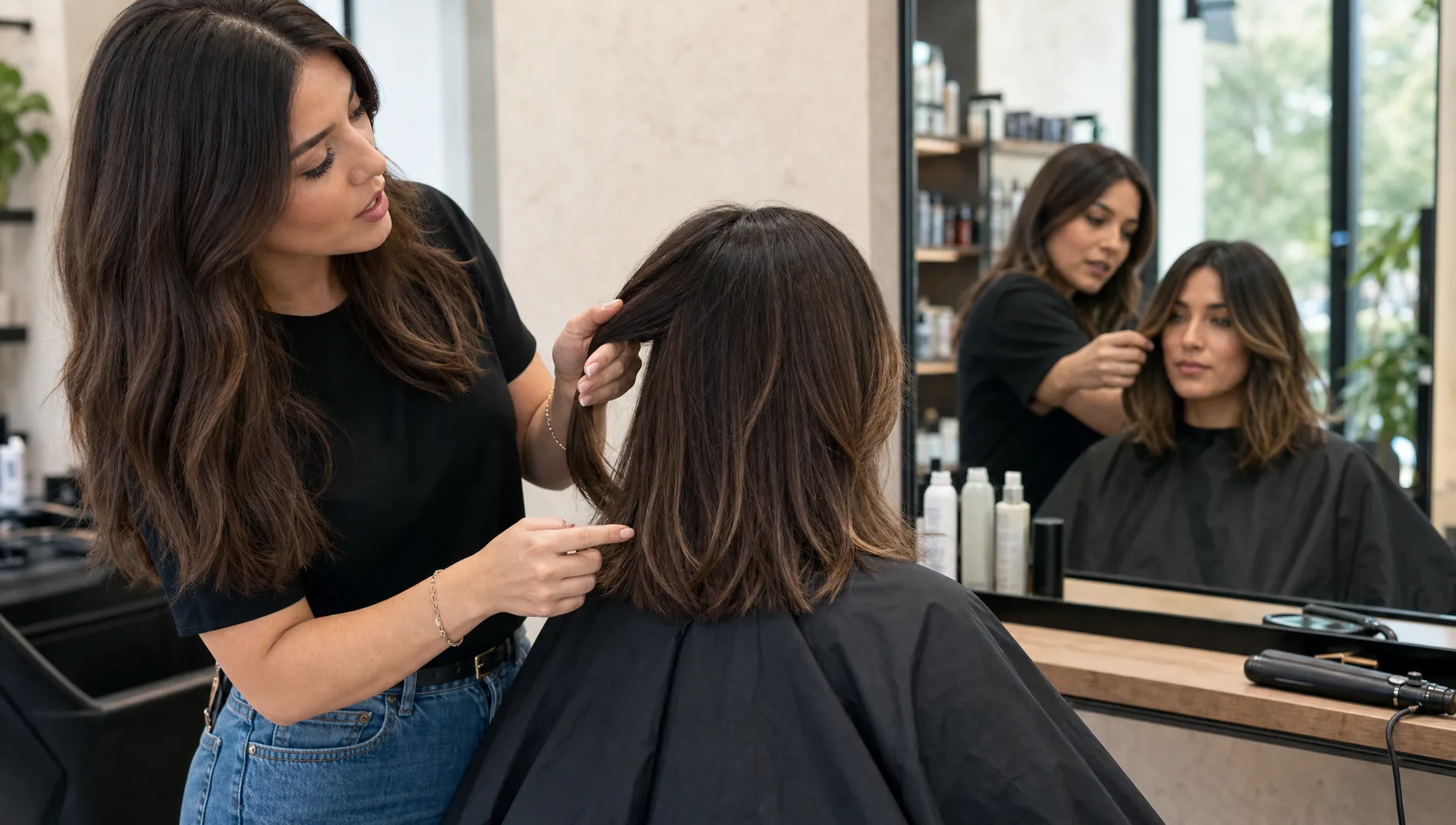
Be Realistic About Bangs, Layers and Big Changes #
Bangs are one of the fastest ways to change your look, but they are also one of the first details to feel different as hair grows. Curtain bangs are usually more flexible than blunt fringe because they can blend into layers. Brow-skimming bangs create a strong style statement, but they may need more frequent trims. Very short bangs require the most confidence during the grow-out phase.
Layers also deserve careful planning. They can add movement, release weight and help curls sit better. They can also make ponytails shorter, reduce fullness at the bottom or create pieces that flip in unexpected directions. If you have fine hair, ask whether your desired layers will preserve density through the ends. If you have thick hair, ask how the stylist will remove weight without creating frizz or a shelf.
Dramatic length changes are exciting, especially if your current hair feels heavy or damaged. Before making the cut, picture your regular styling habits. Will the new length still fit your work style? Can you sleep comfortably in it? Will you miss being able to pull it all back? A great stylist will help you separate the emotional desire for change from the practical details that make the new haircut livable.
Bring Reference Photos, Then Translate Them #
Reference photos are useful, but they should start the conversation rather than dictate the result. The same haircut can look different depending on texture, density, color placement, styling method and face shape. A photo of a smooth layered cut may have been styled with a blow dryer and iron. A tousled bob may rely on natural wave or a curling wand.
Bring two or three photos and be specific about what you like. Is it the length, the softness around the face, the volume, the bangs or the way the ends sit? It is just as helpful to bring a photo of what you do not want, especially if you have had a past haircut that felt too choppy, too round or too flat.
During the consultation, ask clear questions:
- What part of this photo will work well with my hair?
- What would you adjust for my texture or density?
- How will this cut look when I air-dry it?
- How often would I need trims to keep the shape?
- What should I do at home when the layers or bangs start growing out?
If you are still deciding who to trust with your haircut, this guide to choosing a hairdresser who understands women’s hair goals can help you evaluate consultation style, communication and long-term fit.
Plan Your Between-Visit Styling Before You Leave the Chair #
A haircut becomes easier to love when you know how to style it at home. Before you leave the salon, ask your stylist to show you the simplest version of the routine. You do not need a complicated product lineup or a full blowout lesson every time. You need to know what to do with your specific shape.
For example, a layered cut may need product through the mid-lengths so the movement shows. A bob may need a smoothing product on the ends and a quick pass with a round brush. Curls may need a defined application method so the layers spring evenly. A silk press may need heat protection, nighttime wrapping and humidity-conscious care to preserve the finish.
Your stylist can also recommend a maintenance rhythm based on the cut. Short precision cuts and blunt bangs often need shaping sooner. Longer layers, lobs and softer cuts may give you more time between appointments. Hair growth rate, damage level and styling habits all affect that timeline, so use your first appointment as a starting point and adjust after you see how the cut behaves in real life.
Signs You Chose the Right Haircut #
You will know your haircut is working when it makes your normal routine easier, not harder. It should fall into shape with a reasonable amount of effort. It should make your ends look healthier. It should feel like your style, even when it is not freshly done.
A strong cut also gives you options. You can wear it polished or relaxed. You can style it for an event without feeling like you need a completely different shape. You can go a few weeks between appointments and still recognize the look you asked for.
A haircut may be too high-maintenance for you if:
- You only like it when a professional styles it
- You have to fight your natural texture every day
- The grow-out stage bothers you almost immediately
- You can no longer wear your go-to everyday styles
- You need more trims than your schedule allows
If that happens, it does not mean the cut was “bad.” It may simply mean the shape did not match your lifestyle closely enough. Your next consultation can correct that with softer layers, a different perimeter, longer face-framing pieces or a more realistic styling plan.
Frequently Asked Questions #
What is the easiest women’s haircut to maintain? Longer layers, soft lobs and collarbone-length cuts are often easier to maintain because they grow out more gradually and still allow styling flexibility. The easiest option for you depends on your texture, density and daily routine.
How often should women get a haircut? Many women schedule trims every 6 to 12 weeks, but precision cuts, short styles and bangs may need attention sooner. Longer layered styles can often go longer if the ends stay healthy and the shape still works.
Should I choose a haircut based on face shape or hair texture? Use both, but prioritize how the haircut will behave on your actual hair. Face shape can guide balance and framing, while texture and density determine how the cut falls, expands, curls or holds its shape.
Can the right haircut make fine hair look thicker? Yes, the right shape can help fine hair look fuller. Blunt or softly layered ends, careful face framing and avoiding excessive thinning can all help preserve the appearance of density.
Are bangs a good idea if I do not want frequent salon visits? Curtain bangs or longer face-framing fringe may be a better fit than blunt bangs if you want lower maintenance. Shorter fringe can look beautiful, but it usually needs more frequent trims to stay at the intended length.
Choose a Haircut That Still Feels Good Weeks Later #
A haircut you love between visits starts with a thoughtful consultation, a shape that respects your texture and details that match your real routine. When the cut is personalized, you should not have to wait for salon day to feel confident in your hair.
If you are ready for a haircut for women that feels polished, wearable and personal, Kingdom Cute Hair Salon in Warner Robins, GA offers personalized consultations, precision haircuts and styling in a relaxing salon environment. Book your appointment online and leave with a cut designed for more than one great hair day.
Tags: haircut for women