Hair Cuts Styles That Flatter Every Face Shape
Hair Cuts Styles That Flatter Every Face Shape
A flattering haircut is never just about copying a photo. The best cut works with your face shape, hair texture, density, lifestyle, and the way you actually like to style your hair day to day. That is why two people can ask for the same bob, pixie, layers, or bangs and leave with slightly different versions that suit them beautifully.
When clients search for hair cuts styles, they are usually looking for more than inspiration. They want to know what will frame their features, feel current, and still look good after wash day. The good news is that every face shape has multiple flattering options. The secret is knowing what your cut should highlight, soften, lengthen, or balance.
Below is a salon-friendly guide to choosing haircut styles by face shape, plus texture and maintenance tips to help you walk into your next consultation with confidence.
Why Face Shape Matters, But Should Not Limit You
Face shape is a helpful starting point, not a strict beauty rule. A skilled stylist looks at the full picture, including your cheekbones, jawline, forehead, neck length, natural part, hairline, curl pattern, and styling routine. Your personal style matters too. Some clients want softness and movement. Others want a sharp, fashion-forward shape that makes their features stand out.
The goal is not to hide your face shape. The goal is to create balance in a way that feels like you. For example, a round face can look amazing with a sleek blunt bob when the length and part are customized correctly. A square jaw can look stunning with a strong one-length cut if the client wants a bold editorial effect. The right haircut is a collaboration between structure and personality.
Before choosing a cut, compare your inspiration photos, lifestyle needs, maintenance level, and hair health. The same practical thinking applies to many important decisions, whether you are choosing a salon service or using a trusted platform to compare insurance plans online before committing. The best choice is the one that fits your real needs, not just the one that looks popular.
How to Identify Your Face Shape
You do not need a perfect measurement system to understand your face shape. Stand in front of a mirror with your hair pulled away from your face and notice the widest points and overall length.
Oval: Your face is longer than it is wide, with softly balanced forehead, cheekbones, and jaw.
Round: Your face has similar width and length, often with fuller cheeks and a softer jawline.
Square: Your forehead, cheekbones, and jaw are similar in width, with a more defined jawline.
Heart: Your forehead or cheekbones are wider, while the chin is narrower or more pointed.
Diamond: Your cheekbones are the widest point, with a narrower forehead and chin.
Long or oblong: Your face is noticeably longer than it is wide, often with a longer forehead, chin, or both.
Triangle or pear: Your jawline is wider than your forehead, creating more weight at the lower face.
Many people are a blend of two shapes. That is normal. If you feel stuck between round and oval, square and heart, or diamond and long, focus less on the label and more on the styling goal. Do you want to create length, add width, soften angles, or bring attention to your eyes and cheekbones?
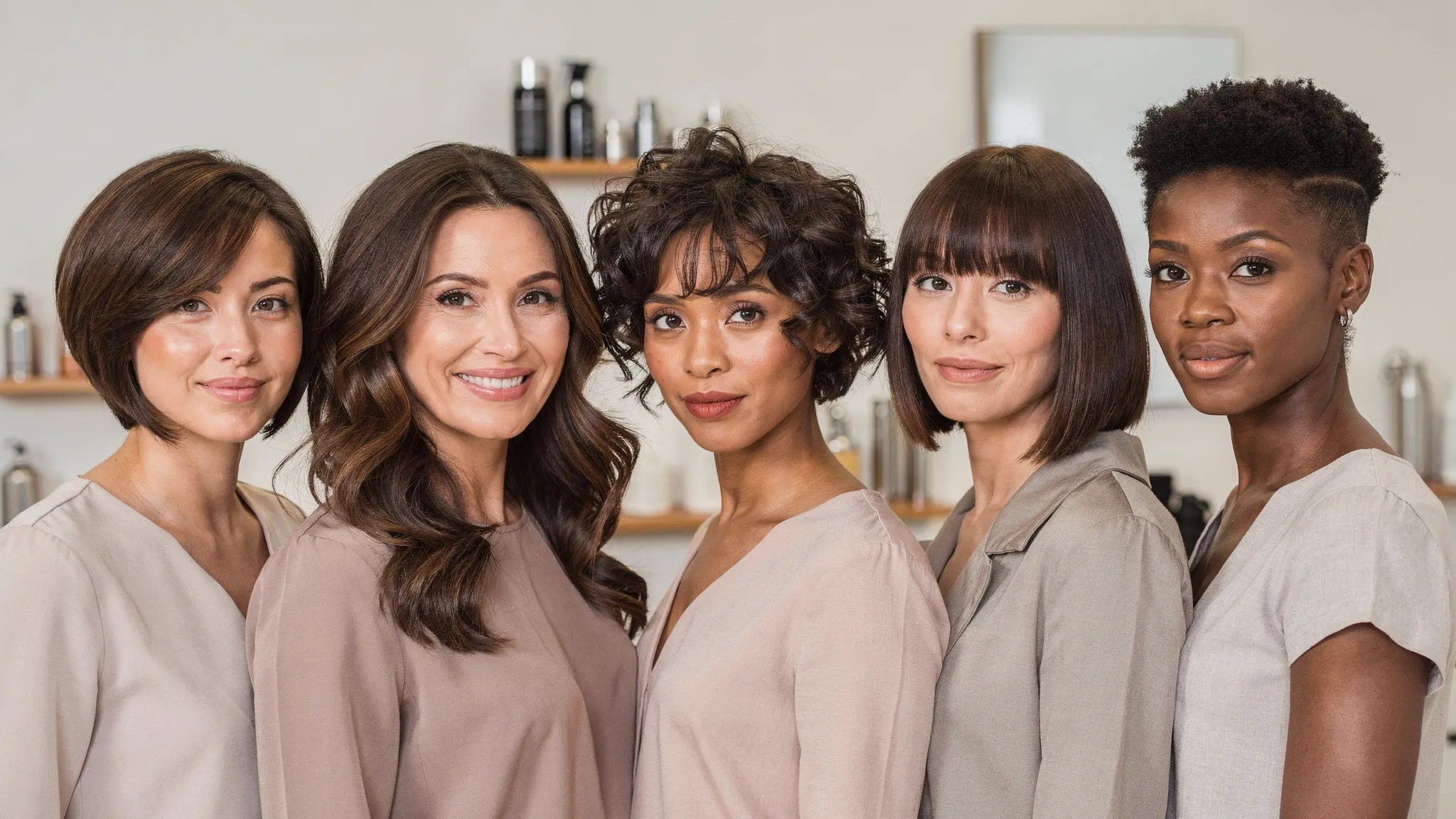
Quick Guide: Flattering Haircut Styles by Face Shape
Use this table as a starting point for your consultation. Your stylist can adjust the length, layers, fringe, and finishing details based on your texture and routine.
Face shape | Flattering goal | Haircut styles to consider | Styling note |
|---|---|---|---|
Oval | Maintain natural balance | Bob, lob, long layers, pixie, shag, curtain bangs | Most shapes work, so focus on texture and lifestyle |
Round | Add length and vertical movement | Angled lob, long layers, asymmetrical bob, side-parted pixie | Keep volume above or below the cheeks, not widest at the cheeks |
Square | Soften strong angles or enhance them intentionally | Soft layered lob, curtain bangs, textured shag, waves, rounded layers | Face-framing pieces can soften the jaw beautifully |
Heart | Balance a wider forehead and narrower chin | Chin-length bob, collarbone cut, side-swept bangs, jawline layers | Add softness around the lower face |
Diamond | Highlight cheekbones and balance narrow areas | Textured bob, soft fringe, shoulder layers, tucked lob | Avoid too much width directly at the cheekbones if you want softness |
Long or oblong | Add width and reduce visual length | Shoulder cut, full bangs, curly layers, voluminous bob | Avoid very long, flat, one-length hair if you want balance |
Triangle or pear | Add lift near the crown and temples | Layered bob, side-parted cut, pixie with volume, curtain fringe | Keep heavy blunt weight away from the widest part of the jaw |
Oval Face Shape: Versatile and Balanced
Oval faces are often considered the most versatile because the proportions are naturally balanced. If your face is oval, you can usually wear short, medium, or long haircut styles well. The key is choosing a cut that supports your hair texture and the amount of styling you are willing to do.
A classic bob can bring attention to your jaw and neck. A collarbone-length lob offers movement without sacrificing too much length. Long layers are beautiful if you want softness and bounce, especially with waves, curls, or a silk press finish. For clients who like a bold look, a pixie cut can show off the eyes and cheekbones.
Bangs also work well on oval faces. Curtain bangs, bottleneck bangs, and soft fringe can add personality without overwhelming your features. If your hair is very fine, your stylist may keep layers minimal so the ends stay full. If your hair is thick or textured, strategic layering can remove bulk while preserving shape.
Round Face Shape: Create Length and Lift
For round faces, flattering cuts often create the illusion of length while adding structure. This does not mean you need to avoid short hair. It means the cut should be placed thoughtfully so it does not add extra width at the cheeks.
An angled lob is a popular choice because the longer front pieces visually lengthen the face. Long layers that begin below the chin can also create a slimming, elongated effect. A side part, asymmetrical bob, or pixie with height at the crown can add lift and definition.
If you love bangs, ask for longer curtain bangs or side-swept fringe rather than a very short, heavy fringe. Soft diagonal lines are usually more flattering than a straight horizontal line across the forehead. For curly and coily hair, shape is everything. A rounded cut can be gorgeous, but your stylist may build more height and controlled volume rather than allowing the widest part to sit at cheek level.
Square Face Shape: Soften, Frame, or Celebrate the Jawline
Square face shapes often have a strong, beautiful jawline. Some clients want to soften that structure, while others want a haircut that celebrates it. Both approaches can work.
If you want softness, consider a textured lob, long layers, face-framing pieces, or a shag-inspired cut with movement. Curtain bangs are especially flattering because they open around the eyes and cheekbones while softening the corners of the forehead and jaw. Waves, curls, and bend through the mid-lengths can make the overall look feel less severe.
If you prefer a bold look, a sharp bob can be striking on a square face. The important part is precision. A blunt cut that lands exactly at the jaw will draw attention there, which can be powerful and chic. If that is not your goal, your stylist may recommend a length slightly above or below the jaw instead.
Heart Face Shape: Balance the Forehead and Chin
Heart-shaped faces typically have more width through the forehead or cheekbones and a narrower chin. The most flattering haircuts often add softness around the jawline and lower face.
A chin-length bob can work beautifully because it creates fullness where the face narrows. Collarbone cuts are also flattering, especially with soft layers that begin around the jaw. Side-swept bangs or curtain bangs can reduce the appearance of width at the forehead while keeping the look light and modern.
For shorter cuts, a pixie with side movement can be very flattering. The key is avoiding too much height or volume directly at the top if you are trying to balance a wider forehead. For longer hair, layers should not start too high unless you want extra volume around the cheeks. A stylist can customize the placement so the cut flows naturally.
Diamond Face Shape: Show Off the Cheekbones
Diamond face shapes usually have standout cheekbones, with a narrower forehead and chin. A flattering cut can either highlight the cheekbones or soften the contrast between the widest and narrowest points.
A textured bob that lands around the chin or slightly below can add balance. Shoulder-length layers are another strong option because they give movement without placing all the width at the cheekbones. Soft fringe, side-swept bangs, or curtain bangs can help widen the look of the forehead if desired.
If you like sleek styling, a tucked lob can look elegant and polished. If you prefer volume, ask for layers that create shape around the jaw and ends rather than building all the fullness at the cheek area. For curls and coils, a custom shape can make the cheekbones pop while keeping the silhouette balanced.
Long or Oblong Face Shape: Add Width and Movement
Long face shapes benefit from cuts that add width and reduce the feeling of vertical length. The most common mistake is wearing very long, very straight, one-length hair with no face framing, which can make the face appear longer.
Shoulder-length cuts, collarbone lobs, full bangs, and layered curly cuts are excellent options. A bob with volume through the sides can also create balance. If you love long hair, consider face-framing layers, waves, or a fringe to break up the length.
Bangs can be especially flattering on long faces because they visually shorten the forehead area. Full bangs, curtain bangs, or textured fringe can all work depending on your hair density and styling preferences. For textured hair, a rounded shape with controlled width can be stunning, especially when the layers are cut to support your natural shrinkage and volume.
Triangle or Pear Face Shape: Lift the Top and Lighten the Jawline
Triangle or pear face shapes have more width near the jaw than the forehead. The goal is often to add softness and lift near the upper face while avoiding too much bulk at the jaw.
Layered bobs, side-parted lobs, and pixie cuts with volume at the crown can balance the silhouette. Curtain bangs can add width around the forehead and temples, which helps the lower face feel more proportional. If you prefer longer hair, layers should be placed carefully so the ends do not become too heavy around the jawline.
For curly, coily, or dense hair, shape control is important. A cut that is too heavy at the bottom may emphasize the jaw. A stylist can remove weight strategically while keeping the hair healthy, full, and wearable.
How Hair Texture Changes the Final Cut
Face shape matters, but texture determines how the cut lives after you leave the salon. Straight hair shows lines clearly, so precision matters. A blunt bob, clean lob, or structured pixie can look polished, but the edges need to be intentional. Fine straight hair may need fewer layers to avoid thin ends.
Wavy hair often benefits from soft layers that encourage movement. Too many short layers can create unwanted puffiness, while too little layering can make waves fall flat. A textured lob, long layered cut, or modern shag can bring out natural wave patterns beautifully.
Curly and coily hair require careful shape planning because of shrinkage, density, and curl pattern variation. A cut that looks shoulder-length when stretched may sit much higher when dry. For natural hair, protective styles, silk press cuts, and curly cuts all require different approaches. This is where a personalized consultation becomes essential.
Relaxed hair, silk press styles, extensions, and wigs also need face-shape customization. The length, part, layering, and density of an install can completely change how it frames your face. If you wear extensions or protective styles often, ask your stylist to consider how your preferred styles will look with your face shape, not just your natural hair length.
Bangs, Parts, and Face-Framing Details
Sometimes the most flattering change is not a dramatic cut. Small details can transform how your haircut frames your face.
Curtain bangs are versatile because they can soften the forehead, highlight cheekbones, and blend into layers. Side-swept bangs add diagonal movement, which can flatter round, square, heart, and diamond face shapes. Full bangs can be stunning on long faces and oval faces, especially when the hair has enough density to support them.
Your part also matters. A center part can create symmetry and length, which often works well for oval, heart, and round faces. A side part can add softness, lift, or asymmetry, which is helpful for square, round, diamond, and triangle shapes. If you are not ready for a major haircut, changing your part and adding face-framing pieces can be a great first step.
Match Your Cut to Your Real Routine
A haircut only flatters you if you can maintain it. The right cut should fit your schedule, styling skills, and comfort with salon upkeep.
Your routine | Consider these cuts | Why it works |
|---|---|---|
Low maintenance | Long layers, soft lob, natural shape refresh, simple trim | Grows out smoothly and needs less daily styling |
Medium maintenance | Bob, layered shoulder cut, curtain bangs, shaped curls | Offers style impact with moderate upkeep |
High maintenance | Precision pixie, blunt bob, full bangs, dramatic layers | Looks best with regular trims and styling attention |
Heat-styled often | Silk press cut, smooth lob, face-framed layers | Shape is designed to move well when polished |
Protective-style focused | Tapered shape, extension layering, wig customization, healthy trim schedule | Supports both style and hair health goals |
If you want a cut that looks effortless, be honest about how much effort you actually want to spend. A high-maintenance cut can be worth it if you love styling. If you prefer wash-and-go simplicity, your stylist can recommend a shape that works with your natural pattern instead of fighting it.
What to Bring to Your Haircut Consultation
Photos are helpful, but bring more than one. A single inspiration photo may not show the back, sides, natural texture, or styling effort required. Try to bring a few examples of what you like and one or two examples of what you do not want.
Tell your stylist how you usually wear your hair, how often you use heat, whether you wear protective styles, how frequently you want trims, and what you struggle with most. If your hair has been colored, relaxed, lightened, heat-styled often, or recently taken out of a protective style, share that too. Hair history helps your stylist protect the health of your strands while shaping the look.
A strong consultation should leave you understanding why a certain haircut works for your face shape, how it will behave with your texture, and what maintenance it will require. If you are unsure, start with a softer version of the cut. You can always go shorter, add more layers, or commit to bangs later.
Frequently Asked Questions
What haircut flatters every face shape? A collarbone-length lob with soft face-framing layers is one of the most versatile options because it can be adjusted for round, oval, square, heart, diamond, long, and triangle face shapes.
How do I know which haircut style is best for me? Look at your face shape, hair texture, density, styling routine, and maintenance comfort. The best haircut is customized to all of those factors, not just one trend photo.
Are bangs good for all face shapes? Yes, but the type of bang matters. Curtain bangs, side-swept bangs, full bangs, and wispy fringe each create a different effect, so your stylist should match the fringe to your features and hair texture.
Can short hair flatter a round or square face? Absolutely. A pixie, bob, or short textured cut can flatter round and square faces when the length, volume, and face-framing details are placed intentionally.
Should curly and coily hair be cut differently for face shape? Often, yes. Shrinkage, density, curl pattern, and natural volume affect the final silhouette, so curly and coily cuts should be customized carefully for both face shape and hair behavior.
Find Your Most Flattering Cut at Kingdom Cute
Your face shape can guide the haircut, but your confidence completes it. At Kingdom Cute Hair Salon in Warner Robins, GA, our luxury salon experience is built around personalized consultations, precision haircuts, styling, color, extensions, protective styles, silk press services, conditioning treatments, and event-ready looks.
If you are ready for a haircut that frames your features, fits your lifestyle, and supports your hair health, book your appointment with Kingdom Cute and let your next cut tell your story.
Related articles