Publish on by Kingdom Cute Luxury Hair Salon
- What Is a Salon Deep Conditioning Treatment?
- Why a Salon Treatment Works Differently Than an At-Home Mask
- The Main Benefits of a Deep Conditioning Treatment
- Softer, More Hydrated Hair
- Better Shine and Smoothness
- Easier Detangling and Less Friction
- Support for Color-Treated Hair
- Improved Elasticity and Reduced Breakage Risk
- Who Benefits Most From Deep Conditioning?
- What Happens During a Salon Deep Conditioning Appointment?
- How Often Should You Book a Deep Conditioning Treatment?
- Deep Conditioning Before Special Events, Bridal Styling, and Photos
- Deep Conditioning vs. Other Salon Treatments
- How to Make the Results Last Longer
- Common Myths About Deep Conditioning
- Frequently Asked Questions
- Ready to Give Your Hair a Healthier Reset?
Dryness, frizz, dullness, rough ends, and styles that fall flat are all signs your hair may need more than a quick rinse-out conditioner. A professional deep conditioning treatment is designed to give your hair a targeted reset, especially when daily styling, color services, heat tools, weather, or protective styles have left it feeling stressed.
The biggest deep conditioning treatment salon benefits come from customization. Instead of guessing which jar, oil, or mask might work at home, your stylist evaluates your hair’s texture, porosity, density, scalp condition, chemical history, and styling goals. That makes the treatment more precise, and often more effective, than a one-size-fits-all product.
At Kingdom Cute in Warner Robins, GA, conditioning and scalp care are part of a luxury hair experience built around healthy, confident hair. Whether you are maintaining color, preparing for a silk press, getting ready for extensions, or simply trying to restore softness, here is what a salon deep conditioning treatment can do for your hair.
What Is a Salon Deep Conditioning Treatment? #
A salon deep conditioning treatment is an intensive service that delivers concentrated moisture, smoothing agents, proteins, or strengthening ingredients to the hair. The goal is to improve how the hair feels, behaves, and holds style after the appointment.
Unlike a regular conditioner, which usually stays on the hair for a short time and mainly helps with detangling and surface softness, a deep conditioning treatment is more intentional. Your stylist may use a formula chosen for hydration, repair support, elasticity, shine, scalp comfort, or a combination of needs.
The service may include cleansing, sectioned application, processing time, gentle heat or steam depending on the treatment, detangling, rinsing, and a professional finish. The details vary based on your hair and the salon’s product system, but the purpose is the same: to help your hair look and feel healthier before you leave the chair.
Why a Salon Treatment Works Differently Than an At-Home Mask #
At-home masks can be helpful, but they are often used without a full understanding of what the hair actually needs. Many people over-moisturize hair that needs strength, use protein-heavy products on hair that is already stiff, or apply oils that sit on the surface without addressing the core issue.
A professional stylist looks for clues that guide the treatment choice. Is your hair snapping when brushed? Does it stretch too much and lose shape? Does water bead up instead of absorbing? Is your color fading quickly? Does your scalp feel tight, flaky, or congested? These details matter.
Salon treatments also come with better application. Sectioning, even saturation, controlled timing, and professional finishing can make a visible difference. If you are deciding whether a higher-level service makes sense for your hair, this guide on when professional hair treatment is worth the investment is a helpful next read.
The Main Benefits of a Deep Conditioning Treatment #
Softer, More Hydrated Hair #
The most immediate benefit is softness. Dry hair often feels rough because the outer cuticle is lifted or uneven. A deep conditioning treatment helps replenish moisture and smooth the hair’s surface, so strands feel silkier and more flexible.
This is especially valuable for curls, coils, color-treated hair, and hair that is frequently heat styled. When hair has enough moisture, it is easier to detangle, easier to style, and less likely to feel brittle during everyday handling.
Better Shine and Smoothness #
Shine happens when light reflects evenly off the hair. When the cuticle is rough, hair can look matte even if it is clean. A deep conditioning treatment helps create a smoother finish, which can make your color look richer and your style look more polished.
For anyone who loves a sleek blowout, silk press, soft curls, or a glossy event style, conditioning can make the final result look more refined. It does not replace a great haircut or color service, but it helps those services show up better.
Easier Detangling and Less Friction #
Hair that tangles easily often has dryness, raised cuticles, split ends, or a lack of slip. A conditioning treatment can reduce friction between strands, making detangling more comfortable and helping reduce unnecessary breakage during combing or styling.
This is a major benefit for textured hair, long hair, highlighted hair, and hair worn in protective styles. Less tugging means less stress on the hair shaft and, in many cases, a smoother styling experience at home.
Support for Color-Treated Hair #
Color services can make hair look beautiful, but they can also increase dryness if the hair is not cared for properly. Deep conditioning helps support softness and manageability after coloring, lightening, glossing, or toning.
While conditioning cannot stop color from fading completely, healthy-feeling hair often holds a polished finish better. When paired with the right shampoo, heat protection, and maintenance schedule, it can help your color look fresher between appointments.
Improved Elasticity and Reduced Breakage Risk #
Elasticity is your hair’s ability to stretch and return without snapping. When hair is too dry, it may break easily. When it is over-processed or imbalanced, it may feel mushy, limp, or weak. A salon treatment can help your stylist address that balance more strategically.
It is important to be realistic: deep conditioning cannot glue split ends back together or reverse severe chemical damage. However, it can improve the feel of compromised hair, support healthier styling habits, and help reduce avoidable breakage from dryness and rough handling.
Who Benefits Most From Deep Conditioning? #
Almost anyone can enjoy a conditioning service, but it is especially helpful when your hair is showing signs of stress. Your ideal formula depends on your hair type, texture, and history.
| Hair concern | What you may notice | How a salon treatment can help |
|---|---|---|
| Dryness | Rough feel, dull finish, frizz | Adds moisture and improves softness |
| Color stress | Fading, dryness after color, lack of shine | Supports smoother, glossier-looking hair |
| Heat styling | Brittle ends, loss of movement | Helps restore flexibility and manageability |
| Textured hair | Tangles, shrinkage dryness, breakage during detangling | Adds slip and improves styling comfort |
| Protective style prep | Hair feels dry before braids, twists, or extensions | Helps hydrate and prepare strands before styling |
| Seasonal dryness | Hair feels different in humidity, cold, or indoor heat | Rebalances moisture and improves feel |
If you are unsure how your hair type affects what it needs, Kingdom Cute’s guide to understanding different hair types and textures explains why fine, coarse, curly, coily, wavy, and straight hair often respond differently to products and services.
What Happens During a Salon Deep Conditioning Appointment? #
Your appointment usually begins with a consultation. This is where your stylist asks about your recent services, home routine, heat styling habits, hair goals, and any scalp concerns. Be honest about color history, relaxers, silk presses, at-home treatments, and extensions, because all of that affects what your hair needs.
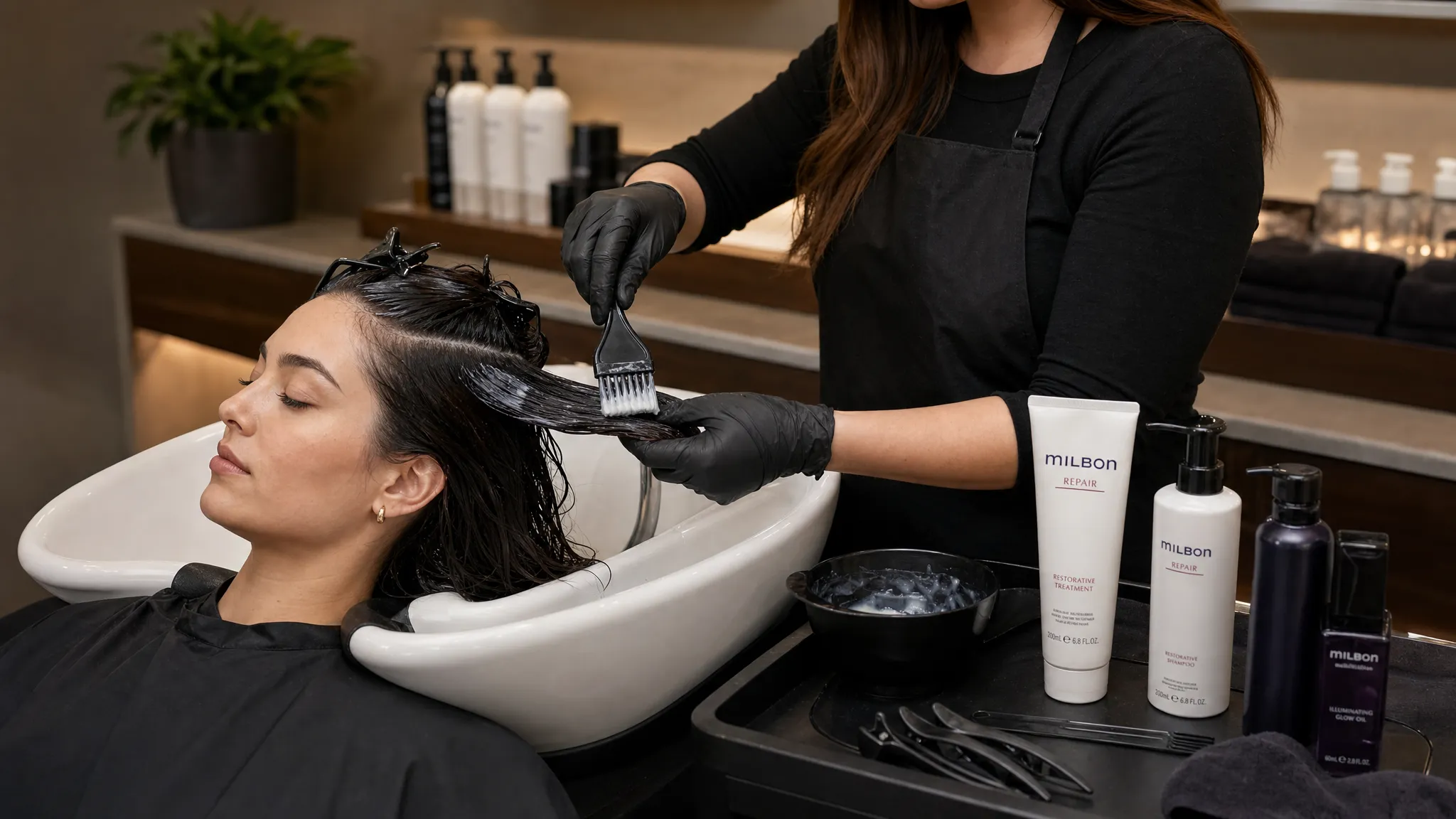
After cleansing, your stylist applies the treatment evenly through the hair, often in sections for better coverage. Depending on the formula, the treatment may process for a set amount of time. Some services may use warmth to support product performance, while others work best without it.
Once the treatment is rinsed, your stylist finishes the hair in a way that lets you see and feel the result. This is also the moment to ask how to maintain the softness at home, how often to return, and whether your hair needs moisture, strength, scalp care, trims, or a combination of services.
How Often Should You Book a Deep Conditioning Treatment? #
There is no universal schedule because hair needs change. Some clients benefit from a treatment every 4 to 6 weeks, especially if they color their hair, use heat often, or wear styles that require extra preparation. Others may only need one seasonally or before a major service.
A good rule of thumb is to book when your hair starts to feel harder to detangle, loses shine, feels rough after washing, or no longer holds a smooth style. If you are growing your hair, transitioning your routine, recovering from dryness, or maintaining a luxury color service, your stylist may recommend a more consistent plan.
The best schedule is the one that matches your hair’s real condition, not a random calendar rule. Too much of the wrong treatment can create buildup or imbalance, which is why professional guidance matters.
Deep Conditioning Before Special Events, Bridal Styling, and Photos #
Conditioning is one of the smartest add-ons before a major event because the camera picks up shine, smoothness, and shape. If your hair is dry or frizzy, even a beautiful style can require more product and more heat to achieve the finish you want.
For weddings, bridal trials, engagement photos, prom, holiday parties, and milestone portraits, a deep conditioning treatment can help your style look softer and more polished. The timing matters. Many clients prefer to condition before the final styling appointment rather than trying something new on the day of the event.
If your beauty plan is part of a destination celebration or intimate ceremony, it helps to think about hair, makeup, wardrobe, and storytelling as one complete vision, much like couples who plan cinematic Mediterranean elopements with Stories by DJ. Healthy-looking hair supports that full visual story, whether your event is local in Georgia or somewhere far from home.
Deep Conditioning vs. Other Salon Treatments #
Deep conditioning is not the same as every other treatment on the salon menu. Understanding the difference helps you choose the right service instead of booking something that does not match your goal.
| Treatment type | Best for | What to know |
|---|---|---|
| Deep conditioning | Dryness, softness, shine, manageability | Great maintenance service for many hair types |
| Protein treatment | Weakness, snapping, loss of structure | Best when hair truly needs strength, not just moisture |
| Scalp treatment | Dry, oily, flaky, or congested scalp concerns | Focuses on the scalp environment, not only the hair strand |
| Keratin smoothing | Frizz control and smoother styling | More intensive and not necessary for every client |
| Gloss or toner | Shine and color refresh | Often paired with conditioning for a polished result |
If your main concern is frizz reduction and long-lasting smoothness, a keratin service may be worth discussing separately. If your hair mainly feels dry, rough, or dull, a deep conditioning treatment may be the simpler and more flexible place to start.
How to Make the Results Last Longer #
A salon treatment gives your hair a boost, but your routine determines how long that softness lasts. The right aftercare can extend the benefits and help you avoid falling back into the same dryness cycle.
Start with a gentle shampoo and conditioner recommended for your hair type. Use heat protection before blow-drying, curling, or flat ironing. Sleep with hair protected in a way that reduces friction, such as a satin bonnet, scarf, or pillowcase. Avoid rough towel drying, and detangle with patience instead of force.
You should also pay attention to your ends. If they are split, a deep conditioning treatment can make them feel better temporarily, but it cannot permanently repair them. A light trim may be needed to keep your hair looking full and healthy.
For a more complete maintenance routine, Kingdom Cute shares practical ideas in luxury hair care habits that keep salon results longer. Pairing professional treatments with better daily habits is where the real transformation happens.
Common Myths About Deep Conditioning #
One common myth is that deep conditioning is only for damaged hair. In reality, it can be preventive. You do not have to wait until your hair is breaking or extremely dry to benefit from added moisture and care.
Another myth is that the thickest product is always the best. Fine hair may need a lighter formula that hydrates without weighing it down, while coarse or high-porosity hair may need richer support. More product does not always mean better results.
A third myth is that oils alone can deep condition the hair. Oils can help seal, soften, or add shine, but they do not all hydrate in the same way. Depending on your hair, you may need water-based moisture, conditioning agents, proteins, or scalp support rather than just oil.
Frequently Asked Questions #
Is a salon deep conditioning treatment worth it? Yes, it can be worth it if your hair feels dry, dull, frizzy, hard to detangle, or stressed from color, heat, or styling. The value comes from professional product selection, even application, and guidance that matches your hair’s condition.
How long do deep conditioning results last? Results vary based on your hair type, lifestyle, products, and styling habits. Many people notice improved softness and manageability for days to weeks, especially when they use proper aftercare at home.
Can deep conditioning fix damaged hair? It can improve softness, shine, and manageability, and it may help reduce breakage caused by dryness. It cannot permanently repair split ends or reverse severe chemical damage, so your stylist may recommend trims or additional treatments if needed.
Should I deep condition before or after coloring my hair? It depends on your hair’s condition and the color service planned. Your stylist may recommend conditioning before color if your hair is very dry, after color to support softness, or as part of a longer maintenance plan.
Will deep conditioning make fine hair greasy or flat? Not when the right formula is used. Fine hair often needs lightweight hydration and careful application, which is why a salon consultation helps prevent heaviness.
Ready to Give Your Hair a Healthier Reset? #
A deep conditioning treatment is more than a relaxing add-on. It is a smart way to support softness, shine, manageability, and healthier styling, especially when it is customized by a professional.
At Kingdom Cute Hair Salon in Warner Robins, GA, every service begins with your hair goals, your texture, and your lifestyle. If your hair has been feeling dry, dull, tangled, or harder to style, book a personalized consultation and let your stylist recommend the treatment plan that helps you love your look again.