10 Hair Tips for Stronger, Shinier, Healthier Strands
10 Hair Tips for Stronger, Shinier, Healthier Strands
Healthy hair is not just about what you put on it, it is about what you do to it every day. The good news is that most “stronger, shinier, healthier strands” goals come down to a handful of repeatable habits: protecting the cuticle, keeping the scalp balanced, minimizing breakage, and choosing techniques that match your hair’s texture and lifestyle.
Below are 10 hair tips we regularly reinforce in the salon because they work across hair types, from straight to coily, and from natural to color-treated.
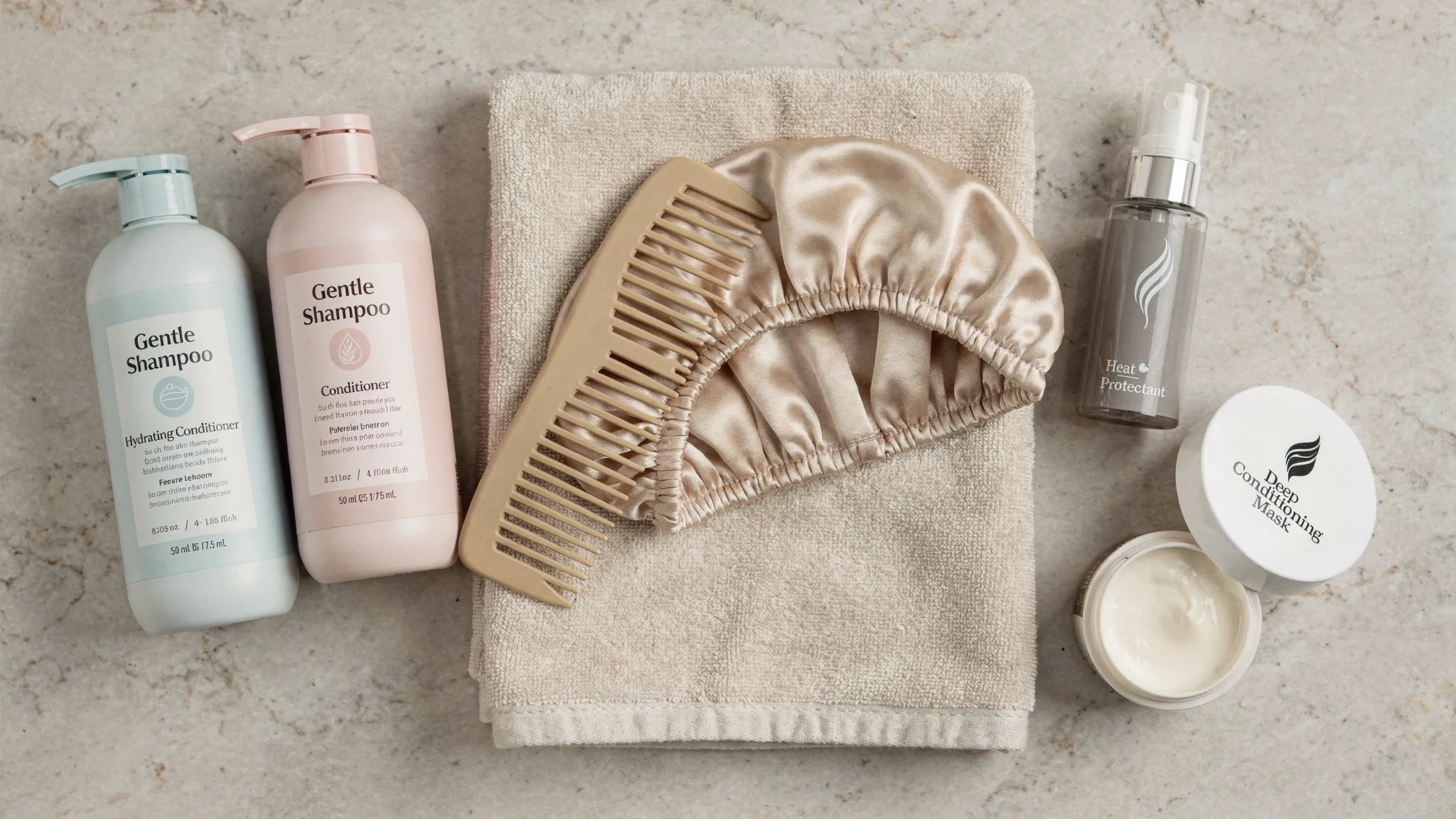
1) Treat your scalp like skin (because it is)
Strong hair starts at the scalp. If your scalp is irritated, flaky, overly oily, or chronically dry, your hair can feel dull and fragile no matter how expensive your styling products are.
A simple reset is to focus shampoo on the scalp, not the ends. Use your fingertips (not nails) and massage in small circles for 60 to 90 seconds, then let the lather rinse through the lengths.
For guidance on scalp health basics and when to see a dermatologist, the American Academy of Dermatology has practical, science-aligned recommendations.
2) Use a wash routine that matches your hair’s porosity and lifestyle
Over-washing can dry hair out, and under-washing can leave buildup that blocks moisture and makes styling harder. The “right” schedule is the one that keeps your scalp comfortable and your hair manageable.
A useful rule:
If your scalp gets oily quickly or you sweat often (workouts, outdoor work), you may need to cleanse more frequently.
If your hair is very dry, tightly coiled, or chemically processed, you may do better with fewer full shampoos and more moisturizing maintenance between washes.
If you are unsure, a stylist can help you match frequency to your hair density, texture, and protective styling routine.
3) Condition with intention (and do it every wash day)
Conditioner is not optional if you want shine and slip. It helps smooth the cuticle, reduce friction during detangling, and improve softness.
Technique matters:
Apply conditioner from mid-lengths to ends first.
Add a little more only if your hair actually needs it near the roots.
Detangle gently while the hair is saturated and “slippery” (often with a wide-tooth comb).
If your hair feels coated but still dry, you may have buildup (see Tip #5) or need a different moisture and protein balance (Tip #4).
4) Balance moisture and protein to prevent breakage
When hair is overly dry, it snaps. When hair is overly soft and stretchy (often from too many heavy conditioners with no strengthening), it can also break.
In real life, “balance” looks like this:
Use moisturizing treatments regularly if your hair feels rough, frizzy, or tangles easily.
Add targeted strengthening or bond-support treatments when you notice increased breakage, mushy feeling hair when wet, or you color/chemically treat your hair.
A salon-grade consultation is helpful here because the right plan depends on your hair’s history (heat, color, relaxer, extensions, protective styles), not just your curl pattern.
5) Clarify when your hair is dull, heavy, or not absorbing moisture
Product buildup, hard water minerals, and oils can create a film that makes hair look less shiny and feel harder to detangle. If your hair suddenly stops responding to your usual routine, clarifying is often the missing step.
Common signs you may need to clarify:
Your curls look limp or undefined
Your blowout feels heavy and gets oily faster
Your hair feels “coated” even after conditioning
Your scalp is itchy without obvious dryness
Most people do not need a strong clarifying shampoo weekly. Think “as needed,” especially if you use lots of stylers, dry shampoo, edge control, or live in a hard-water area.
6) Use heat like a pro (temperature, protectant, and technique)
Heat is not automatically “bad,” but uncontrolled heat is. Shine comes from a smooth cuticle, and excess heat can roughen the cuticle, causing frizz and breakage over time.
Heat-styling upgrades that protect hair:
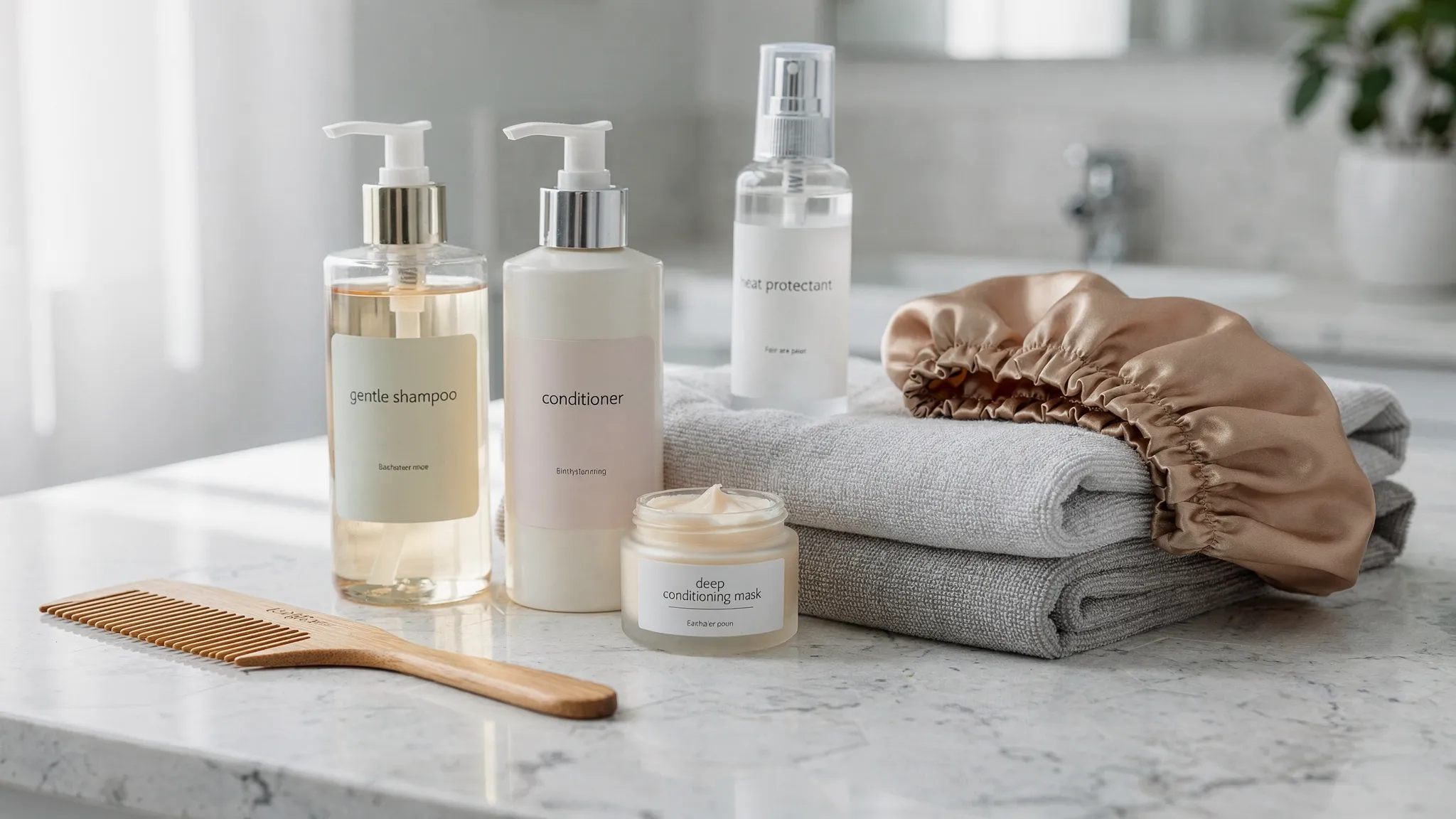
Use a real heat protectant every time you blow-dry, flat iron, or curl.
Keep tools moving, avoid multiple slow passes in the same section.
Start with fully detangled hair and appropriate tension so you do not have to “chase” frizz with extra passes.
Consider fewer high-heat days per week, especially for fine hair or chemically processed hair.
If you love silk presses or sleek styles, technique matters as much as temperature. A professional can help you get longer-lasting results with less heat exposure.
7) Sleep and towel habits can make or break your ends
Your ends are the oldest part of your hair. Friction from cotton pillowcases and rough towel-drying can quietly undo your best wash-day work.
Try these changes for immediate payoff:
Use a satin bonnet, satin scarf, or satin pillowcase to reduce friction.
Use a microfiber towel (or soft t-shirt) to squeeze water out, not rub.
If you wear protective headwear regularly (bonnets, wraps, satin-lined caps), quality construction matters for comfort and durability. If you are curious how brands develop better hair-friendly accessories, an apparel development and manufacturing partner can be part of that behind-the-scenes process.
8) Choose protective styles that protect (not stress) your hairline
Protective styles can support length retention when they reduce daily manipulation. They can also cause thinning or breakage when installed too tightly or worn too long.
Green flags for healthy protective styling:
Your edges feel secure, not painful
You can move your scalp, no tight pulling sensation
You can cleanse your scalp (or at least maintain it) while the style is in
You take breaks between high-tension looks
If you notice bumps, soreness, or thinning along the hairline, do not “push through.” That can be a sign of traction that needs immediate adjustment.
9) Trim for strength, not for speed
Trims do not make hair grow faster from the scalp, but they do prevent split ends from traveling up the strand. That is how trims support length retention.
A healthy approach is to trim based on what your hair is doing:
If you see white dots, frequent single-strand knots, or splits, you may need a trim sooner.
If your ends look full and detangle easily, you can likely go longer between trims.
Ask your stylist for a conservative plan (for example, “dusting” the ends) if you are trying to keep length while improving density and shine.
10) Protect hair from sun, chlorine, and seasonal dryness
UV exposure, pool chlorine, and dry air can all contribute to dullness and breakage.
Simple prevention steps:
Before swimming, rinse hair with clean water and apply conditioner or a swim-safe barrier product.
After swimming, cleanse promptly and deep condition.
In sunny months, consider hats or UV-protective hair products (especially if you color your hair).
Seasonal changes are a great time to reassess your routine, what worked in winter may not work in a humid Georgia summer.
Quick guide: 10 hair tips at a glance
Hair tip | What it helps with | Best for | How often |
|---|---|---|---|
Scalp-first cleansing | Healthier roots, less irritation | Everyone | Each wash |
Right wash frequency | Less dryness or buildup | Everyone | Varies |
Condition every wash | Slip, shine, less tangling | Everyone | Each wash |
Moisture + protein balance | Less breakage | Damaged, processed, heat-styled | Ongoing |
Clarify as needed | Removes buildup, restores shine | Heavy product users, hard water | As needed |
Heat protectant + technique | Less heat damage | Blowouts, silk press, curls | Every heat day |
Satin + microfiber habits | Less friction breakage | Dry, fragile ends | Daily |
Low-tension protective styles | Retention, less manipulation | Textured hair, busy schedules | Style-dependent |
Trim strategy | Prevents split-end “creep” | Everyone | As needed |
Sun/pool/weather protection | Less dullness, less dryness | Swimmers, color-treated | Seasonal/as needed |
When it’s time to get professional help
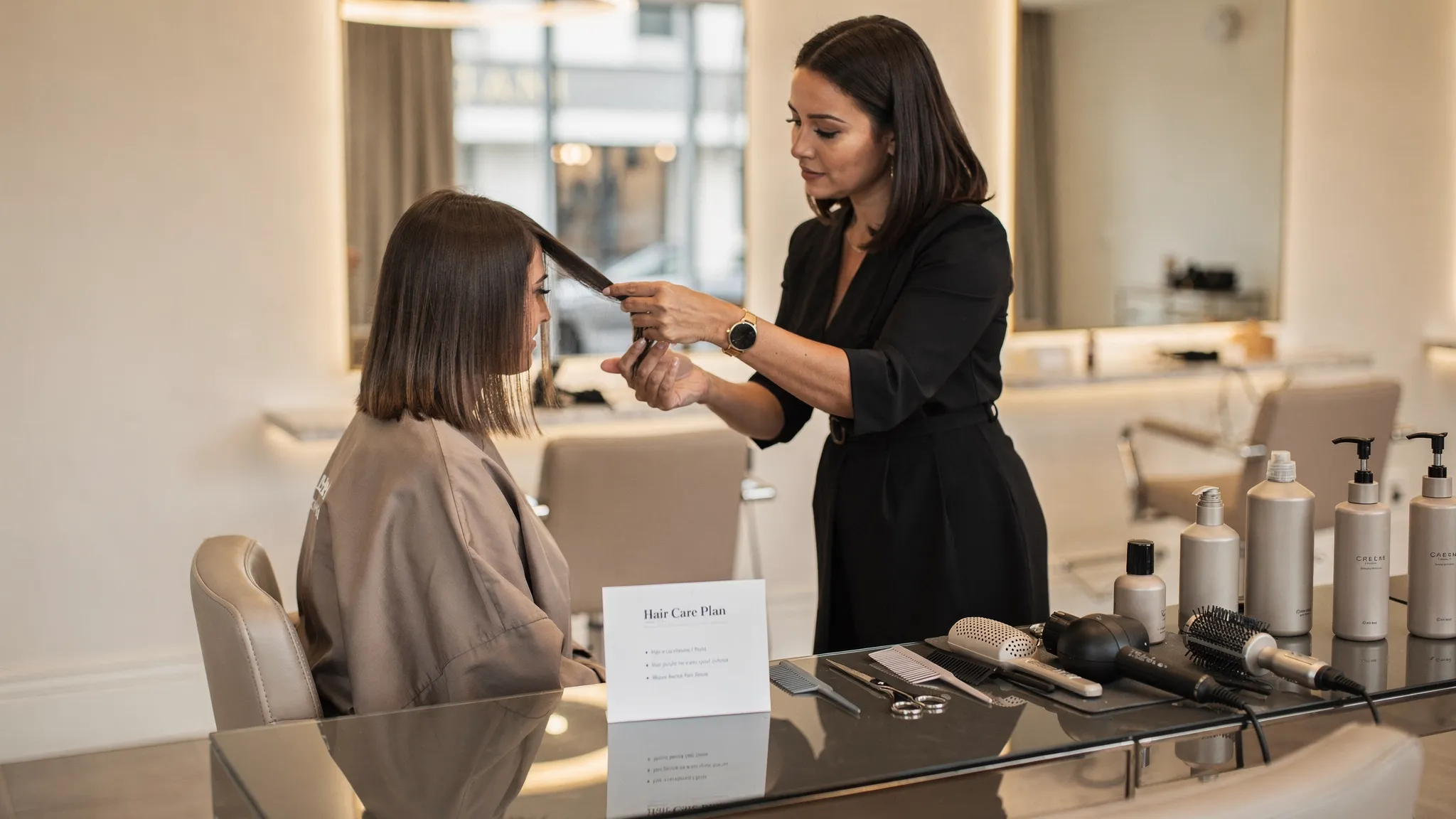
At-home care is powerful, but some issues need a pro to prevent long-term damage. Book a consultation if:
Your hair is breaking faster than it grows
You have persistent scalp itching, tenderness, or flaking
Your color keeps fading fast or turning brassy
Your silk press never lasts (or requires too much heat)
You want extensions or a protective style but want to prioritize hairline and scalp health
At Kingdom Cute in Warner Robins, GA, we build your plan around your hair history and goals, not a one-size-fits-all routine.
Frequently Asked Questions
What is the best way to make hair shinier fast? Shine usually improves when the cuticle is smoother and buildup is removed. Clarify if needed, condition well, reduce friction at night (satin), and avoid excessive heat passes.
How often should I wash my hair? It depends on your scalp oiliness, activity level, and hair type. A comfortable, non-itchy scalp and manageable hair are better indicators than a strict schedule.
Do trims help hair grow? Trims do not change growth at the root, but they help you keep length by preventing split ends from traveling up the strand and causing breakage.
Is air-drying healthier than blow-drying? Not always. Gentle blow-drying with heat protectant can be healthier than long, rough air-drying if your hair stays swollen and friction-prone for hours. The best method depends on your hair’s density and how you handle it while wet.
Why do my ends keep breaking even with good products? Common causes include friction (cotton pillowcases, rough towels), too much heat, buildup blocking moisture, or an imbalance of moisture and protein. A professional consultation can pinpoint the main culprit.
Ready for healthier hair with a personalized plan?
If you want stronger, shinier, healthier strands without guessing, book an appointment with Kingdom Cute. We offer personalized consultations, precision cuts, luxury color, silk press and relaxer services, extensions, and conditioning treatments in a modern, relaxing salon environment.
Book online at Kingdom Cute and let’s build a routine that fits your hair, your schedule, and your goals.
Related articles